


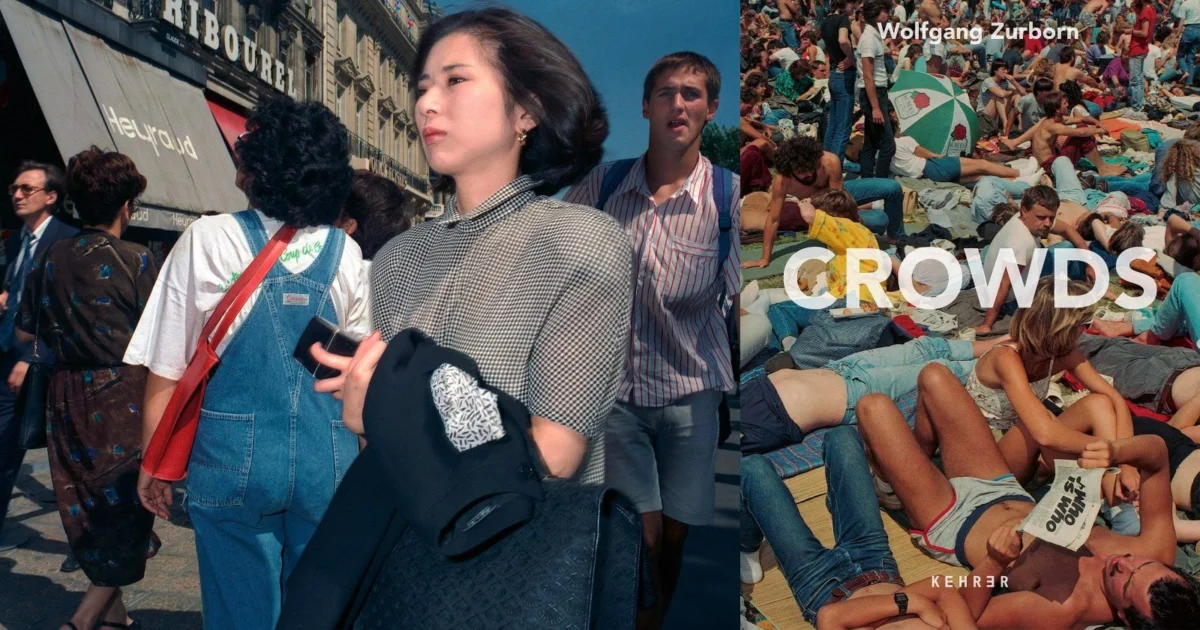
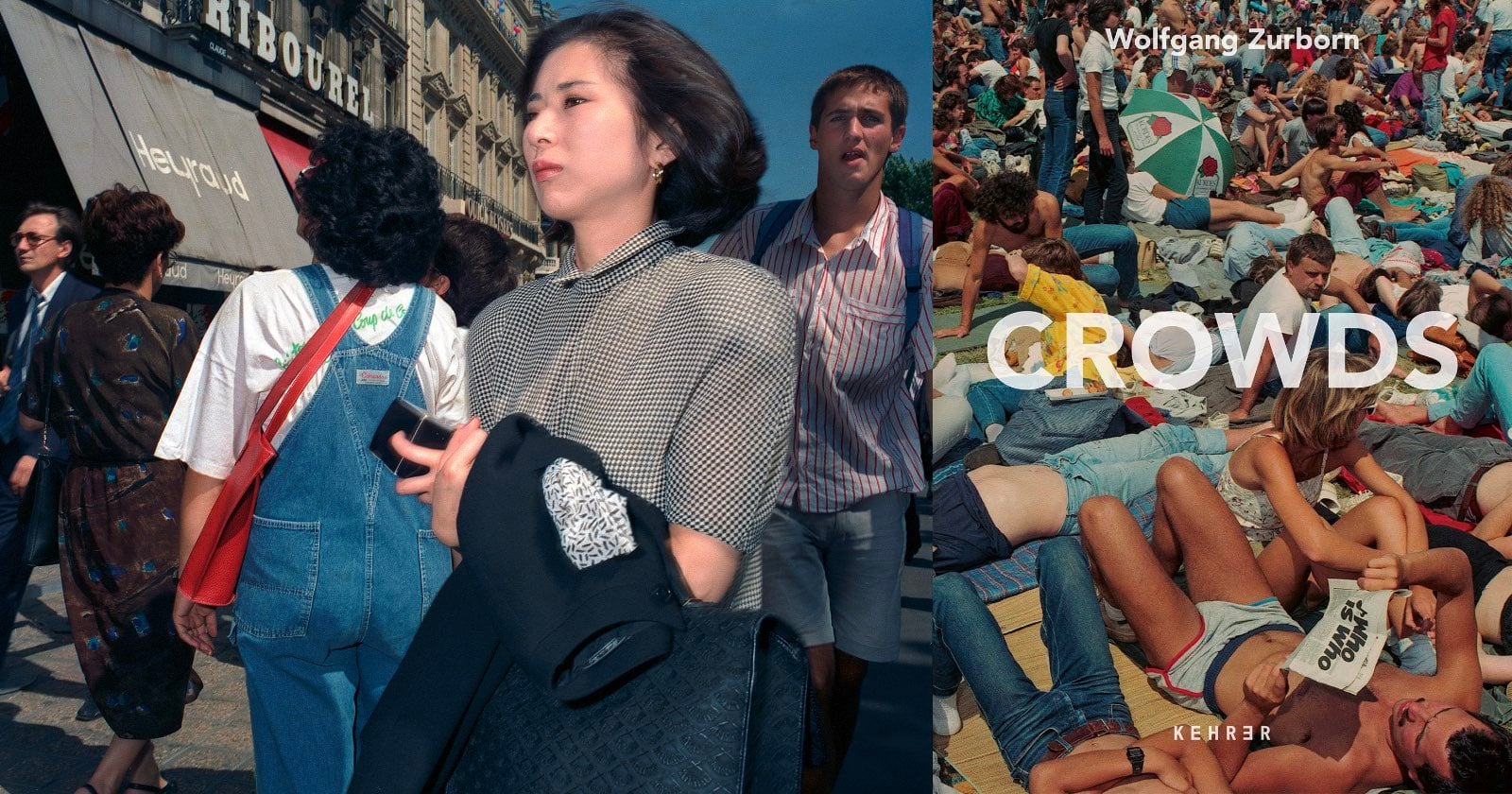
For more than four decades, German photographer Wolfgang Zurborn has traversed the globe with a camera, capturing the kinetic energy of public life. His latest endeavor, a comprehensive photobook titled Crowds published by Kehrer Verlag, serves as a retrospective of his work from the 1980s and 1990s. The collection features hundreds of digitized analog color negatives, many of which have remained unseen by the public until now. Through these images, Zurborn offers a nuanced exploration of a society in transition, documenting the subtle interplay between mass culture, social conditioning, and the burgeoning influence of global media during the final decades of the 20th century.
The Genesis of the Archive
The realization of the Crowds project is uniquely tied to the global events of the early 2020s. During the COVID-19 pandemic, as governments enforced strict social distancing measures and lockdowns, public life—the very subject matter of Zurborn’s career—ground to a halt. This forced pause provided the photographer with the time and perspective to revisit his extensive physical archive of analog color negatives.
As he scanned and digitized these materials, Zurborn discovered thematic threads that spanned decades. The images, which depict everything from political demonstrations and religious processions to casual summer gatherings and urban street life, began to coalesce into a narrative about human behavior in public spaces. The resulting book is not merely a chronological account of the late 20th century, but a thematic examination of how individuals navigate the pressures of a crowd.
Visualizing the Societal Shift: 1986–1991
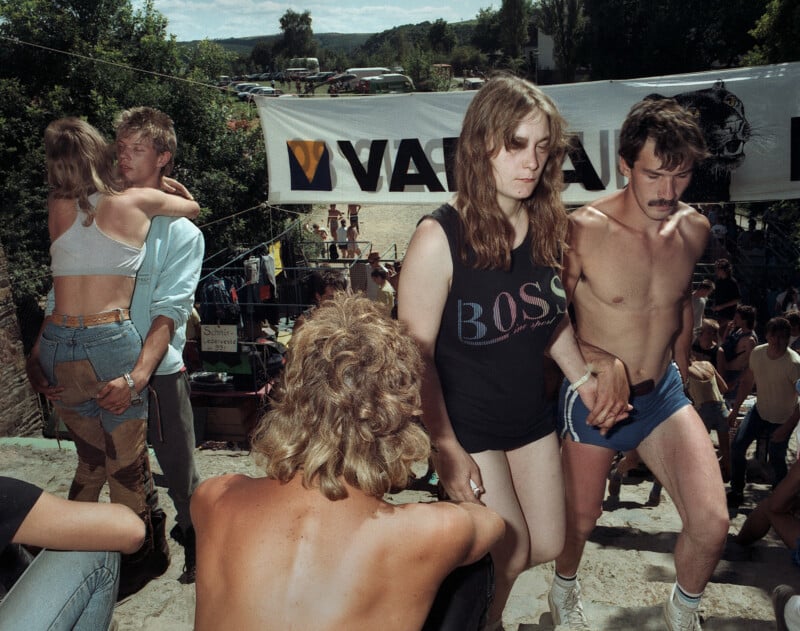
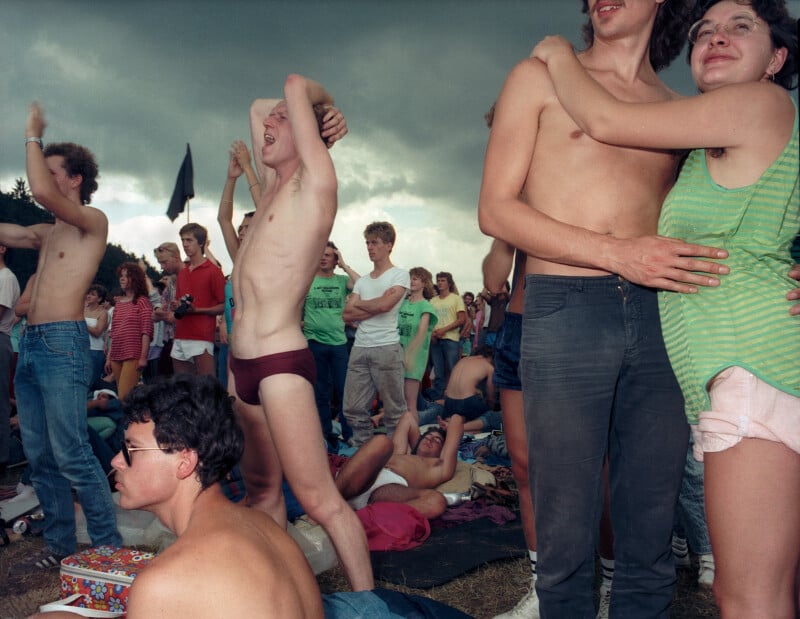
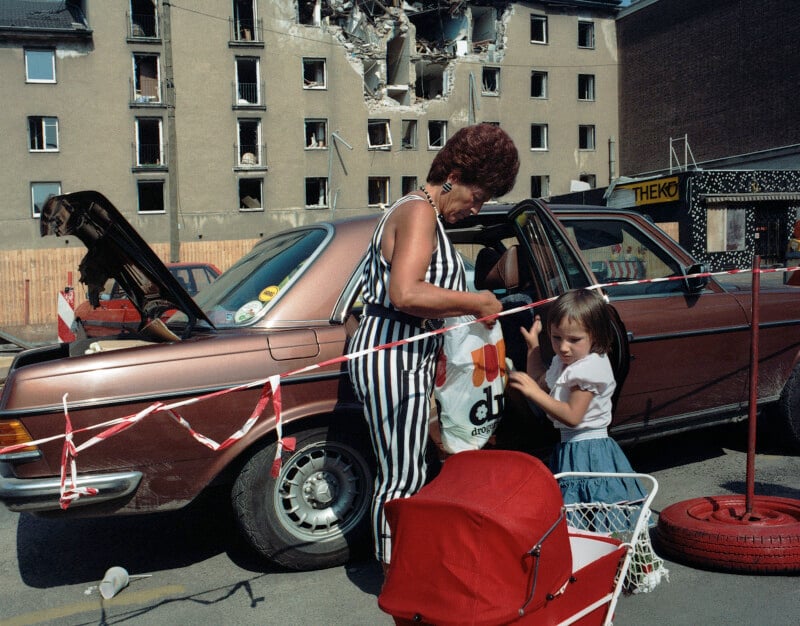
The timeframe covered in the book—roughly 1986 to 1991—was a period of significant geopolitical and cultural transformation in Europe. In 1986, the Wackersdorf fuel reprocessing plant protests in West Germany became a flashpoint for environmental activism, drawing thousands to demonstrations that Zurborn captured with a keen eye for the tension between the individual and the state. By 1989, the fall of the Berlin Wall and the shifting political landscape in Paris signaled the end of the Cold War era, while the early 1990s in Cologne reflected a consumer-driven culture emerging from these historical shifts.
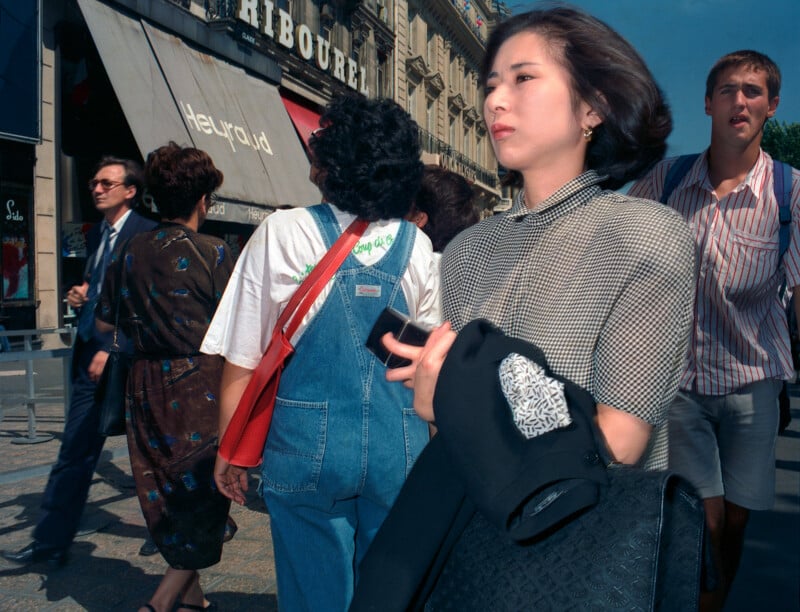
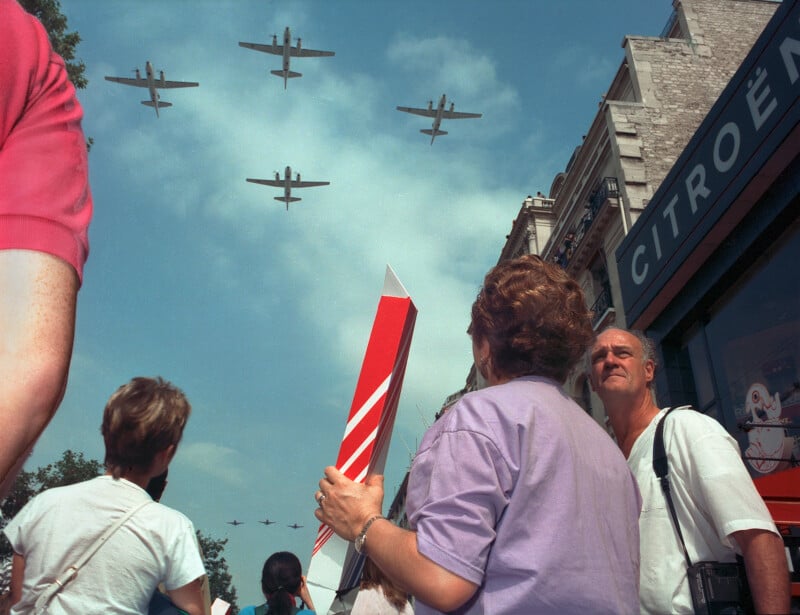
Zurborn’s work captures these moments not by focusing on the leaders or the headlines, but by highlighting the ordinary people caught in the current of history. Whether it is a group of young people gathered at a festival or a woman navigating a busy Parisian thoroughfare, his images capture the intersection of personal identity and group dynamics.
Analytical Approach to Street Photography
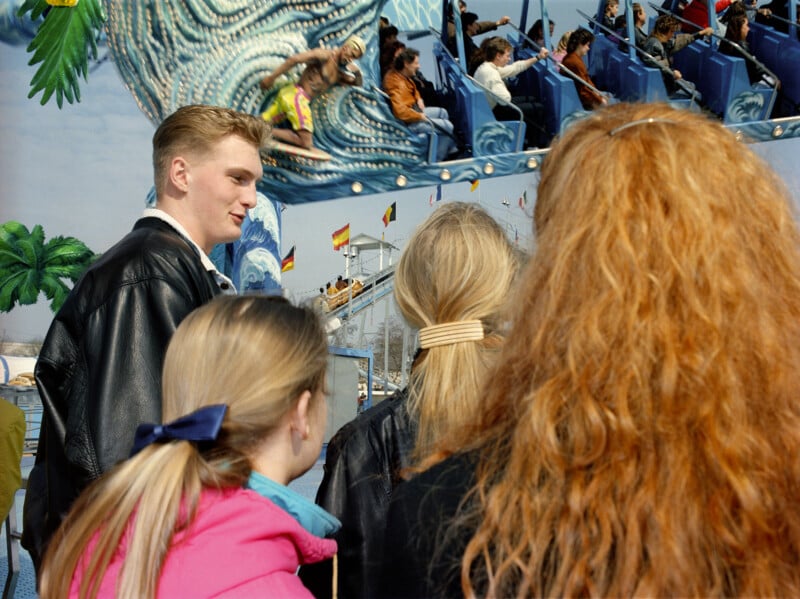
Zurborn’s technical approach is deeply rooted in the tradition of color street photography, which prioritizes the dense, often chaotic reality of public space. Unlike photographers who isolate their subjects to convey a specific, singular narrative, Zurborn embraces the "visual noise" of the environment. His compositions frequently layer foreground and background elements, creating a complex visual dialogue that forces the viewer to search the frame for meaning.
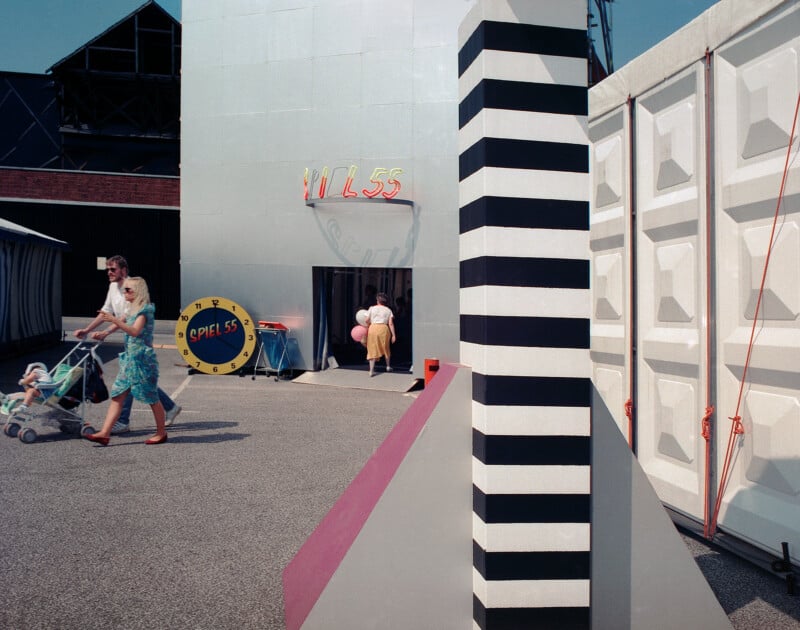
This technique is reflective of the era he documented. The 1980s and 90s saw an explosion in media consumption; the rise of television, the expansion of advertising, and the early stages of a hyper-connected world began to reshape how people interacted in public. Zurborn’s photography captures the physical manifestation of this conditioning. The subjects in his photos often seem to be moving through a world saturated with signs, banners, and modern infrastructure, mirroring the sensory overload that defined the turn of the millennium.
Contextualizing Human Behavior
In the study of sociology, the concept of the "crowd" has long been a subject of debate. From Gustave Le Bon’s early 20th-century theories on the "group mind" to contemporary observations of digital-era social behavior, the ways in which individuals submerge their identity into a collective body remain a key area of study. Zurborn’s photographs provide a visual record of this phenomenon as it manifested in real-world, non-digital spaces.
By documenting religious processions, sports events, and political rallies, Zurborn highlights the shared gestures and patterns of movement that occur when individuals are brought together by a common purpose or location. His work suggests that despite the apparent chaos of a crowd, there is an underlying structure and order dictated by the environment and the prevailing social norms of the time.
The Role of Media and Consumerism
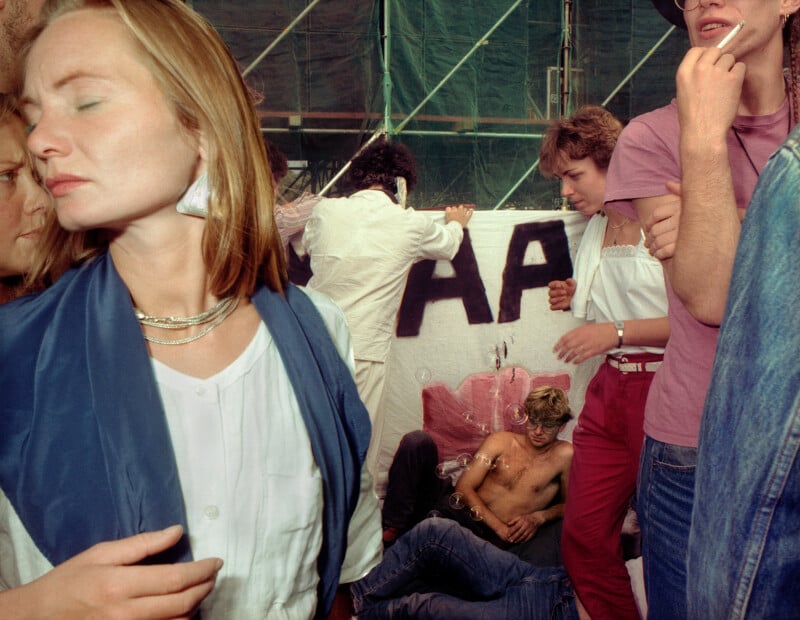
A central theme throughout Crowds is the pervasive influence of media on daily life. Many of the images feature prominent branding, signage, and the visual language of commercial enterprise. For instance, in his photos taken in Cologne and Paris, the architecture and street furniture are often as prominent as the people, suggesting that modern urban life is as much about navigating a landscape of symbols as it is about social interaction.
This serves as a critique—or at the very least, a reflection—of the era’s trajectory toward globalized consumerism. As the 1980s progressed, the aesthetic of public life became increasingly standardized. Zurborn’s archival work serves as a reminder of how quickly these environments changed and how, even then, the individual was constantly negotiating their autonomy against the backdrop of an increasingly managed, corporate-facing world.
Implications of the Archive
The release of Crowds provides historians and photography enthusiasts with a valuable resource for understanding the aesthetic and social character of late 20th-century Europe. In an age where digital photography has made images ephemeral and ubiquitous, the deliberate, physical nature of Zurborn’s analog negatives—and his subsequent curation of them—adds a layer of historical gravitas.
Furthermore, the project’s origin during the pandemic offers a poignant contrast. The images depict a time of "overstimulation" and intense public proximity, standing in stark opposition to the isolation experienced by the world in 2020. By revisiting these images during a time of global silence, Zurborn allows the modern viewer to reconsider the value of public gathering and the complexity of the "social contract" that defines our interactions in communal spaces.
Technical Craftsmanship and Editorial Vision
The production of the book, handled by Kehrer Verlag, emphasizes the quality of the original color negatives. Zurborn’s mastery of color theory—often utilizing the bright, saturated hues typical of 1980s and 90s film stock—enhances the vibrancy of the scenes. His ability to balance the unpredictability of everyday life with a structured, artistic frame is what distinguishes his work from mere documentary journalism.
As the editor of his own archive, Zurborn chose to present the images without imposing a singular, rigid interpretation. This editorial choice invites the viewer to participate in the act of observation, drawing their own conclusions about the societal patterns depicted. The book functions as a visual essay, encouraging a slow, methodical engagement with each page.
Conclusion and Availability
Wolfgang Zurborn’s Crowds is more than a nostalgic look back at a previous century; it is a profound exploration of human social behavior and the environments we build to contain it. By blending the spontaneity of street photography with a disciplined, analytical eye, Zurborn has produced a work that is both an important historical record and a compelling piece of art.
The book is currently available for purchase through the publisher’s website and select retailers. For those interested in the history of photography, sociology, or the cultural landscape of the late 20th century, Crowds offers an essential and immersive experience. As the world continues to navigate the complexities of public interaction in the 21st century, Zurborn’s retrospective provides a vital baseline for understanding how we once gathered, how we behaved, and how the influence of our surroundings has shaped the people we have become.
Note: PetaPixel articles may include affiliate links; we may earn a commission if you purchase through one.

