


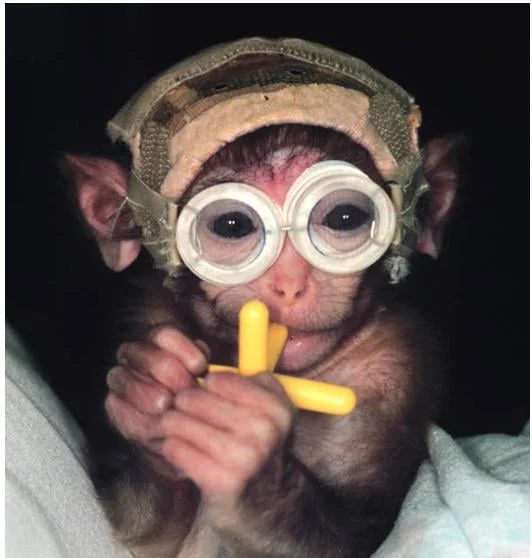
For nearly thirty years, University of Washington (UW) researcher Mark Walton has directed a controversial program of primate experimentation, drawing millions of dollars in public funding while facing escalating criticism from animal welfare organizations and scientific watchdogs. Newly uncovered public records, obtained through Freedom of Information Act requests by People for the Ethical Treatment of Animals (PETA), offer an unprecedented look into the inner workings of Walton’s laboratory at the Washington National Primate Research Center (WaNPRC). The documents reveal a pipeline of invasive procedures performed on infant and adult macaques, alongside internal admissions regarding the professional pressures to maintain continuous experimentation.
The revelations have reignited a broader, decades-long debate concerning the ethics, utility, and financial stewardship of animal-based biomedical research at public universities. While defenders of such facilities argue that primate models remain a cornerstone for translational medicine and neuroscience, critics contend that institutional inertia and grant-dependent funding structures perpetuate obsolete methodologies that yield little direct relevance to human physiology.
Main Facts of the Investigation
The recently disclosed records focus on a series of visual and neurological experiments overseen by Walton at the Seattle-based research hub. According to the documentation, the methodology involves separating infant rhesus macaques from their mothers within days of birth. Following separation, subjects are subjected to a range of sensory deprivation or alteration techniques.
Among the primary procedures detailed in the lab logs are the fitting of specialized, vision-distorting goggles worn continuously for the first three months of life, and the surgical severing of extraocular tendons. As the subjects mature, subsequent surgeries involve the breaching of the cranium to install chronic recording chambers, coupled with the implantation of electromagnetic coils directly into the ocular tissue.
During testing sessions, the animals are secured in restraint chairs via surgically anchored head posts. Placed in darkened testing chambers, the restrained primates are exposed to visual stimuli on a screen, receiving liquid rewards such as applesauce when their gaze fixes on designated points. The primary data collected consists of high-precision recordings tracking ocular motility and neural spike trains.
Internal correspondence and meeting minutes recovered from the facility reveal candid internal assessments regarding the motivation behind the continuous research cycle. In one notable entry, Walton noted the administrative and professional necessity of maintaining active protocols, stating that publication output is tied directly to lab funding security and the preservation of institutional square footage.
Chronology of the Controversy
The scrutiny facing the Washington National Primate Research Center is part of a multi-decade arc of regulatory oversight, public protest, and institutional defense.
The WaNPRC has operated for over six decades as one of several federally funded National Primate Research Centers across the United States, designed to support biomedical studies ranging from infectious disease to reproductive biology and neuroscience. Over the past twenty years, however, the center has faced intensifying public scrutiny regarding animal housing conditions, veterinary oversight, and specific experimental protocols.
In the late 2000s and 2010s, animal advocacy groups began aggressively targeting institutional transparency at WaNPRC, utilizing public records laws to uncover mortality rates, veterinary inspection reports, and internal communications. These efforts documented various compliance issues, including accidental injuries, handling errors, and housing deficiencies.
The most recent phase of documentation, finalized and released in late 2026, marks a significant shift by providing direct insight into the psychological toll on subjects and the internal calculus of principal investigators. The logs specifically highlight instances of psychological distress and self-directed aggression among specific subjects, identified in records as Sonic and Goose. Documentation from laboratory meetings indicates that these animals engaged in severe self-biting behaviors, prompting administrative reviews focused primarily on the potential compromise of experimental utility rather than solely on behavioral rehabilitation.
Supporting Data and Behavioral Indicators
Primate behavior laboratories often monitor for signs of psychological trauma, commonly referred to as zoochosis or captivity-induced distress. In laboratory settings, social deprivation—particularly the removal of infants from maternal care—disrupts critical neurodevelopmental pathways, often resulting in stereotypic behaviors, anxiety, and self-mutilation.
Data extracted from the Walton lab logs show that self-injurious behavior (SIB) among the cohort required formal discussion among research staff. Historical veterinary data across primate facilities suggest that while a small percentage of captive macaques spontaneously exhibit SIB, the incidence increases in environments featuring early maternal separation and prolonged physical restraint.
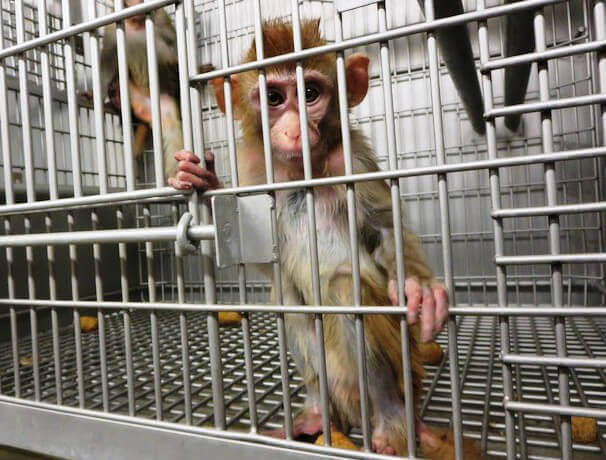
Internal notes from Walton suggested an acknowledgment that environmental or operational factors within the primate center could be exacerbating these stress patterns. Despite these observations, records indicate that the protocols involving the affected animals were permitted to proceed following minor procedural adjustments, rather than permanent removal from the testing pipeline.
Funding Structures and Institutional Pressures
The financial architecture of academic research heavily influences the longevity of specific laboratory programs. Principal investigators at major research universities typically rely on competitive grants from federal agencies, such as the National Institutes of Health (NIH), to sustain their laboratories, pay staff salaries, and cover indirect institutional overhead costs.
Critics argue that this funding model creates a perverse incentive structure. Because grants are frequently tied to continuous publication records and active data generation, researchers may face structural disincentives to wind down or pivot away from established animal models—even when alternative methodologies emerge.
Walton’s documented observation that his lab space and funding depend on continuous experimentation reflects a broader systemic reality within academic science. The pressure to secure multi-million-dollar grants can overshadow critical evaluations of a methodology’s scientific utility, particularly in fields like basic visual neuroscience, where computational models and non-invasive human imaging technologies have advanced significantly over the past thirty years.
Scientific Debate and Alternative Methodologies
The utility of non-human primate models in translating basic science to human clinical applications remains a subject of intense debate within the scientific and medical communities.
Proponents of animal research maintain that the complex neuroanatomy and visual processing systems of Old World monkeys offer an irreplaceable bridge for understanding human neurological disorders, sensory processing, and ocular mechanics. From this perspective, invasive recordings provide micro-level data regarding neural circuits that cannot be ethically or technically obtained from human subjects.
Conversely, a growing contingent of biomedical researchers, ethicists, and advocacy coalitions argue that the physiological and genetic differences between macaques and humans often limit the direct translational value of such studies. Advances in functional magnetic resonance imaging (fMRI), magnetoencephalography (MEG), and sophisticated computational neural networks have provided researchers with non-invasive tools to study human visual processing in real time.
Furthermore, critics emphasize that animal models frequently fail to accurately predict human clinical outcomes in complex systemic conditions, leading to calls for a phased transition toward human-relevant testing platforms, including microphysiological systems, organoids, and advanced computational simulations.
Institutional Responses and Broader Implications
In response to the growing wave of documentation and public campaigns, representatives for the University of Washington and the WaNPRC have consistently defended their operations, emphasizing adherence to federal animal welfare guidelines, oversight by Institutional Animal Care and Use Committees (IACUC), and compliance with the federal Animal Welfare Act.
Institutional defenders argue that all research protocols undergo rigorous ethical review to ensure that the scientific benefits outweigh the distress experienced by the subjects, and that veterinary staff monitor animal health continuously. They contend that public campaigns often mischaracterize complex, peer-reviewed medical research designed to combat human visual impairments and neurological diseases.
However, the release of these internal records has amplified broader questions regarding governance, transparency, and public accountability at taxpayer-funded research institutions. As public opinion shifts toward greater sensitivity regarding animal welfare, universities housing national primate research centers face increasing pressure to modernize their oversight mechanisms, expand transparency, and invest more heavily in non-animal alternatives.
The implications of the Walton laboratory disclosures extend beyond a single research program at the University of Washington. They serve as a focal point for an ongoing national dialogue concerning how the scientific community balances the pursuit of basic knowledge with ethical obligations to sentient subjects, and how funding structures can be adapted to foster innovation without perpetuating archaic methodologies.

