


The United Nations Environment Programme (UNEP) has issued a stark warning regarding the trajectory of global climate policy, stating that current international commitments are insufficient to maintain the 1.5°C threshold established by the Paris Agreement. In its landmark Limiting Overshoot report, released on September 30, 2026, the agency highlights that the global community is now locked into a period of "overshoot, peak, and decline." This trajectory poses profound risks to the stability of ecosystems, food security, and human health, as the longer temperatures remain above the 1.5°C target, the higher the probability of triggering irreversible environmental thresholds.
The report serves as a definitive wake-up call for policymakers, emphasizing that ecosystems fundamentally altered by heat, drought, or systemic failure will not spontaneously recover. As the window for mitigation narrows, the focus must shift toward managing the cascading impacts of a warming planet on the world’s most vulnerable species, particularly migratory birds, which act as "canaries in the coal mine" for the health of global biodiversity.
A Chronology of Escalating Crisis
The urgency surrounding the current climate narrative is underscored by a series of alarming ecological events over the past decade. The 2026 summit in Nairobi, which hosted the BirdLife International Partnership Meeting and the second Global Flyways Summit, was convened against a backdrop of rapid environmental degradation.
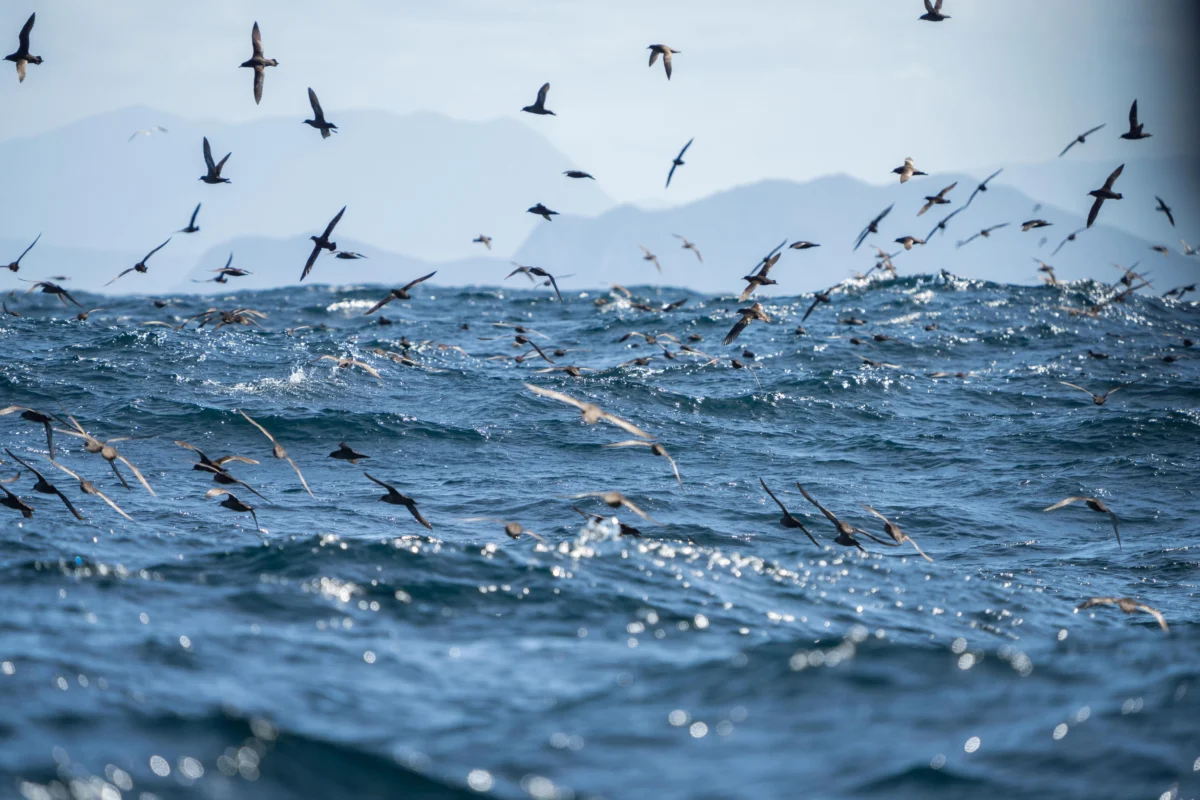
Between 2016 and 2019, Australia recorded over 1,000 human deaths directly attributable to extreme heatwaves, a statistic that serves as a grim baseline for the human cost of a warming climate. This was followed by the devastating 2023–2024 period, where a single marine heatwave resulted in the mortality of over 600,000 seabirds. These incidents are not isolated anomalies; they represent a trend of intensifying marine heatwaves that disrupt food webs from the bottom up, forcing shifts in bird migration patterns and leading to localized extinctions.
The recent Nairobi meetings, held in late September 2026, synthesized these regional tragedies into a global directive. Scientists and NGO leaders reported that 45% of all migratory bird species are currently in decline, with one in nine facing the immediate threat of extinction. These meetings were the culmination of years of data collection by the BirdLife Partnership, which spans more than 120 countries, providing a comprehensive, real-time look at how climate change is forcing birds to abandon historical stopover sites and breeding grounds.
The Science of Overshoot and Irreversibility
The Limiting Overshoot report defines "overshoot" as the period during which global temperatures exceed the 1.5°C limit before eventually returning to lower levels through aggressive decarbonization and carbon sequestration. The core danger, as identified by climatologists and ecologists, is that biological systems do not possess the same elasticity as economic systems.

When an ecosystem experiences a "regime shift"—such as the permanent loss of coral reefs or the drying of critical wetlands—the ecological services provided by that system, such as carbon storage, water filtration, and pollination, are lost. The report warns that the "peak" of the overshoot period is the most dangerous window; if global temperature levels remain too high for too long, the feedback loops triggered will render even successful future cooling efforts insufficient to restore the biodiversity that was lost during the interim.
For migratory birds, the challenge is twofold: the loss of habitats at the start and end of their journeys, and the mismatch between their arrival times and the peak availability of food resources. As springs arrive earlier due to rising temperatures, insects emerge and peak before birds arrive to nest, leading to a "phenological mismatch" that lowers reproductive success rates across entire populations.
Official Responses and the Nairobi Flyways Declaration
In response to these findings, participants at the Nairobi Global Flyways Summit signed the Nairobi Flyways Declaration. This document is a formal commitment to bridge the gap between international environmental treaties and national-level implementation.
HIH Princess Takamado, Honorary President of BirdLife International, noted the necessity of multilateralism in this era of crisis. "Climate change is our common foe, and it is a challenge that no country can solve alone," she stated. "Protecting biodiversity requires people and institutions to work together rather than separately."
This sentiment is echoed by international financial institutions, which are increasingly acknowledging that conservation is an economic imperative. The World Bank, the Asian Development Bank, and the Development Bank of Latin America and the Caribbean (CAF) have begun collaborating with organizations like the National Audubon Society to mobilize billions of dollars. This capital is earmarked for the conservation of critical flyways and the implementation of "nature-positive" renewable energy projects.
Strategic Integration: The Role of Technology and Policy
A significant portion of the discourse at the 2026 Summit centered on the "Energy Transition Paradox." While renewable energy is vital to limiting the overshoot, the infrastructure required—such as wind farms and solar arrays—can often be sited in areas that disrupt critical wildlife corridors.
To mitigate this, BirdLife International is promoting the use of AVISTEP, a spatial planning tool designed to integrate biodiversity considerations directly into the energy planning process. By identifying "no-go" zones for infrastructure based on the movement of migratory species, governments can accelerate the transition to clean energy without causing irreversible harm to the ecosystems that serve as natural carbon sinks.

Furthermore, the Partnership is actively assisting nations in aligning their national biodiversity strategies with climate adaptation plans. For instance, in the Pacific, the KIWA INSPIRE project is utilizing invasive species management to bolster the resilience of coastal Key Biodiversity Areas. By protecting these natural buffers, nations like Fiji and Palau are securing their coastlines against storm surges while simultaneously preserving carbon-sequestering mangroves and seagrass beds.
Implications for the "Triple-COP" Year
The year 2026 is being framed as a pivotal "triple-COP" year, referring to the high-stakes meetings of the Rio Conventions on climate change, biodiversity, and land degradation. The consensus among delegates is that the siloed approach of the past—where climate policy was developed independently of nature policy—must end.
H.E. Murat Kurum, the COP31 President-Designate, emphasized that strengthening cooperation across the Rio Conventions is the only practical pathway to achieving policy coherence. "A stronger Rio Synergies approach can help advance progress across all three global environmental conventions while supporting sustainable development," Kurum remarked.
The integration of the Belém Adaptation Indicators, which utilize the Red List Index and the Red List of Ecosystems, provides a standardized metric for governments to track their progress. By adopting these indicators, nations can better quantify the impact of their policies on ecosystem health, ensuring that climate actions are not only lowering emissions but also effectively halting the decline of endangered species.
Conclusion: Turning Ambition into Implementation
As the global community enters the final years of the decade, the emphasis is shifting from the establishment of targets to the rigorous, transparent implementation of policy. The Limiting Overshoot report, combined with the momentum from the Nairobi Flyways Summit, creates a roadmap for this transition.
The success of these initiatives depends on the ability of governments to treat nature as an ally in the climate struggle rather than a secondary concern. The evidence is clear: by investing in the restoration of flyways, protecting Key Biodiversity Areas, and ensuring that the renewable energy transition is spatially sensitive, the world can navigate the dangerous period of climate overshoot. However, as the report concludes, the time for half-measures has passed. The biological toll of a delayed response is already being paid in the form of mass mortality events and declining species, making the alignment of climate and nature policies the most urgent task for the international community today.

