


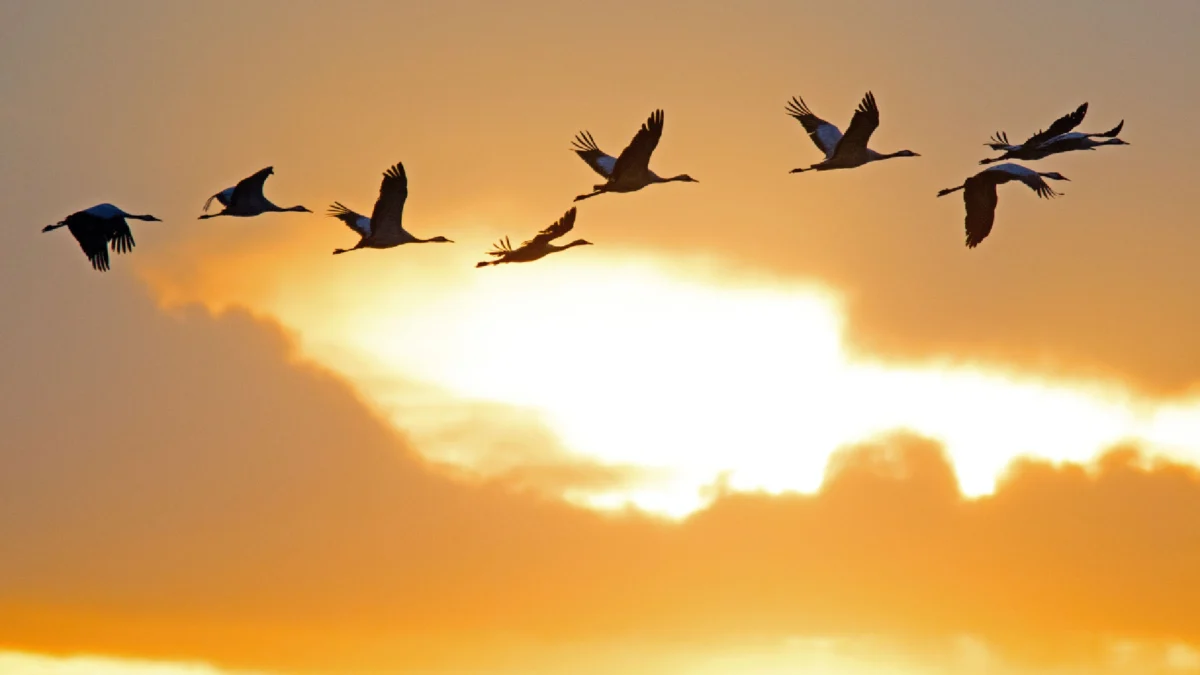
Every autumn, as the sun dips below the horizon and the evening chill sets in, a silent, continental-scale phenomenon begins. Millions of birds take to the skies, embarking on perilous journeys that can span thousands of miles. To the human observer on the ground, the night sky appears empty and tranquil; however, to the modern ornithologist, the atmosphere is teeming with avian life. Tracking these nocturnal voyagers, which often fly hundreds or even thousands of meters above the earth, has long been a challenge for science. Yet, the solution to this riddle lies in a technology originally designed for the battlefield: the weather radar network.
The use of weather surveillance radar to monitor avian movement represents one of the most successful intersections of military technology and biological research in history. By repurposing systems originally intended to track precipitation and storm fronts, scientists have gained unprecedented insights into the timing, intensity, and routing of migratory songbirds, raptors, and waterfowl.
A Legacy of "Angels": The Origins of Radar Ornithology
The history of radar ornithology dates back to the early 1940s, during the height of the Second World War. British radar operators, tasked with monitoring the skies for incoming enemy aircraft, frequently reported mysterious "echoes" on their screens. These signals did not match the flight patterns of planes, nor did they correspond to meteorological phenomena like rain clouds or fog. These elusive blips were colloquially dubbed "angels" by the operators, a term that became entrenched in the lexicon of early radar science.
Following the conclusion of the war, as radar technology became more sophisticated, researchers began to suspect that these "angels" were, in fact, biological. By the 1950s and 60s, systematic studies confirmed that the signals were caused by flocks of birds, insects, and bats. This discovery shifted the paradigm of ornithological research, moving it from localized, ground-based observations to a macro-level understanding of continental migration. Today, this legacy continues through the utilization of the Next-Generation Radar (NEXRAD) network—specifically the WSR-88D system—which provides high-resolution data that allows researchers to visualize the movement of billions of birds across the United States with remarkable precision.

The Mechanics of Nocturnal Migration
While many species are diurnal migrants, the vast majority of songbirds—including warblers, thrushes, and sparrows—prefer the cover of darkness. This nocturnal strategy is driven by a complex interplay of evolutionary pressures. During the night, the air is typically more stable and cooler, which helps birds manage their body temperature during the strenuous physical exertion of long-distance flight. Furthermore, the darkness provides a cloak of protection from aerial predators, such as hawks and falcons, which rely on keen vision to hunt.
By traveling at night, these birds reserve their daylight hours for critical survival activities: foraging for insects and seeds to replenish their fat reserves, resting, and navigating through unfamiliar territories. This pattern creates a fascinating, albeit invisible, "traffic" flow in the upper atmosphere. On a peak autumn night, it is estimated that upwards of one billion birds may be in flight simultaneously across the lower 48 states. This staggering volume means that, at any given moment, tens of thousands of birds might be passing over a single metropolitan area while the residents below sleep, entirely unaware of the biological spectacle occurring overhead.
Technological Integration: BirdCast and Predictive Modeling
The modern era of migration monitoring is spearheaded by initiatives such as BirdCast, a multi-institutional collaboration involving the Cornell Lab of Ornithology, Colorado State University, and the University of Delaware. This project leverages the vast data stream from the NEXRAD network to produce real-time migration maps and, perhaps more significantly, predictive forecasts.
By integrating radar observations with localized weather data, such as wind speed, barometric pressure, and temperature, scientists have developed models that can forecast major migration pulses. Birds are expert navigators of the atmosphere, often waiting for favorable tailwinds to reduce the energy expenditure required for their arduous journeys. When a cold front moves through, providing a strong northern tailwind, radar signals often reveal an immediate surge in migration intensity.
This predictive capability has transformed bird conservation from a reactive discipline into a proactive one. By knowing when and where large-scale movements are likely to occur, researchers can identify high-traffic corridors and provide early warnings to municipal governments and local stakeholders.

Implications for Urban Conservation and Light Pollution
One of the most pressing implications of modern radar data is the light pollution crisis. Artificial light at night (ALAN) is a significant hazard for migrating birds. During nocturnal flights, birds are frequently drawn toward the high-intensity illumination of urban centers, where they can become disoriented, leading to collisions with skyscrapers, windows, and other infrastructure.
The data provided by systems like BirdCast offers a direct mechanism to mitigate these threats. When a major migration event is forecasted, conservation groups can issue "Lights Out" alerts to city officials and property managers. These alerts encourage the reduction of non-essential exterior lighting during the peak hours of 11:00 PM to 6:00 AM. This simple, data-driven intervention has been shown to significantly reduce the risk of bird strikes, providing a tangible example of how high-tech surveillance can lead to low-tech, high-impact conservation solutions.
The Broader Scientific Impact
The ability to track birds via radar has fundamentally altered our understanding of avian ecology. Beyond simply confirming migration routes, these data allow scientists to monitor long-term shifts in migration timing. As climate change continues to alter seasonal temperatures and resource availability, researchers are using these historical radar datasets to study whether birds are shifting their migration windows to match the changing phenology of the landscapes they traverse.
Furthermore, the integration of radar data with acoustic monitoring and citizen science platforms—such as eBird—creates a holistic picture of avian population health. While radar provides the "big picture" of volume and direction, ground-based reports help identify the specific species involved. This combined approach allows for a level of analytical rigor that was unimaginable to the radar operators of the 1940s.
Looking Toward the Future
As the technology continues to evolve, the resolution and accuracy of radar-based migration tracking are expected to improve. Future developments may include the integration of artificial intelligence to better distinguish between different types of biological "noise," such as separating bird flocks from dense swarms of migrating insects or bats. Additionally, the global expansion of radar networks will allow for a more cohesive understanding of migration on a hemispheric scale, linking the wintering grounds of Central and South America with the breeding grounds of North America.

The study of migration is, at its heart, a study of resilience. Despite the mounting challenges of habitat loss, climate change, and urban expansion, billions of birds continue to follow the ancient, instinctual call to migrate. The fact that we can now observe this journey, quantify its scale, and intervene to protect these travelers is a testament to the ingenuity of the scientific community.
In conclusion, the marriage of weather radar and ornithology has bridged the gap between the invisible sky and our terrestrial perspective. What began as a confusing anomaly on a wartime radar screen has blossomed into an essential tool for biodiversity conservation. As we look to the night skies this autumn, we are no longer looking into a void, but rather witnessing one of the most massive and vital migrations on the planet, armed with the knowledge of where our feathered counterparts are headed and how we might help them reach their destinations safely.

