


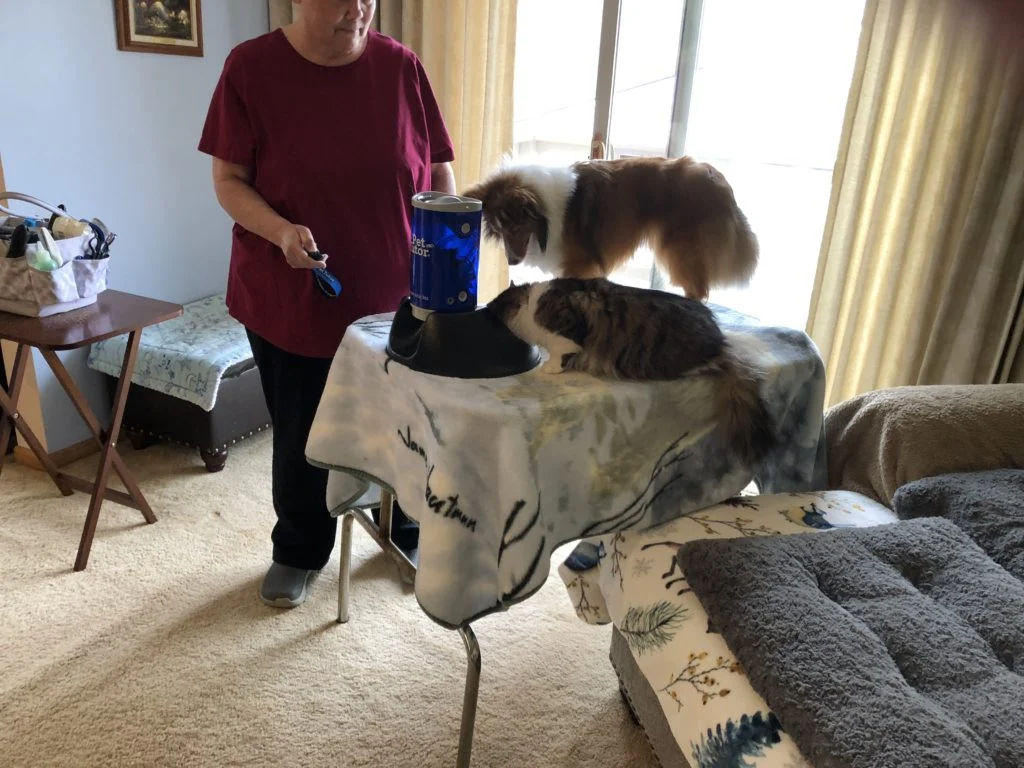
The landscape of animal training technology witnessed a notable development several weeks ago at the annual Clicker Expo in Arlington, Virginia, where Smart Animal Training Systems unveiled a new, smaller iteration of its popular Pet Tutor feeder. This device, designed to streamline positive reinforcement training, quickly garnered attention from industry professionals, including renowned animal behaviorist Dr. Deborah Jones, Ph.D., who highlighted its potential to further revolutionize cooperative care practices.
Clicker Expo: A Hub for Progressive Animal Training
Clicker Expo, a premier international conference, serves as a vital platform for animal training professionals, researchers, and enthusiasts to exchange knowledge, discuss advancements in behavior science, and explore innovative tools. Known for its focus on positive reinforcement and humane training methods, the event consistently attracts leading figures in the field, making it an ideal venue for showcasing new technologies that align with its progressive ethos. The 2019 event, attended by hundreds of delegates, provided a fertile ground for the introduction of products designed to enhance the human-animal bond through ethical training.
It was within this dynamic environment that Wes and Amanda from Smart Animal Training Systems introduced the compact Pet Tutor. While functionally identical to its larger predecessor, the reduced size immediately captivated attendees. Dr. Jones, a prolific author and educator in positive reinforcement training, was among the first to recognize the practical advantages of the smaller unit, expressing an immediate interest in its potential applications. Her initial, somewhat informal, assessment of its "cuteness" quickly evolved into a deeper appreciation for its functional benefits, particularly for her extensive travel and diverse training scenarios.
Smart Animal Training Systems: Innovating the Pet Tech Landscape
Smart Animal Training Systems has established itself as a key player in the pet technology sector, specializing in automated reward delivery systems. Their flagship product, the original Pet Tutor, is a remote-controlled treat dispenser designed to facilitate precise timing in positive reinforcement training. By integrating a light and an auditory marker with automatic food delivery, the Pet Tutor minimizes human error and fumbling, allowing trainers to focus intently on observing animal behavior. This technology has been widely adopted by professional trainers and dedicated pet owners seeking to enhance the efficiency and effectiveness of their training protocols.
The introduction of a smaller Pet Tutor is a strategic move by the company, reflecting a growing trend in pet technology towards more portable, user-friendly, and adaptable devices. The decision to miniaturize the feeder, while maintaining its core functionality, addresses specific logistical challenges faced by trainers and pet owners. This product evolution underscores Smart Animal Training Systems’ commitment to continuous innovation, responding to market demands for greater convenience without compromising performance. The company’s representatives, Wes and Amanda, noted that the enthusiastic reception at Clicker Expo affirmed the demand for such a product, signaling its imminent commercial availability.
Design and Functional Advantages of the Compact Feeder
The primary advantages of the smaller Pet Tutor are rooted in its reduced footprint and enhanced portability. For individuals like Dr. Jones, who frequently travel with their animals for training, demonstrations, or competitions, space efficiency is paramount. A smaller feeder can be easily stowed in a vehicle already packed with equipment, eliminating the need to compromise on essential tools. This increased portability means that the benefits of automated positive reinforcement can be extended to a wider array of locations and situations, from hotel rooms to outdoor training fields, ensuring consistency in training environments.
Furthermore, the compact size offers significant benefits for in-home use, particularly within crates or smaller confinement areas. Many pet owners utilize automated feeders to create positive associations with crates, helping to reduce anxiety and promote calm behavior. A smaller feeder occupies less valuable space, making it more suitable for smaller dog breeds or cats, and ensuring that the animal still has ample room to move comfortably. This subtle design change can have a substantial impact on the comfort and well-being of animals during crating, a common practice for safety, travel, and behavioral management.
Another practical benefit highlighted by Dr. Jones is the reduction in food waste. Larger feeders, while accommodating for extensive training sessions, often hold more treats than are needed for typical daily training. This can lead to stale food or the necessity of frequent emptying and refilling, which can be inefficient. The smaller capacity of the new feeder encourages more appropriate portioning, ensuring that treats remain fresh and minimizing the likelihood of discarding unused food. This small but significant detail contributes to a more sustainable and cost-effective training practice.
Enhancing Positive Reinforcement and Cooperative Care
The core utility of the Pet Tutor, in both its original and compact forms, lies in its ability to streamline positive reinforcement training. This method, scientifically proven to be the most effective and humane approach to animal training, relies on rewarding desired behaviors to increase their likelihood of recurrence. The Pet Tutor automates the delivery of a primary reinforcer (food) immediately following a conditioned reinforcer (the marker sound/light), ensuring precise timing crucial for effective learning. This eliminates the delay often associated with manual treat delivery, where trainers might fumble for food, inadvertently reinforcing unintended behaviors.
Dr. Jones particularly emphasizes the Pet Tutor’s utility in cooperative care work. Cooperative care, a specialized branch of training, focuses on teaching animals to willingly participate in their own handling, grooming, and veterinary procedures. This approach aims to minimize stress and fear during typically intrusive or uncomfortable experiences by building positive associations and empowering the animal with choice. For example, an animal can be trained to voluntarily present a paw for nail trims or hold still for ear cleaning, rather than being forced or restrained.

In her demonstrations, Dr. Jones illustrated how the compact Pet Tutor facilitated the introduction of a small dog named Pixel to the device. By setting the feeder on a table, she ensured a non-threatening initial experience, allowing Pixel to learn that treats appeared without direct interaction with the device. This initial conditioning phase is vital for establishing a positive emotional response to the feeder. Subsequently, Dr. Jones utilized the Pet Tutor to condition Pixel to accept touch, a foundational aspect of cooperative care. By delivering treats immediately after a gentle touch, she created a strong positive association, transforming touch into a predictor of something good.
Ethical Training and the Concept of Consent
Dr. Jones’s training philosophy, particularly evident in her cooperative care work, deeply integrates the concept of consent. She adheres to two fundamental rules: animals must always have the option to disengage if they feel uncomfortable, and their decision to leave must be interpreted as valuable feedback regarding the training approach. This philosophy fosters a two-way communication channel, where the trainer actively "listens" to the animal’s behavior and adjusts their methods accordingly.
This approach aligns with a broader movement within progressive dog training circles advocating for animal agency and choice. By providing an "escape route," trainers empower animals, reducing the likelihood of learned helplessness or suppressed fear responses. Counterintuitively, once animals understand they have the freedom to leave, they often exhibit greater willingness to engage, as their trust in the trainer’s respect for their boundaries increases. Dr. Jones noted that Pixel’s brief disengagement from the grooming table served as immediate feedback, prompting her to modify the intensity of the touch, demonstrating the practical application of these principles. This emphasis on consent not only enhances animal welfare but also strengthens the human-animal bond by building mutual trust and understanding.
Dr. Deborah Jones: A Proponent of Progressive Animal Education
Dr. Deborah Jones, with over 25 years of experience, stands as a prominent figure in the animal training community. A retired psychology professor, she has seamlessly transitioned her academic rigor into the field of animal behavior, championing positive reinforcement-based methods. Her extensive contributions include authoring 12 books on dog training, co-developing several DVD series, and achieving high-level titles with multiple breeds in disciplines such as agility, rally, and obedience.
Currently, Dr. Jones is a faculty member at Fenzi Dog Sports Academy (www.fenzidogsportsacademy.com), an online platform dedicated to providing advanced dog training education. Her commitment to disseminating knowledge and practical skills is further exemplified by her recent launch of a new YouTube channel, "Cooperative Care with Deb Jones." This channel is envisioned as a comprehensive resource, offering short, instructional videos designed to equip pet owners and trainers with the tools needed to prepare their animals for various grooming and veterinary procedures, thereby significantly reducing stress and enhancing compliance. The channel’s focus on practical, actionable advice makes it a valuable addition to the growing body of online educational content for pet owners.
The Broader Impact: Pet Tech Market and Animal Welfare
The introduction of products like the compact Pet Tutor reflects the dynamic growth of the pet technology market, which has seen substantial expansion in recent years. Analysts project continued growth, driven by increasing pet ownership, humanization of pets, and a growing willingness among owners to invest in their pets’ health, well-being, and training. Smart devices for pets, including automated feeders, activity trackers, and remote monitoring systems, are becoming increasingly sophisticated and integrated into daily pet care routines.
The implications of such innovations are far-reaching. For pet owners, these technologies democratize access to advanced training techniques previously reserved for professional trainers. The ease of use and efficiency of automated feeders empower owners to implement consistent, positive reinforcement strategies, leading to better-behaved and happier pets. For professional trainers, these tools offer enhanced precision and the ability to manage multiple training variables more effectively, allowing them to focus on complex behavioral challenges.
Crucially, the widespread adoption of tools like the Pet Tutor, particularly in cooperative care, has a profound impact on animal welfare. By reducing fear, anxiety, and stress during routine handling and veterinary visits, these technologies contribute to a higher quality of life for pets. They also facilitate better veterinary care, as animals that are comfortable and cooperative are easier to examine and treat, potentially leading to earlier diagnosis and more effective interventions. The emphasis on consent-based training, supported by these technological advancements, represents a significant step forward in ethical animal care, promoting respect for animal autonomy and emotional well-being.
Future Outlook for Smart Animal Training Systems and Pet Technology
The positive reception of the compact Pet Tutor at Clicker Expo suggests a strong market demand for smaller, more versatile training aids. As Smart Animal Training Systems prepares for its wider commercial release, it is poised to capture a significant segment of the pet tech market, particularly among travelers, small pet owners, and those seeking to optimize their training efficiency.
The success of such targeted innovations encourages further research and development in the pet technology sector. Future advancements may include even greater integration with smart home systems, AI-driven personalized training programs, and enhanced sensory feedback mechanisms. As technology continues to evolve, its role in fostering stronger, more positive relationships between humans and their animal companions is set to expand, promising a future where humane, effective, and accessible animal training is the norm. The compact Pet Tutor stands as a testament to this ongoing evolution, signaling a new era of convenience and precision in animal behavior modification.

