


The ancient collision of the Indian subcontinent with the Eurasian continent, a geological event that unfolded over 60 million years ago, sculpted the majestic Himalayas, creating the world’s highest peaks. Within these formidable mountain ranges, trapped amidst frigid temperatures at altitudes nearing 8,000 meters, vast reserves of snow and ice have accumulated over millennia, forming the region’s defining glaciers. Today, these frozen reservoirs are not merely geological features; they are the indispensable lifeblood for millions of people and an array of unique wildlife across numerous countries. As the world observes World Water Day, an examination of these critical glacial meltwaters reveals their profound importance for sustaining three iconic Himalayan bird species: the Brown-headed Gull, the Bar-headed Goose, and the Black-necked Crane. These birds, each possessing remarkable adaptations to their high-altitude environment, are intrinsically linked to the fate of the Himalayas’ glaciers, a lifeline increasingly threatened by the accelerating impacts of climate change.
The Glacial Ecosystem: A Foundation for Life
The slow, steady melt of Himalayan glaciers provides a consistent and crucial source of freshwater, feeding a complex network of rivers and high-altitude lakes. This sustained water supply is fundamental to the region’s ecological balance. For human populations, these glacial meltwaters underpin vital agricultural practices, ensuring food security for millions, and are a cornerstone of hydroelectric power generation, fueling economic development. Beyond human sustenance and energy, these water bodies create unique and essential habitats for a diverse range of wildlife, particularly for avian species that have evolved to thrive in the challenging conditions of the high Himalayas.
The ongoing geological processes that formed the Himalayas continue to influence the region’s hydrology. However, the delicate balance of this glacial ecosystem is now being profoundly disrupted by anthropogenic climate change. Rising global temperatures are accelerating the rate of glacial melt, leading to immediate, yet ultimately unsustainable, increases in water flow. This phenomenon, while offering short-term benefits in some instances, portends a future of drastically reduced water availability and habitat loss as glaciers shrink and, in many cases, disappear entirely.
Iconic Avian Inhabitants of the Glacial Realm
Brown-headed Gull: Masters of the High-Altitude Lakes
While commonly associated with coastal environments, the Brown-headed Gull ( Larus brunnicephalus) is a remarkable example of a species that has adapted to a distinctly inland, high-altitude existence. These gulls are frequently observed congregating in significant numbers, often exceeding 100 individuals, on the pristine, cold waters of lakes found across the Tibetan Plateau and the wider Himalayan region. The slow and consistent melt of glaciers is directly responsible for sustaining these expansive, high-altitude lakes and the rivers that connect them.

The abundance of food resources within these glacial-fed water bodies is a key factor in supporting large gull colonies. The nutrient-rich waters teem with fish, providing a reliable food source that allows these birds to flourish. Scientific observations and population surveys indicate that the health and extent of these high-altitude lakes are directly correlated with the breeding success and overall population stability of the Brown-headed Gull. Any alteration to the glacial melt patterns, such as increased or decreased flow, can have a direct and significant impact on the availability of their primary food sources.
Supporting Data: Studies on Tibetan Plateau lakes, which are crucial habitats for Brown-headed Gulls, have documented significant changes in water levels and salinity linked to glacial meltwater input. Fluctuations in these parameters can directly influence fish populations, thereby affecting the gulls’ food availability. For example, research published in journals like Nature Climate Change has highlighted the complex interplay between glacial retreat, lake dynamics, and biodiversity in the region.
Bar-headed Goose: The Unrivaled High-Altitude Migrators
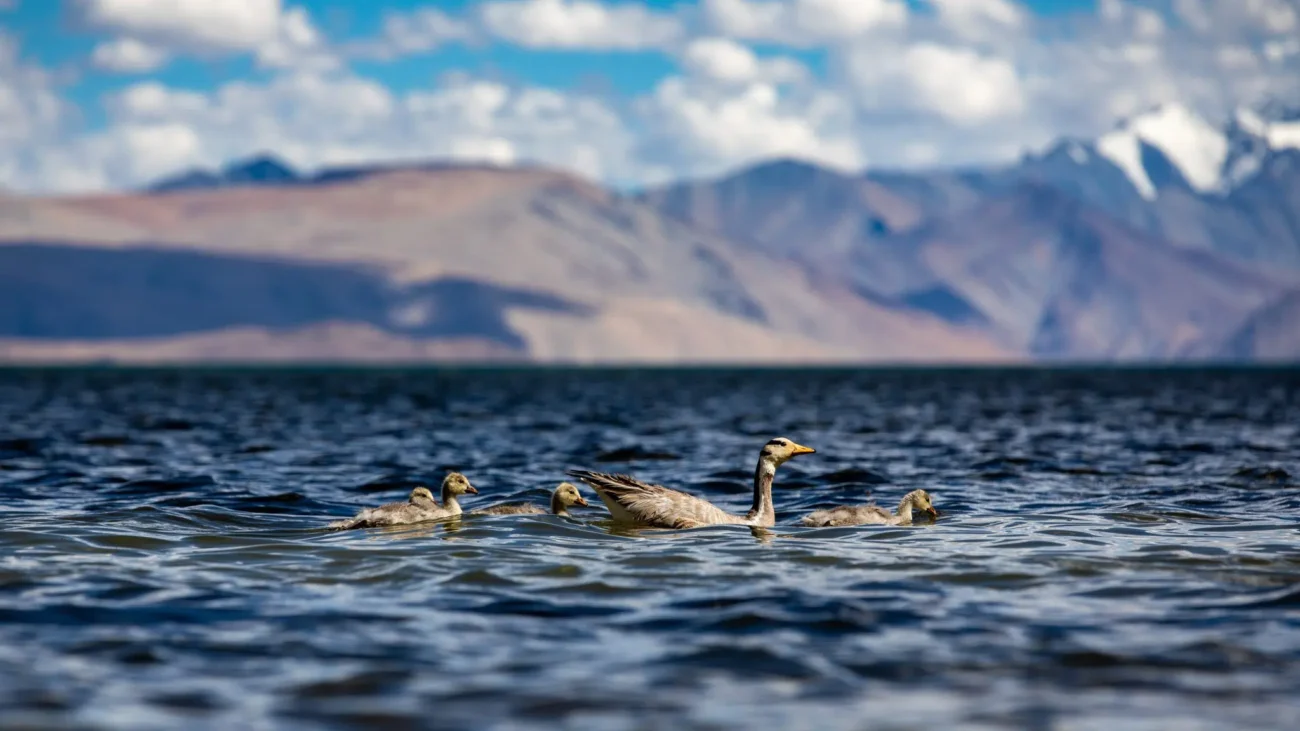
Perhaps no other bird embodies the spirit of the Himalayas quite like the Bar-headed Goose (Anser indicus). While many migratory birds navigate the vast Central Asian Flyway by weaving their way between the imposing peaks, Bar-headed Geese possess an extraordinary and still scientifically debated ability: they fly directly over them. This remarkable feat involves ascending to altitudes of nearly 7,000 meters, a testament to their unparalleled physiological adaptations for low-oxygen environments. The exact mechanisms behind their ability to sustain flight at such extreme altitudes with limited oxygen remain a subject of ongoing scientific investigation, with research exploring specialized hemoglobin and enhanced respiratory systems.
This incredible migratory strategy allows them to exploit the abundant resources of high-altitude lakes and marshes scattered across their migratory routes. These watery havens serve as vital staging grounds, offering opportunities for rest and refueling. The geese graze on the succulent grasses and roots found along the shores, gathering the energy needed to continue their arduous journeys. The presence of these high-altitude wetlands, sustained by glacial melt, is absolutely critical for their survival during these migratory periods. Without them, their epic flights would be impossible.
Supporting Data: Studies utilizing tracking devices have confirmed the extreme altitudes reached by Bar-headed Geese during their migrations. Research in ornithology and physiology has focused on their unique adaptations, such as a higher proportion of oxygen-carrying red blood cells and efficient oxygen utilization. These adaptations are directly linked to their reliance on the oxygen-rich, albeit thin, air found at high altitudes, which is only made accessible by the continued presence of these high mountain environments.

Black-necked Crane: Majestic Flyers Facing a Changing Landscape
The Black-necked Crane (Grus nigricollis) is a truly majestic avian species, characterized by its impressive two-meter wingspan. Their flight, when observed, is a breathtaking spectacle that commands attention. Despite their considerable wingspan, Black-necked Cranes undertake relatively short migrations, typically moving between lower and higher elevation wetlands within the Himalayan region. Their diet primarily consists of roots and small aquatic animals, which they expertly forage for in the shallow waters of these wetlands.
In a complex and concerning paradox, the accelerating melt of mountain glaciers due to climate change has, in the short term, provided an advantage for the Black-necked Crane. Increased glacial melt has led to the expansion of wetland habitats in some areas, offering a temporary increase in available foraging grounds. However, this is a fleeting benefit. The current rate of glacial melt suggests that these vital water sources are diminishing. In the long term, the disappearance of glaciers will lead to a monumental shrinkage of the high-elevation wetland habitats upon which these cranes depend, posing a severe existential threat to the species.
Supporting Data: Ecological assessments of crane populations have shown a correlation between wetland availability and breeding success. Reports from conservation organizations like the International Crane Foundation highlight the vulnerability of Black-necked Cranes to habitat loss. The rapid rate of glacial retreat, documented by glaciologists worldwide, serves as a stark indicator of the future challenges these birds will face. Projections suggest that if current warming trends continue, many Himalayan glaciers could disappear by the end of the century, drastically altering the landscape and the availability of critical habitats.
Climate Change: An Urgent Threat to Glacial Water Security
The overarching narrative for all three species, and indeed for the entire Himalayan ecosystem, is the escalating threat posed by climate change to its glaciers. The gradual disappearance of these ancient ice reserves portends a future of significantly altered water availability. This has profound implications not only for the wildlife that depends on these waters but also for the human communities that have built their civilizations around them for millennia.
The impact of glacial melt on water resources is multifaceted. While some regions may experience temporary increases in water flow, leading to localized flooding and erosion, the long-term prognosis is one of scarcity. As glaciers shrink, the consistent supply of meltwater diminishes, impacting agriculture, hydropower, and the very ecosystems that support biodiversity. This is particularly critical for high-altitude wetlands, which are entirely reliant on consistent glacial input.

Analysis of Implications: The potential loss of Himalayan glaciers represents a significant threat to regional water security and biodiversity. The cascading effects of reduced water availability could lead to increased competition for resources, displacement of communities, and widespread ecological disruption. The unique avian species discussed are sentinel indicators of the health of these fragile environments. Their decline would signal a broader ecological crisis. The interconnectedness of these systems means that impacts on glaciers will ripple through the food web, affecting everything from microorganisms to apex predators.
Conservation Efforts: A Race Against Time
Recognizing the urgency of the situation, organizations like BirdLife International are actively engaged in efforts to mitigate the impacts of climate change and protect the habitats crucial for these iconic species. Their work focuses on a two-pronged approach: preserving existing biodiversity and habitats, and advocating for nature-safe renewable energy solutions to reduce atmospheric carbon emissions.
The strategy involves establishing and reinforcing protected areas, implementing sustainable land-use practices in surrounding communities, and engaging in policy advocacy to promote climate action. By safeguarding the ecological integrity of the Himalayas and working to prevent further greenhouse gas emissions, BirdLife and its partners aim to ensure a future where glaciers continue to sustain vibrant ecosystems, rivers flow freely, and communities of both birds and people can flourish in harmony.
Broader Impact and Implications: The plight of these Himalayan birds serves as a microcosm of a global environmental challenge. The interconnectedness of ecosystems means that the fate of these species is intrinsically linked to the health of the planet. Efforts to conserve Himalayan biodiversity contribute to global conservation goals and highlight the urgent need for international cooperation in addressing climate change. The success of these conservation initiatives will not only secure the future of these iconic birds but also contribute to the resilience of a vital global ecosystem.
The vision for the future is one where the majestic peaks of the Himalayas continue to host their ancient glaciers, where the life-giving waters they provide sustain diverse wildlife and human communities alike, and where the extraordinary journeys of birds like the Bar-headed Goose are not threatened by a vanishing world. World Water Day serves as a poignant reminder of the critical importance of these glacial resources and the collective responsibility to protect them for generations to come.

