


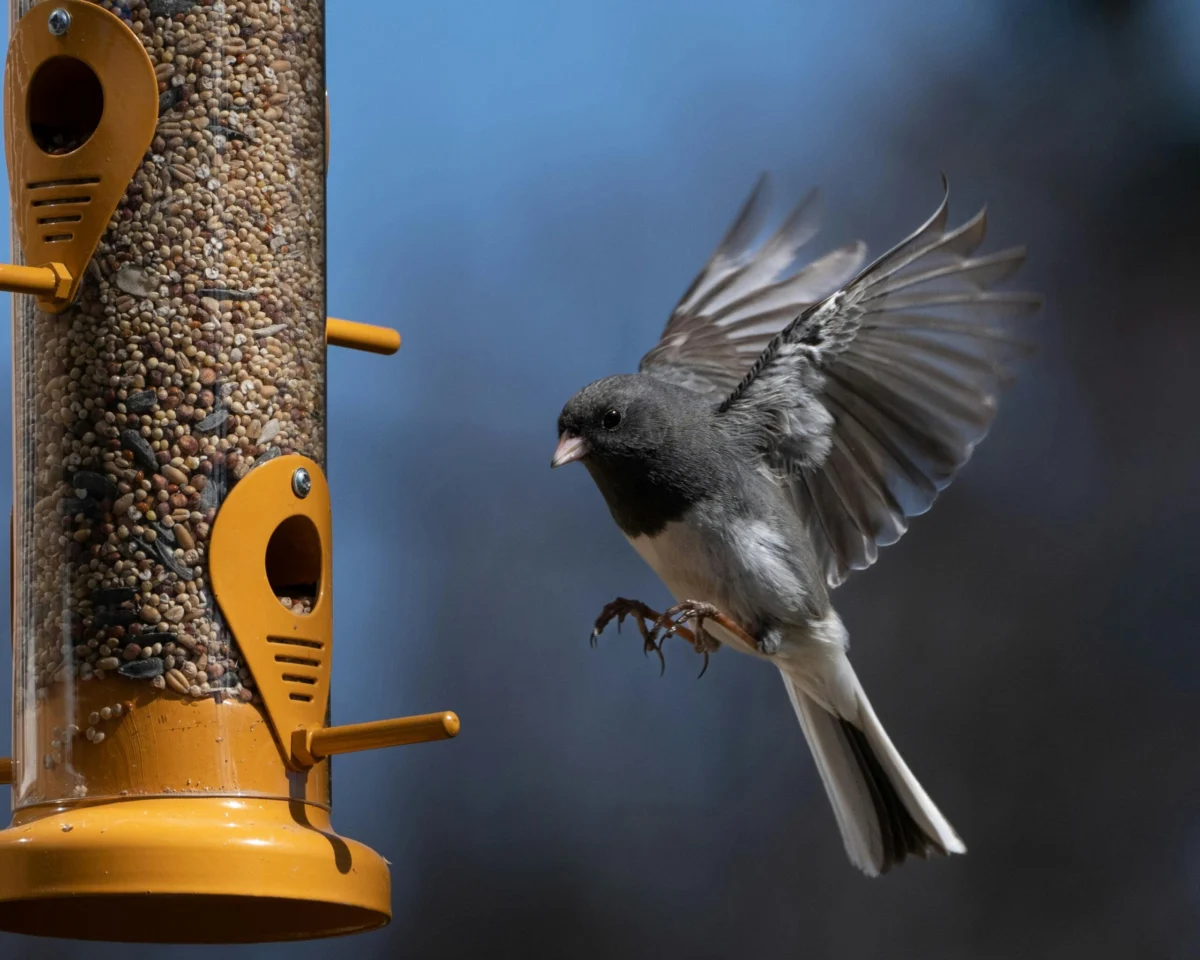
The moment you top up the bird feeder, a subtle shift occurs in the avian landscape. Within minutes, birds seem to materialize from seemingly nowhere, drawn to the replenished bounty. This phenomenon, often perceived as almost magical, stems not from psychic abilities but from an impressive array of sensory and cognitive skills that reveal the remarkable intelligence and awareness of our feathered neighbors. Understanding how birds find bird feeders offers a fascinating glimpse into their observational prowess, memory retention, and intricate social networks.
The Multi-Sensory Approach to Food Finding
Birds locate bird feeders primarily through a sophisticated combination of acute vision, learned memory, and social behavior. Their ability to spot feeders and movement from a distance, coupled with a remarkable capacity to remember reliable food sources from previous visits, allows them to quickly assess potential dining opportunities. Furthermore, observing other birds congregating at a feeder acts as a powerful social cue, often accelerating the discovery process. While less dominant, sound and other environmental activities can also serve as secondary indicators. This intricate interplay of senses and learned behaviors explains the almost instantaneous appearance of birds after a feeder has been refilled.
Visual Acuity: The Primary Locator
Contrary to a common misconception, most common backyard birds possess a relatively weak sense of smell. Their primary tool for discovering food, including bird feeders, is their exceptional eyesight. Birds are capable of detecting subtle changes in their surroundings from significant distances. When a bird feeder is refilled, these changes become immediately apparent to a bird perched nearby, whether on a tree branch, in a hedge, or on a rooftop.
The act of refilling a feeder involves several visual cues that alert birds:
- Movement: The physical act of opening the feeder, pouring seeds, and closing it creates visible motion.
- Changes in Brightness and Contrast: Freshly filled feeders, especially those with bright colors or contrasting seed textures against natural backgrounds, can be more conspicuous.
- New Objects or Disturbances: The brief presence of a human near the feeder, even if they quickly retreat, signals a change in the environment.
Some bird species possess the remarkable ability to see ultraviolet (UV) light. This enhanced visual spectrum can make certain seeds and feeder materials appear even more vibrant and distinct against the backdrop of natural foliage, further aiding in their detection. For instance, sunflower seeds, a common bird feeder staple, exhibit different UV reflectance patterns than many natural food sources, potentially making them stand out to birds with UV vision.
The Power of Scent: A Misconception Debunked
While the aroma of freshly baked cookies might draw humans, the scent of bird seed typically does not play a significant role in birds finding feeders. Compared to mammals, many common feeder birds have a comparatively limited olfactory sense. Therefore, the fragrance of bird seed wafting through the air is rarely the primary attractant.
However, it is important to note that the role of scent can vary among species and in specific circumstances. Some birds, such as vultures or certain seabirds, possess a highly developed sense of smell used for locating carrion or fish from afar. For the typical garden birds that frequent feeders – like finches, chickadees, and sparrows – scent is a minor factor. Their discovery is overwhelmingly driven by what they see, remember, and observe in their social environment, rather than an olfactory quest. This means that the visual and behavioral cues are far more influential in attracting birds to your feeders.

Memory: The Reliable Compass for Sustenance
Birds possess surprisingly robust memories, particularly when it comes to identifying and returning to reliable food sources. Once a bird feeder has consistently provided sustenance, birds will repeatedly visit it, even if it is temporarily empty. This learned behavior is crucial for their survival, especially during seasons when natural food availability diminishes.
The learning process for birds involves:
- Association: Birds quickly associate the physical location and appearance of the feeder with the reward of food.
- Temporal Patterns: They learn the general times of day when feeders are typically refilled or when human activity around the feeder is common.
- Spatial Mapping: Birds create mental maps of their territory, incorporating the locations of dependable food sources.
This strong memory retention explains why birds might appear at a feeder just moments after it’s been refilled. They may have already been in the vicinity, perhaps observing the feeder from a nearby perch, patiently waiting for its replenishment. Their memory prompts them to investigate and confirm the presence of food. This is particularly vital during winter months when natural foraging becomes challenging. Remembering the locations of established feeders can be the difference between survival and scarcity for many bird populations.
Social Learning: The Ripple Effect of Discovery
Birds are highly social creatures, and their interactions with each other play a significant role in food discovery. They don’t just observe their environment; they observe each other. When one bird successfully finds and begins feeding at a bird feeder, it acts as a powerful beacon for others. This phenomenon, known as "local enhancement," allows birds to efficiently locate food resources by observing the foraging success of their conspecifics.
The process unfolds as follows:
- Observation of Activity: A bird landing on and feeding from a feeder draws the attention of other birds in the vicinity.
- Following Movement: Birds are naturally drawn to movement, and the arrival and departure of other birds at a feeder signal potential food availability.
- Response to Vocalizations: The calls or sounds made by feeding birds can also alert others to the presence of food.
This collective discovery process is particularly evident in social species such as tits, finches, sparrows, and starlings. The arrival of a single bird at a feeder can rapidly trigger a cascade effect, quickly transforming a quiet feeder into a bustling avian dining hall. This indirect communication, while not verbal in the human sense, is an effective way for birds to share vital information about food sources within their community.
The Subtle Influence of Sound and Activity
While sight and memory are paramount, auditory cues and other environmental activities can also contribute to a bird’s ability to locate a feeder. The subtle rattle of seeds cascading into the feeder tray, the gentle sway of the feeder in the wind, or the chirping chorus of contented birds already feeding can all serve as reinforcing signals. These sounds provide additional confirmation that food is indeed available, complementing the visual information already processed. This multi-modal sensory input creates a robust system for birds to reliably find their sustenance.
The Instantaneous Arrival: A Combination of Factors
The uncanny speed at which birds appear after a feeder is refilled is rarely coincidental. It’s a testament to the efficiency of their sensory and cognitive systems working in concert. Several factors contribute to this rapid response:

- Proximity: Birds are often already in the vicinity, either resting, foraging for natural food, or observing the feeder from a safe distance.
- Learned Habits: Regular visitors have established routines and regularly check known food sources, including your feeder.
- Social Cues: The visible act of refilling or the sound of seeds can trigger immediate interest from nearby birds.
Birds dedicate a significant portion of their day to moving between known food sources and repeatedly checking them for availability. Refilling the feeder simply shifts its status from "empty but worth investigating" to "currently offering food." This transition is immediately recognized by observant birds in the area.
Making Your Feeder More Inviting
For those who wish to attract more avian visitors or encourage quicker discoveries, a few strategic approaches can enhance feeder visibility and appeal:
- Strategic Placement: Position feeders in open areas that are visible from nearby trees or shrubs, providing both a clear line of sight and a safe perch for birds to survey the area before approaching.
- Feeder Type and Color: Brightly colored feeders or those with contrasting textures can be more easily spotted. Seed types known to be highly attractive to local species will also increase visitation rates.
- Consistency: Maintaining a regular refilling schedule helps birds learn and rely on your feeder as a consistent food source.
Addressing the Dependency Concern
A common concern among bird feeders is whether birds become overly dependent on artificial food sources. However, extensive research and observational data indicate that this is generally not the case for most wild bird populations. Bird feeders typically serve as a supplementary food source, complementing their natural foraging behaviors rather than replacing them entirely. Birds continue to seek out natural food sources and adapt readily if a feeder is removed. Nevertheless, during periods of extreme weather, such as prolonged cold spells or droughts, consistent and reliable feeding can become critically important for bird survival.
A Window into Avian Intelligence
The seemingly instantaneous arrival of birds at a refilled feeder is not a product of magic but a sophisticated interplay of advanced biological mechanisms. This behavior is a direct result of:
- Exceptional Vision: The ability to detect subtle changes in their environment.
- Strong Memory: The capacity to recall reliable food locations.
- Social Learning: The keen observation of other birds’ activities.
- Environmental Awareness: The integration of visual, auditory, and behavioral cues.
Observing this intricate process offers a profound appreciation for the intelligence, adaptability, and complex social dynamics of the birds that share our spaces. It is one of the many quiet joys of engaging with nature, a gentle reminder that even the most familiar garden visitors are constantly engaged in a dynamic process of observation, learning, and adaptation.
Do Birds Recognize Their Human Benefactors?
While birds may not recognize individual humans in the same way we recognize faces, many species develop a practical form of recognition. They learn to associate specific people, locations, and routines with the availability of food and a sense of safety. Over time, birds may become less wary of the individual who consistently refills their feeder, especially if that person moves calmly and predictably.
Certain species are particularly adept at this form of associative learning. Individual birds can also exhibit varying behaviors based on their past experiences. Even if a bird doesn’t consciously "recognize" a human’s face, it can learn to associate that person with positive outcomes: "this person means food and minimal threat." This learned association can significantly influence how closely a bird approaches and how quickly it resumes feeding in their presence, showcasing a remarkable cognitive flexibility in their interactions with the human world.

