


Published on December 18, 2025, with a last update on December 27, 2025, this article delves into a frequently posed question among avian enthusiasts and professionals: Do pet birds truly benefit from antioxidant support, particularly during periods of elevated physiological stress such as molting, aging, hormonal cycles, routine disruptions, or dietary limitations? The concise answer, informed by contemporary avian nutritional science, suggests a nuanced approach: sometimes, under the right circumstances, and always as an integral component of a comprehensive nutritional strategy rather than a standalone solution. While daily antioxidant supplementation may not be universally necessary for every bird, strategic and targeted support during times of increased metabolic demand can play a crucial role in maintaining normal cellular function, bolstering overall resilience, and contributing to long-term avian wellness. This exploration aims to demystify the science behind oxidative stress, clarify the function of antioxidants, delineate when additional support becomes prudent, and outline best practices for pet bird owners navigating the complexities of avian nutrition without succumbing to hype or unsubstantiated claims.
The Evolving Landscape of Avian Wellness and Oxidative Stress
The journey of pet bird care has evolved significantly from rudimentary seed-only diets to sophisticated nutritional paradigms encompassing pelleted foods, fresh produce, and specialized supplements. This progression reflects a deeper understanding of avian physiology and the unique challenges faced by birds in captive environments. One such challenge gaining increasing recognition is oxidative stress, a biological phenomenon that, while a normal part of life, can escalate under various pressures. Oxidative stress occurs when there’s an imbalance between the production of reactive oxygen species (free radicals) and the body’s ability to detoxify these harmful byproducts or repair the resulting damage. For birds, whose metabolic rates are inherently high due to their active lifestyles and demanding physiological processes, managing this balance is paramount.
The question of antioxidant supplementation often arises within bird owner communities, from online forums to dedicated Reddit threads, typically when owners observe subtle shifts in their birds’ demeanor or physical condition – a bird not overtly sick, but perhaps appearing more taxed by life’s daily demands. This intuitive desire to support long-term health without over-supplementation underscores a growing consciousness among pet owners regarding preventative care. The scientific community has increasingly acknowledged that while birds possess intrinsic antioxidant defense systems, these systems can be overwhelmed, especially when environmental and physiological stressors converge. Understanding this delicate balance is fundamental to providing optimal care.
Decoding Oxidative Stress in Avian Physiology
Oxidative stress is not merely an abstract concept; it is a fundamental biological reality for all living organisms, including birds. Every essential life process – eating, breathing, moving, growing feathers, and metabolizing food – generates metabolic byproducts. Among these are free radicals, unstable molecules with unpaired electrons that seek stability by "stealing" electrons from other molecules, initiating a chain reaction of cellular damage. This damage, if unchecked, can affect DNA, proteins, and lipids, potentially impacting cellular function, tissue integrity, and overall health.
Birds, known for their vibrant energy and rapid metabolism, operate at a significantly higher physiological pace than many other animals. Their efficient respiratory systems, capable of extracting more oxygen per breath, and their high body temperatures contribute to a continuous production of reactive oxygen species. In the wild, birds engage in extensive foraging, flight, and social interactions, activities that, while metabolically demanding, are often supported by a highly diverse natural diet rich in various plant-based compounds. In captivity, despite best efforts, the environment and diet can sometimes fall short of replicating this natural richness, potentially leading to an increased oxidative load.
The Mechanics of Antioxidant Defense
Antioxidants are nutrients and compounds that play a crucial role in mitigating oxidative stress by neutralizing free radicals. They achieve this by donating an electron to the free radical without becoming unstable themselves, thus breaking the chain reaction of damage. The avian body utilizes both endogenous (internally produced) antioxidants, such as superoxide dismutase (SOD), catalase, and glutathione, and exogenous (dietary) antioxidants, including vitamins (C and E), carotenoids (e.g., beta-carotene, lutein, zeaxanthin), flavonoids, and certain minerals (e.g., selenium, zinc, manganese). These work synergistically to maintain cellular health.
For instance, Vitamin E, a fat-soluble antioxidant, protects cell membranes from lipid peroxidation, a process where free radicals damage fats. Vitamin C, a water-soluble antioxidant, works in aqueous environments, neutralizing free radicals before they can damage DNA and proteins, and also helps regenerate Vitamin E. Carotenoids, abundant in colorful fruits and vegetables, offer significant antioxidant protection and are crucial for feather pigmentation and immune function. The efficacy of these compounds is not merely their presence but their collective action within the complex biological system of the bird.
Identifying Periods of Heightened Need for Antioxidant Support
While a baseline, well-balanced diet typically provides sufficient antioxidant support for a healthy, unstressed bird, certain physiological and environmental conditions significantly elevate a bird’s metabolic workload, making targeted antioxidant supplementation a judicious consideration.
-
Molting: Feather production is an incredibly nutrient-intensive process, demanding vast amounts of protein, amino acids, vitamins, and minerals. The rapid synthesis of new feathers generates a considerable metabolic burden, increasing the production of free radicals. Even birds on seemingly excellent diets can experience a degree of oxidative stress during this demanding period. Supporting the body with additional antioxidants can help ensure efficient feather growth, vibrant plumage, and faster recovery from the energetic demands of molting.
-
Aging: As birds age, their cellular machinery naturally becomes less efficient at repairing damage and managing oxidative byproducts. Older birds, much like older humans, may experience a decline in their intrinsic antioxidant defense systems. This can lead to a slower recovery from stress, increased susceptibility to age-related conditions, and a general reduction in vitality. For geriatric birds or rescue birds with unknown histories, providing thoughtful antioxidant support can contribute to their comfort, cognitive function, and overall quality of life, helping to counteract the cumulative effects of oxidative damage over time.
-
Hormonal or Seasonal Shifts: Birds are highly attuned to environmental cues such as changes in light cycles, temperature, and day length, which trigger significant hormonal shifts. These shifts regulate breeding cycles, seasonal molts, and migratory instincts (even in captive birds). The physiological and behavioral changes associated with these periods – increased activity, reproductive efforts, or stress from unfulfilled natural urges – place additional demands on the body’s metabolic systems, potentially increasing oxidative load. Targeted support during these predictable cycles can help buffer these physiological stresses.
-
Environmental or Emotional Stress: Captive environments, despite dedicated care, inherently present stressors absent in the wild. Indoor air quality, artificial lighting, limited foraging opportunities, routine changes, noise, travel, social disruptions (e.g., new pets, moving to a new home), and even inappropriate cage mates can all contribute to a bird’s metabolic workload. Chronic or acute stress triggers the release of stress hormones, which can further exacerbate oxidative processes. Providing nutritional support, including antioxidants, during such periods can help the bird’s body cope more effectively, recover faster, and maintain its overall physical and psychological equilibrium.
-
Dietary Limitations: The cornerstone of avian health is a varied, nutrient-rich diet. Fresh plant-based foods – a kaleidoscope of fruits, vegetables, and greens – are natural powerhouses of antioxidants. However, many pet birds, due to owner practices or individual preferences, do not consistently consume a sufficiently diverse range of these foods. Birds maintained on primarily seed-based diets, which are often deficient in essential vitamins and minerals, are particularly vulnerable to oxidative stress due to a lack of dietary antioxidant precursors. In such cases, targeted supplementation or the introduction of antioxidant-rich whole foods becomes crucial to bridge nutritional gaps.
Strategic Supplementation vs. Dietary Foundation
It is crucial to differentiate between antioxidant support as a "fix" and as an enhancement within a holistic care regimen. Antioxidant supplementation is not a panacea for behavioral issues, nor can it replace fundamental care principles such as a balanced diet, consistent routines, environmental enrichment, and appropriate veterinary oversight. Instead, it functions as a complementary strategy: a simple, effective way to provide the body with extra fortification during periods of normal, yet elevated, stress.
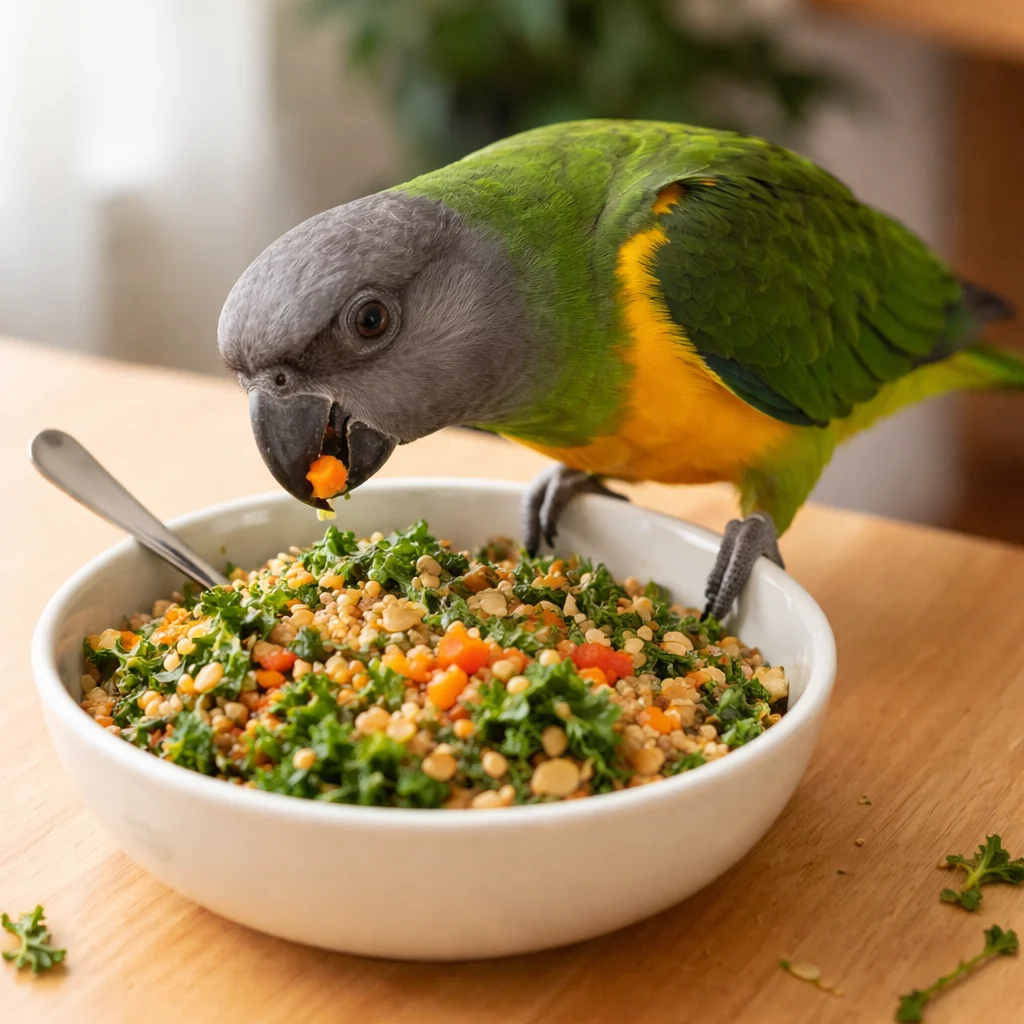
The most effective approach begins with a strong dietary foundation. A diet consisting of high-quality pellets, supplemented daily with a wide array of fresh, plant-based foods (dark leafy greens, colorful vegetables, fruits, sprouts, and specific seeds like hemp or flax) inherently supplies a broad spectrum of natural antioxidants. Think of this varied, nutrient-rich diet as a protective buffer, or "armor," against everyday stressors. Incorporating herbs, specific seeds, or plant-based toppers into a bird’s daily "chop" is an accessible way to consistently build this foundational support.
For periods of heightened need, targeted, plant-based nutritional supports can be rotated, acting as a nutritional "insurance policy" to cover potential gaps before they manifest as health issues. This mindful rotation of supplements can simplify long-term care by proactively addressing anticipated metabolic demands.
Conversely, if a bird is thriving on a well-rounded diet, maintaining a healthy weight, exhibiting appropriate feather quality, demonstrating steady energy levels, and engaging positively with its environment, additional antioxidant support may not be immediately necessary. The focus should always remain on providing good pellets, simple, whole plant-based nutrition, and consistency. Overly processed supplements with extensive, unpronounceable ingredient lists are often less beneficial than natural, food-derived sources.
Expert Insights and Best Practices
Leading avian nutritionists and veterinarians specializing in exotic birds consistently advocate for a measured, evidence-based approach to supplementation. Dr. Eleanor Vance, a prominent avian veterinarian, emphasizes, "The primary goal is always to optimize the bird’s baseline diet. Supplements are precisely that – supplemental. They are most effective when used judiciously to support specific physiological demands or address documented deficiencies, not as a substitute for quality nutrition."
Another expert, Dr. Kenji Tanaka, an avian nutritionist, advises against the common mistake of implementing too many changes simultaneously. "When owners alter diet, lighting, routine, and introduce multiple supplements all at once, it becomes impossible to isolate which intervention, if any, yielded a positive or negative effect. A systematic, ‘one change at a time’ approach allows for careful observation and informed decision-making." This methodical approach is critical, as a beneficial intervention for one bird might be unnecessary or even counterproductive for another, given the individuality of avian needs and responses.
The bird care community also cautions against blindly following online advice without considering the specific context of one’s own bird. While peer experiences can be valuable, they cannot replace a thorough understanding of an individual bird’s health status, species-specific requirements, and lifestyle.
The Path Forward: A Balanced Approach to Bird Wellness
Supporting a bird’s health does not require perfection, but rather a commitment to consistent, thoughtful choices. The journey begins with understanding that a solid everyday diet performs the majority of the heavy lifting in maintaining avian health. Thoughtful, rotating plant-based support, rich in natural antioxidants, then serves as a powerful tool to deploy when a bird’s needs predictably change, ensuring comprehensive care without overdoing it.
When considering antioxidant-rich foods to integrate into a bird’s diet, focus on a rainbow of options:
- Berries: Blueberries, raspberries, strawberries are packed with anthocyanins.
- Dark Leafy Greens: Kale, spinach, collard greens offer vitamins C and E, and carotenoids.
- Orange/Yellow Vegetables: Carrots, sweet potatoes, bell peppers are rich in beta-carotene.
- Cruciferous Vegetables: Broccoli, cauliflower contain glucosinolates and other beneficial compounds.
- Herbs and Spices: Turmeric, ginger, rosemary, parsley provide potent antioxidants.
- Specific Seeds: Hemp seeds, chia seeds, flax seeds offer omega fatty acids and antioxidants.
Finally, while proactive nutritional support is key, it is equally important to recognize the signs that warrant professional veterinary attention. Sudden weight loss, lethargy, significant appetite changes, breathing difficulties, or major behavioral shifts are clear indicators to contact an avian or exotic veterinarian immediately. These are not situations to be addressed solely with supplements but require a thorough diagnostic evaluation.
In conclusion, the discourse around antioxidants for pet birds underscores a broader commitment to holistic avian wellness. By embracing a balanced approach that prioritizes foundational nutrition, understands the physiological demands of different life stages and stressors, and integrates targeted support judiciously, pet bird owners can significantly contribute to the vitality, resilience, and longevity of their cherished feathered companions. This nuanced perspective, grounded in scientific understanding and practical application, ensures that care decisions are informed, effective, and truly in the best interest of the birds.

