


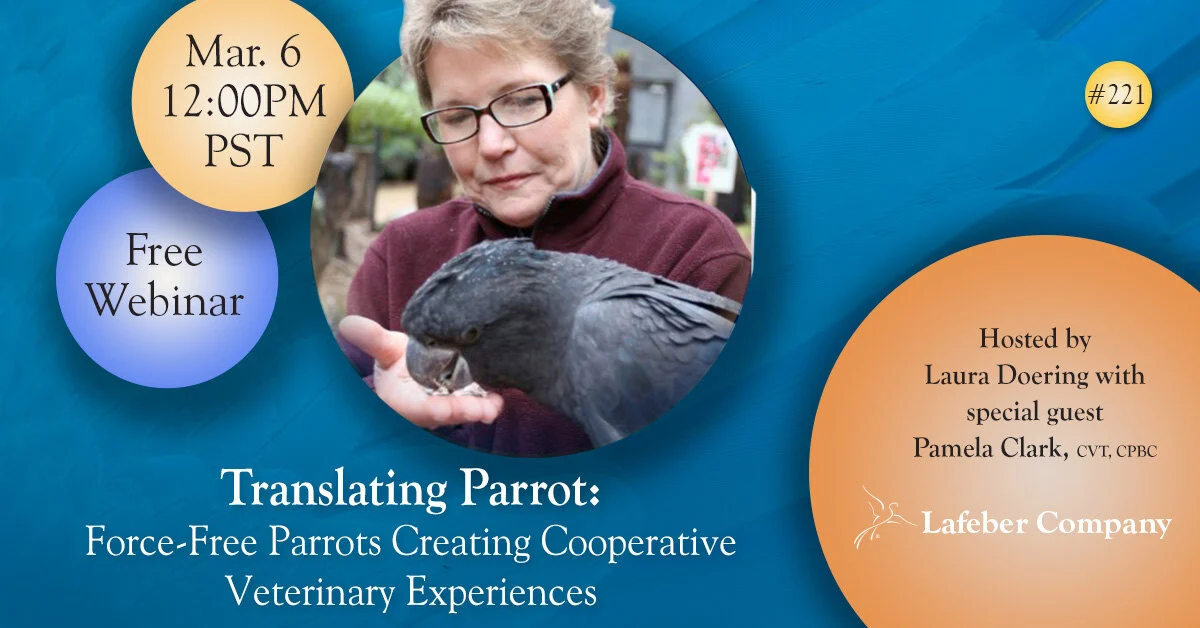
The landscape of companion animal care is continually evolving, with a growing emphasis on welfare, trust, and minimizing stress. A pivotal event addressing this progressive shift in avian care is scheduled for Friday, March 6, 2026, at 12:00 p.m. PST. This crucial webinar, titled "Force-Free Parrots: Creating Cooperative Veterinary Experiences," aims to revolutionize how caregivers and veterinary professionals approach avian healthcare, moving away from traditional restraint methods towards a more compassionate and effective model. Hosted by an organization dedicated to avian health and education, this online seminar will feature esteemed expert Pamela Clark, CPBC, who will delve into the principles of force-free handling and cooperative care, offering invaluable insights for anyone involved in the life of a parrot.
The Paradigm Shift in Animal Welfare: A Historical Context
For decades, veterinary procedures and animal handling often relied on physical restraint, a method perceived as necessary to ensure tasks were completed efficiently. While effective in the short term for specific procedures, this approach frequently overlooked the profound psychological and physiological impact on the animal. In the realm of companion parrots, highly intelligent and sensitive creatures with complex emotional lives, traditional restraint can lead to significant trauma, fear, and a breakdown of trust between the bird, its caregiver, and veterinary staff. This fear can manifest as aggression, phobias, and a strong aversion to future veterinary visits, potentially compromising long-term health management.
The last two decades have witnessed a profound paradigm shift in animal welfare science. Influenced by advancements in ethology, cognitive science, and applied behavior analysis, there has been a widespread movement towards positive reinforcement, choice-based training, and cooperative care across various species. This evolution began prominently with canine training, moving away from dominance theories, and subsequently expanded to horses, zoo animals, and now, increasingly, to companion birds. The core tenet of this modern approach is to empower animals with agency, allowing them to voluntarily participate in their own care through trust-building exercises and positive reinforcement, rather than being forced into compliance. This shift recognizes that an animal’s emotional state directly impacts its physical health and its ability to learn and adapt. For parrots, known for their remarkable intelligence, long lifespans (often 50-80 years or more), and capacity for deep bonds with humans, fostering a positive relationship through force-free methods is not merely a preference but an ethical imperative and a cornerstone of their overall well-being. The consequences of chronic stress from repeated traumatic experiences can include immunosuppression, self-mutilation, behavioral problems, and a shortened lifespan, underscoring the urgency of adopting less invasive, more humane practices.
Understanding Force-Free Handling and Cooperative Care
At the heart of the upcoming webinar is a comprehensive exploration of force-free handling and cooperative care. Force-free handling, in its essence, means avoiding any physical or psychological coercion, intimidation, or pain to achieve a desired behavior. It prioritizes the animal’s comfort, safety, and emotional well-being above all else. Cooperative care takes this a step further, training animals to willingly participate in husbandry and medical procedures. Instead of struggling against restraint, a parrot trained in cooperative care might voluntarily step onto a scale, present a foot for a nail trim, allow examination of its wings, or even take oral medication without a struggle.
The principles underpinning this approach are rooted in positive reinforcement. This involves rewarding desired behaviors to increase their likelihood of occurring again. For parrots, this could mean using favorite treats, praise, or head scratches as motivators. Key components include:
- Voluntary Participation: The parrot is given a choice and actively participates, rather than being subjected to a procedure.
- Building Trust: Consistent positive interactions during training and care foster a strong bond and reduce fear.
- Desensitization and Counter-conditioning: Gradually introducing stimuli (e.g., towels, examination tools, carriers) in a positive context, paired with rewards, to change the bird’s emotional response from fear to neutrality or even anticipation.
- Target Training: Teaching the parrot to touch a target stick, which can then be used to guide it to specific locations (e.g., a perch for examination) or positions.
- Stationing: Training the parrot to remain calmly in a designated spot (e.g., a specific perch or platform) for a period.
- Environmental Enrichment: Providing a stimulating environment that meets the parrot’s physical and psychological needs, reducing overall stress and making them more receptive to training.
For instance, preparing a parrot for a vet visit might involve positively reinforcing stepping into a carrier, desensitizing it to the sights and sounds of transport, and practicing handling routines at home in a non-threatening manner. This proactive approach not only minimizes stress during the actual visit but also empowers caregivers with the tools to manage their bird’s health effectively throughout its life.
The Expert Voice: Pamela Clark, CPBC
Leading this transformative discussion is Pamela Clark, a Certified Parrot Behavior Consultant (CPBC) renowned for her extensive experience and pioneering work in avian behavior. Clark has dedicated her career to understanding the complex needs of parrots and advocating for humane, positive reinforcement-based training methods. Her expertise is not merely theoretical; she has worked directly with countless parrots and their caregivers, implementing practical strategies that have yielded significant improvements in bird welfare and human-parrot relationships.
Clark’s contributions extend beyond individual consultations; she is a prominent educator, regularly sharing her knowledge through seminars, articles, and workshops. Her philosophy centers on empowering caregivers to understand their parrots’ communication signals, build trust, and implement positive behavioral interventions. Her voice is particularly impactful because she bridges the gap between scientific understanding of avian behavior and practical application, making complex concepts accessible to a broad audience. Her involvement in this webinar signals its authoritative and actionable content, drawing upon years of real-world experience and a deep commitment to the welfare of companion birds.
Target Audience and Far-Reaching Implications
The webinar is meticulously designed to cater to two primary audiences: parrot caregivers and veterinary professionals. However, its implications stretch further, impacting animal welfare organizations and the broader avian community.
For Caregivers/Pet Owners: The seminar offers a roadmap to a less stressful and more rewarding relationship with their feathered companions. By learning force-free techniques, caregivers can:
- Reduce Stress and Fear: Transform vet visits from dreaded events into manageable, even positive, experiences.
- Strengthen the Human-Animal Bond: Building trust through positive interactions deepens the relationship.
- Improve Health Outcomes: Less stress means better immune function and more accurate diagnostic results. Proactive training allows for early detection of health issues, as birds are more cooperative for routine checks.
- Empowerment: Caregivers gain practical skills to advocate for their birds’ well-being and participate actively in their care decisions.
- Cost Savings: Reducing stress and fear can lead to fewer complicated vet visits and potentially lower long-term medical costs.
For Veterinary Professionals: This webinar provides critical tools for enhancing patient care, improving clinic efficiency, and fostering stronger client relationships. Veterinary staff who adopt cooperative care models can:
- Improve Patient Compliance: Parrots are more likely to cooperate voluntarily, reducing the need for forceful restraint, which can be dangerous for both bird and handler.
- Enhance Diagnostic Accuracy: Stress can elevate heart rate, blood pressure, and alter blood parameters, potentially skewing diagnostic results. A calm patient allows for more accurate assessments.
- Reduce Risk of Injury: Minimizing physical restraint reduces the risk of injury to both the bird (e.g., fractures, stress-related illness) and veterinary staff (e.g., bites, scratches).
- Increase Client Satisfaction: Caregivers are increasingly seeking humane and ethical treatment for their pets. Clinics that offer force-free options build trust and loyalty.
- Ethical Practice: Adopting these methods aligns with the highest standards of animal welfare and ethical veterinary practice.
- Professional Development: Staying current with advancements in behavioral science and low-stress handling techniques is crucial for modern veterinary medicine.
For Animal Welfare Organizations: The widespread adoption of force-free and cooperative care principles can significantly improve the lives of rescued and rehabilitated parrots. Birds entering shelters often carry trauma from past experiences. Training them with positive reinforcement can help them overcome fear, adapt to new environments, and increase their adoptability by making them easier and safer to handle.
Supporting Data and Research: The Science of Stress and Cooperation
While the original article does not provide specific data, the principles of force-free handling and cooperative care are firmly grounded in scientific research on animal behavior, learning theory, and stress physiology. Numerous studies across various species have demonstrated the detrimental effects of stress on health. For instance, chronic stress is known to elevate cortisol levels, suppress the immune system, and exacerbate pre-existing conditions. Conversely, positive reinforcement training has been shown to reduce stress markers, improve cognitive function, and foster a more resilient emotional state in animals.
In the context of avian medicine, the physical examination of a parrot, often requiring careful handling of delicate bones and powerful beaks, presents unique challenges. Traditional methods often involve toweling and firm restraint, which can lead to increased heart rate, respiration, and vocalization – all indicators of acute stress. Research on avian stress responses suggests that these experiences can lead to learned helplessness and a strong negative association with humans and veterinary environments. The alternative, cooperative care, by creating positive associations and allowing voluntary participation, can significantly mitigate these stress responses. The growing body of literature supporting low-stress handling techniques in veterinary practice underscores the validity and necessity of webinars like Pamela Clark’s.
Timeline and Timeliness
The webinar, scheduled for Friday, March 6, 2026, at 12:00 p.m. PST, is a timely intervention in the ongoing discourse about progressive animal care. The online format ensures accessibility to a global audience, with participants advised to utilize the provided time zone converter to ensure accurate attendance. This timing aligns with a broader societal push for greater empathy and ethical treatment of all living beings, reflecting an increasingly informed public and a more sophisticated understanding of animal sentience and cognitive abilities. As companion parrot ownership continues to grow globally, estimated to be in the tens of millions, the need for advanced, humane care strategies becomes ever more critical. This webinar is not just an event; it’s a response to an evolving demand for better practices in avian health.
Broader Impact and Future Implications
The "Force-Free Parrots" webinar holds the potential for significant broader impact, shaping the future of avian veterinary medicine and the human-animal bond.
Ethical Imperative: At its core, the initiative speaks to the ethical responsibility we have towards the animals under our care. Minimizing fear, pain, and stress aligns with fundamental principles of animal welfare, moving beyond mere survival to thriving.
Advancing Avian Veterinary Medicine: This approach represents a forward-thinking evolution in avian veterinary practices. As more professionals adopt cooperative care, it will become the standard, pushing the boundaries of what is considered best practice and leading to a generation of healthier, less fearful avian patients.
Strengthening the Human-Animal Bond: When parrots view their caregivers and even veterinarians as partners in their care, rather than sources of fear, the bond deepens. This fosters a more harmonious coexistence and a more fulfilling experience for both parrot and human.
Industry Trends: The webinar reflects a larger trend in the pet industry towards holistic, welfare-centric, and preventative care. Organizations and product developers are increasingly focusing on solutions that support positive reinforcement and reduce stress.
Educational Outreach and Advocacy: Events like this webinar are crucial for educational outreach, disseminating vital information to a wide audience. They serve as platforms for advocacy, encouraging a shift in mindset and practice across the entire avian community. By empowering caregivers and professionals with knowledge and skills, this initiative contributes to a more compassionate and informed world for companion parrots. The long-term implication is a healthier, happier parrot population, better able to receive necessary medical care throughout their extended lifespans, thereby enhancing their quality of life and strengthening the bonds they share with their human companions.
In conclusion, the "Force-Free Parrots: Creating Cooperative Veterinary Experiences" webinar is more than just an educational event; it is a catalyst for change. By equipping caregivers and veterinary professionals with the knowledge and tools for force-free handling and cooperative care, it promises to transform veterinary visits from potentially traumatic events into positive, trust-building interactions. As Pamela Clark, CPBC, guides participants through these innovative principles, the webinar is poised to leave an indelible mark on the landscape of avian welfare, ensuring compassionate and considerate treatment for every parrot.

