


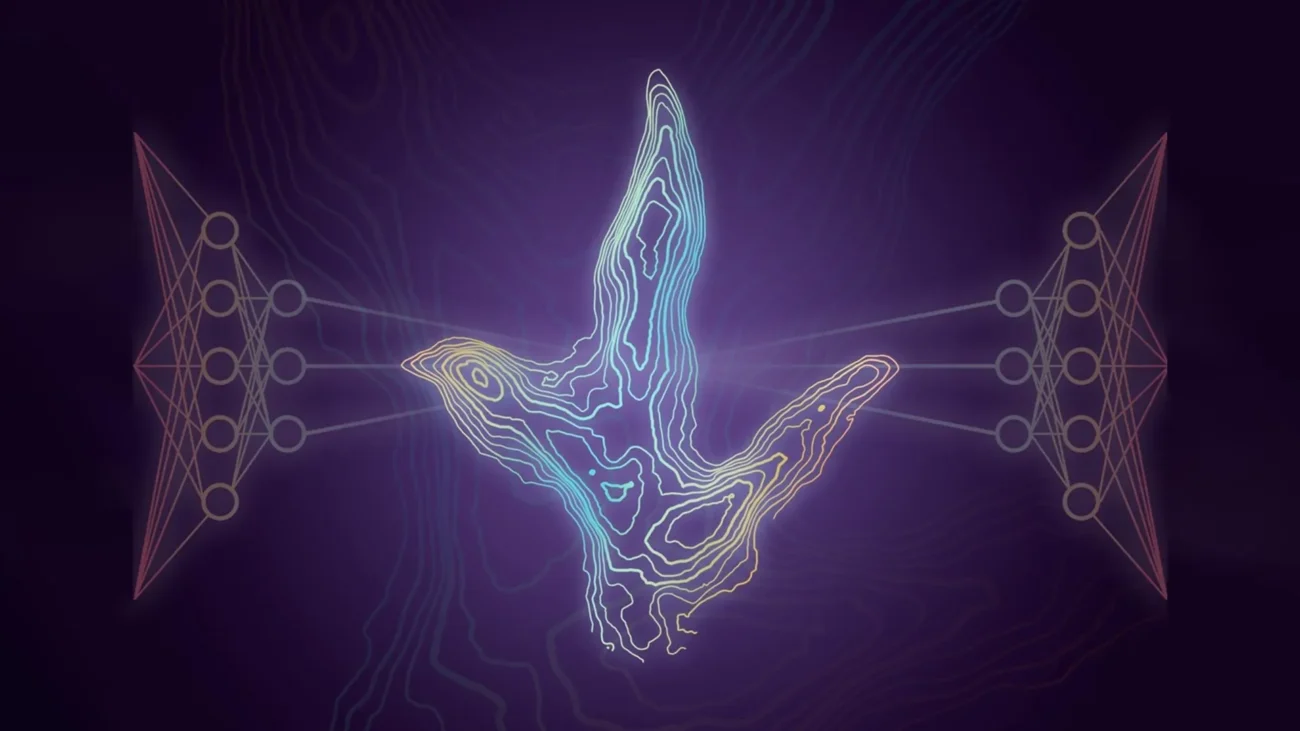
A groundbreaking artificial intelligence-powered application, dubbed DinoTracker, is ushering in a new era of paleontological discovery, offering scientists and the public an unprecedented tool to identify dinosaur footprints left behind millions of years ago. This innovative technology promises to demystify fossil tracks that have long presented significant challenges to researchers, potentially rewriting our understanding of prehistoric life and evolutionary timelines. The findings of the study detailing this development have been published in the prestigious journal Proceedings of the National Academy of Sciences (PNAS).
The Enduring Enigma of Fossilized Tracks
For decades, paleontologists have meticulously studied ancient footprints, often engaging in vigorous debate over the identities of the creatures that made them. These fossilized impressions are far more than mere curiosities; they serve as invaluable windows into the past, offering crucial insights into dinosaur locomotion, behavior, social structures, and even their ecological interactions. However, the very nature of fossilization, a process that spans eons and involves immense geological pressures, can significantly alter the original shape and clarity of these tracks. This distortion has frequently led to ambiguity, with some tracks potentially belonging to formidable meat-eating predators, while others might have been made by gentle plant-eating herbivores. More intriguingly, some fossilized impressions have even sparked debates about the involvement of early avian species in the dinosaurian world, blurring the lines between reptiles and birds.
Traditional methods of identification relied heavily on the expertise of individual paleontologists and manually curated databases. These databases typically linked specific footprint morphologies to known dinosaur species. While effective to a degree, this approach was inherently susceptible to human bias, particularly when dealing with ambiguous or disputed track classifications. The subjective nature of interpretation could lead to differing conclusions among experts, hindering definitive identification and slowing the pace of research. The painstaking process of comparing new finds against existing records was time-consuming and often required extensive field experience and deep knowledge of numerous species.
DinoTracker: Transforming Photos into Instant Paleontological Analysis
The DinoTracker app represents a paradigm shift in how we approach the study of dinosaur footprints. Developed through a collaborative effort between the Helmholtz-Zentrum research centre in Berlin and the University of Edinburgh, this intuitive application allows users – ranging from seasoned paleontologists to enthusiastic amateur fossil hunters – to upload photographs or even drawings of a footprint directly from their mobile phones. Within moments, the app provides an immediate, data-driven analysis.
At its core, DinoTracker leverages advanced artificial intelligence algorithms to meticulously evaluate the shape, structure, and various characteristics of the uploaded track. By analyzing these features, the AI can then estimate the type of dinosaur most likely responsible for creating the impression. This democratizes access to sophisticated paleontological analysis, empowering a broader audience to contribute to scientific understanding.
The Science Behind the AI: Algorithms Learning from the Past
The development of DinoTracker’s sophisticated AI model involved overcoming the inherent challenges posed by the variability of fossilized tracks. Researchers recognized that traditional, manually constructed databases, while useful, could introduce observer bias, especially when the identity of a track was uncertain or contested. To address this, the team embarked on creating advanced algorithms capable of independent learning, allowing computers to discern the subtle variations in dinosaur footprint shapes without direct human pre-classification for every feature.
The AI system underwent an intensive training process. It was fed a vast dataset comprising nearly 2,000 meticulously documented real fossil footprints. Crucially, this was augmented by millions of additional simulated examples. These simulated tracks were not mere digital copies; they were designed to mimic the realistic transformations that footprints undergo during the fossilization process. This included incorporating variations such as compression, erosion, infill by sediment, and the subtle edge displacements that naturally occur as impressions are preserved over geological timescales. This extensive and varied training regimen equipped the AI with a robust understanding of the spectrum of possible footprint appearances.
Unpacking the AI’s Analytical Toolkit: Key Discriminatory Features
The AI model, through its rigorous training, learned to identify and weigh eight key features that are crucial in distinguishing one footprint from another. These are not arbitrary characteristics but rather fundamental aspects of biomechanics and foot structure that vary significantly across different dinosaur species. Among these critical features are:
- Toe Spread (Divarication): The degree to which the toes splayed apart, indicative of foot structure and gait.
- Heel Position: Whether the heel was clearly defined and positioned, or whether the track was primarily composed of toe impressions.
- Surface Area Contact: The total area of the foot that pressed into the substrate, providing clues about weight distribution and locomotion style.
- Weight Distribution: How the dinosaur’s weight was distributed across different parts of its foot, offering insights into its posture and the mechanics of its stride.
- Claw Marks: The presence, size, and shape of claw impressions, which can differentiate between predatory and herbivorous species, and sometimes even indicate specific genera.
- Outline Shape: The overall perimeter of the footprint, revealing the general morphology of the foot.
- Interdigital Webbing: Evidence of webbing between the toes, which could suggest aquatic or semi-aquatic adaptations.
- Depth of Impression: While not directly analyzed for identification in the app, depth can provide context about the dinosaur’s weight and the substrate’s consistency.
Once these variations are identified and quantified, the AI system cross-references the new footprint’s characteristics against its vast library of known fossil examples. This comparative analysis allows it to predict which dinosaur most likely created the tracks.
Performance Metrics: A High Degree of Accuracy
The efficacy of the DinoTracker AI was rigorously evaluated against classifications made by human experts. The results were remarkably impressive: the algorithm achieved a classification accuracy of approximately 90 percent, a figure that is particularly noteworthy considering it was tested on species that are notoriously difficult to identify and often considered controversial within the paleontological community. This level of accuracy rivals, and in some cases potentially surpasses, that of experienced human researchers, especially when dealing with less common or poorly preserved specimens. This suggests that the AI can offer a more consistent and objective baseline for identification.
Unearthing Unexpected Evolutionary Links: The Bird Connection
One of the most astonishing revelations to emerge from the application of DinoTracker technology concerns fossilized tracks dating back over 200 million years. The AI detected striking similarities between certain ancient dinosaur footprints and the foot morphology of both extinct and extant bird species. This observation has profound implications for our understanding of avian evolution.
According to the research team, this finding could suggest that the lineage leading to modern birds, or at least avian-like foot structures, emerged tens of millions of years earlier than previously estimated by the scientific community. The prevailing scientific consensus, based on fossil evidence such as Archaeopteryx, places the origin of birds much later in the Jurassic period. The AI’s analysis, however, hints at a much deeper evolutionary history for bird-like feet within the dinosaurian family tree.
Alternatively, the researchers acknowledge another possibility: that some early dinosaurs, through convergent evolution, independently developed foot structures that coincidentally closely resembled those of birds. This scenario would still highlight the remarkable plasticity of evolutionary processes. Further research, incorporating genetic data and a wider range of fossil evidence, will be crucial in distinguishing between these two compelling hypotheses.
New Insights from Scotland: The Isle of Skye Mystery
The DinoTracker system has also shed new light on a long-standing paleontological puzzle: mysterious footprints discovered on the Isle of Skye in Scotland. These tracks, formed on the muddy edges of a lagoon approximately 170 million years ago during the Middle Jurassic period, have puzzled scientists for decades due to their unusual characteristics.
The AI’s analysis suggests that these enigmatic footprints may have been left by some of the earliest known relatives of duck-billed dinosaurs, also known as hadrosaurs. This potential identification would make these Skye tracks among the earliest examples of this prominent group of ornithischian dinosaurs discovered anywhere in the world. Hadrosaurs are characterized by their distinctive duck-like bills and are well-known for their extensive fossil record in the Late Cretaceous period. If these Scottish footprints indeed represent early hadrosaur relatives, it would push back the known origins of this dinosaur group significantly, offering a more complete picture of their evolutionary journey.
Democratizing Paleontology: Empowering Citizen Scientists and Researchers Alike
The implications of DinoTracker extend far beyond academic circles. Researchers emphasize that this technology opens up new avenues for studying dinosaur behavior, migration patterns, and the broader ecological dynamics of prehistoric landscapes. It provides an objective, data-driven method for classification, reducing reliance on potentially subjective interpretations.
Perhaps equally significant is the app’s potential to democratize paleontological research. By allowing the public to actively participate in the analysis of footprints, DinoTracker fosters a sense of engagement and discovery. Citizen scientists can contribute valuable data, potentially leading to new discoveries in their local areas or during amateur fossil hunts. This broader participation can accelerate the pace of research and cultivate a greater public appreciation for the wonders of paleontology. Dr. Gregor Hartmann of the Helmholtz-Zentrum research centre highlighted this point, stating, "Our method provides an unbiased way to recognize variation in footprints and test hypotheses about their makers. It’s an excellent tool for research, education, and even fieldwork."
Funding and Collaboration: A Testament to Scientific Endeavor
The ambitious research project that led to the development of DinoTracker was supported by a consortium of esteemed scientific bodies and funding initiatives. These include the innovations pool of the BMBF-Project: Data-X, the Helmholtz project ROCK-IT, the Helmholtz-AI project NorMImag, the National Geographic Society, and the Leverhulme Trust. This multi-faceted support underscores the significance and collaborative spirit driving advancements in paleontological research.
Expert Endorsements: A New Dawn for Dinosaur Studies
Leading figures in the field have expressed considerable enthusiasm for the DinoTracker’s potential. Professor Steve Brusatte, Personal Chair of Palaeontology and Evolution at the University of Edinburgh, lauded the study as an "exciting contribution for paleontology and an objective, data-driven way to classify dinosaur footprints – something that has stumped experts for over a century." He further elaborated on the transformative impact, stating, "It opens up exciting new possibilities for understanding how these incredible animals lived and moved, and when major groups like birds first evolved. This computer network might have identified the world’s oldest birds, which I think is a fantastic and fruitful use for AI."
The advent of AI-powered tools like DinoTracker marks a pivotal moment in paleontology. By leveraging the power of artificial intelligence, scientists are not only gaining unprecedented accuracy in identifying ancient creatures but are also uncovering surprising evolutionary connections and pushing back the timelines of major biological developments. This technology promises to deepen our understanding of Earth’s ancient inhabitants and inspire a new generation of explorers to engage with the planet’s incredible fossil record. The potential for future discoveries, fueled by this innovative blend of technology and scientific inquiry, is immense.

