


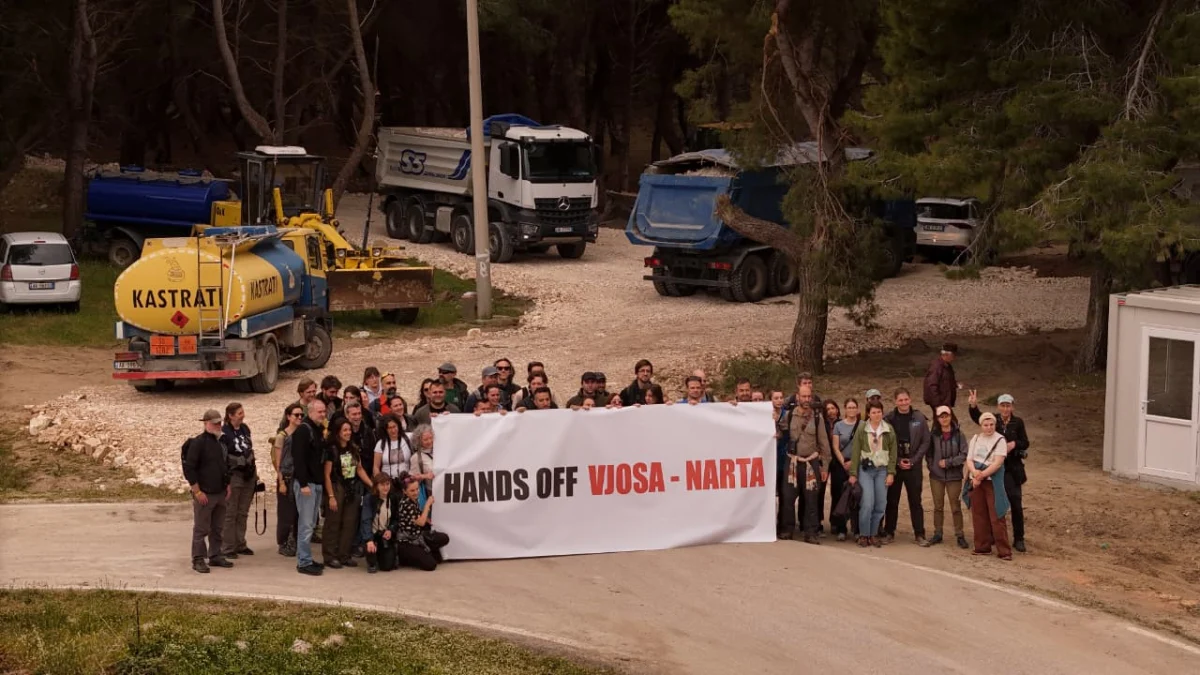
The Albanian coast, a vibrant tapestry of life in spring, is currently facing an unprecedented environmental crisis. Flamingos gracefully navigate the shallow lagoons, Dalmatian Pelicans soar majestically overhead, and millions of migratory birds find vital sanctuary within ancient pine forests. This critical ecosystem, known as Pishë Poro-Narta, stands as one of the Mediterranean’s last pristine wild coastlines and holds profound global ecological significance. Yet, without any apparent authorization, public consultation, or environmental impact assessment, heavy machinery has descended upon this protected area, felling trees, levelling sand dunes shaped over millennia, and raising urgent questions about accountability and the future of Albania’s natural heritage.
A Sanctuary Under Threat: The Ecological Value of Pishë Poro-Narta
Pishë Poro-Narta is an integral part of the Vjosa-Narta Protected Landscape, a region renowned for the Vjosa River, one of Europe’s final untamed waterways. This protected zone is a biodiversity hotspot, supporting over 70 endangered species and more than 200 avian species. The ancient pine forest, an irreplaceable natural asset, lies directly on the Adriatic Flyway, one of Europe’s most crucial bird migration corridors. The destruction of this habitat has far-reaching consequences, extending beyond Albania’s borders and impacting avian populations across the continent and beyond. Scientific studies on migratory bird routes consistently highlight the Adriatic Flyway as a critical pathway for millions of birds traveling between their breeding grounds in Europe and their wintering grounds in Africa. The loss of resting and refueling sites like Pishë Poro-Narta could lead to significant declines in bird populations, affecting ecosystems far from the Albanian coast.
Exploiting a Legislative Window: The Shadow of Development
The current crisis unfolds against a backdrop of contentious legislative changes. The Albanian government has previously amended its Law on Protected Areas, introducing provisions that permit luxury resort construction within designated protected zones. This move directly contravenes established EU nature protection standards, a point of significant concern given Albania’s ongoing accession negotiations with the European Union. The European Commission has repeatedly urged Albania to revise this legislation to align with EU directives, and the government has provided assurances of impending reform.
However, critics argue that while legal reforms are being debated on paper, development projects are being aggressively pushed forward on the ground. Aleksandër Trajçe, Director of PPNEA (Protection and Preservation of the Natural Environment in Albania), a key partner organization, has articulated the perceived strategy: to establish de facto development before stricter environmental laws can be enacted. This tactic, if true, represents a deliberate exploitation of a legislative gray area to bypass robust environmental protections.
The situation is further exacerbated by the apparent illegality of the current works, even under the existing, controversial legislation. Reports indicate a complete absence of environmental assessments, public consultations, transparent permitting processes, and any official clarification from relevant authorities regarding the nature of the construction, its purpose, or the entities responsible. Adding another layer of complexity, a major development project reportedly linked to Jared Kushner has been planned for this sensitive area. While the direct connection between these ongoing bulldozing activities and this specific project remains unclear, the timing and location raise significant concerns about potential future developments and the underlying motivations for the current destruction.
A Timeline of Concern and Escalating Actions
The events unfolding at Pishë Poro-Narta appear to have gained momentum in late April. Prior to this, the Albanian government’s amendment of the Law on Protected Areas, which opened the door for development in protected zones, had already drawn criticism from environmental organizations and international bodies. This amendment, though contentious, created the legal ambiguity that appears to be exploited now.
- Late April: Heavy machinery enters the Pishë Poro-Narta protected area. Reports emerge of trees being felled and sand dunes being leveled. Crucially, there is no evidence of an approved project, public consultation, or an environmental impact assessment.
- Early May: Environmental organizations, including BirdLife Europe and its Albanian partner PPNEA, begin to publicly highlight the destruction. Concerns are raised about the lack of transparency and the potential illegality of the works.
- Mid-May: Representatives from BirdLife Europe travel to Tirana to engage with Albanian authorities. While discussions are described as constructive, the physical destruction of the protected area continues.
This chronology suggests a deliberate and rapid execution of activities, potentially designed to outpace regulatory responses and public outcry. The lack of official communication further fuels speculation and distrust.
Data and Evidence: Quantifying the Ecological Loss
While precise figures on the extent of the damage are still being compiled, preliminary observations paint a grim picture. The ancient pine forest, a crucial element of this ecosystem, is being systematically cleared. This forest provides essential habitat for numerous bird species, including those on migratory routes, and plays a vital role in coastal erosion control and carbon sequestration. The sand dunes, natural barriers against sea-level rise and vital breeding grounds for specific flora and fauna, are being leveled, disrupting delicate ecological balances.
The Vjosa-Narta Protected Landscape is recognized internationally for its biodiversity. According to data from conservation organizations, the area is a critical stopover point for approximately 2.5 million migratory birds annually, representing a significant portion of the birds utilizing the Adriatic Flyway. The loss of even a fraction of this habitat could have cascading effects on bird survival rates and the health of ecosystems across Europe and Africa. Furthermore, the area is home to endemic species and a significant number of raptors, whose presence is often an indicator of a healthy ecosystem.
Official Responses and International Scrutiny
In response to the escalating situation, BirdLife Europe’s Regional Director Ariel Brunner and Head of Policy Anouk Puymartin visited Tirana this week. They engaged in discussions with Albanian authorities, reportedly receiving assurances that the relevant legislation will be updated within the current year. BirdLife Europe welcomed these assurances but emphasized that written commitments are insufficient while the physical destruction of the protected area continues unabated.
During a press conference in Tirana, Ariel Brunner stated, "Bulldozers are operating in a completely illegal way, based on unclear decisions and a total lack of transparency – and this needs to stop." This strong condemnation underscores the urgency and the perceived violation of both national and international environmental principles.
The European Commission, as Albania’s potential future member, is closely monitoring the situation. The country’s commitment to upholding EU environmental standards, particularly concerning protected areas and biodiversity, is a critical factor in its accession process. The ongoing destruction at Pishë Poro-Narta, if not swiftly addressed, could have significant diplomatic and political ramifications, potentially jeopardizing Albania’s progress towards EU membership.
Broader Implications: A Betrayal of Trust and Commitment
The events at Pishë Poro-Narta represent more than just an environmental issue; they signify a potential betrayal of trust and a disregard for long-term sustainability. Destroying a globally important ecological site, particularly one designated as protected, without due process, transparency, or public consent, undermines the principles of good governance and environmental stewardship.
The implications are multifaceted:
- Ecological Catastrophe: The irreversible loss of habitat for endangered species and migratory birds.
- Damage to Albania’s Reputation: Tarnishing the country’s image as a responsible steward of its natural resources and potentially impacting tourism and international investment.
- Jeopardizing EU Accession: Creating obstacles in Albania’s path towards EU membership due to non-compliance with environmental standards.
- Erosion of Public Trust: Disregarding the concerns of citizens and environmental organizations, leading to a breakdown in faith in governmental institutions.
- Precedent for Future Violations: If allowed to proceed unchecked, this incident could set a dangerous precedent for the exploitation of other protected areas in Albania.
BirdLife Europe’s call for immediate action—halting all works, publishing all relevant documents, and launching a full legal investigation—is a critical plea for accountability and the preservation of a vital natural asset. The Albanian wild coast, a treasure for the nation and the world, faces an existential threat. The decisions made in the coming days and weeks will determine whether this invaluable ecosystem will be saved or irrevocably lost to the relentless march of unchecked development. The clock is ticking, and the urgency for decisive, transparent, and legally sound action has never been greater.

