


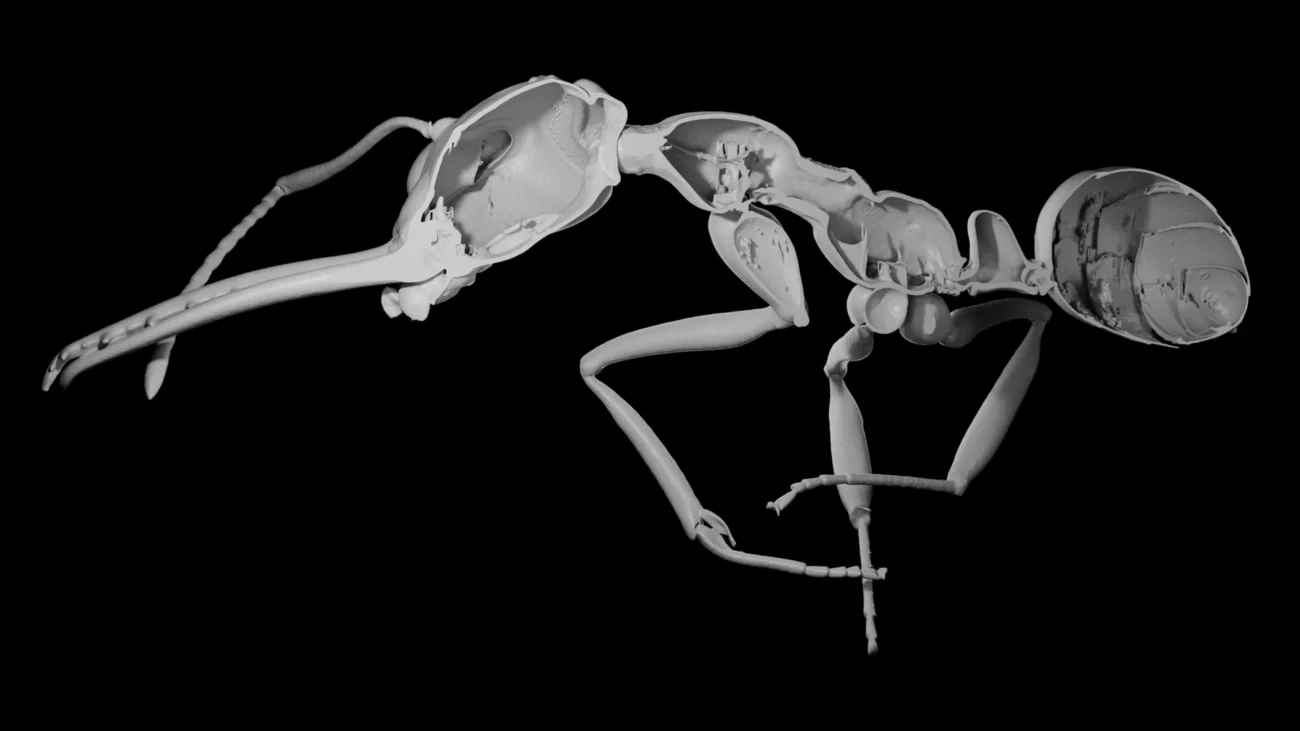
A groundbreaking study published in the prestigious journal Science Advances on December 19, 2025, has unveiled a fundamental evolutionary principle that may explain the remarkable success of complex animal societies, particularly the astonishing diversification and societal complexity observed in ants. Researchers from the University of Maryland and the University of Cambridge have presented compelling evidence suggesting that, in the grand evolutionary narrative, quantity can indeed triumph over individual quality, a phenomenon they’ve termed the "evolution of squishability." This research offers a novel perspective on how social organisms, from insects to potentially humans, have evolved by prioritizing the production of numerous, less robust individuals over fewer, highly defended ones, thereby unlocking pathways to larger, more intricate social structures and accelerated evolutionary diversification.
The Ant Colony: A Microcosm of Societal Evolution
The question of how individual organisms change as the societies they inhabit become more complex has long intrigued biologists. Dr. Evan Economo, senior author of the study and chair of the Department of Entomology at the University of Maryland, articulates this central inquiry: "There’s this question in biology of what happens to individuals as societies they are in get more complex. For example, the individuals may themselves become simpler because tasks that a solitary organism would need to complete can be handled by a collective." This simplification, where individuals require fewer resources to construct and can be produced in greater numbers, even at the cost of individual physical resilience, is what scientists describe as individuals becoming "cheaper." Until now, this hypothesis, while intuitive, had not been rigorously tested with large-scale analyses across diverse social insect groups.
Ants, with their vast range of colony sizes – from a few dozen individuals to many millions – and their ubiquitous presence across nearly every terrestrial ecosystem, present an ideal model system for studying the evolution of social complexity. Lead author Arthur Matte, a Ph.D. student in zoology at the University of Cambridge, highlights the enduring mystery surrounding ants’ success: "Ants are everywhere. Yet the fundamental biological strategies which enabled their massive colonies and extraordinary diversification remain unclear." This study proposes that a key strategy lies in how ants invest in their physical defenses, specifically their cuticle.
The Trade-Off: Investment in Armor vs. Numbers
The cuticle, the hard outer layer of an insect’s exoskeleton, plays a crucial role in an ant’s survival. It acts as a formidable barrier against predators, environmental desiccation, and pathogens, while also providing essential structural support for muscle attachment. However, constructing this protective armor is metabolically expensive, demanding significant quantities of limited nutrients such as nitrogen and various minerals. The research team hypothesized that species that opt for a thicker, more robust cuticle might be constrained in their ability to produce a large workforce, thereby limiting colony size. Conversely, species that "skimp" on cuticle thickness might be able to allocate these vital resources towards producing a greater number of workers, even if each individual is less physically resilient.
To empirically test this, the researchers embarked on an ambitious data collection and analysis project. They compiled a substantial dataset comprising over 500 ant species, utilizing high-resolution 3D X-ray scans to meticulously measure both total body volume and cuticle volume for each species. This extensive data allowed for precise quantification of the proportion of an ant’s body dedicated to its exoskeleton, revealing a wide spectrum of investment, ranging from a mere 6% to an impressive 35% of an ant’s total body mass.
Evolutionary Models Reveal a Clear Trend
The compiled measurements were then integrated into sophisticated evolutionary models. The results were striking and consistent: a clear and significant trend emerged. Ant species that devoted a smaller proportion of their body mass to cuticle development were demonstrably more likely to evolve into species that form larger colonies. This finding directly supports the central hypothesis that a reduction in per-individual investment in physical defense is a key driver of the evolution of large-scale social organization.
"Ants reduce per-worker investment in one of the most nutritionally expensive tissues for the good of the collective," explained Matte. "They’re shifting from self-investment toward a distributed workforce, resulting in more complex societies. It’s a pattern that echoes the evolution of multicellularity, where cooperative units can be individually simpler than a solitary cell, yet collectively capable of far greater complexity."
Beyond Colony Size: Links to Diversification
The implications of this reduced cuticle investment extend beyond simply enabling larger colony sizes. The study also uncovered a compelling correlation between lower investment in the cuticle and higher rates of diversification. Diversification, defined as the rate at which new species arise, is a widely accepted metric of evolutionary success. Dr. Economo noted the significance of this finding: "Very few traits have been connected to diversification in ants, making this result especially striking."
The precise mechanisms by which reduced cuticle investment promotes speciation are still under investigation, but the researchers have proposed several plausible hypotheses. One prominent idea is that ants requiring fewer nutritional resources for their construction, due to thinner cuticles, are better equipped to colonize and thrive in environments with limited food availability. Matte elaborated on this, stating, "Requiring less nitrogen could make them more versatile and able to conquer new environments." This suggests that a more "economical" body plan could unlock new ecological niches, leading to adaptive radiation and the formation of new species.
Furthermore, as ant societies evolved to become more complex, the collective capabilities of the group likely reduced the selective pressure for heavy individual armor. Group-level defenses, such as coordinated nest defense, sophisticated alarm systems, and communal sanitation practices to prevent disease spread, would have made individual ants less vulnerable. This creates a reinforcing feedback loop: lower cuticle investment allows for larger colonies, and larger colonies, in turn, reduce the need for each individual ant to be heavily armed, further favoring the "cheaper worker" strategy. Dr. Economo humorously encapsulated this concept as "the evolution of squishability," noting that not all insects are equally robust, a fact many children have likely discovered.
Historical Parallels and Broader Implications
The evolutionary pathways observed in ants offer fascinating parallels to broader biological and even human history. The study draws a compelling analogy to human military evolution, where the era of heavily armored knights, representing high individual quality, eventually gave way to armies composed of numerous, specialized soldiers like archers and crossbowmen, who relied on coordinated tactics and overwhelming numbers. This echoes Lanchester’s Laws, mathematical models developed during World War I that analyze how massed forces can overcome smaller, more elite units.
"The tradeoff between quantity and quality is all around. It’s in the food you eat, the books you read, the offspring you want to raise," said Matte. "It was fascinating to retrace how ants handled it through their long evolution. We could see lineages taking different directions, being shaped by different constraints and environments, and ultimately giving rise to the extraordinary diversity we observe today."
The implications of this research extend beyond entomology. It provides a fundamental framework for understanding how complex societies evolve across diverse taxa. While further research is needed, the principle of prioritizing collective strength through numerous, less individually specialized units could be a unifying theme in the evolution of sociality, potentially applicable to other social organisms like termites, and even offering insights into human societal development.
A Timeline of Discovery
The genesis of this research can be traced back to earlier explorations into ant biology and social evolution. The conceptual seeds were likely sown during academic discussions and initial observations of variation in ant morphology and colony structure. Arthur Matte began the foundational work during his master’s program while interning in Dr. Economo’s lab at the Okinawa Institute of Science and Technology in Japan, a period of intense data acquisition and preliminary analysis.
The formal research project, involving the extensive collection of 3D X-ray scans and the development of sophisticated evolutionary models, would have spanned several years, likely commencing in the early to mid-2020s. The meticulous process of data gathering, cleaning, and computational modeling required significant scientific infrastructure and expertise.
The culmination of this extensive effort arrived with the publication of the paper, "The evolution of cheaper workers facilitated larger societies and accelerated diversification in ants," in Science Advances on December 19, 2025. This publication marks a significant milestone, bringing years of dedicated research to the scientific community and offering a fresh perspective on one of biology’s most enduring questions.
Supporting Data and Context
The study’s reliance on a dataset of over 500 ant species is crucial. This broad taxonomic scope ensures that the observed trends are not an artifact of a few specific lineages but rather a general evolutionary phenomenon. The quantification of cuticle investment, ranging from 6% to 35% of body mass, provides concrete data points that anchor the evolutionary models. For context, consider the stark difference this represents. An ant with a 35% cuticle investment would have a significantly more robust exoskeleton than an ant with a 6% investment, likely impacting its resource requirements and susceptibility to damage.
The researchers’ use of evolutionary models allows them to infer past evolutionary trajectories. By mapping cuticle investment and colony size (or proxies for it) onto an ant phylogeny, they can identify instances where reductions in cuticle investment preceded increases in colony size or diversification rates. This retrodictive power of evolutionary modeling is essential for understanding historical biological processes.
Broader Impact and Implications
The findings from this ant study have profound implications for our understanding of evolutionary biology and the development of complex systems.
- Social Evolution Theory: The research provides empirical support for theories of social evolution that emphasize the benefits of a division of labor and the production of numerous, less specialized individuals. It suggests that the trade-off between individual robustness and sheer numbers is a fundamental driver of societal complexity.
- Resource Allocation: The study highlights the critical role of resource allocation in evolutionary success. By understanding how organisms prioritize investments in different traits (e.g., defense vs. reproduction vs. growth), we gain deeper insights into adaptation and diversification.
- Human Societies: The parallels drawn to human military history and economic principles suggest that these evolutionary trade-offs are not limited to the insect world. They may offer a lens through which to examine aspects of human societal organization, from economic development to military strategy.
- Conservation Biology: Understanding the factors that drive diversification could inform conservation efforts by identifying species or lineages that are particularly vulnerable or resilient due to their evolutionary strategies.
Official Responses and Future Directions
While specific official statements from external bodies are not provided in the source material, the publication in a high-impact journal like Science Advances itself signifies peer acceptance and scientific validation. This research is likely to stimulate further investigation in several key areas:
- Mechanistic Studies: Future research could delve deeper into the genetic and physiological mechanisms underlying cuticle development and the metabolic pathways involved in nutrient allocation.
- Comparative Studies: Expanding this research to other social insects, such as termites and social bees, would provide a more comprehensive understanding of the universality of these evolutionary principles.
- Ecological Factors: Investigating the specific environmental pressures that favor either high-quality or high-quantity individuals in different ecological contexts would be valuable.
- Behavioral Ecology: Examining how behavioral adaptations complement or mitigate the effects of differing cuticle investment levels could offer further insights.
In conclusion, the research on ant cuticle investment presents a compelling narrative of evolutionary strategy. By embracing "cheaper" workers, ants have not only built empires of unprecedented scale but have also diversified into an astonishing array of forms and ecological roles, demonstrating that in the grand theater of evolution, sometimes the most successful path is paved with a multitude of less armored, yet collectively powerful, individuals. This study serves as a potent reminder that the most complex and enduring structures often arise not from individual might, but from the synergistic power of a well-orchestrated collective.

