


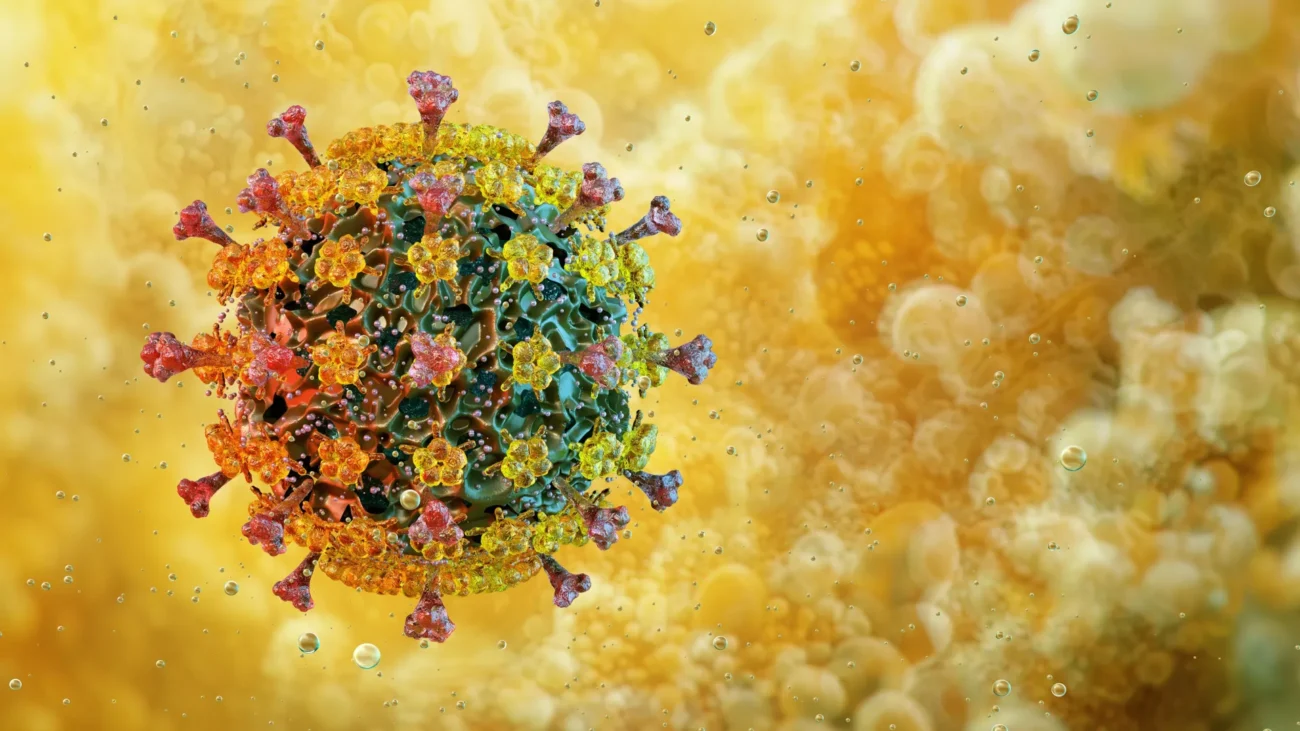
A groundbreaking study by researchers at the Universities of Cambridge and Glasgow has revealed a critical genetic factor that allows bird flu viruses to persist and multiply even at temperatures that typically inhibit human influenza strains. This discovery sheds new light on why avian influenza viruses, particularly those like H5N1, pose a significant and persistent threat to human health, with potentially devastating pandemic implications. The findings, published on November 28 in the prestigious journal Science, pinpoint a specific gene that confers remarkable heat tolerance, explaining how these viruses can bypass one of the body’s primary defenses: fever.
The research centers on the PB1 gene, a crucial component for viral replication. The study demonstrates that when this gene, originating from avian flu viruses, integrates into human influenza strains, it can grant them the ability to thrive in conditions that would normally be prohibitive. This gene exchange mechanism is not a theoretical possibility but a documented phenomenon that has played a role in past human influenza pandemics, including those of 1957 and 1968. Understanding this genetic adaptability is paramount for global health organizations tasked with monitoring and preparing for future influenza outbreaks.
The Body’s Fever Defense: A Double-Edged Sword
Fever, a ubiquitous response to infection, is a fundamental mechanism by which the human body combats viral invaders. By raising the core body temperature, typically to between 38°C and 41°C (100.4°F and 105.8°F), the body creates an environment that is less conducive to viral replication. Many common viruses, including seasonal human influenza strains, are highly sensitive to these elevated temperatures.
Seasonal human influenza viruses, for instance, exhibit a preference for the cooler upper respiratory tract, where temperatures hover around 33°C (91.4°F). While they can infect the warmer lower respiratory tract (closer to 37°C or 98.6°F), their replication efficiency diminishes significantly. This temperature gradient is a natural barrier that helps to contain infections and limit their severity.
However, avian influenza viruses, by their very nature, are adapted to different environments. Their natural hosts, such as waterfowl, often harbor these viruses in their lower respiratory tracts or intestines, where temperatures can reach a much higher range of 40-42°C (104-107.6°F). This inherent thermotolerance means that when these viruses encounter the feverish conditions of a human host, they are not as severely hampered as their human counterparts.
Unraveling the Genetic Mechanism: Experiments in Mice
To investigate the differential response of human and avian flu viruses to fever, the Cambridge and Glasgow research teams conducted a series of sophisticated experiments using laboratory mice. Crucially, mice do not typically develop fevers when infected with influenza A viruses. To simulate fever conditions, the researchers artificially elevated the ambient temperature in the mice’s environment, thereby raising their body temperature to mimic a human fever.
In these controlled settings, the scientists observed a stark contrast in viral behavior. When infected with a laboratory-adapted human-origin influenza strain, known as PR8 (a strain that poses no risk to humans), the simulated fever proved remarkably effective. The elevated body temperature significantly inhibited the replication of the human flu virus, transforming what would normally be a severe infection into a mild one. A mere 2°C (3.6°F) increase in body temperature was sufficient to dramatically curtail the virus’s ability to spread.
Conversely, when the same simulated fever conditions were applied to mice infected with avian influenza viruses, the results were strikingly different. The elevated temperatures did not impede the replication of the bird flu viruses. These avian strains continued to multiply, demonstrating their inherent resistance to the body’s fever defense. This in vivo evidence provided compelling support for the hypothesis that avian influenza viruses possess a distinct advantage in overcoming fever-induced inhibition.
The Pivotal Role of the PB1 Gene
The research further zoomed in on the genetic basis for this thermotolerance. The team identified the PB1 gene as a central player in conferring resistance to elevated temperatures. This gene is indispensable for the virus’s ability to copy its genetic material within infected host cells, a process known as replication.
When the PB1 gene originated from an avian influenza virus, the viruses demonstrated a marked ability to withstand fever-level temperatures. This was directly correlated with their capacity to cause serious disease in the experimental mice. The significance of this finding is amplified by the fact that bird and human flu viruses can readily exchange genetic material. This process, known as reassortment, often occurs when both types of viruses infect the same host, such as pigs, which are known to be susceptible to both avian and human influenza strains.
Historical Echoes and Pandemic Potential
Dr. Matt Turnbull, the study’s lead author from the MRC Centre for Virus Research at the University of Glasgow, emphasized the historical context and ongoing threat. "The ability of viruses to swap genes is a continued source of threat for emerging flu viruses," Dr. Turnbull stated. "We’ve seen it happen before during previous pandemics, such as in 1957 and 1968, where a human virus swapped its PB1 gene with that from an avian strain. This may help explain why these pandemics caused serious illness in people."
The pandemics of 1957 (Asian flu) and 1968 (Hong Kong flu) were caused by novel influenza A viruses that likely emerged through reassortment. These events led to millions of deaths worldwide, underscoring the devastating potential of influenza viruses that acquire new adaptations. The current research provides a molecular explanation for how such adaptations, specifically heat resistance, could have contributed to the virulence of these past pandemics.
Dr. Turnbull further stressed the importance of proactive surveillance: "It’s crucial that we monitor bird flu strains to help us prepare for potential outbreaks. Testing potential spillover viruses for how resistant they are likely to be to fever may help us identify more virulent strains." This suggests a future direction for pandemic preparedness, where the thermotolerance of circulating avian flu strains could be a key indicator of their pandemic potential.
The Persistent Threat of Avian Influenza
Professor Sam Wilson, senior author of the study from the Cambridge Institute for Therapeutic Immunology and Infectious Disease, highlighted the persistent danger posed by avian influenza viruses, despite their infrequent human infections. "Thankfully, humans don’t tend to get infected by bird flu viruses very frequently, but we still see dozens of human cases a year," Professor Wilson noted. "Bird flu fatality rates in humans have traditionally been worryingly high, such as in historic H5N1 infections that caused more than 40% mortality."
Historically, highly pathogenic avian influenza strains, such as H5N1 and H7N9, have demonstrated alarmingly high mortality rates in humans when they do manage to infect people. The H5N1 strain, in particular, has been responsible for severe outbreaks in poultry and sporadic, but often fatal, human infections. The high case fatality rate associated with these infections underscores the urgent need to understand the factors that contribute to their pathogenicity in humans.
"Understanding what makes bird flu viruses cause serious illness in humans is crucial for surveillance and pandemic preparedness efforts. This is especially important because of the pandemic threat posed by avian H5N1 viruses," Professor Wilson added. The current findings offer a significant piece of this complex puzzle, providing a tangible mechanism that can be monitored and studied.
Implications for Public Health and Future Treatments
The findings of this study have far-reaching implications, not only for understanding the fundamental biology of influenza viruses but also for public health strategies and potentially even medical treatments.
Surveillance and Risk Assessment: The identification of the PB1 gene’s role in fever resistance provides a valuable new tool for virologists and public health officials. By analyzing the genetic makeup of avian influenza viruses circulating in animal populations, particularly those with the potential to spill over into humans, scientists can more accurately assess their pandemic potential. Viruses exhibiting avian-like PB1 genes may warrant closer scrutiny and more aggressive containment efforts.
Pandemic Preparedness: The historical precedent of the 1957 and 1968 pandemics, linked to genetic reassortment involving avian flu genes, serves as a stark reminder of the threat. This research offers a scientific basis for understanding how such events might unfold and provides a potential avenue for early warning. Understanding the specific genetic traits that confer virulence can inform the development of targeted diagnostic tools and antiviral therapies.
Fever Treatment Debate: The study also touches upon the ongoing debate surrounding the management of fever during viral infections. While fever is a natural defense mechanism, it can also cause discomfort and distress, leading many to seek antipyretic medications like ibuprofen and aspirin. Some clinical evidence has suggested that suppressing fever might not always be beneficial and could, in some instances, even facilitate viral spread in human influenza infections. The new research provides a compelling biological explanation for why this might be the case, particularly for avian-adapted viruses. If bird flu viruses can bypass the fever defense, then artificially lowering that defense might inadvertently aid their replication. However, the researchers caution that more studies are needed before any definitive changes are made to treatment guidelines.
Future Research Directions: This discovery opens up several avenues for future research. Scientists will likely focus on:
- Quantifying PB1 gene prevalence: Investigating how widespread avian-like PB1 genes are in different avian influenza strains globally.
- Developing specific antivirals: Exploring whether therapies can be developed to specifically target the replication mechanisms of heat-resistant avian flu viruses.
- Investigating other contributing factors: While PB1 appears crucial, other genetic or environmental factors might also influence thermotolerance and pathogenicity.
- Human trials: If feasible and ethically permissible, understanding how simulated fever conditions impact human influenza infections in controlled settings could provide further insights.
The research was supported by substantial funding from various prestigious organizations, including the Medical Research Council, the Wellcome Trust, the Biotechnology and Biological Sciences Research Council, the European Research Council, the European Union Horizon 2020 program, the UK Department for Environment, Food & Rural Affairs, and the US Department of Agriculture. This broad support underscores the global recognition of the importance of understanding and combating influenza viruses.
In conclusion, the findings from Cambridge and Glasgow represent a significant leap forward in our understanding of avian influenza viruses and their potential to cause pandemics. By uncovering the critical role of the PB1 gene in conferring heat resistance, scientists have provided a tangible target for surveillance, preparedness, and potentially, future therapeutic interventions. The persistent threat of bird flu, coupled with its capacity to adapt and spread, necessitates continued vigilance and robust scientific investigation.

