


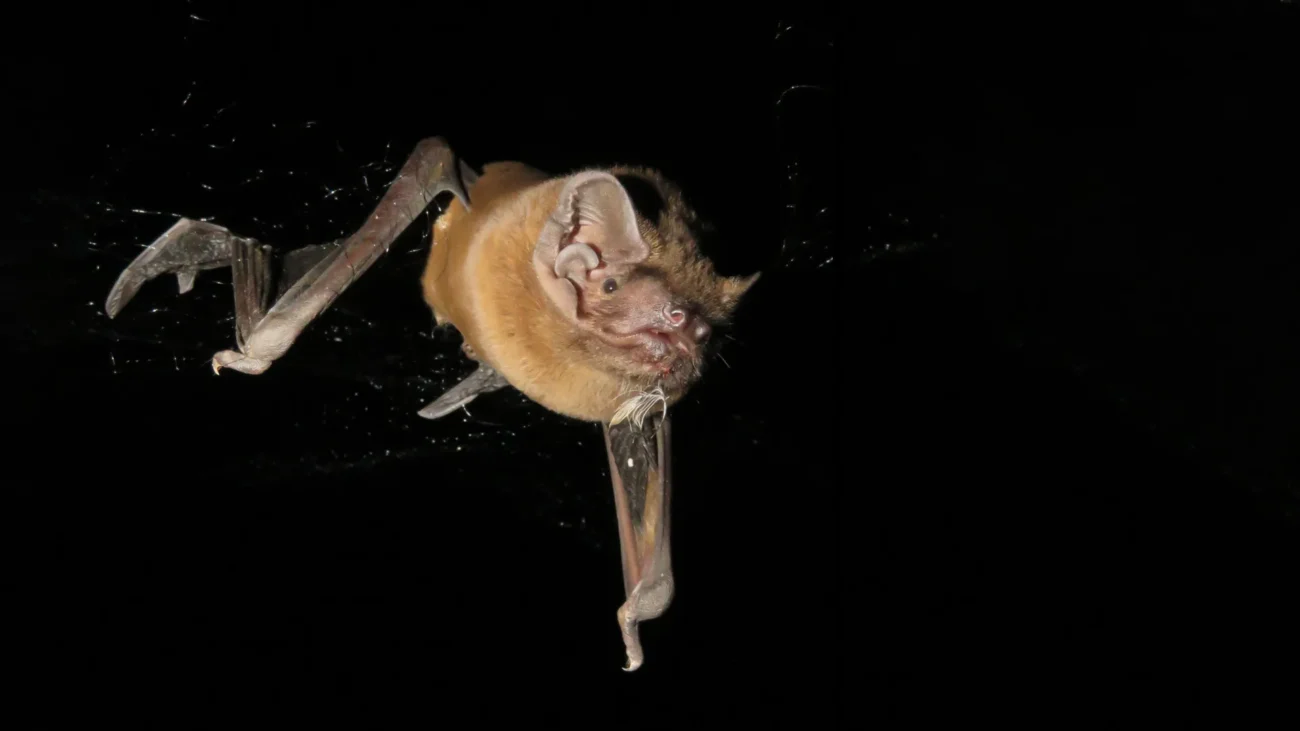
For nearly a quarter of a century, scientists have pursued a tantalizing enigma in the nocturnal skies of Europe: the hunting habits of its largest bat, the greater noctule (Nyctalus lasiopterus). Today, a groundbreaking international research effort has not only confirmed but also vividly illuminated this remarkable mystery. Far from being a mere insectivore, this colossal chiropteran has been revealed as a sophisticated aerial predator, capable of hunting and capturing small birds more than a kilometer above the ground, consuming its quarry while still in sustained flight. The findings, published in the prestigious journal Science, paint a stunning portrait of nocturnal aerial combat, precision strikes, and predation in the deepest darkness.
The Silent Hunters of the Night Skies
Each year, billions of songbirds embark on epic migratory journeys, traversing vast distances between their breeding grounds and wintering territories. To evade diurnal predators and optimize their travel, many species choose to fly under the cloak of night. However, this nocturnal passage is not without its perils, as the skies are also dominated by a different set of hunters: bats. For decades, researchers have suspected that certain large bat species might pose a threat to these airborne travelers, but direct evidence of such predation, particularly mid-flight, remained elusive.
The greater noctule, a solitary and rarely seen species, has long been a focal point of this inquiry. Its impressive wingspan, reaching up to 55 centimeters, hints at its capacity for powerful flight and potentially, for taking down larger prey than typical insectivorous bats. The hypothesis that these bats preyed on birds had been circulating for years, fueled by circumstantial evidence, but the sheer difficulty of observing such a high-altitude, nocturnal interaction made definitive proof a monumental challenge.
A Quarter-Century Pursuit: From Feathers to Flight Recorders
The genesis of this investigation can be traced back nearly 25 years to the pioneering work of Spanish bat expert Carlos Ibáñez and his colleagues at the Doñana Biological Station (CSIC) in Seville. In the late 1990s, Ibáñez made a significant discovery: bird feathers were present in the droppings of greater noctule bats. This initial finding ignited a persistent curiosity, prompting years of dedicated effort to gather further evidence.
Ibáñez’s team employed innovative methods for their time, including the use of "smart" roosts. These specialized roosts were equipped with antennas designed to detect microchips implanted in the bats. This sophisticated tracking system allowed researchers to monitor the bats’ movements, collect data, and even receive real-time alerts on their phones. While this approach provided valuable insights into the bats’ general activity patterns, it could not directly capture the specifics of their hunting behavior.
Despite accumulating evidence, the notion that a bat could actively hunt and capture a bird in mid-air was met with considerable skepticism within the scientific community. Birds, especially those capable of sustained flight, are agile and can weigh as much as half the body mass of a greater noctule, presenting a formidable challenge for any predator. The sheer scale of such an aerial pursuit made direct observation incredibly difficult. Researchers attempted various methods to film these elusive hunts, including roost cameras, military radar, and even hot-air balloons equipped with ultrasound recorders. They also experimented with GPS trackers, but the challenge lay in developing devices that were both effective and light enough for the bats to carry without hindering their flight. This quest for definitive proof was a testament to the scientific community’s dedication to understanding the intricacies of the natural world.
Technological Leap: Riding on the Bats’ Backs
The breakthrough in this long-standing mystery arrived with advancements in miniaturized biologger technology, spearheaded by researchers at Aarhus University in Denmark. These cutting-edge devices, developed with bat research in mind, are remarkably lightweight and can be fitted like tiny backpacks onto the bats. The biologgers are capable of recording a wealth of data, including altitude, acceleration, detailed movement patterns, and crucial acoustic information, such as the bats’ echolocation calls.
An international research team, including Assistant Professor Laura Stidsholt from Aarhus University’s Department of Biology and Elena Tena, a co-author of the study, effectively "rode along" with greater noctule bats. By analyzing the data transmitted from these biologgers, scientists gained an unprecedented, high-resolution view of the bats’ nocturnal hunting strategies, revealing their activities at altitudes exceeding one kilometer above ground level.
The Hunt: Precision Strikes in Total Darkness
The data meticulously collected by the biologgers painted a dramatic picture of the greater noctule’s hunting prowess. The bats were observed soaring to extreme altitudes, a strategy that likely allows them to survey vast territories and identify potential prey. Unlike insects, which can be detected by the bats’ ultrasonic echolocation calls, birds possess a different sensory apparatus. This means that songbirds are largely unaware of the approaching danger until the final moments of the attack, making them vulnerable to the bats’ stealth and speed.
The success of these hunts hinges on the bats’ sophisticated echolocation system. Greater noctules employ powerful, low-frequency echolocation calls that can detect birds at considerable distances, providing them with a significant range advantage. As the bat closes in on its target, it unleashes a rapid series of short, high-frequency calls. This shift in echolocation signals the transition to the final, critical phase of the attack.
Daring Aerial Pursuits and Mid-Flight Feasting
The biologger data revealed the astonishing agility and predatory drive of the greater noctule. In several documented instances, the bats engaged in steep, high-speed dives towards their unsuspecting avian prey. These maneuvers were described as being reminiscent of fighter jets executing combat dives, with the bats exhibiting remarkable acceleration and emitting a continuous stream of attack calls.
In one observed chase, a bat dove for an impressive 30 seconds, demonstrating intense flapping and a threefold increase in acceleration. While this particular pursuit was ultimately unsuccessful, the birds’ own evasive tactics proving a match for the bat on that occasion, another chase lasted for a remarkable 176 seconds. In this prolonged aerial duel, the bat eventually triumphed, capturing a robin near the ground.
The audio recordings captured from the biologgers provided chilling evidence of the final moments. Microphones picked up 21 distinct distress calls from the robin, followed by approximately 23 minutes of chewing sounds as the bat, still in flight, consumed its meal.
The Mechanics of Aerial Predation
Further analysis, including X-ray imaging and DNA analysis of bird wings recovered from beneath known hunting areas, has shed light on the precise methods employed by the greater noctule. Once a bird is captured, the bat kills it with a powerful bite. It then appears to remove the bird’s wings, a likely adaptation to reduce aerodynamic drag and facilitate easier handling during flight. The bat then utilizes the membrane between its hind legs, the uropatagium, as a makeshift pouch to secure and consume the prey while continuing to fly. This remarkable feat of aerial dining underscores the extraordinary capabilities of this apex nocturnal predator.
Assistant Professor Laura Stidsholt, a lead author of the study, articulated the sheer marvel of this behavior. "We know that songbirds perform wild evasive maneuvers such as loops and spirals to escape predators like hawks during the day — and they seem to use the same tactics against bats at night," she explained. "It’s fascinating that bats are not only able to catch them, but also to kill and eat them while flying. A bird like that weighs about half as much as the bat itself — it would be like me catching and eating a 35-kilo animal while jogging." Stidsholt’s expertise in perfecting biologger technology has been instrumental in numerous bat research discoveries, culminating in this significant confirmation.
A Symphony of Sounds and Survival
Elena Tena, a co-author of the study, described the emotional impact of hearing the recordings for the first time. "While it evokes empathy for the prey, it is part of nature," she stated. "We knew we had documented something extraordinary. For the team, it confirmed what we had been seeking for so long. I had to listen to it several times to fully grasp what we had recorded." The soundscape of a bird’s final moments, coupled with the subsequent sounds of consumption, is a stark reminder of the raw realities of the natural world, even as it confirms a long-held scientific hypothesis.
Implications for Conservation: Protecting a Rare Predator
Fortunately for songbird populations, the greater noctule bat is an exceedingly rare species. In many regions across Europe, it is classified as endangered, primarily due to the ongoing loss of its essential forest habitats. The very success of this research, enabled by advanced technology, now places a critical emphasis on understanding the ecology and behavior of this remarkable creature.
The findings have profound implications for conservation efforts. By illuminating the greater noctule’s unique predatory niche and its reliance on specific forest environments, scientists and conservationists can develop more targeted and effective strategies to protect this extraordinary nocturnal predator. Ensuring the preservation of its habitat is paramount to safeguarding its future and maintaining the delicate balance of Europe’s biodiversity. The confirmation of its bird-hunting prowess is not just a scientific triumph, but a compelling call to action for the conservation of one of the continent’s most fascinating and enigmatic inhabitants.

