


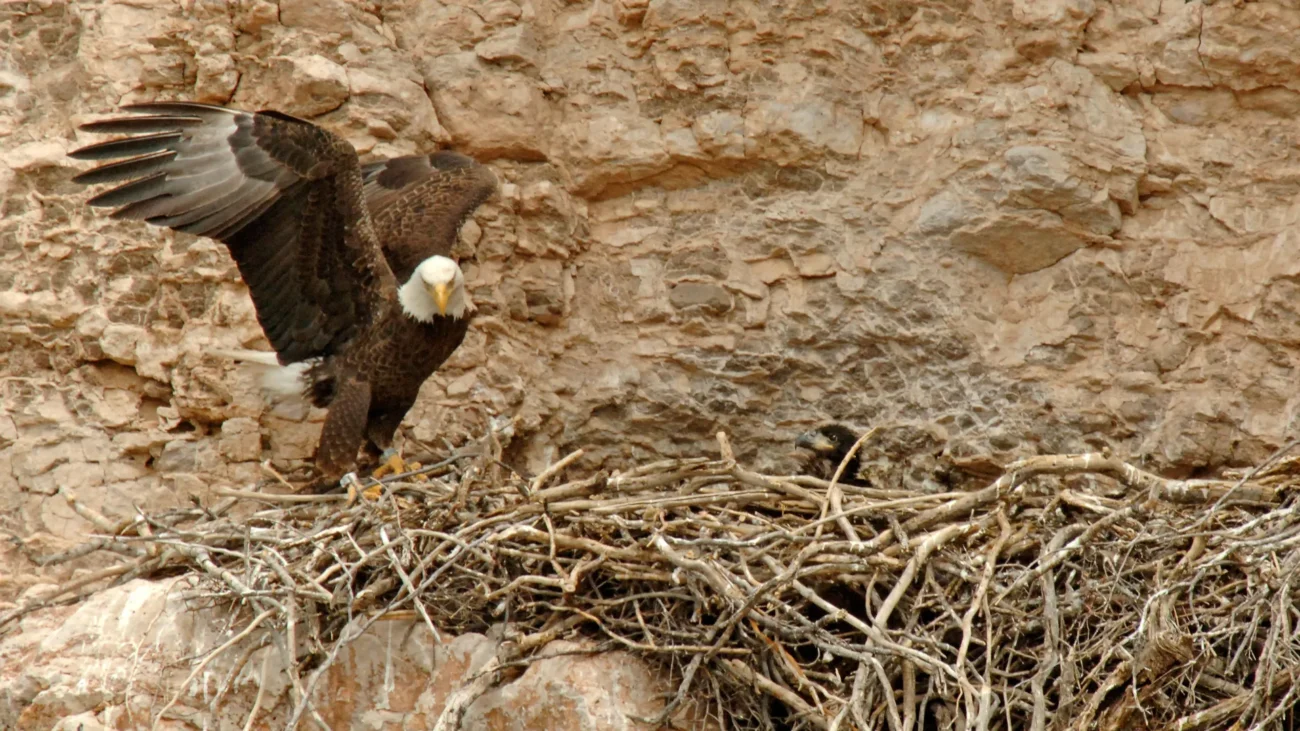
A groundbreaking study published in the Journal of Raptor Research is challenging long-held assumptions about avian migration patterns, particularly concerning the iconic Bald Eagle ( Haliaeetus leucocephalus ). Contrary to the traditional understanding of temperate-zone birds heading south for warmer climes and more abundant food during their nonbreeding season, a significant portion of Bald Eagles originating from Arizona are exhibiting an unexpected northward migratory behavior. This research, meticulously conducted between 2017 and 2023, not only documents these atypical journeys but also reveals a remarkable instance of long-term emigration, prompting a reevaluation of the species’ adaptability and dispersal strategies in a rapidly changing environment.
The study, titled "Northward Migrations of Nonbreeding Bald Eagles from Arizona, USA," highlights the exploratory nature of these southwestern Bald Eagles. Researchers utilized advanced satellite telemetry to track the movements of 24 newly fledged eagles and two nonbreeding adult birds. The data collected paints a compelling picture of young eagles undertaking extensive journeys, often venturing far north of their natal territories. This exploratory drive is believed to be a strategic adaptation to locate ephemeral food sources, a critical survival mechanism in dynamic ecosystems. The implications of this research are profound, offering vital insights for conservation efforts as climate change and habitat alterations continue to reshape landscapes and influence wildlife movements, necessitating the protection of crucial migratory corridors for vulnerable species.
Unraveling the Mysteries of Nonbreeding Bald Eagle Movements
Traditionally, the prevailing wisdom regarding migratory birds in North America dictates a southward trajectory during the nonbreeding season, typically coinciding with the northern hemisphere’s winter. This movement is primarily driven by the search for milder weather and more reliable food resources. However, the Arizona population of Bald Eagles presents a fascinating anomaly. These birds commence their nesting activities during the winter months, meaning their nonbreeding period falls during the summer and autumn. This temporal inversion of migratory behavior immediately intrigued the research team, led by Dr. Caroline D. Cappello.
"Northward migratory behavior raises interesting questions about the recent and historical pressures that shape these movement strategies," Dr. Cappello noted. Her curiosity was the driving force behind the extensive seven-year study, which aimed to provide a more comprehensive understanding of what nonbreeding Bald Eagles do after they leave their established territories. While much is known about the fidelity of breeding eagles to their nesting sites, the movements and survival rates of nonbreeding individuals have remained largely undocumented. This research fills a critical knowledge gap, offering a more complete picture of the species’ overall health and the factors influencing population dynamics.
The satellite transmitters, fitted to the young eagles, provided invaluable real-time data, allowing researchers to follow individual birds for periods extending up to four years. This extended observation window enabled the team to map not only their migratory paths but also their dispersal patterns and potential settlement areas. The findings suggest that these young eagles are not merely engaging in short-term excursions but are actively exploring vast territories in search of suitable habitats and sustenance.
Historic Stopover Sites: Enduring Havens for Eagles
A particularly compelling aspect of the study is the overlap observed between the current migratory routes of the tracked eagles and historic stopover sites identified in earlier research. A study conducted in the 1980s had already pinpointed several lakes and rivers as critical resting and feeding grounds for Bald Eagles. The current research confirms that these same aquatic environments continue to serve as vital gathering points for multiple generations of eagles. This enduring reliance on specific habitats underscores their ecological significance and the importance of their continued preservation.
The researchers observed that the eagles utilized a significant portion of the Intermountain Flyway, a major avian migratory route that stretches across western North America. Their routes were consistently linked to lakes and rivers, confirming a deep dependence on these freshwater ecosystems. Furthermore, the study revealed that eagles of various age classes were migrating to regions spanning the northern United States and southern Canada.
Dr. Javan M. Bauder, a coauthor of the study and a USGS researcher affiliated with the Arizona Cooperative Fish and Wildlife Research Unit and the University of Arizona, emphasized the critical nature of this finding. "Managing and conserving wildlife populations requires that we understand the movement of patterns of individuals of all age classes within those populations," he stated. This sentiment highlights the need to consider the entire life cycle of a species when developing conservation strategies.
The study also noted a refinement in migration pathways as the eagles matured. Most birds tracked for at least two years exhibited a pattern of returning to Arizona in the fall of their hatch year after spending the preceding summer exploring farther north. This suggests a learning process where young eagles gradually develop more precise and efficient migratory routes. The researchers posit that these journeys might be driven by the pursuit of seasonal food "bonanzas," such as the spawning runs of salmon, the nesting aggregations of waterfowl, or the carcasses of large mammals that become available in different regions at specific times of the year. However, this hypothesis requires further investigation to be definitively confirmed.
Long Journeys and the Perils of a Human-Dominated World
The journeys undertaken by these young Bald Eagles are not without significant risks. In a world increasingly shaped by human activities, raptors face a multitude of hazards. One particularly poignant case documented in the study involved a single eagle that traversed ten U.S. states and four Canadian provinces during her early life. She eventually appeared to settle in northern California, seemingly poised to establish a breeding territory. Tragically, at the age of four, her life was cut short by electrocution, a common and often fatal threat to large birds of prey that encounter power lines.
Dr. Cappello expressed her dismay at this loss, explaining that it "underscored the ongoing risks these birds face." The death of this eagle was especially troubling because emigration, the act of moving from one’s home population to establish residence elsewhere, is a difficult aspect of population dynamics to quantify. Her apparent decision to emigrate and potentially breed in California would have provided invaluable data on the frequency of dispersal among Arizona-hatched Bald Eagles.
Beyond electrocution, young raptors are vulnerable to a range of other threats. These include poisoning from lead ammunition and rodenticides, collisions with wind turbines, habitat loss due to development and land-use changes, and the pervasive uncertainty associated with a changing climate. The unpredictable shifts in weather patterns, resource availability, and ecosystem dynamics pose significant challenges to the survival of these magnificent birds.
By meticulously studying raptors at every stage of their lives, including the exploratory journeys of young birds, scientists can develop more effective, evidence-based conservation recommendations. This includes identifying the most critical stopover sites that require protection and recommending modifications to infrastructure, such as electrical systems, to mitigate risks and improve survival rates for eagles and other large raptors.
Future Research and Evolving Conservation Priorities
The findings of this study necessitate a forward-looking approach to Bald Eagle conservation. The research team has outlined several key areas for future investigation. Dr. Cappello highlighted the importance of studying "route fidelity," the tendency of individuals to repeatedly use the same migratory pathways. "If consistent patterns exist, it could help focus conservation efforts on specific, high-use areas along their migratory route," she explained. Identifying these critical corridors would allow for targeted protection measures, ensuring that vital habitats are preserved and that migratory routes remain open and safe.
Furthermore, the researchers emphasize the value of comparing the migratory strategies of these Arizona Bald Eagles with other wildlife populations that exhibit northward migration from the southern edges of their ranges. Such comparative studies can shed light on the broader ecological and evolutionary trade-offs, costs, and benefits associated with this less common migratory strategy. Understanding these dynamics can inform more nuanced and effective conservation approaches across diverse species and regions.
The study’s findings underscore the dynamic nature of wildlife populations and their ability to adapt to changing environmental conditions. As climate change continues to exert pressure on ecosystems, understanding how species like the Bald Eagle adjust their movements and behaviors becomes paramount. The proactive identification of critical habitats, the mitigation of anthropogenic threats, and the adaptation of conservation strategies to account for novel migratory patterns are essential steps in ensuring the long-term survival of these majestic raptors and the health of the ecosystems they inhabit. This research serves as a crucial reminder that our understanding of the natural world is constantly evolving, and with it, our responsibility to protect it.

