


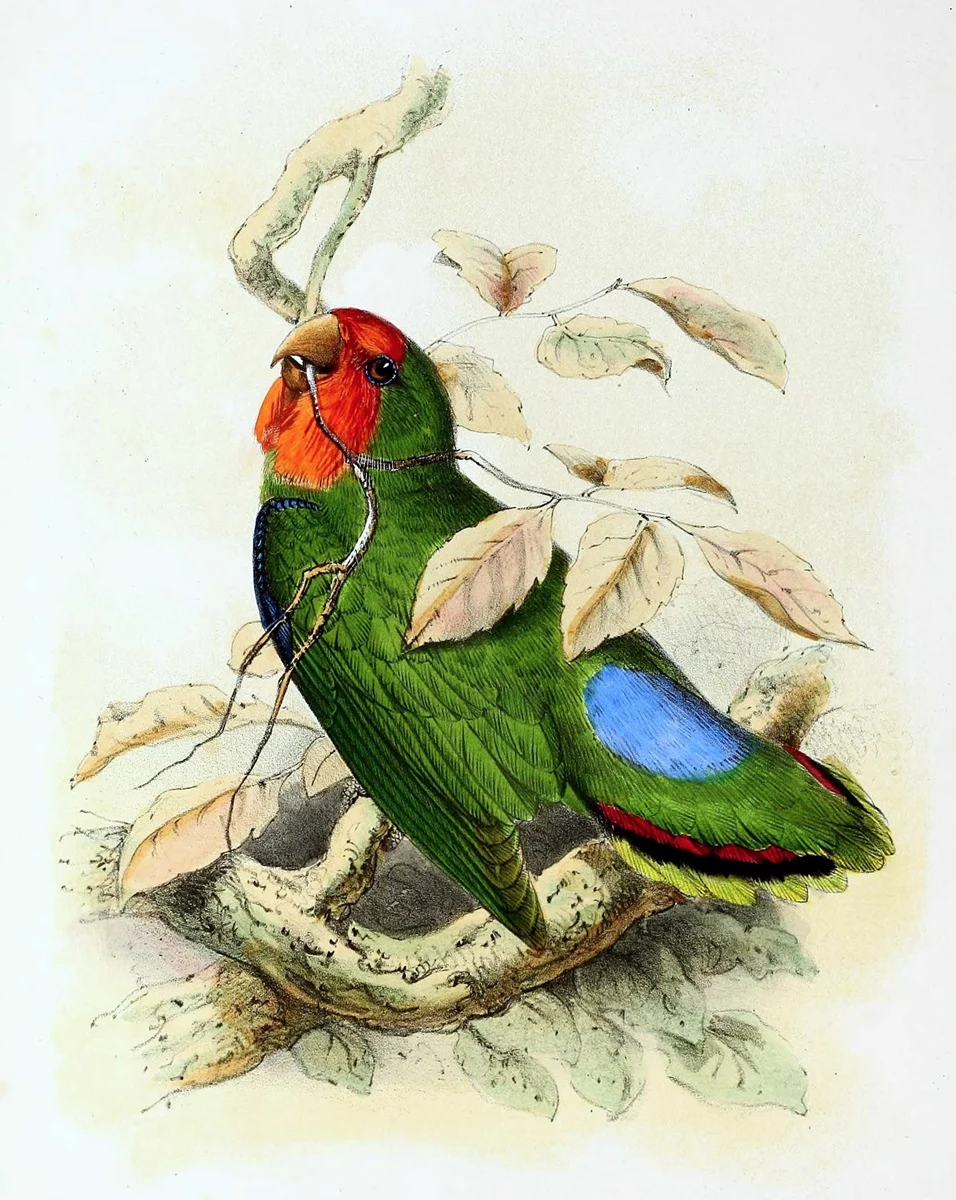
Among the vibrant tapestry of African parrots, one species often remains in the shadows, rarely encountered in private collections or public aviaries: Agapornis pullarius, commonly known as the red-headed lovebird or red-faced lovebird. Unlike its more ubiquitous relatives, such as the peach-faced or Fischer’s lovebirds, Agapornis pullarius presents a unique set of challenges and fascinations, primarily due to its inherently stress-prone nature, which severely limits its prevalence in captivity. This article explores the intricate details of this captivating avian species, from its natural habitat and ecological role to its complex conservation status and the formidable hurdles faced in its avicultural management.
A Distinctive Member of the Agapornis Genus
The genus Agapornis comprises nine species of small parrots native to the African continent, with one species also found in Madagascar. Known for their strong pair bonds, these "lovebirds" are a diverse group, but Agapornis pullarius distinguishes itself not only by its striking coloration but also by its specialized ecological requirements and delicate temperament. Reaching up to 15 cm (6 inches) in length and weighing approximately 45 grams, these compact parrots are characterized by a vivid emerald green body, a bright scarlet face and beak, a subtle blue wash on the lower back, and a touch of red on the tail feathers. Their lifespan can extend up to 20 years in optimal conditions, though achieving such longevity in captivity is a testament to dedicated care. While considered relatively quiet for a parrot, their calls can be shrill, a typical trait of many psittacine species.
Geographic Distribution and Preferred Habitat
Like all members of its genus, the red-headed lovebird is exclusively found in Africa. Its natural range stretches across a broad, albeit patchy, band from western sub-Saharan Africa eastward into Central Africa. This distribution encompasses countries from Guinea in the west to Ethiopia in the east, traversing diverse landscapes across a significant portion of the continent.
Agapornis pullarius is primarily a bird of the tropical lowland savannah, demonstrating a preference for open woodlands and savannahs dotted with trees, crucially avoiding dense primary forests. This habitat preference suggests an adaptation to environments with scattered vegetation, offering both cover and foraging opportunities. The species is largely sedentary within its range, indicating a stable resource base rather than nomadic movements driven by seasonal scarcity. These lovebirds typically occur at altitudes up to 2,000 meters (approximately 6,550 feet), though they are more commonly observed at lower elevations. They are usually encountered in pairs, reflecting their common moniker, or in small flocks that can number up to a few dozen individuals, foraging and roosting together.
Physical Characteristics and Subspecies

The visual appeal of the red-headed lovebird is undeniable, making it a highly attractive species. Its bright green plumage provides excellent camouflage within leafy canopies, while the contrasting red face and beak serve as a prominent identifier. A subtle dash of blue on the lower back and a small band of red on the tail further enhance its beauty.
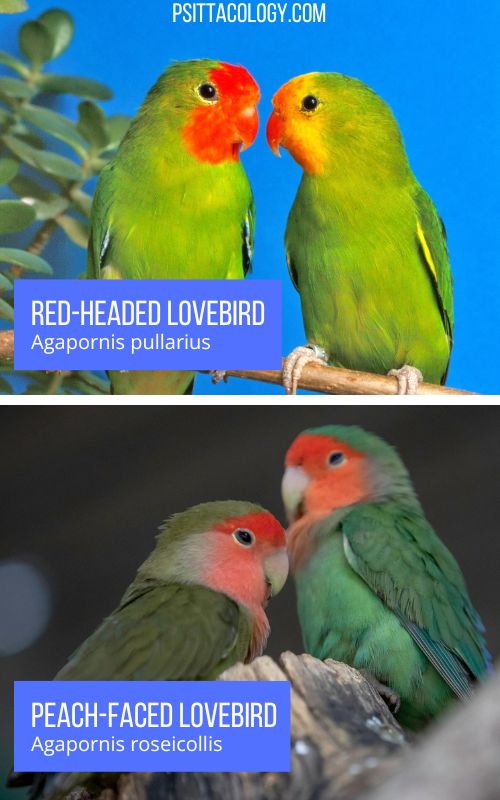
Distinguishing Agapornis pullarius from its more common avicultural counterpart, the peach-faced lovebird (Agapornis roseicollis), is important. While both share a similar body shape and green plumage, the key differentiator lies in the beak color: A. pullarius possesses a distinct red beak, whereas A. roseicollis has a beige or horn-colored beak.
Sexual dimorphism is also observable in red-headed lovebirds, albeit subtly. The male typically displays a more intensely colored scarlet face and beak. In contrast, the female’s facial coloration leans more towards an orange hue, and her beak is often less brightly pigmented. This difference, while not always immediately apparent, allows experienced observers to differentiate between the sexes visually.
There are two recognized subspecies of Agapornis pullarius:
- Agapornis pullarius pullarius: The nominate subspecies, found across the majority of the species’ range from West to Central Africa.
- Agapornis pullarius ugandae: Found in a more restricted area, primarily in Uganda and parts of eastern Democratic Republic of Congo. This subspecies is often noted for minor variations in plumage coloration, typically a slightly darker green and sometimes a deeper red on the face.
Behavioral Ecology and Dietary Habits
In their natural environment, red-headed lovebirds exhibit behaviors characteristic of small, arboreal parrots. Their movements are often quick and agile, flitting between branches as they forage. Socially, the species maintains strong pair bonds, a hallmark of lovebirds, often seen preening each other and staying close even within larger flocks. These small flocks likely offer protection against predators, with multiple eyes and ears to detect threats.
The diet of Agapornis pullarius primarily consists of seeds, particularly grass seeds, which are abundant in their savannah habitat. This dietary preference has, however, brought them into conflict with human agricultural interests. Red-headed lovebirds are known to feed on agricultural crops such as millet, leading to their perception as pests by local farmers. This human-wildlife conflict contributes to the pressure on wild populations. Beyond seeds, they also supplement their diet with wild fruits like figs and guava when available, providing essential vitamins and minerals. The ability to exploit both wild and cultivated food sources highlights their adaptability, yet it also underscores a vulnerability when agricultural practices intensify.
Conservation Status and Escalating Threats

Despite its widespread range, the conservation status of Agapornis pullarius presents a paradox. The International Union for Conservation of Nature (IUCN) Red List currently classifies the species as "Least Concern." However, this broad classification is accompanied by crucial caveats, noting that the species is "locally uncommon in most of its natural range" and that its population size is "unfortunately likely decreasing." This highlights a disconnect between a seemingly secure global status and concerning regional declines.
Several significant factors contribute to the ongoing decline of red-headed lovebird populations:
- Habitat Destruction: The primary driver of decline for many African species, habitat loss through deforestation, agricultural expansion, and urbanization directly reduces the availability of suitable savannah and woodland habitats. As human populations grow and land use intensifies, the fragmented and patchy nature of their preferred environment becomes increasingly compromised.
- Human-Wildlife Conflict: The perception of red-headed lovebirds as crop pests leads to their persecution by farmers. Methods of control, often lethal, contribute to local population reductions, intensifying the pressure on a species already facing habitat challenges.
- Capture for the Pet Trade: Historically, and to some extent currently, the live bird trade has exerted significant pressure on wild populations. A 2018 study alarmingly reported that almost 40,000 red-headed lovebirds were exported from their natural range since 1975. This figure, representing only documented exports, likely underestimates the true scale of wild-caught birds entering the pet trade, including illegal trade. The quote from Parr & Juniper (2010) in "Parrots: a guide to parrots of the world" reinforces this, stating: "Abundance also varies owing to nomadic habits, but a genuine overall decline appears to have occurred in many areas this century. Trapped for live bird trade with large numbers in captivity outside range."
Agapornis pullarius is listed under CITES Appendix II, meaning it is not necessarily threatened with extinction, but its trade must be controlled to avoid utilization incompatible with its survival. Despite this, the sheer volume of birds captured for trade over decades undoubtedly contributes to population declines and disrupts wild ecosystems. The stress-prone nature of these birds means many wild-caught individuals do not survive the capture and transport process, leading to further waste and unsustainable practices.
Challenges and Ethical Considerations in Aviculture
The red-headed lovebird stands in stark contrast to its more docile and adaptable lovebird cousins in aviculture. Its nervous, easily stressed, and particular nature makes it a species almost exclusively managed by highly dedicated and experienced parrot enthusiasts, often within specialized aviary settings rather than as household pets. This species’ extreme sensitivity means that sudden loud noises, changes in environment, or even the presence of boisterous aviary neighbors can lead to profound stress, sometimes resulting in sudden death.
For those rare individuals who successfully keep Agapornis pullarius, a tame pet is not the expectation. These birds are observed and appreciated from a distance, reinforcing the principle of "look, but don’t touch."
Housing Requirements:
Successful housing of red-headed lovebirds in captivity necessitates careful planning. A heated aviary is often preferred, particularly for birds housed in temperate climates, to mimic their tropical origins. Ideally, they are kept solo or in established, harmonious pairs to minimize stress from social dynamics. For indoor keeping, a spacious cage (at least 80cm/30 inches wide) with appropriate bar spacing (around 1.25cm/0.5 inches) is essential. The cage must be furnished with a variety of natural wood perches of varying diameters to promote foot health and provide enrichment.
Captive Diet:
While many traditional lovebird keepers continue to rely on dry or sprouted seeds, modern avian veterinary science increasingly advocates for a high-quality pelleted diet as the nutritional cornerstone for parrots. Pellets provide a balanced intake of essential nutrients, mitigating the risks of nutritional deficiencies often associated with seed-only diets. This should be supplemented with a diverse array of fresh foods, including leafy greens and other vegetables, a selection of fruits, cooked grains, and safe foraged weeds. During breeding seasons or for general health, additional protein sources like boiled egg or mealworms can be beneficial.
Enrichment for Sensitive Species:
Like all parrots, Agapornis pullarius is intelligent and prone to boredom. However, their stress-prone disposition means enrichment must be introduced gradually and thoughtfully. Abrupt changes or novel, startling items can induce panic. Essential enrichment items include:
- Foraging opportunities: Mimicking their natural feeding behaviors helps stimulate their minds and provides physical activity.
- Chew toys: Parrots need to chew to maintain beak health and for mental engagement. Natural wood and fibrous materials are ideal.
- Shredding toys: Encourages natural destructive behaviors in a safe and constructive way.
- Bathing opportunities: A shallow dish of water or a fine misting can promote feather health and provide sensory stimulation.
Reproductive Challenges in Captivity
Breeding red-headed lovebirds in captivity is notoriously difficult, primarily due to their unique nesting habits and extreme sensitivity. In the wild, they exhibit a fascinating reproductive strategy: they typically nest in arboreal termite or ant nests, burrowing into the structure to create a secure cavity. Females are responsible for excavating the nest and reinforcing it with plant materials like grass leaves. Occasionally, they will utilize ground-level nests or natural tree hollows, but the preference for insect mounds is distinctive.
Replicating these specific nesting conditions in captivity has proven to be a significant hurdle. Standard nest boxes are often rejected. However, dedicated aviculturists have achieved some success by innovating with nest boxes made of cork. Cork provides a material that can be burrowed into, mimicking the consistency of termite nests, and offers excellent insulation, creating a secure and comfortable environment for the nervous female. Even with such specialized approaches, successful breeding remains a challenge, often yielding small clutch sizes of up to 6 eggs and requiring meticulous attention to minimize disturbances.
The Future of Agapornis pullarius
The future of Agapornis pullarius hinges on a multi-faceted approach involving robust conservation efforts in its natural range and highly ethical, specialized aviculture. Protecting its tropical savannah habitat from deforestation and agricultural encroachment is paramount. Education and outreach programs are crucial to mitigate human-wildlife conflict with farmers. Stricter enforcement of CITES regulations and efforts to combat illegal wildlife trade are also essential to reduce the pressure on wild populations.
From an avicultural perspective, the focus should remain on responsible captive breeding by experienced individuals. Such programs, while challenging, can help establish sustainable captive populations, potentially reducing the demand for wild-caught birds and providing a genetic reservoir should wild populations face more severe threats. Research into the specific physiological and psychological stressors affecting Agapornis pullarius is also vital to improve captive management techniques and enhance their well-being.
The red-headed lovebird, though an unassuming and often overlooked species, serves as a poignant reminder of the delicate balance within biodiversity and the complex interplay between human activities and wildlife survival. Its beauty and unique behaviors underscore the importance of dedicated conservation and ethical practices to ensure its continued presence, both in the wild and for future generations to appreciate.

