


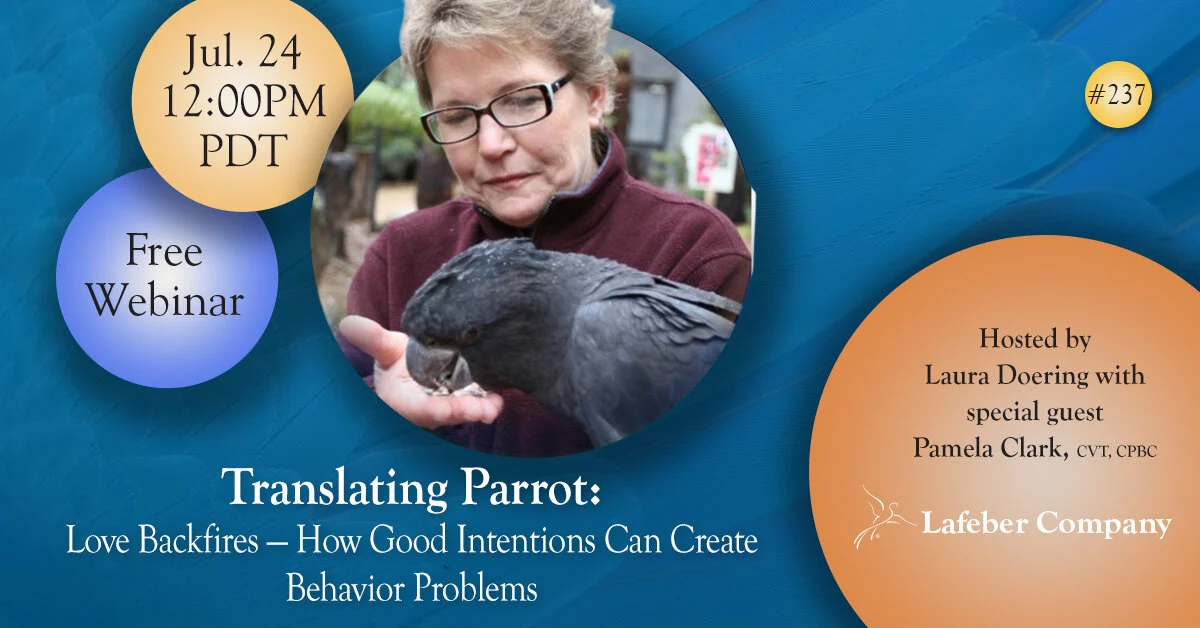
A crucial online event addressing the nuanced challenges of companion parrot ownership, titled "When Love Backfires – How Good Intentions Can Create Behavior Problems," is scheduled for Friday, July 24, 2026, at 12:00 p.m. PDT. This forthcoming webinar, hosted by acclaimed parrot behaviorist Pamela Clark, CPBC, aims to dissect the often-unforeseen consequences of well-meaning human interactions on avian companions. The session promises to provide attendees with evidence-based strategies to foster healthier, more independent, and behaviorally sound relationships with their pet birds, moving beyond common pitfalls rooted in anthropomorphic interpretations of affection.
The core premise of the webinar revolves around the paradox that many actions perceived as expressions of love by human caregivers can inadvertently cultivate undesirable behaviors in parrots. Common practices such as sharing favorite foods, granting unlimited shoulder access, encouraging constant physical cuddling, or overlooking seemingly benign exploratory behaviors into dark, enclosed spaces are often rooted in a deep affection for these intelligent creatures. However, from an ethological perspective, these actions can clash with a parrot’s natural instincts and lead to a spectrum of behavioral issues, including excessive screaming, biting, territorial aggression, and detrimental over-bonding. The good news, as emphasized by the event organizers and Pamela Clark herself, is that these challenges are not only preventable but also often reversible with the right understanding and application of behavior modification principles.
The Expert Perspective: Pamela Clark, CPBC
Pamela Clark stands as a leading authority in the field of companion parrot behavior. As a Certified Professional Bird Consultant (CPBC), her expertise is grounded in years of practical experience, scientific research, and a deep understanding of avian psychology and ethology. Clark’s approach is renowned for its emphasis on positive reinforcement, species-appropriate care, and empowering owners with the knowledge to interpret their birds’ complex communication signals accurately. Her work consistently advocates for a paradigm shift from treating parrots as feathered humans to recognizing them as unique species with distinct needs and motivations. This webinar represents a distillation of her extensive knowledge, offering a practical framework for owners struggling with behavioral issues or those seeking to preemptively avoid them. Her previous contributions to avian welfare and education through various platforms, including articles, workshops, and consultations, have established her as a trusted voice in the community, making this upcoming webinar a highly anticipated event for parrot enthusiasts globally.
Unpacking the "Good Intentions" That Backfire
The webinar will delve into specific examples of how well-intentioned caregiving can inadvertently shape problematic behaviors. For instance, sharing human food, while seemingly a bonding gesture, can reinforce begging behaviors, lead to nutritional imbalances, and even foster aggression if the parrot perceives the food as a high-value resource to be guarded. Unlimited shoulder privileges, a common desire for many owners, can contribute to a parrot developing a sense of dominance or territoriality over the owner, leading to biting when boundaries are attempted. Encouraging constant cuddling, while fulfilling for humans, can interfere with a parrot’s natural need for independence and self-sufficiency, potentially exacerbating separation anxiety or even leading to sexual frustration in adult birds who may interpret excessive physical contact as pair-bonding behavior. Similarly, allowing a parrot to explore dark, enclosed spaces, such as inside clothing or furniture, can trigger strong nesting instincts, leading to heightened territoriality, hormonal aggression, and a strong drive to reproduce, even without a mate. These examples underscore the critical need for owners to understand the underlying biological and psychological drivers of their birds’ actions rather than projecting human emotional frameworks onto them.
The Prevalence of Behavioral Challenges in Companion Parrots
Behavioral issues are a significant concern within the companion parrot community. Data from avian veterinarians, animal shelters, and parrot rescue organizations consistently indicate that behavioral problems are among the leading reasons for birds being surrendered, rehomed, or euthanized. Studies and anecdotal evidence suggest that a substantial percentage of companion parrots, possibly over 50%, exhibit at least one chronic behavioral problem, ranging from feather plucking and incessant screaming to aggression and phobias. The financial and emotional toll on owners can be immense, often leading to frustration, guilt, and a breakdown of the human-animal bond. The long lifespan of many parrot species, often extending several decades, means that unaddressed behavioral issues can become deeply entrenched, making early intervention and education, such as that offered by this webinar, critically important. Understanding the root causes of these behaviors, rather than merely treating the symptoms, is essential for sustainable improvement and long-term welfare.
A Proactive Approach to Avian Welfare
The webinar’s focus on prevention and reversibility offers a beacon of hope for parrot caregivers. By understanding the functional analysis of behavior—what triggers a behavior, what purpose it serves for the bird, and what reinforces it—owners can begin to implement targeted, humane interventions. Pamela Clark’s methodology typically emphasizes environmental enrichment, consistent training using positive reinforcement, establishing clear boundaries, and fostering independence. This includes providing appropriate foraging opportunities to stimulate natural behaviors, offering a diverse array of toys for mental and physical engagement, teaching basic commands to enhance communication, and structuring daily interactions to avoid accidental reinforcement of unwanted actions. The goal is to empower parrots to make appropriate choices and to build a relationship based on trust, respect, and mutual understanding, rather than control or human-centric affection. Such an approach not only reduces stress for the bird but also enhances the enjoyment and satisfaction of the owner.
Webinar Structure and Participant Takeaways
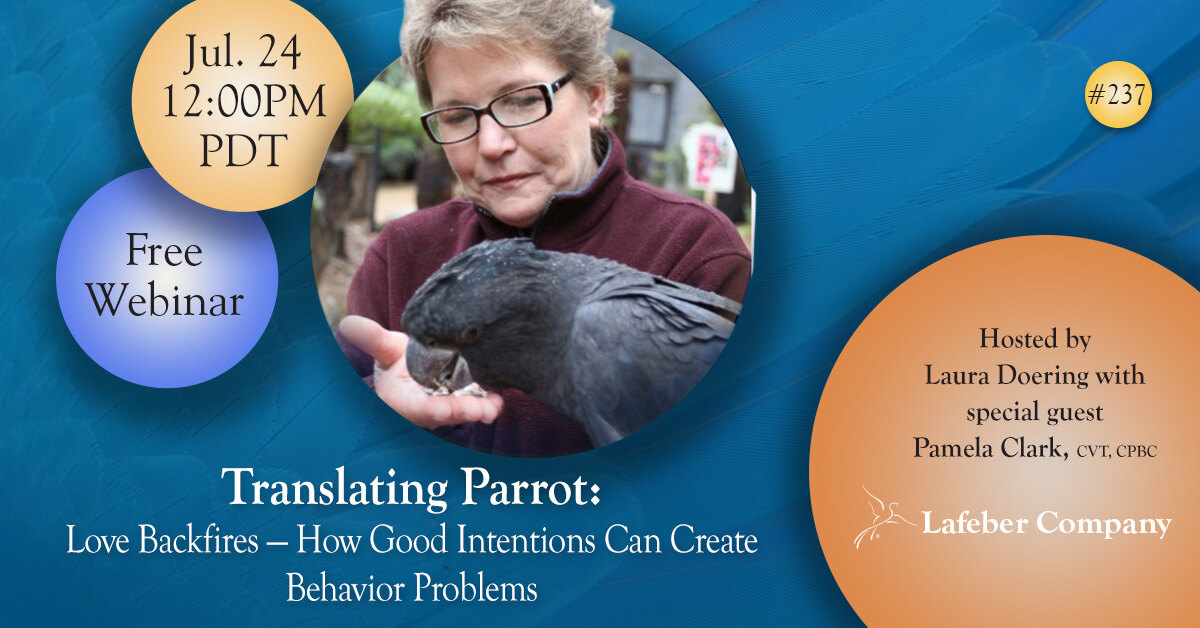
The "When Love Backfires" webinar is designed to be engaging and evidence-based, ensuring that participants leave with actionable insights. Clark will likely employ a combination of theoretical explanations, real-world case studies, and practical demonstrations (where appropriate) to illustrate her points. The session is expected to cover:
- Identifying common "love backfires": Detailed exploration of specific human actions and their unintended consequences.
- Understanding parrot motivations: Insights into the natural instincts, social structures, and communication methods of various parrot species.
- Behavioral assessment: Guidance on how to objectively observe and analyze a parrot’s behavior to pinpoint triggers and functions.
- Practical intervention strategies: Step-by-step approaches for modifying undesirable behaviors using positive reinforcement and environmental management.
- Strengthening the human-parrot bond: Techniques to build trust and cooperation, promoting emotional well-being and independence.
- Promoting lasting behavioral health: A long-term vision for preventing future problems and maintaining a harmonious relationship.
Participants are promised "practical, compassionate strategies they can begin using immediately." This emphasis on immediate applicability underscores the webinar’s utility for both novice and experienced parrot owners. The format, delivered virtually via Zoom, makes it accessible to a global audience, provided they double-check their local time using the provided time zone converter.
The Role of Education in the Avian Community
This webinar is emblematic of a broader trend within the avian community towards increased professionalization and education in pet care. Organizations like Lafeber, implicitly associated with this event through its hosting platform, often play a crucial role in sponsoring and disseminating such educational content. Lafeber Company, known for its commitment to avian health and nutrition, frequently supports initiatives that promote responsible pet bird ownership and advanced avian veterinary care. Their involvement highlights the growing recognition that comprehensive care extends beyond diet and physical health to encompass the psychological and behavioral well-being of these complex animals.
The proliferation of online educational resources, workshops, and certifications for avian behavior consultants reflects a maturing understanding of parrot needs. This movement away from purely anecdotal advice towards evidence-based practices is vital for improving the welfare of captive parrots, many of whom face significant challenges adapting to human environments. By providing accessible, expert-led education, such webinars contribute significantly to raising the standard of care across the globe, potentially reducing the number of birds surrendered to rescues due to preventable behavioral issues.
Broader Implications for Avian Welfare and Pet Ownership
The implications of webinars like "When Love Backfires" extend beyond individual parrot owners. On a broader scale, they contribute to:
- Reducing the burden on rescue organizations: By equipping owners with the tools to manage and prevent behavioral problems, the incidence of parrot abandonment and rehoming, often driven by intractable behaviors, can be significantly reduced. This frees up resources for birds with more complex needs and lessens the emotional toll on rescue staff.
- Elevating ethical pet ownership standards: Promoting an understanding of species-specific needs encourages a more responsible and ethical approach to pet keeping, fostering environments where animals can thrive physically and psychologically. This aligns with broader movements in animal welfare that advocate for recognizing the intrinsic value and sentience of companion animals.
- Advancing avian science and research: The practical application of behavioral science, as taught in such webinars, can highlight areas where further research is needed, driving innovation in avian veterinary medicine and behavior.
- Supporting the pet industry: A more educated and satisfied owner base is more likely to invest in appropriate products and services, from specialized diets and enrichment toys to professional veterinary and behavioral consultations, thereby strengthening the responsible pet industry.
The long-term vision is one where companion parrots live out their long lives in enriched environments, enjoying a harmonious relationship with their human caregivers, free from the stress and suffering that often accompany misunderstood or mishandled behavioral issues. This requires a continuous commitment to learning and adapting caregiving practices based on the latest scientific understanding.
Registering for the Event
For those interested in participating in this pivotal educational opportunity, registration is now open. Attendees are encouraged to secure their spot early to ensure access to the live session and any subsequent resources. The webinar is an invaluable investment for anyone committed to the well-being and happiness of their feathered companions. The insights shared by Pamela Clark are expected to empower owners to transform their relationships with their parrots, fostering independence, emotional resilience, and a deeper, more profound bond built on mutual understanding and respect. The event’s virtual nature ensures global reach, making this essential information accessible to parrot enthusiasts worldwide, all united by the common goal of providing the best possible care for their cherished avian friends. The provided registration link offers direct access to sign up for this enlightening and impactful session.

