


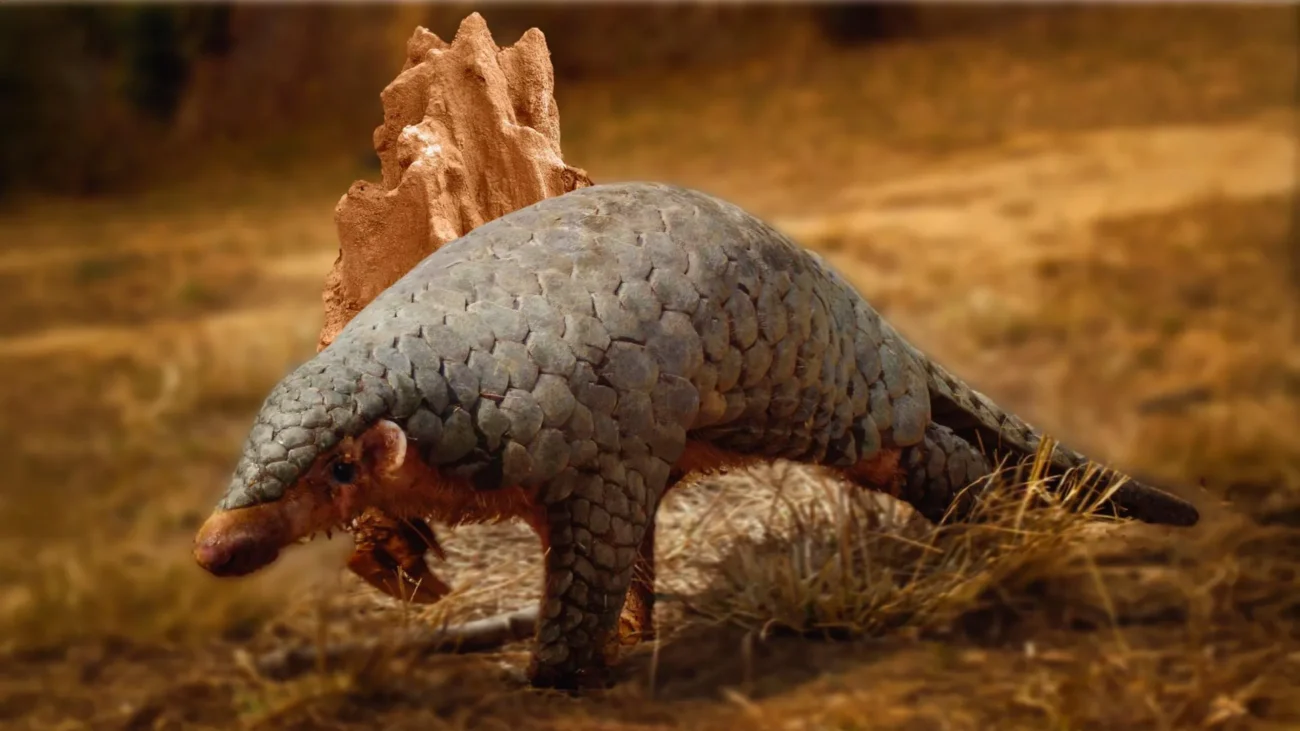
The prehistoric-looking pangolin, often described as a walking pinecone due to its distinct overlapping scales, has long captured the curiosity of naturalists and wildlife enthusiasts. Found exclusively across the tropical and subtropical regions of Africa and Asia, these medium-sized mammals possess long, powerful tails and large, curved claws designed for tearing into termite mounds. Yet, beneath their armored exteriors lies profound vulnerability. Heavily targeted by poachers to supply international black markets—primarily driven by demand in traditional medicine—pangolins have earned the grim distinction of being the most heavily trafficked mammals on Earth. Now, an international team of researchers has brought a glimmer of hope to the fight against their extinction by confirming the existence of a previously unrecognized Asian pangolin species: Manis aurita, which roams the forests of Nepal and Northern India.
The groundbreaking findings, recently published in the esteemed scientific journal Communications Biology, provide vital clarity on the evolutionary relationships, geographic distributions, and physical distinctions of Asian pangolins. By mapping these boundaries, the discovery equips international law enforcement agencies and conservationists with unprecedented tools to trace illegal wildlife trade routes, pinpoint active poaching hotspots, and fortify protection efforts for one of the planet’s most endangered animal groups.
Untangling a Complex Evolutionary Web
The road to recognizing Manis aurita as a distinct species has been winding and complex, rooted in decades of taxonomic debate. The classification of Himalayan pangolins shifted dramatically in 2025, when a separate research cohort revealed that animals previously lumped together under the umbrella of the Chinese pangolin actually comprised two distinct species. While one species primarily inhabits China proper, the other populates the rugged Himalayan foothills extending through Nepal, India, Bhutan, and Myanmar. Initially, the researchers designated this mountain-dwelling creature as Manis indoburmanica, or the Indo-Burmese pangolin.
However, scientific nomenclature operates under strict historical guidelines. According to the principle of priority, when multiple scientific names are given to the same biological entity, the earliest valid name takes precedence. Unbeknownst to the 2025 research team at the exact time of their publication, a decade-long genetic and morphological investigation led by Anderson Feijó of the Field Museum and his colleagues was already underway to resolve the broader pangolin family tree.
During their exhaustive archival work, the team encountered references to Manis aurita, a pangolin formally described in 1836. Over the intervening centuries, however, M. aurita had been systematically stripped of its species status and misclassified as a mere subspecies of the Chinese pangolin. This created a profound taxonomic puzzle: what was the precise biological relationship between M. indoburmanica and the historical M. aurita? Were they genetically identical, or did they represent separate evolutionary lineages?
Unlocking History with 190-Year-Old DNA
The definitive answer to this complex biological riddle came not from modern field expeditions, but from the climate-controlled archives of the Natural History Museum in London. Through rigorous collaboration, specialists at the museum successfully extracted and sequenced ancient DNA directly from the historical type specimen of the Nepalese subspecies (aurita). Collected nearly 190 years ago, in 1836, the fragile historic tissue held the genetic key to modern conservation science.
When the genetic profile of the 1836 museum specimen was compared against contemporary tissue samples from Himalayan pangolins, the results were definitive. The modern Himalayan pangolins—briefly categorized in 2025 as M. indoburmanica—were an exact genetic match for the historical animals first cataloged in the nineteenth century. Consequently, under international rules of zoological nomenclature, Manis aurita was formally reinstated as the correct and prioritized scientific name.
"This finding marks the culmination of more than five years of research that began in Nepal, where we first documented evidence suggesting that Himalayan pangolins represented a distinct evolutionary lineage," notes Narayan Koju, a researcher at Nepal Engineering College at Pokhara University and the study’s first author. "The confirmation of Manis aurita as a valid species demonstrates the importance of long-term research, international collaboration, and museum collections. Most importantly, it provides a strong scientific basis for conservation planning, wildlife forensics, and efforts to protect one of the world’s most trafficked mammals from extinction."
Physical and Geographic Distinctions
Distinguishing Manis aurita from its relative, the Chinese pangolin, requires a keen eye, though distinct physical and ecological traits separate the two lineages. According to Feijó, the newly validated Himalayan pangolin features a noticeably larger body, a significantly longer tail, and smaller ears than the Chinese pangolin—with the revived species name aurita serving as a historic nod to the animal’s distinct auricular morphology.
Geographically, the two species are completely allopatric, meaning their natural habitats do not overlap. The Chinese pangolin favors the broader landscapes of eastern and southern China, whereas M. aurita is restricted to the rugged elevations of the Himalayan foothills. For critically endangered taxa facing extreme anthropogenic pressures, mapping these exact geographic borders is not merely an academic exercise; it is an essential prerequisite for targeted habitat protection and species management.
A Powerful New Weapon Against Wildlife Trafficking
The illegal global trade in pangolins is fueled largely by the persistent demand for their keratin scales, which are falsely believed in traditional medicine practices to possess therapeutic properties or act as aphrodisiacs. Because pangolin scales are predominantly traded in processed, fragmented forms rather than as intact carcasses, law enforcement officers and customs inspectors face immense challenges when attempting to intercept illicit shipments.
"In the marketplaces you basically only find pangolin scales, not the whole animals, which makes it hard to know which species are being hunted and where they are coming from," explains Feijó.
The successful genetic sequencing of M. aurita fundamentally changes this dynamic. By applying advanced DNA profiling techniques to confiscated scale shipments, wildlife forensic scientists can now pinpoint the exact species of origin. Furthermore, by cross-referencing this genetic data with established geographic ranges, authorities can trace black-market shipments directly back to the specific regions and populations experiencing the most severe poaching pressures.
This forensic capability empowers enforcement agencies to execute intelligence-led operations, dismantling trafficking networks at their source rather than merely intercepting low-level couriers. Moreover, a precise understanding of species boundaries significantly enhances captive breeding and reintroduction initiatives. Conservationists can now ensure that rehabilitated or rescued pangolins are released exclusively into their native historic ranges, avoiding the ecological risks of translocating the wrong species into vulnerable ecosystems.
The Indispensable Value of Natural History Museums
The successful resurrection and validation of M. aurita underscore a broader, often overlooked reality in modern conservation biology: the irreplaceable scientific value of natural history museum collections. Because wild pangolin populations have plummeted drastically due to decades of relentless poaching, encountering live specimens in the field has become an exceedingly rare and difficult endeavor for researchers.
By maintaining vast repositories of historical specimens gathered over the past two centuries, institutions like the Natural History Museum in London and the Field Museum provide scientists with temporal and geographic access to populations that are otherwise impossible to sample today.
"Using museum collections allows us to have access to more individuals across the species’ range," emphasizes Feijó. "If you only rely on fresh material, since the animals are so rare to find in the wild, this greatly limits the information that you can gather. We used collections to have a more complete sampling of the species. It’s a big advantage to have this resource available as a repository of material that we can look back and keep learning from."
As international conservation groups digest the implications of this taxonomic breakthrough, the validation of Manis aurita offers a renewed framework for survival. By combining cutting-edge molecular genetics with nineteenth-century museum archives, scientists have proven that humanity’s understanding of the natural world is still evolving—providing a crucial scientific shield for a remarkable mammal fighting extinction.

