


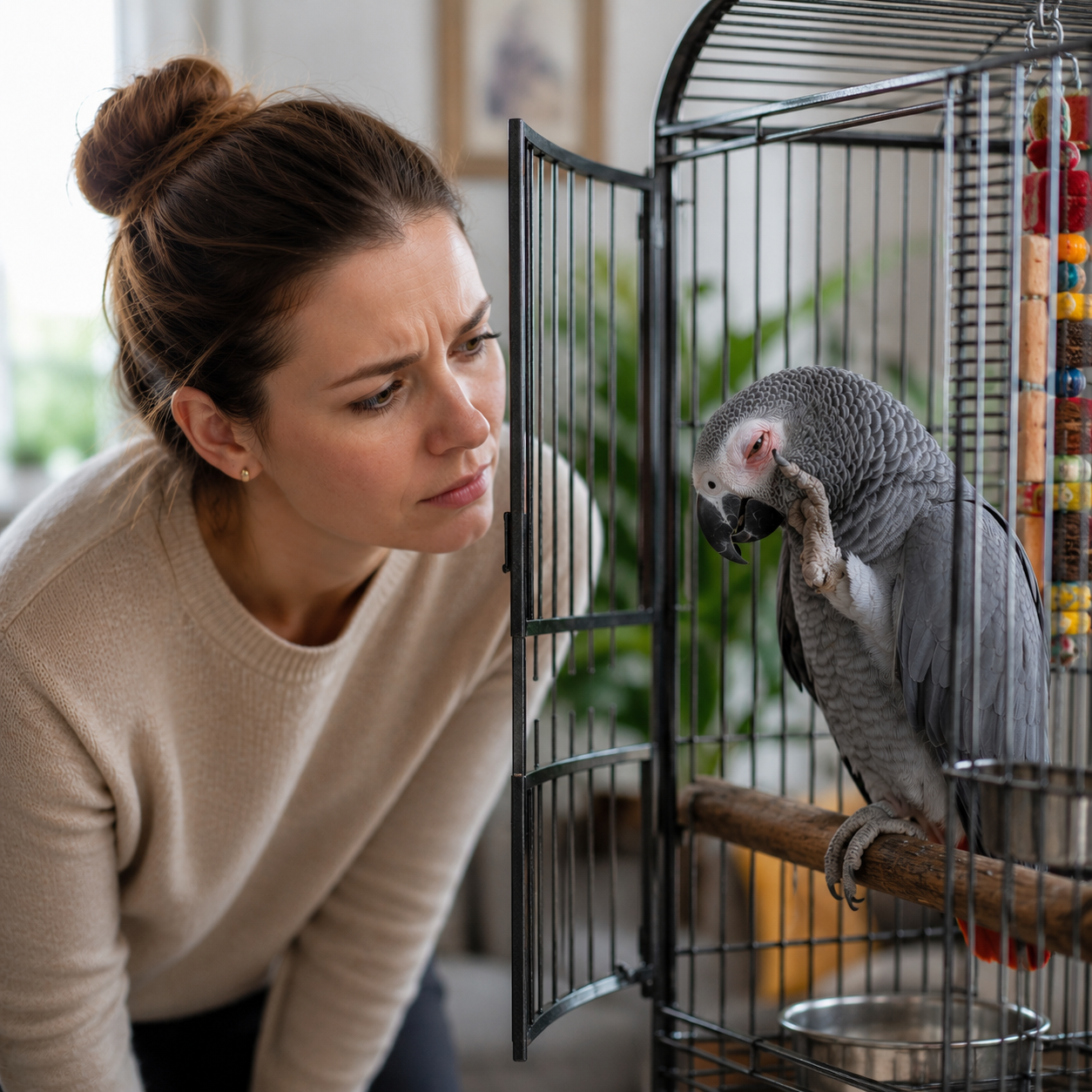
Observing your parrot rubbing its eye against a perch, toy, or its own foot is a common occurrence that frequently leaves owners wondering if the behavior is simple grooming or a sign of an underlying medical crisis. While avian species often engage in delicate preening of the feathers surrounding the orbital area, persistent or repetitive rubbing directed at the eye itself is rarely a neutral activity. Veterinarians emphasize that unlike mammals, which may rub their eyes due to allergies or minor fatigue, birds are masters at concealing illness. Consequently, when a bird exhibits localized eye irritation, it is often an indicator that the condition has already surpassed the initial stages of discomfort.
The Physiology of Avian Eye Maintenance
To understand why eye rubbing is a clinical concern, one must first recognize the sophisticated ocular anatomy of the parrot. Unlike humans, who rely on a single set of eyelids and the occasional blink, birds possess a third eyelid known as the nictitating membrane. This thin, translucent structure functions as an organic windshield wiper, sweeping across the cornea to clear away particulate matter and ensure consistent moisture distribution.
Under normal, healthy conditions, a parrot maintains ocular hygiene through this automatic blinking mechanism and gentle preening of the periorbital feathers. When a bird begins to deviate from this routine—focusing its energy on scratching or pressing one eye against abrasive surfaces—it is signaling a breakdown in this natural maintenance system. Clinical observations indicate that healthy parrots do not feel the need to mechanically rub their eyes. Therefore, repetitive behavior serves as a behavioral red flag that the eye’s internal defense mechanism has been compromised by an external or internal irritant.
Chronology of Symptoms and Diagnostic Indicators
The transition from normal behavior to a pathological state often follows a predictable timeline. Initially, an owner might notice brief, sporadic rubbing. If the cause is a transient piece of dust or a loose down feather, the irritation typically resolves within minutes. However, if the rubbing persists beyond an hour or recurs intermittently over several days, the likelihood of a secondary condition increases significantly.
The progression typically moves through distinct phases:
- Initial Irritation: The bird may exhibit mild squinting or a slight increase in blinking frequency.
- Behavioral Compensation: The bird begins to use its foot (zygodactyl toes) to scratch the orbital area or rubs its face against cage bars, perches, or toys to alleviate the sensation of a foreign body.
- Physical Manifestation: Left unaddressed, the eye may begin to show visible signs of inflammation, such as conjunctival redness, swelling, or the accumulation of serous or mucopurulent discharge.
- Chronic Compromise: The eye remains shut, the bird exhibits lethargy, and the surrounding plumage becomes matted due to excessive tearing or discharge.
Clinical Causes and Environmental Triggers
Veterinary diagnostics in avian medicine divide potential causes into two main categories: environmental factors and physiological pathologies. Environmental irritants are perhaps the most common, yet overlooked, culprits. Modern domestic settings are replete with aerosolized particles—ranging from kitchen smoke and scented candle vapors to volatile organic compounds (VOCs) from cleaning supplies. These substances are particularly damaging to the delicate respiratory and ocular tissues of parrots, who possess a highly efficient, high-metabolism respiratory system.
Beyond environmental hazards, mechanical trauma represents a significant risk. Because parrots are active, inquisitive creatures, they are prone to minor injuries during flight or play. A microscopic scratch on the cornea from a sharp toy or a jagged piece of cuttlebone can create a sensation of constant grit, leading to persistent rubbing. If the cornea is breached, the risk of secondary bacterial or fungal infection rises, turning a minor injury into a sight-threatening emergency.
Furthermore, systemic health issues often manifest in the eyes. Avian veterinarians frequently highlight Vitamin A deficiency as a primary driver of ocular and sinus health issues. Inadequate nutrition compromises the integrity of the epithelial tissues, making the bird significantly more susceptible to infections of the tear ducts and surrounding sinuses. This creates a feedback loop where the bird rubs the eye due to irritation, introduces pathogens from its feet, and exacerbates an existing systemic infection.
Professional Intervention and Veterinary Standards
When an owner identifies repetitive rubbing, the recommended course of action is to avoid home-remedy interventions. The administration of over-the-counter eye drops, which may contain ingredients safe for humans but toxic to birds, can cause severe chemical burns or mask deeper ocular damage.
A standard veterinary assessment of an irritated eye involves a multi-step protocol:
- Magnification Examination: The veterinarian will use an ophthalmoscope to inspect the cornea for ulcers or foreign debris.
- Fluorescein Staining: A non-invasive diagnostic dye is often used to highlight corneal scratches or abrasions that are invisible to the naked eye.
- Cytology or Culture: If discharge is present, samples may be collected to identify specific bacterial or fungal pathogens.
- Systemic Review: Given that many eye problems in birds are secondary to sinus infections, the clinician will often evaluate the upper respiratory tract to determine if the ocular issue is the primary condition or merely a symptom of a larger illness.
Strategic Nutritional Support
While immediate medical intervention is necessary for acute symptoms, long-term ocular health is intrinsically tied to dietary quality. Avian nutritionists have established that the inclusion of beta-carotene and other carotenoids is essential for the maintenance of healthy ocular mucous membranes. Birds maintained on a strictly seed-based diet are statistically more prone to the epithelial breakdown that precedes eye infections.

For birds with established nutritional gaps, veterinarians may suggest targeted supplementation—such as red palm oil or avian-specific vitamins—to bolster the immune system. However, it is vital to understand that these supplements are preventive measures. They are not curative and will not resolve an active infection, an ulcerated cornea, or a deep-seated sinus blockage.
Broader Implications for Avian Welfare
The act of eye rubbing serves as a vital communication channel between the bird and its caretaker. Because birds are prey animals, they are evolutionarily hardwired to mask signs of illness to avoid predation. When a parrot breaks this instinctual silence by exhibiting visible signs of discomfort—such as holding an eye shut or rubbing it—the condition is often more advanced than it appears.
The implications for the owner are clear: proactive monitoring is the most effective tool in preventing permanent vision loss or chronic disease. By maintaining a clean, smoke-free environment, providing a nutritionally diverse diet, and recognizing the difference between a fleeting grooming motion and a sustained, repetitive behavioral change, owners can significantly improve the quality of life and longevity of their avian companions.
In conclusion, while not every instance of eye contact with a foot necessitates an emergency visit, the criteria for seeking help should be clearly defined by the presence of any physical change. If the rubbing is accompanied by swelling, discharge, or is localized to one eye, the situation warrants immediate professional consultation. Early detection remains the gold standard in avian medicine, ensuring that minor irritations do not escalate into systemic health crises. Bird owners are encouraged to observe their pets with the understanding that in the world of avian health, persistent behavior is almost always a message that requires a response.

