


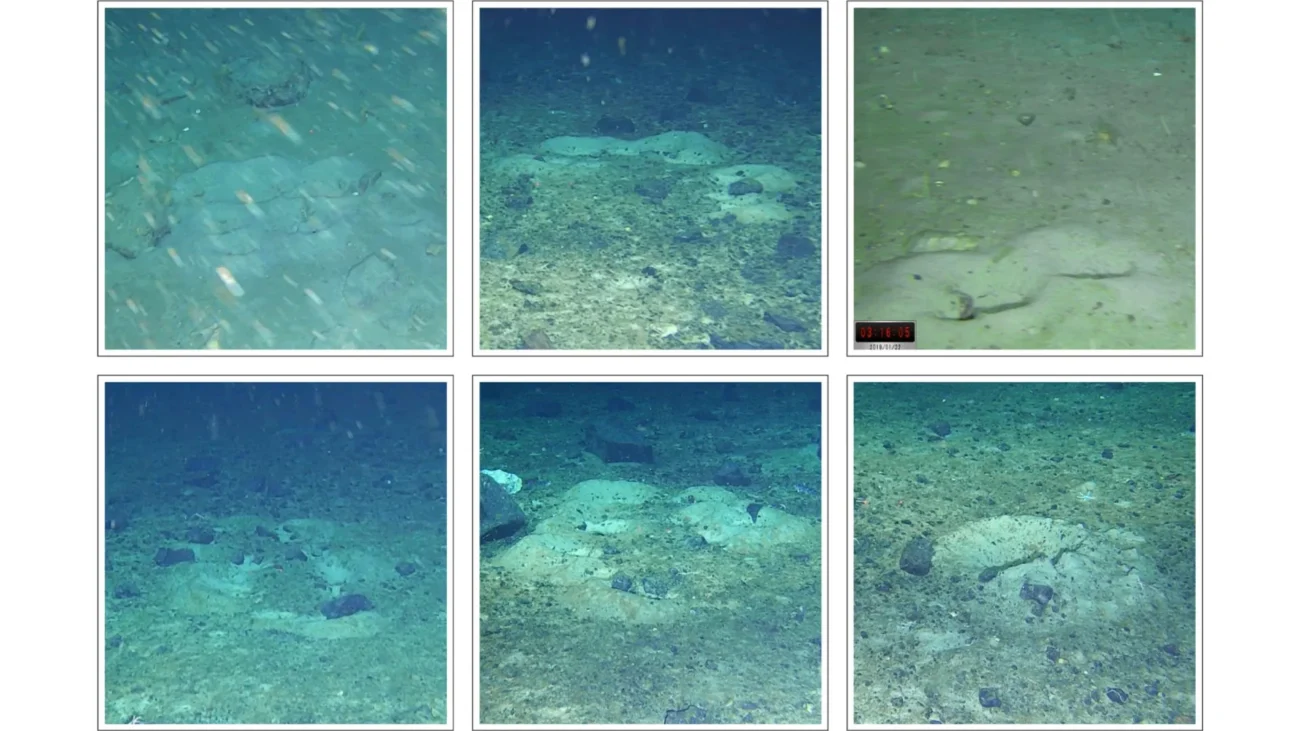
In a groundbreaking revelation from the frigid depths of Antarctica’s western Weddell Sea, a team of international researchers has unveiled an astonishing natural phenomenon: extensive, meticulously organized fields of fish nests, hidden for centuries beneath an immense layer of ice. This extraordinary find, located in a previously inaccessible region of the seafloor, offers unprecedented insights into the reproductive strategies and ecological resilience of Antarctic marine life. The discovery was facilitated by the dramatic calving of the A68 iceberg, a colossal mass of ice measuring approximately 5,800 square kilometers, which broke away from the Larsen C Ice Shelf in July 2017. This monumental event peeled back a significant portion of the frozen shield, exposing a pristine underwater landscape and opening a unique window for scientific exploration.
A Window into the Frozen Unknown
The sheer scale of the A68 iceberg’s departure was a catalyst for scientific curiosity. For millennia, the area it once covered had been entirely concealed from human observation, a frozen enigma shielded by over 200 meters of solid ice. The calving event, a stark indicator of the planet’s changing climate and the vulnerability of polar ice shelves, paradoxically presented a rare opportunity to study an environment untouched by direct human interference. Scientists aboard the South African polar research vessel SA Agulhas II embarked on the Weddell Sea Expedition of 2019 with a dual mission: to conduct a comprehensive scientific survey of the waters surrounding the Larsen C Ice Shelf and to search for the legendary wreck of Sir Ernest Shackleton’s ship, the Endurance, lost to the ice in 1915.
The expedition utilized cutting-edge underwater technology, including autonomous underwater vehicles (AUVs) and a remotely operated vehicle (ROV), to navigate the challenging Antarctic waters. These sophisticated tools were deployed to survey the seafloor in the area previously covered by the ice shelf. The ROV, in particular, played a pivotal role in capturing the remarkable images that revealed the astonishing extent of the fish nests. More than a thousand circular depressions, clearly discernible on the sediment-covered seabed, were observed. What made these formations truly remarkable was their apparent deliberate arrangement and the striking cleanliness of their interiors. Each nest was meticulously swept free of the plankton debris and fine sediment that blanketed the surrounding seafloor, creating a stark contrast and a landscape of geometric order.
Unveiling the Architects of the Abyss
The sand depressions, visible in the high-resolution imagery captured by the ROV, are the telltale signs of these ancient nesting grounds. The patterns observed were diverse and intriguing: some nests stood alone, isolated on the seabed, particularly in the bottom right quadrant of the surveyed area. Others formed elegant, curved lines, suggesting a coordinated expansion or territorial marking across the central expanse of the seafloor. In the top left, clusters of nests indicated denser concentrations of activity. The consistent feature across all these formations was their pristine condition, a clear indication of active maintenance and a deliberate effort to keep them free from the ubiquitous layer of phytoplankton detritus that characterized the adjacent seabed. This visual disparity was particularly striking in the central portion of the survey area, highlighting the organized nature of these underwater habitats.
Initial analysis by the research team, led by marine biologists and ecologists, quickly pointed towards a species of Antarctic fish as the architects of these elaborate structures. Subsequent identification confirmed the builders to be a species of Antarctic rockcod, specifically the yellowfin notie, scientifically known as Lindbergichthys nudifrons. This discovery shed light on the remarkable reproductive behaviors of these cold-water fish. Each circular nest is believed to have been carefully constructed and tended by a parent fish, likely guarding its precious eggs from the constant threat of predation in the harsh Antarctic environment.
A Collective Strategy for Survival
The dense groupings of nests observed in the Weddell Sea offer a compelling illustration of a sophisticated collective survival strategy. Researchers hypothesize that these aggregations are a manifestation of the "selfish herd" theory, a concept in behavioral ecology where individuals in a group benefit from the protection afforded by their conspecifics. In this scenario, fish in the center of a dense cluster would be shielded from predators by the individuals on the periphery. Conversely, the solitary nests, often found along the perimeter of the larger aggregations, are thought to belong to larger, more dominant fish individuals. These stronger fish are presumed to possess the capacity to defend their territory and nesting sites independently, thus contributing to the overall stability and success of the colony. This delicate balance of cooperation and competition underscores the adaptive ingenuity of life in extreme environments.
The Weddell Sea Expedition of 2019 was not solely focused on this unexpected discovery. One of its primary objectives was to conduct a wide-ranging scientific survey in the waters around the Larsen C Ice Shelf. This region is of critical importance to understanding the dynamics of Antarctic ice shelves, which act as vital buttresses, slowing the flow of glaciers from the continent’s interior into the ocean. The thinning or disintegration of these ice shelves has profound implications for global sea levels, as it allows land ice to accelerate its movement towards the sea. The calving of iceberg A68 provided a unique, albeit concerning, opportunity to study the immediate impacts of such ice shelf loss on the underlying marine ecosystem.
The Endurance Connection and Technological Prowess
The expedition’s second major objective, the search for Shackleton’s Endurance, added a layer of historical resonance to the scientific endeavors. The Endurance, on Shackleton’s Imperial Trans-Antarctic Expedition, became trapped and was crushed by pack ice in the Weddell Sea in 1915. The survival of Shackleton and his crew is one of history’s most celebrated tales of human endurance. The research vessel SA Agulhas II was equipped to navigate the same treacherous sea ice conditions that had sealed the Endurance‘s fate over a century prior. Despite the formidable challenges posed by the pack ice, which ultimately prevented the location of the Endurance during the 2019 expedition, the team gained invaluable experience in maneuvering through these difficult conditions and operating advanced underwater technology. This experience proved instrumental for the subsequent Endurance22 expedition, which, in March 2022, successfully located the remarkably preserved wreck of the Endurance resting at a depth of 3,008 meters, a testament to both historical significance and modern technological capability.
Ecological Significance and Future Protection
The discovery of these extensive fish nests holds significant ecological implications. It provides strong evidence that the region represents a Vulnerable Marine Ecosystem (VME). VMEs are defined by the presence of unique, rare, fragile, or slow-growing habitats or species that are particularly susceptible to damage from human activities. The yellowfin notie nesting grounds, meticulously maintained and covering a vast area, clearly fall under this designation. This finding corroborates and expands upon earlier studies, such as the research published by Purser et al. (2022), which identified one of the world’s largest known fish breeding colonies in the Weddell Sea.
The implications of this discovery extend beyond mere academic interest. It significantly strengthens the scientific case for the designation of the Weddell Sea as a Marine Protected Area (MPA). MPAs are geographically defined areas of the ocean that have been afforded a greater level of protection against human activities than the surrounding waters. Safeguarding the Weddell Sea would be crucial for preserving not only its iconic wildlife, including penguins, seals, and whales, but also these vital, hidden nurseries that form the bedrock of the Antarctic food web. The presence of such extensive and organized breeding grounds highlights the critical need for conservation efforts to protect these fragile ecosystems from potential future impacts, such as deep-sea fishing or resource extraction.
The Weddell Sea, known for its exceptionally cold waters and persistent sea ice, is a critical component of the global oceanographic system. It plays a significant role in thermohaline circulation, the global conveyor belt of ocean currents that distributes heat and nutrients around the planet. Understanding the health and productivity of its marine life is therefore of paramount importance. The discovery of the yellowfin notie nests offers a vivid demonstration of the intricate and often surprising ways life adapts and thrives even in Earth’s most extreme environments. It serves as a powerful reminder of the vast, unexplored biodiversity that exists in our oceans and the urgent need to understand and protect these vital natural wonders before they are irrevocably altered.
The research conducted during the Weddell Sea Expedition of 2019, supported by institutions such as the British Antarctic Survey and the South African National Antarctic Programme, represents a significant advancement in our understanding of polar marine ecosystems. The collaboration between scientists from various nations underscores the global importance of Antarctic research and the need for concerted international efforts in conservation. As climate change continues to exert pressure on polar regions, continued monitoring and research in areas like the Weddell Sea will be indispensable for informing effective conservation strategies and ensuring the long-term health of these critical marine environments. The meticulous organization of the yellowfin notie nests is a testament to the enduring power of life to adapt and flourish, a message of resilience from the deepest, coldest reaches of our planet.

