


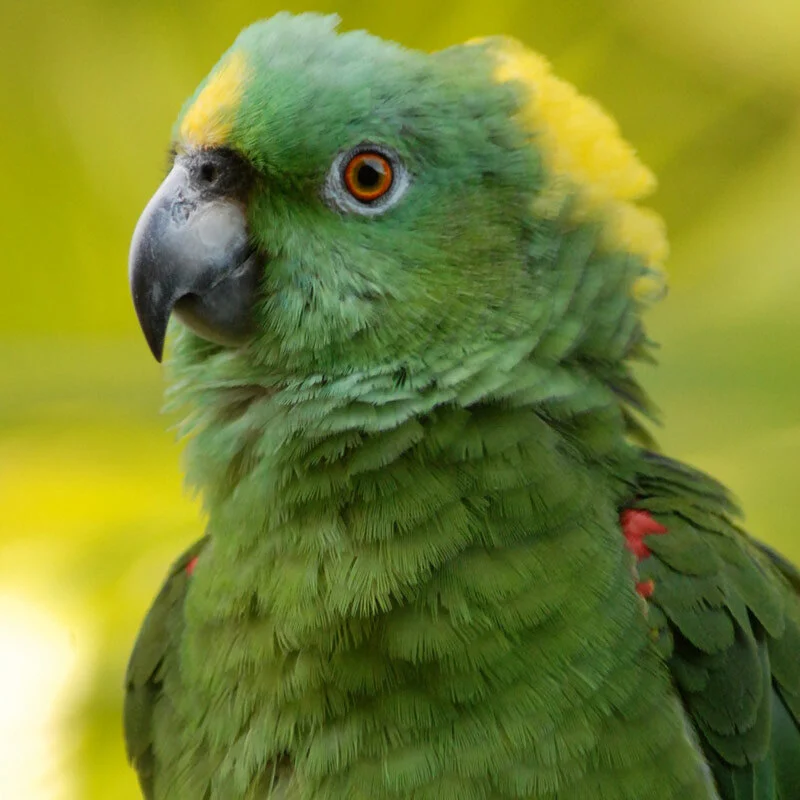
Parrots have long captivated human observers with their remarkable capacity for vocal mimicry, often replicating human words and accents with astonishing accuracy. New research published on February 12, 2026, suggests that their intrinsic vocal exchanges are equally, if not more, sophisticated. A recent comprehensive study focusing on yellow-naped Amazon parrots (Amazona auropalliata) has revealed that mated pairs engage in intricate "warble" duets composed of an impressive 36 distinct call types. These vocalizations are not random; they are meticulously arranged in patterned, rule-governed sequences, adding substantial weight to the growing body of evidence indicating that parrots possess highly structured and potentially language-like communication systems. This discovery not only deepens our understanding of avian cognition but also underscores the urgent need for robust conservation efforts for a species critically endangered in the wild.
The pioneering study, spearheaded by Dr. Christine R. Dahlin, a distinguished professor of biology at the University of Pittsburgh, alongside a team of five dedicated colleagues, offers compelling insights into the communicative prowess of these vibrant birds. Their findings suggest that yellow-naped Amazon parrots communicate using a learned system of vocalizations, one that exhibits structural parallels remarkably akin to human language. This research challenges long-held anthropocentric views of language, proposing that complex, rule-based communication may be more widespread in the animal kingdom than previously assumed.
Unraveling the Structural Complexity of Parrot Duets
The core of Dr. Dahlin’s and her team’s belief stems from the intricate structural patterns identified within the parrots’ duets. These vocal exchanges were found to adhere to recognizable "rules," bearing striking similarities to the syntactic structures observed in complex human speech. Through meticulous acoustic analysis and extensive field observations, the researchers were able to categorize the 36 distinct call types. Beyond mere identification, they discerned the sequential regularities and predictable arrangements of these calls, indicating a deliberate and organized form of communication rather than a series of isolated sounds.
Further adding to the complexity, the study uncovered that many of these calls are sex-biased, with a significant majority—between 75% and 99%—being used predominantly by either males or females. Even more remarkably, certain calls were identified as entirely sex-specific, produced exclusively by one sex. This sexual dimorphism in vocalization suggests specialized roles or messages within the pair bond or broader social context, akin to how certain linguistic expressions might be gendered in human societies or used in specific contexts. For instance, a male-specific call might be related to territorial defense, while a female-specific call could be linked to nesting or chick care.
Distinct Calls, Distinct Meanings: A Hierarchical System
Animals exhibiting highly social behaviors, such as yellow-naped Amazon parrots, frequently develop more complex and expansive call sets. These parrots are already renowned for possessing regional dialects that influence the entirety of their vocal repertoire, a testament to their advanced vocal learning capabilities. The researchers further categorized the calls into two primary groups: "primary" calls and "warble" calls. Primary calls constitute the most prevalent form of communication, likely serving a broad range of daily interactions. In contrast, the "warble" call appears to be specifically employed by mated pairs for purposes of alerting and warning. This distinction is evident in their acoustic properties; warble calls are typically expressed at a faster pace and encompass a more diverse range of notes, indicative of their urgent and attention-grabbing function. In total, the study definitively identified 36 distinct call types, with an additional 11 unique calls recorded only once, suggesting an even richer, though rarer, vocal lexicon.
A Timeline of Discovery: Advancements in Animal Communication Research
The publication of Dr. Dahlin’s study in early 2026 marks a significant milestone in a scientific journey that has spanned decades, focusing on deciphering the complexities of animal communication. Historically, animal vocalizations were often dismissed as mere instinctual reactions or simple signals. However, breakthroughs in ethology, neurobiology, and bioacoustics have progressively revealed a much richer landscape.
- Mid-20th Century: Early studies in birdsong, particularly with species like sparrows and finches, began to highlight the role of learning and critical periods in vocal development. Researchers like Fernando Nottebohm pioneered the understanding of neural pathways involved in song learning.
- Late 20th Century: The advent of advanced sound recording and spectrographic analysis allowed scientists to meticulously break down animal vocalizations into their constituent elements. Studies on cetaceans (dolphins and whales) revealed complex song structures and individualized calls, while primate research began to explore referential communication, where specific calls denote specific predators or food sources.
- Early 21st Century: Focus shifted towards identifying elements of "syntax" and "semantics" in animal communication. The concept that animals might combine sounds in specific orders to create new meanings, rather than just using isolated calls, gained traction. Studies on species ranging from prairie dogs to various bird species hinted at rule-governed vocalizations.
- Present Day (2020s): Technological advancements, including machine learning and artificial intelligence applied to bioacoustics, have enabled researchers to process vast amounts of vocal data, uncovering patterns and structures that were previously undetectable. This study on yellow-naped Amazons leverages these advancements to identify structural rules in their duets, placing it at the forefront of this evolving field.
The Neurobiological Basis of Parrot Vocal Learning
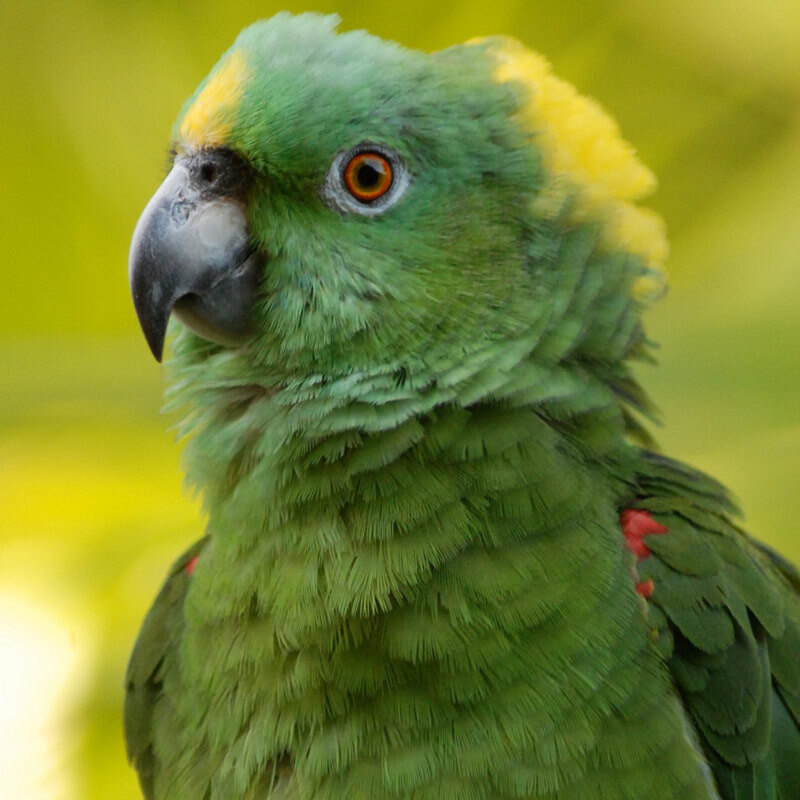
Parrots are exceptional among birds for their sophisticated vocal learning abilities, a trait shared by only a few avian orders (songbirds, hummingbirds) and humans. This capability is underpinned by a unique brain architecture. Unlike most birds, parrots possess specialized "vocal learning centers" in their brains, which consist of an inner "core" and an outer "shell" region. The core regions are crucial for producing and imitating sounds, while the shells are thought to be involved in the social learning and contextual use of vocalizations. This dual structure provides the neural plasticity necessary for mimicking a vast array of sounds, including human speech, and for developing complex, learned communication systems like the warble duets observed in yellow-naped Amazons. The presence of regional dialects further supports the idea that these vocalizations are culturally transmitted and learned, rather than purely innate.
Implications for Cognition, Language Evolution, and Conservation
This complex and revealing study adds substantial weight to the argument that many of the planet’s animals utilize linguistic patterns remarkably similar to those humans learn and employ. The existence of "rules" governing call sequences in parrots pushes the boundaries of what scientists understand about animal cognition and the potential evolutionary pathways for complex communication systems, including human language. It suggests that the cognitive machinery for structuring communication may not be unique to our species but has evolved convergently in other lineages under similar social or ecological pressures.
Beyond its academic significance, the study carries profound implications for the preservation of yellow-naped Amazons, which are classified as critically endangered by organizations like BirdLife International. Their dwindling numbers in the wild are primarily due to severe habitat loss, driven by deforestation for agriculture and urban development, as well as the relentless pressure from the illegal pet trade. Their exceptional vocal abilities, ironically, make them highly sought after in the exotic pet market, further exacerbating their decline.
Understanding the intricacies of their communication system is not merely an academic exercise; it is a vital tool for conservation. If these parrots rely on complex, learned vocalizations for social cohesion, pair bonding, and warning signals, then disruptions to their social structures or population density due to human activities could severely impair their ability to communicate effectively, impacting their survival and reproductive success. For instance, if dialects are crucial for mate recognition or group identity, fragmented populations might struggle to communicate across geographic divides, hindering genetic diversity.
As Dr. Dahlin and her colleagues eloquently state in their published work, "If we hope to eventually break the code of their vocal communication system, it will likely take a sustained mix of conservation efforts, field observations, and playback experimentation. Ultimately, our work demonstrates the value of research into vocal complexity and syntactic organization in wild animal populations, as natural pressures shape communication in ways that cannot be replicated in captivity." This statement serves as a powerful call to action. Conservation strategies must integrate ethological research, recognizing that preserving a species means protecting not just its physical habitat but also its intricate social and communicative fabric.
Official Responses and Future Directions
The scientific community has largely welcomed Dr. Dahlin’s findings with enthusiasm, viewing it as a significant step forward in animal communication research. Dr. Alex Chen, a prominent bioacoustician from the University of California, remarked, "This study provides compelling evidence of sophisticated structural organization in parrot vocalizations, challenging our perceptions of animal ‘language.’ It opens new avenues for comparative research into the evolution of communication." Conservation organizations, while acknowledging the scientific breakthrough, have also leveraged the findings to amplify their pleas for increased protection for yellow-naped Amazons. A spokesperson for the World Parrot Trust emphasized, "Every discovery that reveals the intelligence and complexity of these birds strengthens the argument for their protection. We must act decisively to safeguard their habitats and combat the illegal trade."
Future research endeavors stemming from this study are likely to focus on several key areas. Scientists will undoubtedly strive to decipher the semantic content of the 36 distinct call types – what specific information are these parrots conveying? Playback experiments, where specific calls are played back to wild parrots, will be crucial in testing hypotheses about their meaning and function. Furthermore, comparative studies with other parrot species and vocal learners could shed light on the evolutionary pressures that drive such complex communication systems. The study also opens the door to exploring whether individual parrots possess unique vocal signatures within these duets, allowing for individual recognition.
In conclusion, the groundbreaking research on yellow-naped Amazon parrots offers a profound glimpse into the intricate world of avian communication, revealing a system of vocalizations that mirrors the structural complexity of human language. This discovery not only enriches our understanding of animal cognition but also serves as a poignant reminder of the precious biodiversity we stand to lose. As humanity continues its quest to unravel the mysteries of the natural world, the call for sustained conservation efforts, informed by such crucial scientific insights, becomes ever more urgent to ensure that these eloquent communicators continue to "speak" in their wild homes for generations to come.

