


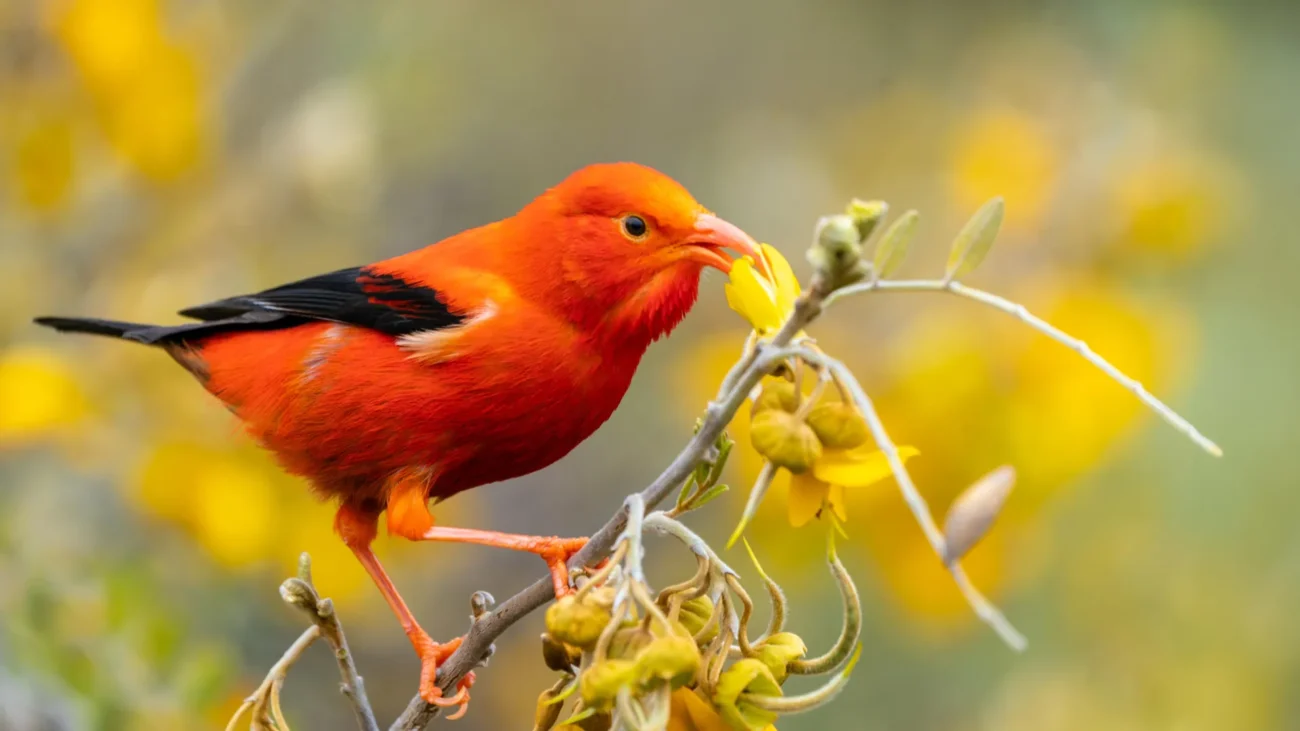
A landmark study spearheaded by a researcher at the University of Hawaiʻi at Mānoa has unearthed a startling reality for Hawaii’s native avifauna: nearly every forest bird species on the islands possesses the capability to transmit avian malaria. This pervasive transmissibility of the deadly disease, caused by the parasite Plasmodium relictum, is now understood to be the primary driver behind its widespread presence across virtually every habitat inhabited by mosquitoes, thus exacerbating the existential threat to native Hawaiian honeycreepers. The findings, published on February 10 in the prestigious journal Nature Communications, paint a grim picture of the ongoing ecological crisis.
The Pervasive Reach of Avian Malaria
The comprehensive research encompassed 64 distinct locations statewide, with avian malaria detected at an overwhelming 63 of them. These testing sites spanned a diverse array of forest ecosystems, each characterized by unique assemblages of bird species. The parasite Plasmodium relictum, known for its generalist nature, has been identified as the principal agent responsible for the catastrophic population declines and numerous extinctions observed among Hawaii’s endemic honeycreepers. This new research provides a crucial piece of the puzzle, explaining how the disease has become so entrenched across the archipelago.
Christa M. Seidl, the mosquito research and control coordinator for the Maui Forest Bird Recovery Project, who conducted this pivotal research as part of her doctoral studies at the University of California, Santa Cruz, articulated the gravity of the findings. "Avian malaria has taken a devastating toll on Hawaiʻi’s native forest birds, and this study shows why the disease has been so difficult to contain," Seidl stated. "When so many bird species can quietly sustain transmission, it narrows the options for protecting native birds and makes mosquito control not just helpful, but essential." Her sentiment underscores the urgent need for integrated conservation strategies that address both the parasite and its vectors.
The Devastating Impact on Native Avifauna
Avian malaria inflicts severe damage by attacking the red blood cells of infected birds. This parasitic onslaught can lead to a cascade of debilitating health issues, including anemia, organ failure, significantly reduced survival rates, and, in many cases, a swift and agonizing death. The consequences have been particularly dire for Hawaii’s iconic bird species, many of which are found nowhere else on Earth.
For instance, studies have consistently shown that the ʻiʻiwi, also known as the scarlet honeycreeper, faces a staggering mortality rate of approximately 90 percent if infected with avian malaria. This single statistic highlights the extreme vulnerability of these species to the parasite. Even more tragically, the ʻakikiki, a small honeycreeper endemic to the island of Kauaʻi, is now considered functionally extinct in the wild, with avian malaria being the primary culprit behind its disappearance. The loss of these species represents an irreplaceable blow to global biodiversity and the unique ecological heritage of the Hawaiian Islands.
A Sophisticated Transmission Network
Typically, many infectious diseases rely on a limited number of reservoir species to maintain their spread within a population. However, the findings of this study reveal that avian malaria operates with a far more insidious and distributed network in Hawaii. The research indicates that most forest birds, encompassing both native and introduced species, exhibit a moderate to high capacity to infect the southern house mosquito (Culex quinquefasciatus), the primary vector for the disease in the islands.
Remarkably, even birds carrying seemingly low levels of the malaria parasite were capable of infecting mosquitoes. This implies that a broad spectrum of avian communities, irrespective of their native or introduced status, can act as potent reservoirs, facilitating continuous and widespread transmission of the parasite. Seidl elaborated on this crucial point: "We often understandably think first of the birds when we think of avian malaria, but the parasite needs mosquitoes to reproduce and our work highlights just how good it has gotten at infecting them through many different birds." This interconnectedness of species in sustaining the disease presents a formidable challenge for conservationists.
Chronic Infections: The Silent Spreaders
The extensive research involved the analysis of blood samples collected from over 4,000 birds across the islands of Kauaʻi, Oʻahu, Maui, and Hawaiʻi Island. These field observations were complemented by rigorous laboratory experiments designed to quantify the ease with which mosquitoes become infected after feeding on birds. The results were consistent and alarming: native and introduced birds displayed similar levels of infectiousness, underscoring the fact that both groups actively contribute to the propagation of the parasite.
A particularly concerning discovery was the prevalence of chronic infections. The study found that birds can harbor the malaria parasite for extended periods, often months or even years. During these chronic stages, birds may exhibit only mild or no visible symptoms of illness, yet they remain capable of transmitting the parasite to mosquitoes. The researchers estimate that these long-lasting, low to moderate infectious phases are responsible for the majority of avian malaria transmission occurring across the state. This prolonged infectious period makes infected birds difficult to identify and isolate, further complicating control efforts.
Climate Change: Shrinking Safe Havens
The widespread ability of the avian malaria parasite to infect a multitude of bird species is now seen as the most plausible explanation for its ubiquitous presence throughout Hawaii’s forests. The study’s implications suggest that very few mosquito-infested habitats remain free from the risk of transmission. This dire situation is being exacerbated by the accelerating impacts of climate change.
Warming temperatures are enabling mosquitoes, and consequently avian malaria, to expand their range into higher elevation areas. These higher altitudes have historically served as crucial refuges for many native bird species, offering cooler climates that were less hospitable to the parasite and its vectors. As these natural sanctuaries shrink and become more accessible to mosquitoes, the already vulnerable native bird populations are facing an increasingly inescapable threat. This climatic shift effectively erodes the last remaining safe havens for many of Hawaii’s endemic birds.
Collaborative Efforts and Future Directions
In response to the escalating crisis, a collaborative initiative known as Birds, Not Mosquitoes has been formed. This partnership brings together a diverse array of academic institutions, state and federal agencies, non-profit organizations, and industry stakeholders. Their collective mission is to advance innovative mosquito control strategies in direct support of Hawaiian bird conservation. Christa M. Seidl and the Maui Forest Bird Recovery Project are active members of this vital collaboration.
The Maui Forest Bird Recovery Project operates under the auspices of the Pacific Cooperative Studies Unit within the University of Hawaiʻi’s College of Natural Sciences. All birds involved in the study were captured and handled with the utmost care by highly trained ornithologists, operating strictly under state and federal permits, ensuring ethical research practices.
The implications of this study are profound and far-reaching. The confirmation that nearly every forest bird species can act as a reservoir for avian malaria fundamentally alters our understanding of disease dynamics in island ecosystems. It highlights the interconnectedness of species and the critical role of vectors in disease transmission. For conservationists, the challenge now lies in developing and implementing effective, large-scale interventions that can mitigate the impact of avian malaria across a diverse range of bird populations and in the face of a changing climate.
Historical Context of Avian Malaria in Hawaii
Avian malaria was first introduced to the Hawaiian Islands in the late 19th century, likely through the introduction of non-native mosquitoes and infected birds. Prior to this introduction, native Hawaiian birds had no prior exposure or immunity to the parasite. The arrival of Plasmodium relictum and its mosquito vector marked the beginning of a silent epidemic that has relentlessly decimated native bird populations over the past century.
Early conservation efforts were often hampered by a limited understanding of how the disease spread and which species were most at risk. The focus was frequently on protecting specific species or habitats, but the pervasive nature of the parasite, as revealed by this new study, underscores the need for a more holistic and widespread approach. The history of avian malaria in Hawaii is a tragic testament to the unintended consequences of species introductions and the fragility of isolated ecosystems.
Supporting Data and Scientific Rigor
The study’s robustness is further bolstered by its methodological rigor. The sample size of over 4,000 birds across four major islands provides a statistically significant representation of the Hawaiian avifauna. The integration of field data with controlled laboratory experiments allowed researchers to move beyond mere correlation to establish causation, demonstrating the direct ability of various bird species to infect mosquitoes.
The identification of chronic infections as a primary driver of transmission is a critical revelation. This suggests that even birds that appear healthy and are not exhibiting acute symptoms can be silently spreading the disease. Quantifying the duration and infectiousness of these chronic stages provides crucial data for epidemiological modeling and the development of targeted intervention strategies. The consistent findings across different bird communities and island ecosystems lend substantial weight to the study’s conclusions.
Broader Implications for Island Conservation
The findings from Hawaii have significant implications for conservation efforts in other island ecosystems worldwide, which are often characterized by high endemism and unique ecological vulnerabilities. Island species, having evolved in isolation, frequently lack the genetic diversity and immunological defenses to cope with novel pathogens introduced by human activities. The Hawaiian model of avian malaria transmission serves as a stark warning about the potential consequences of such introductions.
This research underscores the importance of stringent biosecurity measures to prevent the introduction of invasive species, including disease vectors and pathogens, to pristine environments. Furthermore, it highlights the need for adaptive management strategies that can respond to the dynamic nature of disease spread, especially in the context of climate change. The study serves as a call to action for increased investment in ecological research, disease surveillance, and integrated conservation programs.
Official Responses and Community Engagement
The scientific community and conservation organizations have widely acknowledged the significance of this study. Dr. Anya Sharma, a leading ornithologist not involved in the research, commented, "This study provides definitive evidence for what many of us have suspected but could not definitively prove: the sheer ubiquity of avian malaria transmission across Hawaii’s bird populations. It’s a wake-up call for intensified action."
Government agencies responsible for wildlife management have also taken note. A spokesperson for the Hawaiʻi Department of Land and Natural Resources stated, "We are committed to working with our partners, including the University of Hawaiʻi and the Maui Forest Bird Recovery Project, to implement science-based strategies for avian malaria control. This research is invaluable in guiding our efforts to protect Hawaii’s native birds."
Community engagement is also a critical component of the conservation effort. Educational initiatives aimed at raising public awareness about the threat of avian malaria and the role of mosquitoes are ongoing. Efforts to control mosquito populations, such as through the deployment of sterile insect technique technology and the use of larvicides in targeted areas, are crucial components of the broader conservation strategy.
The Path Forward: A Multifaceted Approach
The path forward for safeguarding Hawaii’s native forest birds from avian malaria requires a multifaceted and sustained approach. This includes:
- Continued Research and Monitoring: Ongoing surveillance of bird populations and mosquito vectors is essential to track the spread of avian malaria and assess the effectiveness of control measures. Further research into the parasite’s life cycle and the immunological responses of different bird species could reveal new avenues for intervention.
- Mosquito Control: Innovative and environmentally sound mosquito control methods remain a cornerstone of any effective strategy. This may involve a combination of biological, chemical, and genetic approaches, tailored to specific island ecosystems and habitats.
- Habitat Restoration and Management: Protecting and restoring native habitats can enhance the resilience of bird populations by providing food, shelter, and potentially cooler microclimates that may offer some refuge from the disease.
- Assisted Reproduction and Translocation: For critically endangered species, captive breeding programs and the translocation of birds to disease-free or managed areas may be necessary to prevent immediate extinction.
- Public Awareness and Engagement: Educating the public about the importance of native birds, the threat of avian malaria, and the role individuals can play in conservation efforts is vital for long-term success.
The groundbreaking research from the University of Hawaiʻi at Mānoa has illuminated the profound and pervasive threat of avian malaria to Hawaii’s unique birdlife. The realization that nearly every forest bird species can contribute to the disease’s transmission presents a formidable conservation challenge, amplified by the looming specter of climate change. However, armed with this critical scientific understanding, a concerted and collaborative effort holds the potential to mitigate the devastating impact of this disease and secure a future for these irreplaceable avian treasures.

