


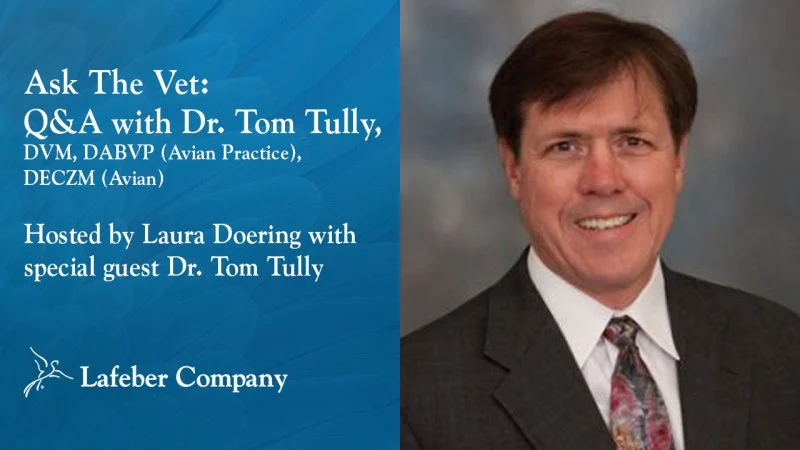
A pivotal opportunity for pet bird owners globally is set to unfold on Friday, April 17, 2026, as Dr. Tom Tully, a distinguished figure in avian veterinary medicine, hosts a free, live, and interactive "Ask the Vet" webinar. Scheduled for 12:00 p.m. PDT, this digital event promises direct access to one of the world’s foremost experts in avian health, nutrition, and care, offering an unparalleled platform for owners to seek guidance on the myriad complexities of pet bird stewardship. The webinar will be facilitated by Laura Doering, a veteran in avian journalism known for her editorial roles at Bird Talk magazine and Birds USA magazine, ensuring a structured and engaging Q&A session. This initiative underscores a growing commitment within the avian community to empower pet bird owners with accurate, expert-driven information, recognizing that an educated owner is the most effective advocate for their bird’s well-being.
The Esteemed Expert: Dr. Tom Tully’s Renowned Expertise
At the heart of this educational endeavor is Dr. Tom Tully, whose extensive credentials and experience position him as a preeminent authority in avian veterinary medicine. Holding a Doctor of Veterinary Medicine (DVM) degree, Dr. Tully further distinguishes himself with dual board certifications: he is a Diplomate of the American Board of Veterinary Practitioners (DABVP) specializing in Avian Practice and a Diplomate of the European College of Zoological Medicine (DECZM) with an avian specialization. These certifications are not merely academic accolades; they represent years of rigorous advanced training, intensive examination, and demonstrated expertise in the highly specialized field of avian medicine, setting him apart from general veterinary practitioners.
The American Board of Veterinary Practitioners (ABVP) Avian Practice certification signifies a veterinarian’s advanced proficiency in avian species, encompassing diagnostics, treatment, surgery, and preventative care unique to birds. Similarly, the European College of Zoological Medicine (ECZM) Avian specialization denotes a comparable level of expertise recognized across Europe, highlighting Dr. Tully’s international standing and breadth of knowledge. His role as a Professor and practicing veterinarian at the Louisiana State University School of Veterinary Medicine further solidifies his influence, where he contributes to both academic research and clinical practice, shaping the next generation of avian veterinarians while directly impacting the health of countless birds.
Dr. Tully’s international recognition stems from his extensive contributions to the field, including numerous publications, presentations, and his direct involvement in advancing avian diagnostic and therapeutic techniques. His philosophy, deeply rooted in the belief that "the educated bird owner is the best bird steward," drives his commitment to these outreach initiatives. He is particularly known for his ability to articulate complex medical information in an understandable manner, providing detailed answers that often bridge the gap between health-related and behavioral issues in birds. His vast knowledge, especially concerning parrots – a diverse group of birds with intricate health and behavioral needs – makes his insights invaluable to a broad spectrum of pet bird enthusiasts.
Facilitating Dialogue: The Role of Laura Doering
Guiding the interactive session will be Laura Doering, whose career has been dedicated to informing and engaging the pet bird community. As the former editor of Bird Talk magazine and Birds USA magazine, Doering possesses a unique understanding of the questions and concerns that resonate most deeply with bird owners. Her experience in curating content and facilitating expert discussions makes her an ideal host for an interactive Q&A format. She is adept at moderating discussions, ensuring that participant questions are clearly articulated and that the dialogue remains focused and informative. Her presence ensures a smooth flow of information, maximizing the educational value for all attendees and providing a comfortable environment for owners to voice their concerns.
Doering’s tenure at leading avian publications provided her with a comprehensive overview of the industry, from nutritional advancements and behavioral science to common health challenges and the latest veterinary practices. This background enables her to effectively frame questions and elicit the most pertinent information from Dr. Tully, making the webinar not just an informational session but a dynamic conversation tailored to the real-world needs of pet bird owners. Her involvement reinforces the professional and authoritative nature of the event, reassuring participants that they are receiving guidance from a well-coordinated team of avian advocates.
Addressing Critical Needs: The Landscape of Pet Bird Care
The decision to host such a specialized webinar reflects a growing recognition of the unique challenges inherent in pet bird ownership. Millions of households globally, including an estimated 5.7 million in the United States alone, include pet birds, making them one of the most popular companion animals. However, despite their popularity, birds often receive less specialized veterinary care compared to dogs and cats, partly due to a lack of readily available avian veterinarians and a general misunderstanding of their complex needs.
Pet birds, particularly parrots, are known for their intelligence, longevity, and intricate social structures. Yet, they are also prone to a range of health issues, many of which are preventable with proper care. Nutritional deficiencies are alarmingly common, often stemming from seed-heavy diets that lack essential vitamins and minerals, leading to conditions like hypovitaminosis A or liver disease. Behavioral problems, such as feather plucking, screaming, or aggression, are frequently observed and can often be linked to environmental factors, lack of stimulation, or underlying medical conditions. Respiratory issues, reproductive disorders, and infectious diseases also pose significant threats, often presenting subtly and requiring a keen, experienced eye for early diagnosis.
The specialized nature of avian physiology and anatomy means that symptoms often manifest differently than in mammals, and treatments must be carefully tailored. A bird’s ability to mask illness, an evolutionary survival mechanism, means that by the time overt symptoms appear, the condition may be advanced. This necessitates a proactive approach to care, relying heavily on preventative measures and regular wellness checks by veterinarians with specific avian expertise. The "Ask the Vet" webinar directly addresses these critical needs by offering accessible, expert guidance that can help owners identify potential issues early and implement effective preventative strategies.
The Imperative of Specialized Avian Veterinary Medicine
Avian veterinary medicine is a highly specialized field that demands an extensive understanding of avian biology, pathology, pharmacology, and behavior. Unlike general small animal practices, an avian specialist must be proficient in treating a vast array of species, each with unique physiological characteristics, dietary requirements, and disease predispositions. The rigorous training involved in obtaining board certification, such as the DABVP (Avian Practice) or DECZM (Avian), ensures that these veterinarians possess an in-depth knowledge far beyond what is typically covered in general veterinary curricula.
This specialization is crucial because many common veterinary procedures and medications for mammals are either ineffective or dangerous for birds. For instance, avian metabolism often processes drugs differently, requiring precise dosing and careful selection of medications. Diagnostic techniques, such as endoscopy or specialized blood work, are also highly refined for birds, allowing for minimally invasive procedures and accurate disease identification. Furthermore, an avian specialist can provide invaluable advice on creating appropriate habitats, managing environmental enrichment, and understanding species-specific social needs, all of which are paramount to a bird’s overall health and well-being.

The importance of this specialized care cannot be overstated. A study by the Journal of Avian Medicine and Surgery highlighted that a significant percentage of avian illnesses are related to husbandry errors, emphasizing the need for owner education. Conditions like chronic malnutrition can lead to secondary infections, organ failure, and a diminished quality of life. Behavioral issues, if left unaddressed, can result in self-mutilation or abandonment. The webinar, therefore, serves as a vital bridge, connecting owners with the knowledge required to navigate these complexities and provide their feathered companions with the highest standard of care.
Webinar Format: An Accessible Platform for Knowledge Exchange
The choice of a free, live, and interactive webinar format leverages modern technology to maximize reach and engagement. By hosting the event on a platform like Zoom, organizers ensure that geographical barriers are eliminated, allowing pet bird owners from diverse locations to participate simultaneously. The "live" aspect fosters a sense of immediacy and allows for dynamic interaction, a stark contrast to pre-recorded content. Participants can submit questions in real-time, receiving direct, personalized responses from Dr. Tully, thereby addressing specific concerns that might not be covered in general educational materials.
The interactive nature is particularly valuable, as it allows for a nuanced exploration of topics. Owners can provide context to their questions, and Dr. Tully can ask follow-up questions to better understand the situation, leading to more comprehensive and actionable advice. This direct engagement fosters a stronger sense of community among bird owners and reinforces the idea that their individual concerns are valid and worthy of expert attention. The fact that the webinar is free removes any financial barrier, ensuring that critical information is accessible to all who seek it, regardless of their economic circumstances. This democratic approach to education is a hallmark of initiatives aimed at improving animal welfare on a broad scale.
The Vision Behind the Event: Empowering Bird Stewards
While not explicitly stated in the provided content, the hosting of such a high-caliber, free educational event on a domain like "lafeber.com" strongly suggests a commitment from the organizing entity, presumably Lafeber Company, to advancing avian health and welfare. Lafeber Company has a long-standing history in avian nutrition and care, known for its efforts in research, product development, and owner education. Their potential involvement underscores a strategic vision to empower pet bird owners and foster responsible stewardship.
This initiative aligns with a broader mission to elevate the standard of pet bird care globally. By providing direct access to an internationally recognized specialist like Dr. Tully, the organizers are not just offering information; they are cultivating a more informed and proactive community of bird owners. This approach helps to demystify complex medical and behavioral issues, encouraging owners to seek specialized veterinary care when needed and to implement preventative measures based on scientific evidence. The long-term implication is a healthier, happier pet bird population, reducing instances of preventable diseases and behavioral problems.
A Chronology of Avian Health Advocacy
The evolution of pet bird care has seen significant advancements over the past few decades. Historically, pet birds were often kept with limited understanding of their complex dietary, environmental, and social needs. The mid-to-late 20th century saw a rise in scientific research into avian nutrition and medicine, leading to the development of specialized diets and veterinary practices. The establishment of organizations like the ABVP and ECZM in the late 20th and early 21st centuries marked a critical step in professionalizing avian veterinary care, setting rigorous standards for specialists.
In parallel, avian journalism, exemplified by magazines like Bird Talk and Birds USA, played a crucial role in disseminating this emerging knowledge to the general public. The advent of the internet and digital platforms has further revolutionized access to information, enabling initiatives like this "Ask the Vet" webinar. This chronological progression highlights a continuous drive towards better understanding and care for pet birds, with each new development building upon previous efforts to educate owners and advance veterinary science. The 2026 webinar is a contemporary manifestation of this ongoing advocacy, utilizing modern tools to deliver timeless, essential knowledge.
Broader Implications for Avian Welfare and Community
The implications of this webinar extend far beyond the individual questions answered during the session. By democratizing access to expert avian veterinary advice, the event contributes significantly to overall avian welfare. Empowered with accurate information, owners are better equipped to identify subtle signs of illness, provide appropriate nutrition, and create stimulating environments that prevent behavioral issues. This proactive approach can lead to earlier diagnosis of diseases, more effective treatments, and ultimately, longer, healthier lives for pet birds.
Furthermore, such events strengthen the global pet bird owner community. They foster a sense of shared responsibility and provide a common platform for learning and mutual support. The knowledge gained from Dr. Tully’s insights will not only benefit individual attendees but can also be shared within local bird clubs, online forums, and social networks, amplifying its reach and impact. By setting a high standard for accessible, high-quality educational content, this webinar serves as a model for future initiatives aimed at improving the lives of companion animals. It underscores the critical role of collaboration between veterinary specialists, media professionals, and industry leaders in advancing animal care and promoting responsible pet ownership worldwide.
Registration Details and Call to Action
Pet bird owners are strongly encouraged not to miss this rare opportunity to engage directly with Dr. Tom Tully. The "Ask the Vet" webinar is scheduled for Friday, April 17, 2026, at 12:00 p.m. PDT. Participants from different time zones are advised to utilize the provided time zone converter link to ensure they log in at the correct local time. This free, interactive event is a valuable resource for anyone seeking to enhance their understanding of pet bird health, nutrition, and care, whether addressing specific concerns or simply aiming to become a more informed bird steward. Registration is essential to secure a spot and can be completed by visiting the following link: https://us02web.zoom.us/webinar/register/WN_I6TVoDh-SzORxjsUZIvWwQ. This initiative represents a significant step forward in making specialized avian knowledge accessible, fostering a community of educated and proactive pet bird owners dedicated to the optimal well-being of their feathered companions.

