

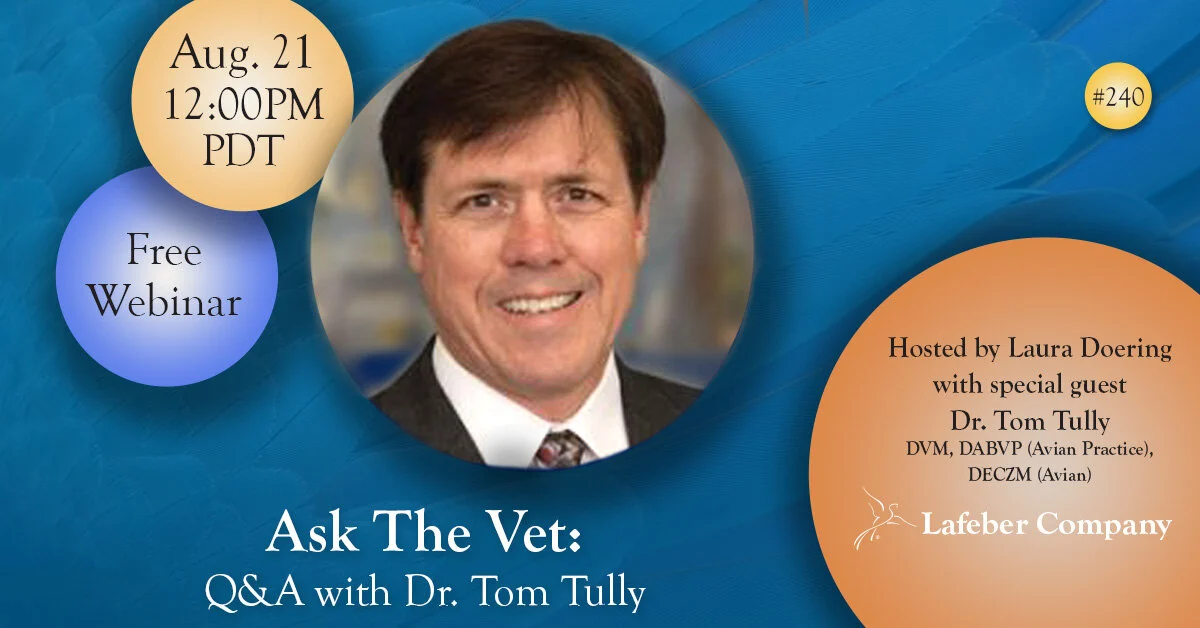
The landscape of avian healthcare is poised for a significant collaborative session as Lafeber Company prepares to host a live, interactive webinar featuring Dr. Tom Tully, DVM, DABVP (Avian Practice), DECZM (Avian), on Friday, August 21, 2026. Scheduled for 12:00 p.m. PDT, the event serves as a platform for pet bird owners to engage directly with one of the world’s most credentialed avian specialists. Hosted by Laura Doering, a former editor of industry-standard publications Bird Talk and Birds USA, the session aims to bridge the gap between complex clinical veterinary science and the practical, daily requirements of responsible avian stewardship.
Professional Credentials and the Value of Specialized Care
The participation of Dr. Tom Tully in an open-access forum represents a notable opportunity for the pet bird community. Dr. Tully holds a Diplomate status with both the American Board of Veterinary Practitioners (Avian Practice) and the European College of Zoological Medicine (Avian). These certifications require rigorous examination and clinical experience, placing him at the pinnacle of the veterinary field concerning psittacine and other avian species.
In the veterinary world, specialized knowledge of exotic animals—particularly parrots, which often possess highly sensitive physiological systems—is a resource that is frequently difficult for the average pet owner to access. The inherent complexity of avian biology, characterized by high metabolic rates and unique respiratory systems, means that diagnostic errors can have rapid, life-altering consequences for a patient. By providing a forum where a specialist of Dr. Tully’s caliber addresses questions directly, the webinar functions as a critical educational resource intended to improve long-term outcomes for captive birds.
Chronology of the Webinar Initiative
The "Ask the Vet" series has become a fixture in the digital outreach strategy for Lafeber Company, an organization long dedicated to the nutritional and behavioral welfare of companion birds. The August 2026 event follows a long line of previous digital town halls designed to demystify avian health.
Historically, these sessions have evolved from simple Q&A formats to complex clinical discussions covering topics ranging from feather destructive behavior to avian bornavirus (ABV) and nutritional deficiencies. The August 21 event is structured to be highly interactive, allowing participants to register via a Zoom-based portal. By leveraging this technology, the organizers ensure that distance is no longer a barrier to receiving expert guidance. The timeline for the event includes a live presentation segment, followed by an intensive Q&A period where audience members submit inquiries ranging from clinical symptomatology to husbandry practices.
Supporting Data: The State of Avian Health in Captivity
Data from the American Pet Products Association (APPA) and various avian welfare groups indicate that the primary causes of morbidity in captive parrots are linked to preventable lifestyle factors. These include improper diet, lack of environmental enrichment, and owners’ inability to recognize early warning signs of illness.
Clinical statistics suggest that roughly 70% to 80% of health issues in pet birds are directly correlated with sub-optimal nutrition. Common ailments, such as hypovitaminosis A, obesity-related hepatic lipidosis, and metabolic bone disease, remain prevalent in households that rely on outdated seed-only diets. The upcoming webinar seeks to address these statistics by providing evidence-based recommendations. Dr. Tully’s philosophy, which posits that an educated owner is the most effective steward of avian life, aligns with the clinical goal of preventive medicine. By shifting the focus from crisis management—taking a bird to the vet only when it is visibly terminal—to proactive health monitoring, the veterinary community hopes to extend the life expectancy of companion parrots, many of which can live for several decades.

Analysis of Behavioral vs. Medical Symptoms
One of the most complex challenges facing bird owners is distinguishing between behavioral manifestations and physiological illness. Parrots are prey animals, a biological imperative that leads them to mask signs of illness until a condition is far advanced. This "hiding" behavior makes the owner’s role in daily observation essential.
During the August 21 webinar, the discussion is expected to dissect the nuances between stress-induced behavior—such as repetitive screaming or feather plucking—and underlying medical issues like pain, hormonal imbalances, or chronic inflammation. The analysis of these symptoms requires a systemic approach. Dr. Tully’s expertise allows him to categorize these behaviors, offering owners a roadmap for when to pursue diagnostic imaging, blood work, or environmental modifications. This distinction is vital, as treating a medical condition as a behavioral problem—or vice versa—is a common pitfall that can lead to delayed treatment and increased veterinary costs.
Official Perspectives and Educational Objectives
While official responses from the veterinary community often emphasize the necessity of in-person examinations, organizations like the Association of Avian Veterinarians (AAV) support public outreach initiatives that promote veterinary literacy. The collaboration between a practitioner of Dr. Tully’s standing and a public-facing platform serves to validate the necessity of professional care.
Laura Doering, in her capacity as host, facilitates these discussions to ensure that the language remains accessible to the average pet owner without compromising the scientific accuracy of the information provided. The objective is to foster a "triage mentality" where owners learn the clinical red flags that necessitate an immediate appointment with a local avian-certified veterinarian. It is understood by the participants that the webinar does not replace a physical examination; rather, it serves as a critical educational precursor to professional clinical intervention.
Broader Implications for the Avian Industry
The implications of such webinars are significant for the broader pet industry. As the standard of care for companion animals rises, owners are becoming increasingly discerning about the information they consume. The transition toward expert-led, digital education reflects a broader trend in veterinary medicine: the democratization of high-level diagnostic knowledge.
Furthermore, the emphasis on nutrition and husbandry in these sessions puts pressure on the pet product industry to provide higher quality, scientifically backed sustenance and enclosure materials. When an expert of Dr. Tully’s level advises on the physiological necessity of specific dietary components, it influences consumer behavior, forcing manufacturers to prioritize biological suitability over marketing-driven aesthetics.
Ultimately, the event on August 21, 2026, represents a convergence of technology, clinical science, and ethical animal stewardship. By utilizing the Zoom platform to reach a global audience, the event serves as a microcosm of the modern shift in veterinary medicine, where the empowered, well-informed owner acts as a frontline defender of their pet’s health. For those planning to attend, the session promises to offer not just temporary answers to specific questions, but a fundamental shift in how one approaches the complex requirements of maintaining a bird in a domestic environment.
The registration process for the webinar is currently open via the provided digital link, and participants are encouraged to prepare their questions in advance to ensure they are addressed during the limited live window. As the date approaches, interest remains high, underscoring the ongoing need for high-quality, accessible veterinary education in the avian community. By focusing on the intersection of medicine and husbandry, Dr. Tully and the Lafeber team continue to set a standard for what public engagement in veterinary health should look like in the 21st century.

