


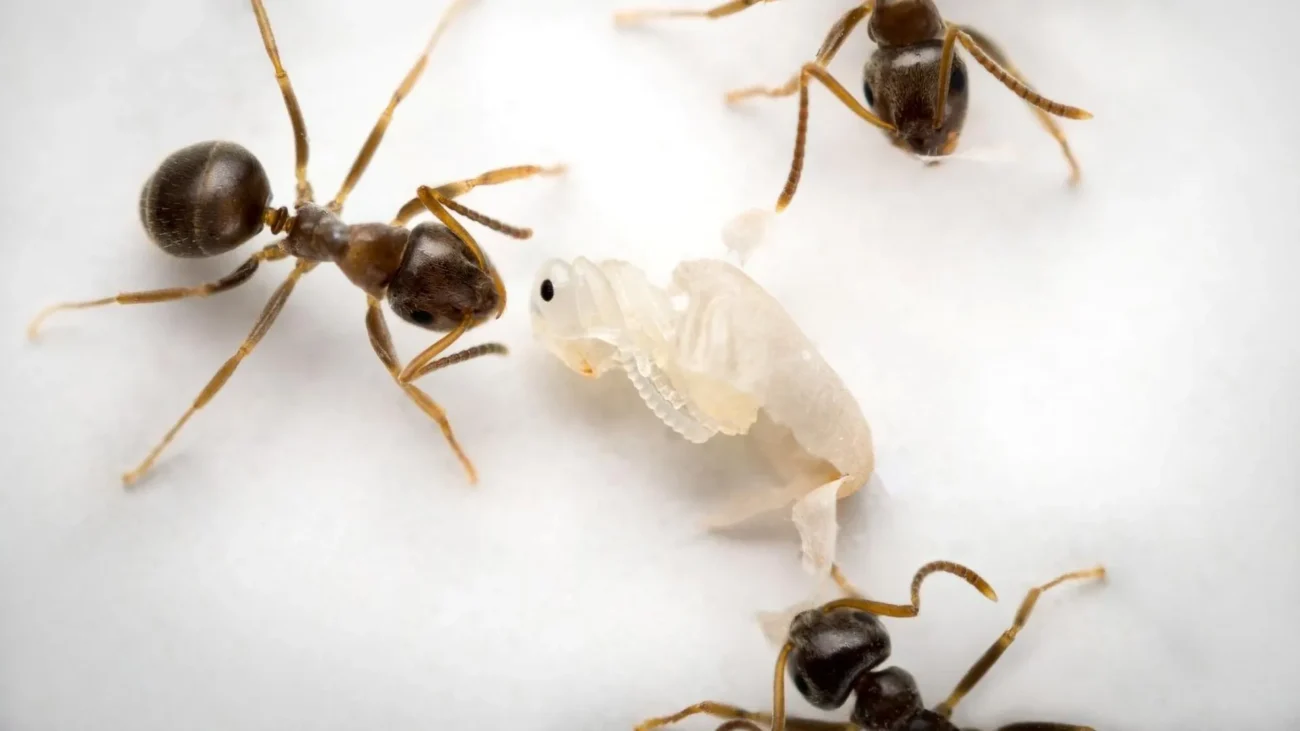
Ant societies, long admired for their complex social structures, have revealed a remarkable parallel to mammalian biology, demonstrating that even at the level of individual brood, these insect colonies operate with an integrated precision akin to a single, cohesive organism. Researchers at the Institute of Science and Technology Austria (ISTA) have uncovered a sophisticated communication system within ant colonies, where terminally ill ant pupae emit a distinctive odor, mirroring the distress signals sent by infected cells in a human body. This chemical alarm serves as an early warning, enabling the colony to swiftly identify and neutralize potential threats before they can compromise the health and survival of the entire superorganism. The groundbreaking findings were recently published in the esteemed scientific journal Nature Communications.
The Silent Scream of the Infected Pupae
Unlike many social animals, where individuals might conceal signs of illness to maintain their position within the group, ant pupae facing an unsurvivable infection adopt a drastically different strategy. Instead of hiding their deteriorating condition, they actively produce a specific chemical signal. This "distress scent" acts as a potent alert to their nestmates, warning them of the impending danger. This behavior, while appearing as a stark act of self-sacrifice, is a crucial component of the colony’s robust immune defense system, termed "social immunity."
The research, spearheaded by Erika Dawson, a former postdoc in the Social Immunity research group at ISTA, under the guidance of Professor Sylvia Cremer, meticulously documents this altruistic disease signaling. This marks the first time such a sophisticated communication mechanism has been identified in social insects, highlighting a level of cooperation and evolutionary adaptation previously underestimated. The implications of this discovery extend beyond the realm of entomology, offering profound insights into the evolution of collective intelligence and immune strategies across diverse life forms.
A Coordinated Response: The Colony’s Swift Action
Upon detecting this distinct olfactory alarm, worker ants exhibit a remarkably rapid and coordinated response. Their immediate actions involve meticulously opening the cocoon of the infected pupa, making small incisions in its outer surface, and then carefully applying formic acid. This powerful antimicrobial compound, which the worker ants themselves produce, is a potent weapon against pathogens. While this treatment effectively eradicates the infectious agents multiplying within the pupa, it also inevitably leads to the pupa’s demise.
This calculated intervention underscores the ants’ advanced understanding of disease containment. By sacrificing a single, terminally ill individual, the colony as a whole is preserved. As Erika Dawson explained, "What appears to be self-sacrifice at first glance is, in fact, also beneficial to the signaler: it safeguards its nestmates, with whom it shares many genes. By warning the colony of their deadly infection, terminally ill ants help the colony remain healthy and produce daughter colonies, which indirectly pass on the signaler’s genes to the next generation." This demonstrates a profound evolutionary advantage: the preservation of the collective, and by extension, the propagation of shared genetic material through future generations.
The collaboration with chemical ecologist Thomas Schmitt from the University of Würzburg in Germany was instrumental in deciphering the chemical intricacies of this alarm system. Their joint efforts have illuminated a critical survival mechanism that, without such an early warning system, would leave the entire colony vulnerable to potentially catastrophic outbreaks. A dying, infectious ant could quickly become a vector for widespread disease, threatening the colony’s very existence. The act of signaling, therefore, is not merely a passive response but an active contribution to the colony’s resilience.
The Superorganism Analogy: Division of Labor and Collective Survival
The remarkable behavior of ants can be best understood through the lens of the "superorganism" concept. In this paradigm, an ant colony functions as a single, unified entity, with each individual member playing a specialized role essential for the group’s survival and reproduction. The queen, for instance, is dedicated to reproduction, ensuring the continuation of the colony’s lineage, while worker ants undertake a myriad of tasks, including foraging, nest maintenance, and crucially, the protection and health of the colony. This division of labor mirrors the specialization of cells within a multicellular organism, such as the human body, where reproductive cells generate offspring and somatic cells perform the daily biological functions necessary for survival.
Both biological organisms and ant superorganisms rely on the seamless cooperation between their reproductive and non-reproductive components. In ants, this cooperation is so deeply ingrained that it extends to behaviors that benefit the colony even at the direct expense of an individual, as exemplified by the sacrificial signaling of fatally infected brood. This level of altruism, rooted in evolutionary advantage, is a cornerstone of their societal success.
The Necessity of an Early-Warning System
A pertinent question arises: why would such a sophisticated alarm system evolve if sick individuals could simply isolate themselves? Professor Cremer elaborated on this, stating, "Adult ants that approach death leave the nest to die outside the colony. Similarly, workers that have been exposed to fungal spores practice social distancing." This innate drive for self-preservation and colony protection is evident in healthy adult ants. However, this option is not available to brood, particularly pupae, which are immobile and entirely dependent on the care of worker ants. Like infected cells within a body, they require external intervention to be dealt with.
The parallel between developing pupae and infected body cells is striking. Both face similar challenges in managing internal threats and utilize comparable strategies. They both release chemical cues that act as beacons, attracting specialized responders – immune cells in the case of the body, and worker ants in the colony. These responders then identify and remove the source of potential infection. In immunology, these cues are often referred to as "find-me and eat-me" signals, designed to be both readily detectable and indicative of danger.
Professor Cremer emphasized the critical need for precision in such signaling: "The signal must be both sensitive and specific. It should help to identify all terminally-sick ant pupae but be precise enough to avoid triggering the unpacking of healthy pupae or those capable of overcoming the infection with their own immune system." This specificity is paramount to avoid unnecessary disruption to the colony and the loss of healthy individuals. The research aimed to unravel how ants achieve this remarkable level of accuracy in their disease detection.
Decoding the Scent of Infection: A Chemical Signature of Distress
Thomas Schmitt, whose research expertise lies in the chemical communication of social insects, highlighted the remarkable ability of worker ants to pinpoint a single sick pupa amidst a multitude of healthy brood. "This means the scent cannot simply diffuse through the nest chamber but must be directly associated with the diseased pupa," he noted. This observation led researchers to hypothesize that the signal is not composed of volatile compounds that dissipate quickly but rather of non-volatile compounds that adhere to the pupal body surface, creating a localized scent signature.
The study revealed that two specific components of the ants’ natural scent profile become significantly more pronounced when a pupa is fatally infected. To rigorously test whether this alteration in scent alone was sufficient to trigger the disinfection response, the research team conducted a crucial experiment. They carefully extracted the altered scent from signaling pupae and applied it to healthy pupae. The results were compelling: the treated healthy pupae were then systematically unpacked by the worker ants, providing definitive evidence that the modified odor of terminally infected brood functions precisely as a "find-me and eat-me" signal, analogous to those observed in infected mammalian cells. This experimental validation underscores the direct causal link between the chemical alteration and the worker ants’ targeted intervention.
Selective Signaling: A Prudent Evolutionary Strategy
Further insights from the study, provided by Erika Dawson, revealed that not all brood emit this alarm signal. "Queen pupae, which have stronger immune defenses than worker pupae and can limit the infection on their own, were not observed to emit this warning signal to the colony," she explained. This selective signaling is a critical evolutionary adaptation. Worker pupae, lacking the robust immune capabilities of their queen counterparts, are more susceptible to overwhelming infections and thus benefit significantly from colony intervention.
By only signaling when an infection surpasses the individual’s ability to combat it, the brood ensures that the colony’s valuable resources and energy are directed only towards genuine threats. This prevents the unnecessary disturbance and potential harm to healthy pupae that are capable of recovering from an infection independently. Professor Cremer concluded, "This precise coordination between the individual and colony level is what makes this altruistic disease signaling so effective." This intricate interplay between individual vulnerability and collective defense mechanisms is a testament to the sophisticated evolutionary strategies that underpin the success of ant societies.
Broader Implications and Future Directions
The findings from ISTA contribute significantly to our understanding of collective intelligence, social immunity, and the evolution of communication systems in the natural world. The parallels drawn between ant brood signaling and cellular communication in vertebrates open new avenues for research into fundamental biological processes. It suggests that similar signaling mechanisms might be present, or have evolved convergently, in other social organisms, and even in the intricate workings of our own bodies.
This research also has implications for applied fields, such as the development of novel pest control strategies that mimic natural ant defenses or the design of more resilient artificial intelligence systems that learn from biological models of cooperation and resource management. The elegance of the ants’ solution—a chemical distress call that triggers a targeted, life-saving response—offers a powerful example of nature’s ingenuity.
The study’s meticulous methodology, involving chemical analysis, behavioral observation, and experimental manipulation, sets a high standard for future research in this domain. The scientific community eagerly awaits further investigations that might explore the specific molecular mechanisms behind the scent alteration, the genetic basis for differential signaling between queen and worker pupae, and the prevalence of such sophisticated altruistic signaling in other ant species and social insect colonies. The ongoing exploration of these complex biological systems promises to unlock further secrets of life’s enduring drive for survival and propagation.
Information on Animal Studies
To better understand fundamental biological processes, such as those in behavioral biology, immunology, or genetics, research involving animals is essential. No other methods, including in silico approaches, can fully replace these studies. All animals used in the experiments are collected, reared, and handled according to strict legal regulations. The ISTA research team adhered to all ethical guidelines and legal requirements governing animal research.

