


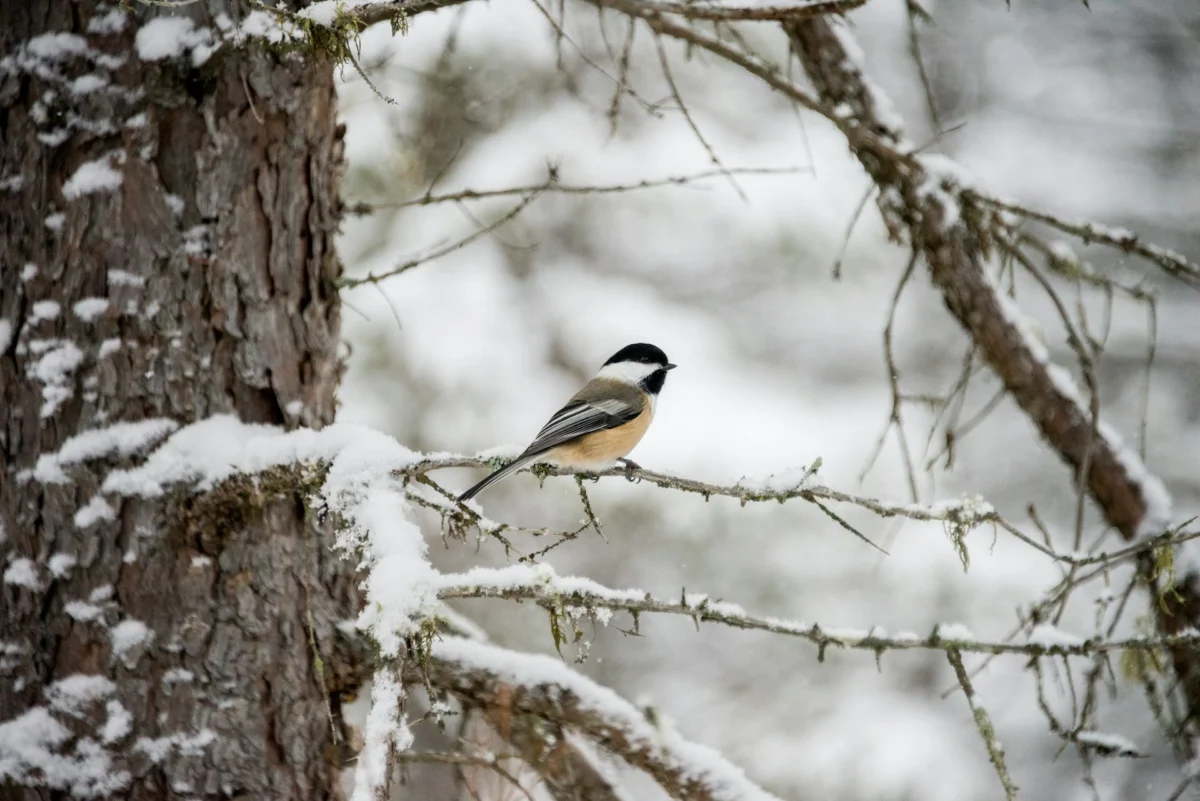
The countryside transforms into a hushed tableau during winter, with softened colors and shortened days that strip nature back to its fundamental elements. As leaves fall and ground cover thins, birds become more visible, their calls more pronounced, offering a unique clarity rarely experienced at other times of the year. The Christmas season, in particular, presents a rare opportunity: extended unhurried daylight, a conducive atmosphere for reflection, and the precious time to observe the avian world in ways that might otherwise be overlooked. This article is not an exhaustive list of elusive species to pursue amidst holiday festivities, but rather an invitation to cherish those fleeting, memorable encounters that are intrinsically linked to the winter season. Here are twelve distinct Christmas birdwatching experiences, readily accessible whether viewed from a kitchen window, during a crisp morning walk, or in quiet moments between celebratory gatherings.

The Intrepid Robin: A Winter Companion
Few birds are as culturally entwined with Christmas as the robin. However, their behavior in winter differs markedly from their spring counterparts. They exhibit increased boldness and a curious proximity to human activity, frequently appearing mere feet away as one tends to gardens, traverses woodland paths, or pauses near a hedgerow. This proximity is not merely a display of festive friendliness, but rather a manifestation of fierce winter territoriality. With food resources becoming scarce, robins vigorously defend their feeding grounds. This defense can extend to humans, particularly if their movements disturb invertebrates hidden in the soil or under leaf litter. This territorial imperative, driven by survival, makes the winter robin a constant and engaging presence.
Dawn’s Symphony: The Overhead Passage of Geese
One of winter’s most profound auditory experiences unfolds before the day has truly begun. On frigid mornings, skeins of geese – be they pink-footed, greylag, or white-fronted – lift from their nocturnal roosts, their purposeful formations traversing the pale sky. Their calls, carried far in the still air, echo across fields and estuaries, imbuing the first light of day with an ancient and stirring resonance. These mass migrations, often driven by the search for unfrozen feeding grounds, represent a vital part of the winter landscape’s ecological narrative.

The Ethereal Flight of the Barn Owl
The barn owl perfectly embodies the profound stillness often associated with Christmas. As daylight wanes, their pale forms emerge over frost-rimmed fields, quartering the landscape with a ghost-like precision. Winter’s reduced vegetation makes small mammals more readily detectable, facilitating the owl’s hunting success. Their unhurried, silent flight seems to possess the ability to suspend time itself, offering a moment of serene observation that feels uniquely suited to the contemplative spirit of the season. The increase in barn owl sightings during winter can be attributed to their reliance on open fields for hunting voles and mice, which are more exposed when crops have been harvested and vegetation is less dense.
Redwings and Rowan: A Splash of Winter Color
For many, the arrival of redwings signifies the true commencement of winter and the approaching holiday season. These migratory thrushes inject vibrancy and sound into otherwise quiet landscapes. They descend upon berry-laden trees with suddenness, only to erupt into flight at the slightest disturbance. Their presence is often fleeting, characterized by a cycle of feasting and moving on. Their high, thin "seep" calls are among the most evocative sounds of the season, a delicate yet persistent reminder of nature’s resilience. Fieldfares frequently accompany redwings, forming larger flocks that can strip trees bare of berries in a short period, a testament to their efficient foraging strategies.

The Kingfisher’s Flash: A Jewel on the Water
Against winter’s muted palette, the kingfisher’s vibrant colors appear almost otherworldly. That electric flash of blue becomes even more striking when juxtaposed with bare branches, dark water, and an often-grey sky. Colder weather often concentrates birdlife along unfrozen streams and rivers, making winter an opportune time to spot a perched kingfisher, provided patience is exercised. Their characteristic darting flight and rapid plunge into the water for prey are a breathtaking spectacle. Studies have shown that kingfisher populations can be sensitive to prolonged hard frosts, which can freeze smaller water bodies, pushing them towards larger, more open river systems.
Long-Tailed Tits: Living Baubles in the Hedgerow
A winter hedgerow truly comes alive with the arrival of long-tailed tits. These small, energetic family groups travel incessantly, their soft, excited contact calls a constant thread as they meticulously forage. They are birds of togetherness, with siblings remaining in close proximity throughout the winter months, a characteristic that feels particularly resonant at Christmas. Watching them move like a rolling wave of tiny, animated baubles through the branches is a delightful experience. These mixed-species flocks, often including goldcrests and treecreepers, highlight the intricate social dynamics of winter bird communities.

The Elusive Woodcock: A Surprise Flush
The woodcock stands as one of Britain’s most secretive winter visitors, and the Christmas period offers some of the prime opportunities to encounter one, often by surprise. A dusk walk along woodland edges may suddenly trigger an explosive flush, the bird zigzagging away on whirring wings, leaving a palpable sense of exhilaration. These birds undertake impressive migratory journeys from Scandinavia and Russia to find suitable wintering grounds. Their cryptic plumage provides excellent camouflage within leaf litter, making them notoriously difficult to spot until they take flight. The number of woodcock recorded in the UK during winter can fluctuate annually, influenced by weather patterns in their breeding grounds and along migration routes.
Starling Murmurations: Winter’s Aerial Ballet
Murmurations of starlings represent winter theatre at its most magnificent. As daylight recedes, thousands of starlings converge and twist above their roosting sites, forming mesmerizing, shifting shapes against the sky before descending en masse into reeds or urban structures. Cold weather often intensifies this spectacle, making Christmas a particularly reliable time to witness this phenomenon. The synchronized aerial displays are thought to serve multiple purposes, including confusing predators and sharing information about foraging sites. The sheer scale and complexity of these formations are a testament to the sophisticated social organization within starling flocks.

Goldfinches at the Feeder: A Cheerful Gathering
Goldfinches, often overlooked as common garden birds, reveal their sociable nature in winter. Small flocks congregate at feeding stations, their tinkling calls creating a continuous, cheerful soundtrack. Their distinctive red faces and golden wing bars provide a particularly festive visual against the backdrop of frost and bare branches. The increase in goldfinch visits to feeders during winter is driven by the scarcity of their preferred natural food sources, such as thistle and teasel seeds. Providing them with nyjer seed and sunflower hearts can significantly enhance garden bird diversity during the colder months.
The Grey Wagtail: A Splash of Color by Water
Despite their name, grey wagtails introduce a surprising and welcome splash of color to winter rivers. Their bright yellow underparts gleam as they energetically bob along weirs and fast-flowing streams. These birds are often found in urban settings where water bodies remain ice-free, providing crucial habitat during harsh weather. Their constant tail-wagging is a distinctive characteristic, a rhythmic motion that can be observed even from a distance. While their primary wintering grounds are in the Mediterranean, a significant number of grey wagtails can be found in the UK during the colder months, favoring areas with open water and adjacent foraging opportunities.

The Sparrowhawk’s Pause: A Moment of Intense Focus
Few avian encounters can sharpen winter birdwatching quite like the appearance of a sparrowhawk. One moment, garden feeders are a hive of activity; the next, everything freezes, or erupts into frantic flight. Winter often brings these aerial predators closer to human habitation as potential prey congregates in more accessible locations. The sparrowhawk’s sudden, low, and incredibly fast flight through cover is a breathtaking display of predatory efficiency. Although their appearances are brief, they are invariably thrilling and unforgettable, serving as a stark reminder of the raw predator-prey dynamics at play in the natural world. The success rate of sparrowhawk hunts can be influenced by vegetation cover and the vigilance of their prey.
The Christmas Walk Bird: The Undiscovered Gem
Every Christmas walk seems to hold the potential for a special avian encounter, a bird that might otherwise go unnoticed on an ordinary day. This could be a mistle thrush calling assertively from a bare tree, a plump bullfinch perched regally in a hedgerow, or a subtle brambling mixed in with a flock of chaffinches. It is not the rarity of the bird that imparts significance, but its mere presence and the unique context of its observation. Christmas provides the invaluable gift of time, and it is this temporal abundance that fundamentally alters our perception, allowing us to see and appreciate the wonders of the natural world around us with renewed clarity and appreciation. The cumulative data from citizen science initiatives like the RSPB’s Big Garden Birdwatch, which often takes place in early spring but is informed by winter observations, helps track population trends and understand the factors affecting common garden birds. These events underscore the importance of understanding and conserving the habitats that support these diverse avian species throughout the year.

