


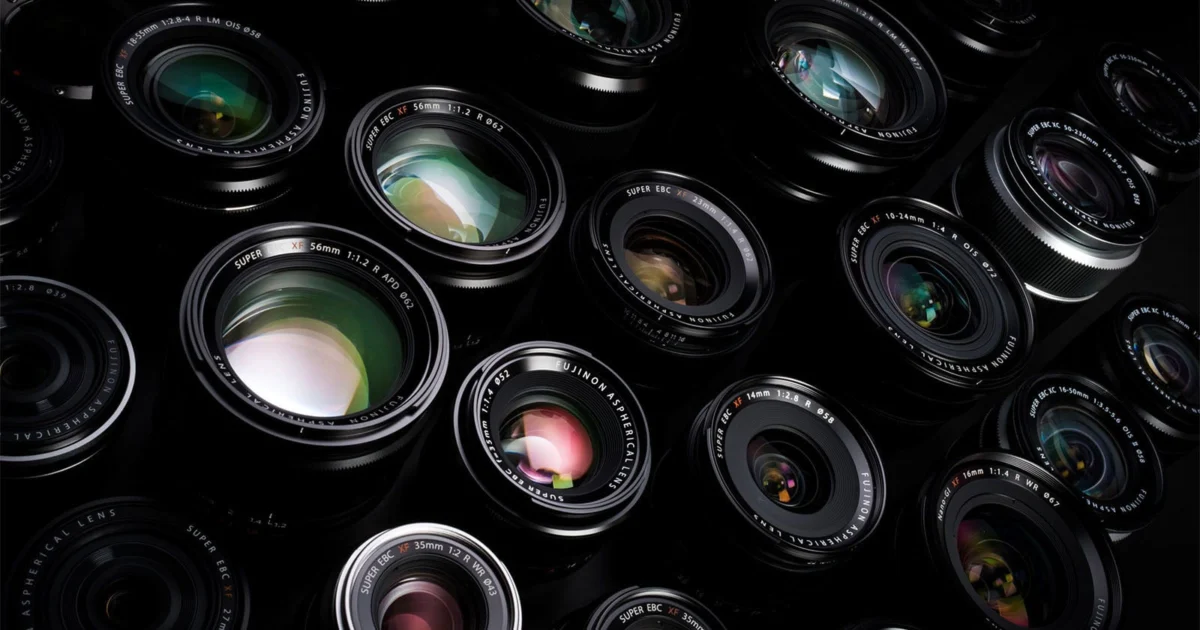
In a comprehensive dialogue regarding the future of optical engineering and the evolution of the X-mount ecosystem, Yuji Igarashi, General Manager of Professional Imaging Products at Fujifilm, has provided new insights into the company’s long-term strategy for lens development. Speaking on the PetaPixel Podcast, Igarashi detailed the internal philosophies that drive Fujifilm’s imaging division, emphasizing a commitment to optical "character" that transcends mere technical specifications. This discussion follows the company’s "Focus on Glass" initiative, an event held in early March that served as a rare public window into the research and development pipeline of one of the industry’s most prominent camera manufacturers.
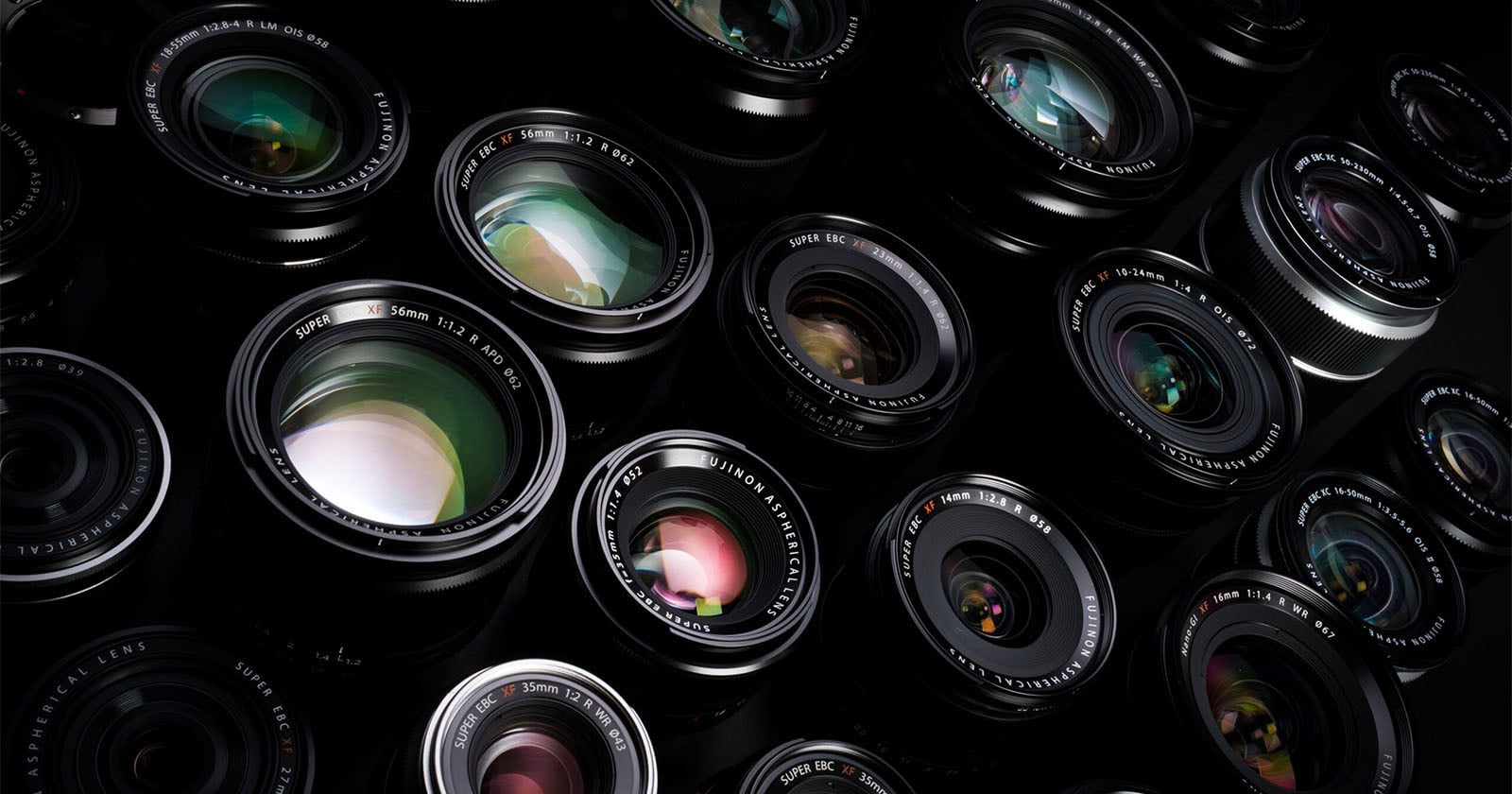
For over eight decades, Fujifilm has maintained a significant presence in the optical industry, producing glass for everything from consumer cameras to high-end cinema and broadcast equipment. Igarashi noted that while modern digital sensors receive significant attention, the lens remains the most challenging component of the imaging chain to perfect. According to Igarashi, the difficulty lies in the fact that many of a lens’s most desirable qualities are subjective and difficult to quantify. While metrics such as f-number, resolution, and MTF charts provide a baseline, they do not account for the nuance of chromatic aberration, distortion management, and the overall "feel" of an image. This realization was the primary driver behind the "Focus on Glass" event, which sought to communicate the passion of Fujifilm’s engineers directly to the photographic community.
The Focus on Glass Initiative: A Strategic Shift in Engagement
The "Focus on Glass" event represented a departure from traditional corporate communication. Rather than simply announcing finished products, Fujifilm chose to share 14 distinct lens concepts—ideas that were feasible but not yet in active production. These concepts were distilled from a larger pool of over 40 internal designs proposed by the Research and Development (R&D) and product planning teams. By presenting these "dream lenses," Fujifilm effectively turned its user base into a focus group, inviting photographers to vote on which optics they most desired to see in their camera bags.
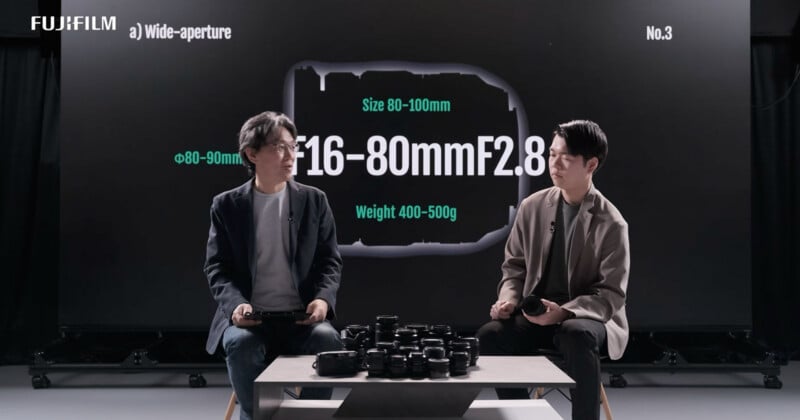
The event featured prominent roles for optical engineers Yukitaka Takeshita and Yuma Miyauchi, who were given a platform to discuss their personal design philosophies. Igarashi observed that this was a significant moment for the engineering team, as they are typically restricted to discussing the specifications of lenses that have already been finalized and announced. The ability to share conceptual designs allowed for a more transparent relationship between the creators of the glass and the photographers who use it.
Analyzing the Public Mandate: The Top Three Lens Concepts
The results of the public voting process provided Fujifilm with a clear roadmap of consumer expectations. The enthusiasm was palpable, as Igarashi admitted that the company feared a lack of participation would have been "quite sad." Instead, thousands of photographers weighed in, with three concepts emerging as the clear favorites.
1. The XF 16-80mm f/2.8 Fast Zoom
Taking the top spot with over 16 percent of the vote was the XF 16-80mm f/2.8. This concept represents a significant upgrade over the existing XF 16-80mm f/4 R OIS WR. For many professional and enthusiast photographers, a constant f/2.8 aperture across a versatile 24-120mm (full-frame equivalent) focal range is considered the "holy grail" of travel and event lenses. Igarashi noted that the popularity of this concept was expected, as it builds upon the success of the XF 16-55mm f/2.8, extending its reach while maintaining the fast aperture required for low-light performance and subject separation.
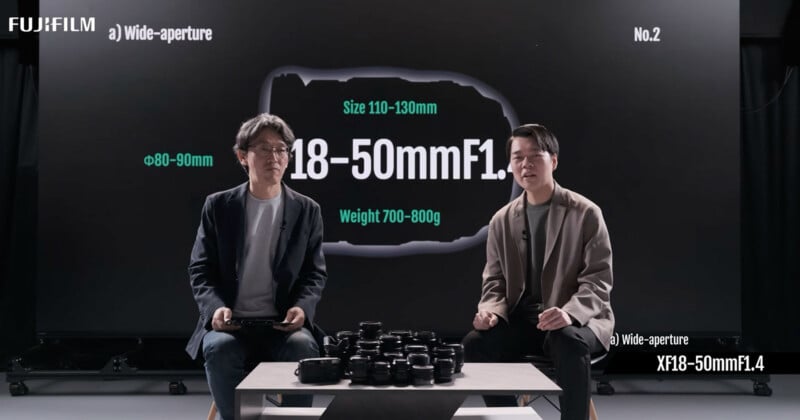
2. The XF 18-50mm f/1.4 Ultra-Fast Zoom
The second-place concept, an 18-50mm f/1.4 zoom, highlights a growing trend in the industry toward ultra-fast zooms. While providing a standard focal range, an f/1.4 aperture in a zoom lens is an ambitious engineering feat that would likely result in a large, heavy, and expensive optic. However, the demand for shallow depth of field and the ability to replace multiple primes with a single zoom has made this a highly anticipated possibility for the X-mount.
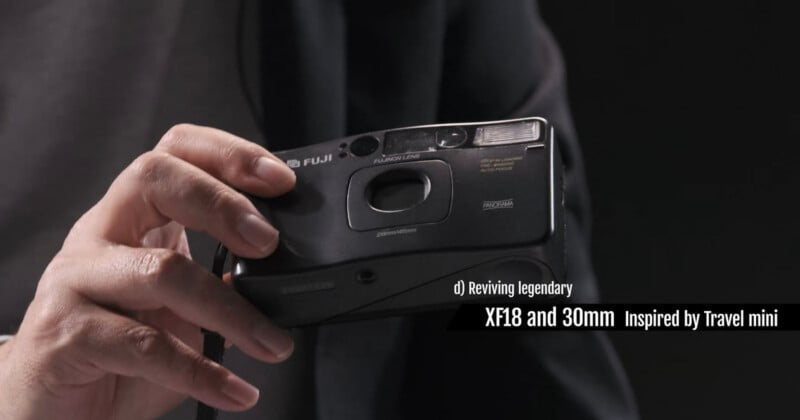
3. The XF 18mm and 30mm Dual Focal Length Prime
Perhaps the most surprising result for the Fujifilm executive team was the third-place finish of the dual focal length lens. Inspired by the "Travel Mini" film cameras of Fujifilm’s heritage, this lens would allow photographers to toggle between 18mm (27mm equivalent) and 30mm (45mm equivalent) focal lengths. Unlike a traditional zoom lens that covers every millimeter in between, a dual-prime design allows for a significantly more compact form factor. Fujifilm estimated that such a lens could weigh as little as 100 grams and measure less than 50 millimeters in length. Its popularity suggests that the Fujifilm community continues to value the compact, "street-friendly" aesthetic that defined the X-series at its inception.
Addressing the Ecosystem’s Gaps: The Telephoto Challenge
Despite the maturity of the X-mount, which launched in 2012 with the X-Pro1 and three prime lenses, Igarashi was candid about the areas where the system still has room to improve. While the system is widely praised for its wide-angle and standard prime lenses—such as the acclaimed 23mm, 35mm, and 56mm series—the telephoto segment remains a strategic focus for future growth.
"I think [telephoto] is still an area which we can grow," Igarashi admitted, describing it as the current "weakest" point in the lineup. While Fujifilm offers capable telephoto options like the XF 100-400mm and the XF 150-600mm, the demand for fast, professional-grade telephoto primes and zooms for sports and wildlife photography continues to rise. As APS-C sensors become more capable of high-speed tracking and high-resolution output (as seen in the X-H2 and X-H2S), the need for corresponding high-performance telephoto glass becomes more acute.
The Convergence of Stills and Motion
A recurring theme in Fujifilm’s current strategy is the integration of video capabilities into lens design. The modern photographer is increasingly a hybrid creator, requiring lenses that perform equally well for stills and cinema. This shift presents unique engineering challenges, such as minimizing focus breathing (where the focal length appears to change during focusing) and ensuring silent, smooth autofocus actuators.
Fujifilm is uniquely positioned in this regard due to its "Professional Imaging" umbrella, which houses consumer X-series and GFX-series optics alongside Fujinon broadcast and cinema lenses. Igarashi emphasized that the cross-pollination of expertise between these departments is a key competitive advantage. The heritage of cinema optics—where "character" and "rendering" are often valued over clinical sharpness—is being increasingly infused into the consumer lens lineup.
Market Implications and Future Outlook
The "Focus on Glass" initiative and Igarashi’s subsequent commentary signal a more iterative and transparent approach to product development. By acknowledging that the 14 concepts are "realistic" and not merely "pipe dreams," Fujifilm has set a high bar for its future roadmap. These designs do not require breakthroughs in the laws of physics; rather, they require a strategic balance of size, cost, and optical performance.
From a market perspective, Fujifilm’s focus on unique lens designs—such as the dual focal length prime—serves to differentiate the X-mount from its full-frame competitors. While Sony, Canon, and Nikon have focused heavily on their respective full-frame mirrorless transitions, Fujifilm’s doubling down on APS-C (and Medium Format GFX) allows it to cater to a specific niche of photographers who value portability and tactile controls without sacrificing professional image quality.
The feedback gathered from the public voting will likely influence the official lens roadmaps for 2025 and beyond. While not every concept is guaranteed to reach the production line, the data provides Fujifilm’s R&D teams with a prioritized list of user needs. As the industry moves further into the mirrorless era, the "character" of the glass may become the primary deciding factor for photographers choosing a system, and Fujifilm appears intent on ensuring its glass remains at the center of that conversation.
In conclusion, Igarashi’s insights reveal a company that is deeply aware of its history but acutely focused on the evolving needs of the modern creator. By bridging the gap between engineering "Untold Stories" and public desire, Fujifilm is attempting to foster a community-driven approach to innovation, ensuring that the next generation of X-mount glass is as much a product of photographer feedback as it is of optical mathematics.

