


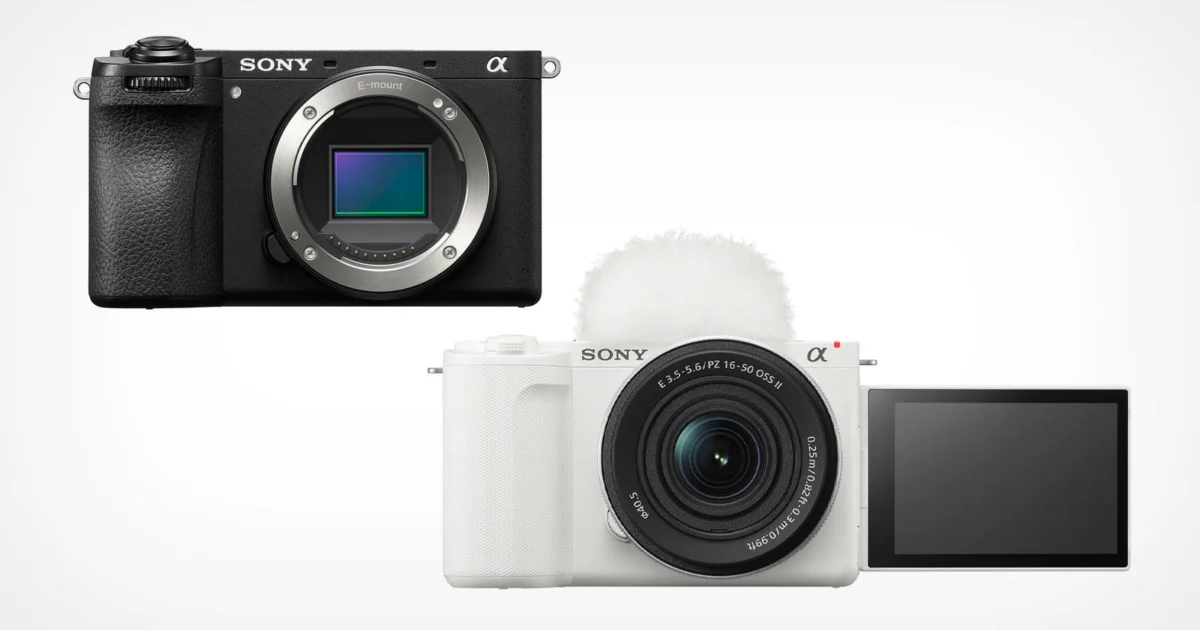
Sony has officially signaled a reinforced dedication to its APS-C (Advanced Photo System type-C) mirrorless camera ecosystem, countering industry speculation that the electronics giant might be shifting its primary focus exclusively toward the high-margin full-frame market. Speaking at the CP+ 2026 photography trade show, executives from Sony’s Imaging Entertainment Business Unit clarified that the APS-C segment remains a cornerstone of their imaging strategy, citing a steady and measurable increase in consumer demand for smaller, more affordable, yet high-performance camera systems.
While Sony’s Alpha full-frame lineup—comprising the a7, a9, and a1 series—frequently captures the headlines of the professional photography world, the company’s internal data suggests a parallel growth trajectory for its cropped-sensor offerings. Yasufumi Machitani, General Manager of the Camera Business Department at Sony Imaging Entertainment Business Unit, emphasized that the market for APS-C products is not merely stabilizing but actively expanding. This growth is driven by a new generation of content creators, vloggers, and enthusiast photographers who prioritize portability and value without sacrificing the technological advancements found in professional-tier equipment.
The Evolution of Sony’s APS-C Ecosystem: A Chronology of Growth
The current state of Sony’s APS-C lineup is the result of a multi-year strategy to diversify the E-mount system. To understand the current trajectory, one must look at the timeline of releases that have defined the brand’s presence in this segment over the last several years.
In early 2019, Sony released the Alpha 6400 (a6400), a camera that became a benchmark for mid-range mirrorless performance due to its advanced autofocus capabilities. This was followed by the Alpha 6100 and the flagship Alpha 6600, which introduced in-body image stabilization (IBIS) to the compact form factor. However, the most significant shift occurred in 2021 with the introduction of the ZV-E10, a camera specifically designed for the burgeoning vlogging market.
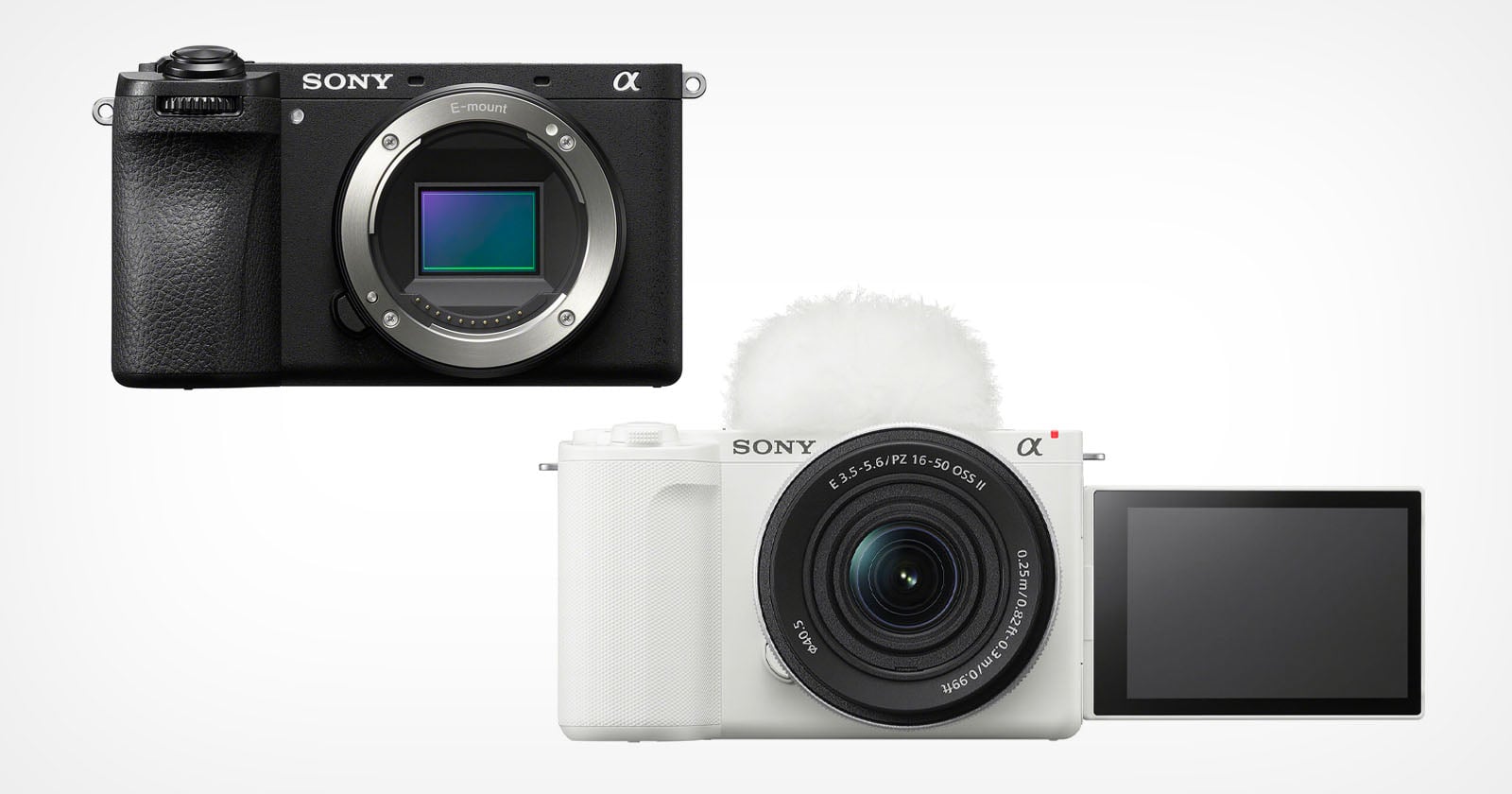
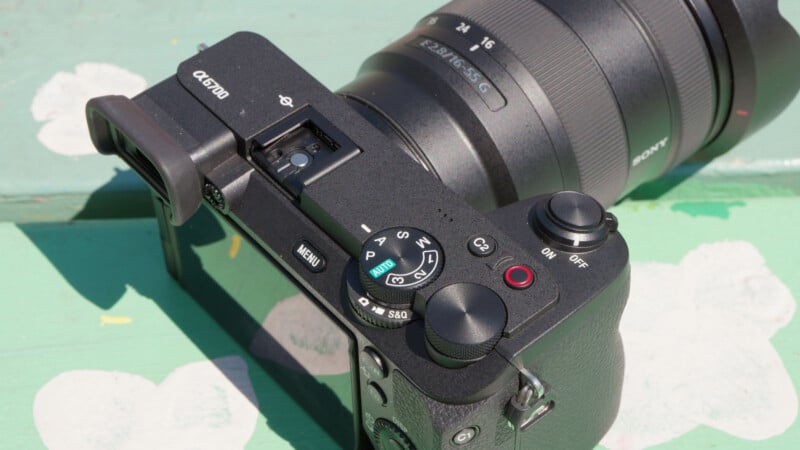
By June 2022, Sony addressed a long-standing criticism regarding its APS-C lens roadmap by launching a "triple threat" of wide-angle optics: the 10-20mm f/4 PZ G, the 15mm f/1.4 G, and the 11mm f/1.8. This move signaled that the company was willing to invest in high-quality, dedicated glass for the smaller sensor format. In 2023, the Alpha 6700 arrived, integrating AI-driven processing units and high-end video specifications previously reserved for the full-frame Alpha 7R V. Most recently, the July 2024 launch of the ZV-E10 II further solidified Sony’s dominance in the entry-level and mid-range video creation space.
Current Market Position and Product Portfolio
As of early 2026, Sony maintains one of the most robust APS-C inventories in the mirrorless industry. The current hardware lineup consists of five primary interchangeable lens cameras:
- ZV-E10 II: The current flagship for entry-level vlogging.
- ZV-E10: The original vlogging workhorse, which remains in the catalog as a high-value entry point.
- Alpha 6700: The premium enthusiast model featuring a 26-megapixel sensor and advanced AI autofocus.
- Alpha 6400: A reliable mid-range option favored by street photographers.
- Alpha 6100: The accessible entry point for traditional still photography.
On the optics side, Sony’s E-mount catalog now features 15 dedicated APS-C lenses, including specialized power zooms and fast primes. While this number is dwarfed by the massive "FE" (Full-Frame) lens collection, it remains significantly more comprehensive than the APS-C offerings from competitors like Canon (RF-S) and Nikon (Z-DX), both of whom have focused more heavily on full-frame lens development.
Data-Driven Success: Why APS-C Dominates the Retail Market
The strategic importance of APS-C is backed by hard retail data. While professional photographers may gravitate toward full-frame sensors for their low-light performance and dynamic range, the general consumer market frequently chooses the APS-C format for its balance of size, weight, and price.
Recent reports from major Japanese retail analysts provide a clear picture of this trend. According to data from Map Camera, a leading high-end retailer, five of the ten best-selling digital cameras of 2025 were APS-C models. Even more telling is the data from BCN+R, which monitors approximately 40 percent of the Japanese retail market. Their 2025 year-end rankings placed the Sony ZV-E10 II at the number two spot for total sales volume, with the original ZV-E10 and the Alpha 6400 occupying the fourth and fifth positions, respectively. In contrast, Sony’s highly popular full-frame Alpha 7C II sat at eighth place.
This data suggests that while full-frame cameras generate higher profit margins per unit, the APS-C lineup provides the volume and market penetration necessary to sustain the brand’s ecosystem. This "volume play" is essential for bringing new users into the Sony E-mount family, many of whom will eventually transition to more expensive full-frame gear as their skills and budgets grow.
Official Responses and Strategic Philosophy
Sony’s leadership is transparent about the role APS-C plays in their broader business model. Yasufumi Machitani noted that the company does not view the two formats as being in competition with one another, but rather as complementary tiers of a single unified system.
"APS-C is important. Looking at the market, we believe it’s growing," Machitani stated. "APS-C demand has been steadily growing, so we see it as important as well. We want to see the market trend and discuss future development."
A key part of Sony’s philosophy is the "One Mount" strategy. Because both APS-C and full-frame cameras use the same E-mount physical connection, a customer who starts with an Alpha 6400 can use the same lenses if they later decide to purchase an Alpha 7 IV. This interoperability creates a "sticky" ecosystem, making it less likely for a user to switch to a competitor like Fujifilm or Canon once they have invested in E-mount glass. "Even if customers start with APS-C, some will upgrade to full-frame once they enjoy our products," Machitani explained. "We don’t limit the APS-C business."
Competitive Landscape and Implications for the Industry
Sony’s commitment to APS-C places it in a unique competitive position. For years, Fujifilm has been the primary champion of the APS-C format, choosing to forgo the full-frame market entirely in favor of its X-Series and GFX medium format systems. Fujifilm’s success with models like the X100VI and X-T5 has proven that there is a massive market for premium, high-performance APS-C cameras.
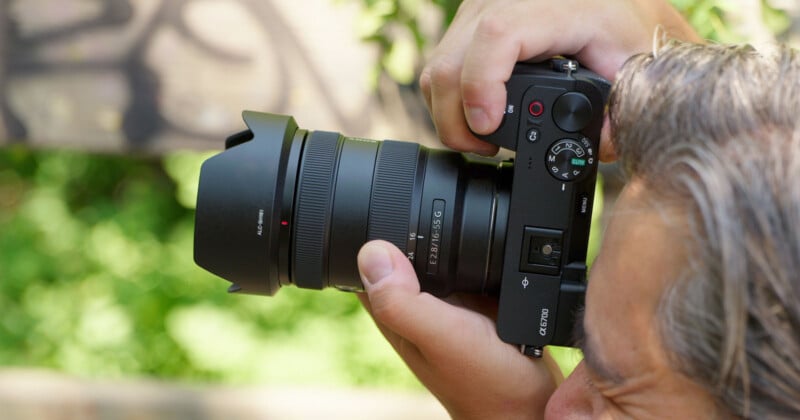
Sony appears to be taking a two-pronged approach to counter Fujifilm and other rivals. First, it is dominating the video-centric "vlogger" market with the ZV series. Second, it is trickling down high-end technology from its $6,000 professional bodies into its $1,500 APS-C bodies.
However, industry analysts point out that there is still a gap in Sony’s lineup. While the Alpha 6700 is a powerful tool, it lacks the "rugged, professional" feel of some of Sony’s full-frame bodies. There is a growing chorus of enthusiasts calling for an "Alpha 7 Lite"—an APS-C camera housed in a body design similar to the Alpha 7 series, featuring dual card slots, a larger viewfinder, and more robust weather sealing. Such a camera would directly compete with the Canon EOS R7, which has found success among wildlife and sports photographers who value the 1.5x "reach" advantage provided by the smaller sensor’s crop factor.
Future Outlook: The Next Frontier for APS-C
The future of Sony’s APS-C development likely hinges on two factors: AI integration and specialized optics. With the advent of Sony’s dedicated AI processing chip, the company has the ability to offer class-leading subject tracking (for humans, animals, birds, insects, and vehicles) in cameras that are significantly smaller than their full-frame counterparts. This makes the APS-C format particularly attractive for travel and outdoor photography.
Furthermore, as the vlogging market matures, there is an expectation that Sony will continue to push the boundaries of video specifications in the APS-C space. Features like 4K/120p recording, 10-bit 4:2:2 internal color, and advanced electronic stabilization are becoming standard expectations rather than luxury additions.
While the lens release schedule has been heavily tilted toward full-frame "FE" models in the last 24 months, the sheer volume of APS-C camera sales suggests that a new wave of dedicated E-mount lenses may be on the horizon. To maintain its market lead, Sony will likely need to refresh its aging kit lenses and introduce more "G Master" quality glass optimized for the APS-C image circle.
In conclusion, Sony’s statements at CP+ 2026 serve as a reassurance to millions of users that the APS-C format is not a "legacy" system. Instead, it is a thriving, growing segment that serves as both a gateway for newcomers and a powerful, portable alternative for professionals. By maintaining a healthy balance between its full-frame aspirations and its APS-C foundations, Sony is positioning itself to remain the dominant force in the global mirrorless market for the remainder of the decade.

