


The global photography community is currently grappling with a fundamental crisis of authenticity as the boundaries between captured reality and algorithmic generation continue to dissolve. For over a century, the value of a photograph has been tethered to the physical presence of the photographer—the "being there" that serves as a witness to history. However, as artificial intelligence (AI) achieves the capability to produce images indistinguishable from traditional photographs, the industry is forced to re-evaluate the core of its craft. This shift challenges the long-held romanticism of the "decisive moment," suggesting that the artistic value of photography may not reside in the instant the shutter is pressed, but in the subsequent process of curation and discernment.
The 2026 Sony World Photography Awards: A Turning Point
In April 2026, the Sony World Photography Awards provided a definitive case study in the shifting nature of photographic creation. Elle Leontiev, an Australian photographer, was named the Portrait and Open Photographer of the Year for a striking image of Phillip Yamah, a self-taught volcanologist on the Vanuatu island of Tanna. The portrait, captured against the backdrop of the Mount Yasur volcano, was hailed by judges for its raw intensity and technical execution.
However, the circumstances surrounding the image’s creation complicate traditional notions of photographic intent. During a documentary assignment, Leontiev experienced a total equipment failure caused by an electricity shortage in a local village. Her Sony A7 III’s digital interface and rear screens became inoperable, forcing her to shoot "blind." Relying solely on the audible confirmation of her autofocus sensor, Leontiev captured several frames without the ability to compose through a viewfinder or review the results.
The winning frame was not "seen" by the photographer at the moment of exposure. Instead, its artistic merit was discovered days later during the editing process. This event underscores a growing realization in the industry: the camera often acts as a mechanical harvester of data, while the photographer’s primary creative act occurs at the "sorting table." Leontiev’s victory suggests that the "moment" is a raw material, and the art is the result of post-capture recognition.
The Deconstruction of the Decisive Moment
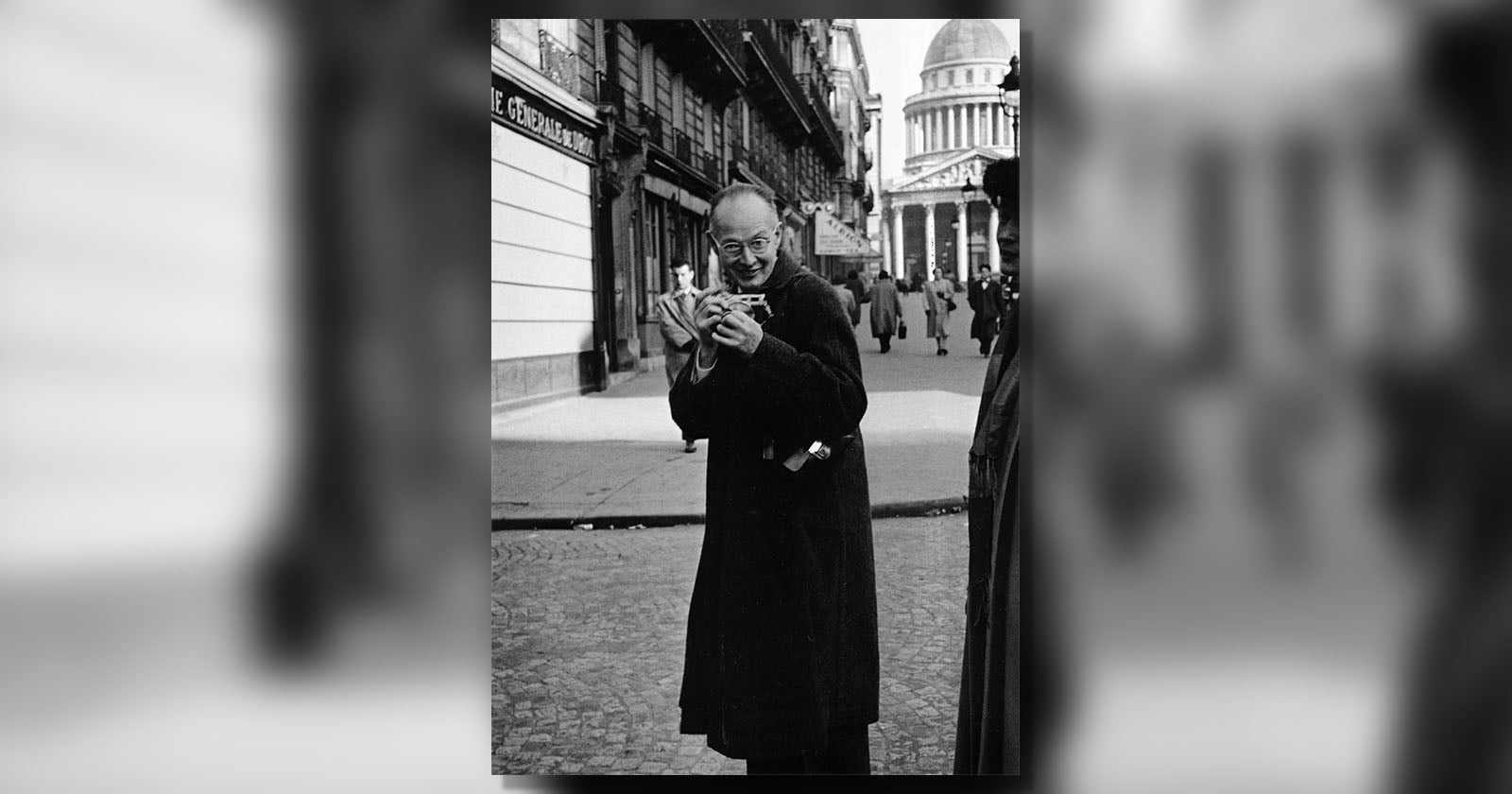
The concept of the "Decisive Moment" was popularized by Henri Cartier-Bresson in his 1952 book Images à la Sauvette. He defined it as the "simultaneous recognition, in a fraction of a second, of the significance of an event as well as of a precise organization of forms which give that event its proper expression." This philosophy has served as the bedrock of street photography and photojournalism for 75 years, implying that a photographer’s genius lies in their reflexive timing.
Historical analysis, however, reveals that even Cartier-Bresson’s most iconic works did not always adhere to this ideal. His 1932 masterpiece, Behind the Gare Saint-Lazare, which depicts a man leaping over a puddle, was captured under conditions that precluded "precise organization" at the moment of the click. Cartier-Bresson was forced to thrust his Leica lens through a gap in a wooden fence that was too narrow for his eye to reach the viewfinder.
The photographer later admitted he did not see the background elements—specifically the posters on the wall that mirrored the leaper’s pose—until the film was developed. The "visual rhyme" that grants the image its immortality was a product of chance, later validated by the artist in the darkroom. This historical context suggests that the "decisive moment" is often a retroactive narrative applied to a successful edit rather than a conscious realization at the time of exposure.
Chronology of Photographic Curation and Technological Evolution
The evolution of photography can be traced through the changing relationship between the capture and the edit:
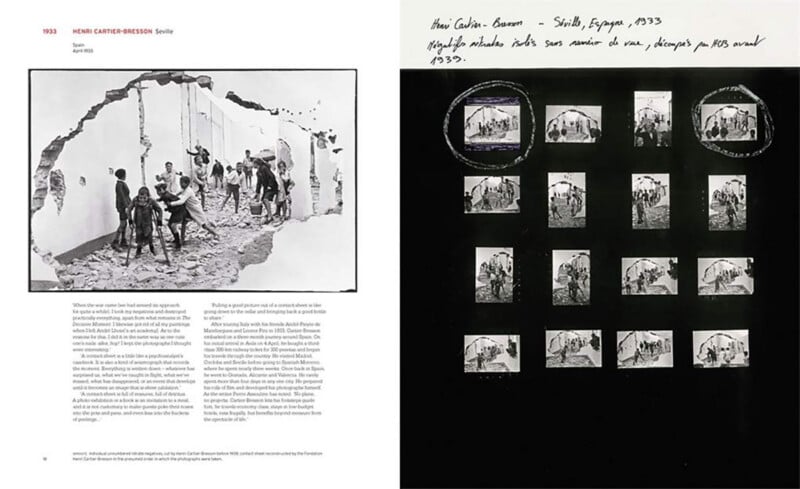
- 1930s–1950s: The Era of the Contact Sheet. Photographers like those at Magnum Photos utilized contact sheets to review entire rolls of 35mm film. These sheets, now considered vital historical documents, reveal that "masterpieces" were typically surrounded by dozens of near-misses, technical failures, and redundant frames.
- 1970s–1980s: The Adams Methodology. Ansel Adams, perhaps the most technical of the 20th-century masters, utilized the "Zone System" to pre-visualize images. Despite his meticulous approach, Adams was a ruthless curator. Out of an estimated 40,000 negatives produced during his career, he curated a "Museum Set" of only 126 images to represent his life’s work. He famously noted that "twelve significant photographs in any one year is a good crop."
- 2000s–2010s: The Digital Explosion. The transition to digital sensors removed the marginal cost of taking a photo, leading to a massive increase in the volume of images captured. The "sorting table" moved from the light box to software like Adobe Lightroom, where the act of "flagging" and "culling" became the dominant phase of production.
- 2023–Present: The AI Intersection. The emergence of generative AI introduced the ability to create "photographs" without a physical subject. This forced a distinction between "indexical" images (records of physical light) and "probabilistic" images (mathematical predictions of what a photo should look like).
Statistical Context: The Scale of Visual Saturation
The necessity of curation has become an existential mandate due to the sheer volume of imagery produced in the modern era. Recent studies on "visual saturation" indicate that AI now generates approximately 34 million images per day. This output rivals the daily uploads to major social media platforms and has reached a point where neither human experts nor automated detection tools can reliably distinguish between "real" and "fake" imagery.
In 2023, German artist Boris Eldagsen famously entered an AI-generated image titled Pseudomnesia: The Electrician into the Sony World Photography Awards. The piece won the Creative category, but Eldagsen refused the award, revealing the image’s origin to highlight the industry’s lack of preparedness for AI integration. His experiment proved that the "aesthetic of the photograph" can now be decoupled from the "act of photography."
Indexicality vs. Probabilistic Construction
To maintain a distinction between photography and AI-generated art, scholars and critics are increasingly turning to the concept of the "indexical sign." In semiotics, an indexical sign is a trace left by a physical cause—similar to a footprint in the sand or a shadow on a wall.
A photograph is indexical because it requires photons to bounce off a physical subject and strike a sensor or film. Elle Leontiev’s photo of Phillip Yamah is a physical record of light reflected off a man on a volcano in Vanuatu. Conversely, AI images are "probabilistic constructions." They do not record an event; they calculate the probability of pixel placement based on a dataset of existing images. While an AI can mimic the "look" of a barefoot volcanologist, it lacks the "weight of the footprint"—the historical truth that a specific person stood in a specific place at a specific time.
Broader Implications for the Industry and Artistry
The realization that the "art" of photography lies in the edit rather than the shutter click has significant implications for how the medium is taught, judged, and valued. If the camera is viewed as a tool for "foraging"—gathering raw visual data from the environment—then the photographer’s role shifts from that of a "hunter" seeking a single kill to that of a "curator" discerning value from a harvest.
Impact on Photojournalism
In journalism, the "physical trace" remains paramount. The industry is moving toward stricter metadata standards, such as the Content Authenticity Initiative (CAI), which embeds a digital "paper trail" in image files to prove they originated from a camera sensor. However, the Leontiev and Cartier-Bresson examples suggest that "truth" in photojournalism is not just about the capture, but about the selection of a frame that accurately represents the essence of a situation, even if that frame was one of hundreds taken blindly.
The Human Element in the Age of AI
As AI masters the "perfect" composition, human photographers may find their unique value in "intentional imperfection" and the subjective choice of what to keep. The "sorting table" is where a photographer’s personal philosophy, ethics, and aesthetic preferences manifest. The decision to delete a "happy accident" in favor of an "intentionally crafted" frame—or vice versa—is a uniquely human act of meaning-making that an algorithm cannot replicate.
Conclusion: The Future of the Photographer’s Point of View
The crisis of authenticity in photography is, at its heart, a crisis of the "moment." By dismantling the myth that a photograph’s value is determined in a fraction of a second, the medium can find a new footing. The camera records what happened, but the photographer determines its value.
As the industry moves forward, the "sorting table" will likely become the primary site of artistic defense against the flood of algorithmic imagery. The ability to look at a grid of images—whether captured blindly on a volcano or meticulously planned in a studio—and recognize the one frame that carries the weight of reality is the skill that will define the next generation of photographers. In a world saturated by probability, the act of human discernment remains the only true "decisive moment."

