


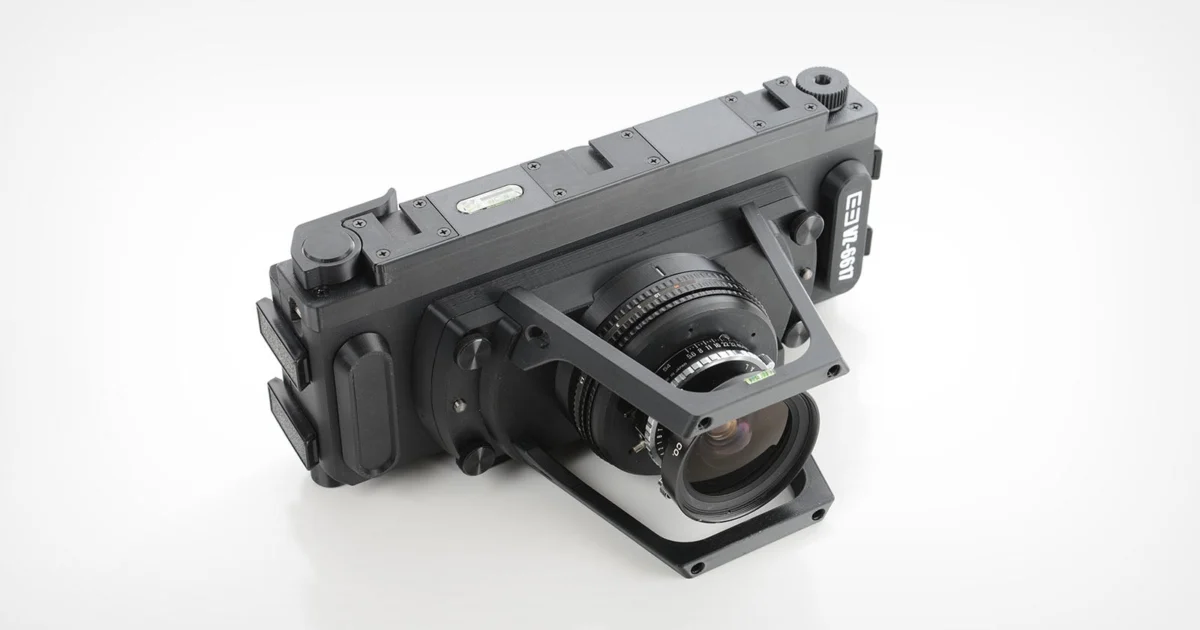
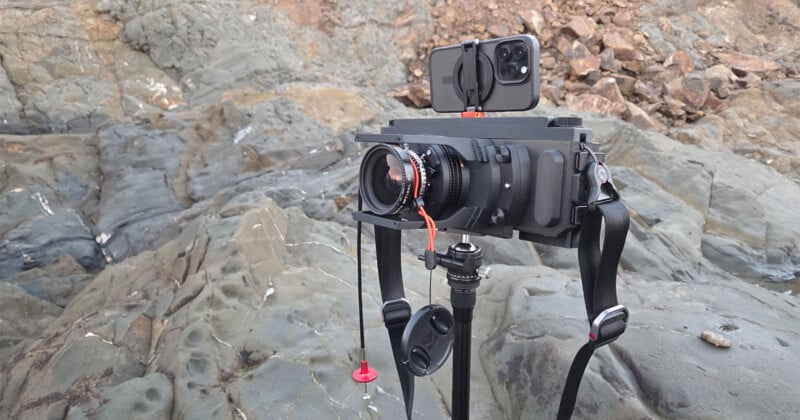
The traditional landscape of medium-format film photography has long been defined by its rigid adherence to specific frame dimensions, often requiring photographers to commit to a single aspect ratio for the duration of a 120-format roll. This technical limitation is being directly challenged by Exposing Engineering, a firm led by designer Francis Garing, through the introduction of the VZ-6617. This innovative camera system features a stepless "Variable Zone Film Gate" mechanism, allowing photographers to adjust their framing from a standard 6×6 square to an expansive 6×17 panoramic format at any point during the shooting process, even between individual frames on the same roll of film. By integrating large-format lens compatibility with a modular, 3D-printed chassis, the VZ-6617 aims to consolidate multiple camera systems into a single, highly adaptable tool for the film enthusiast.
Technical Innovation: The Variable Zone Film Gate
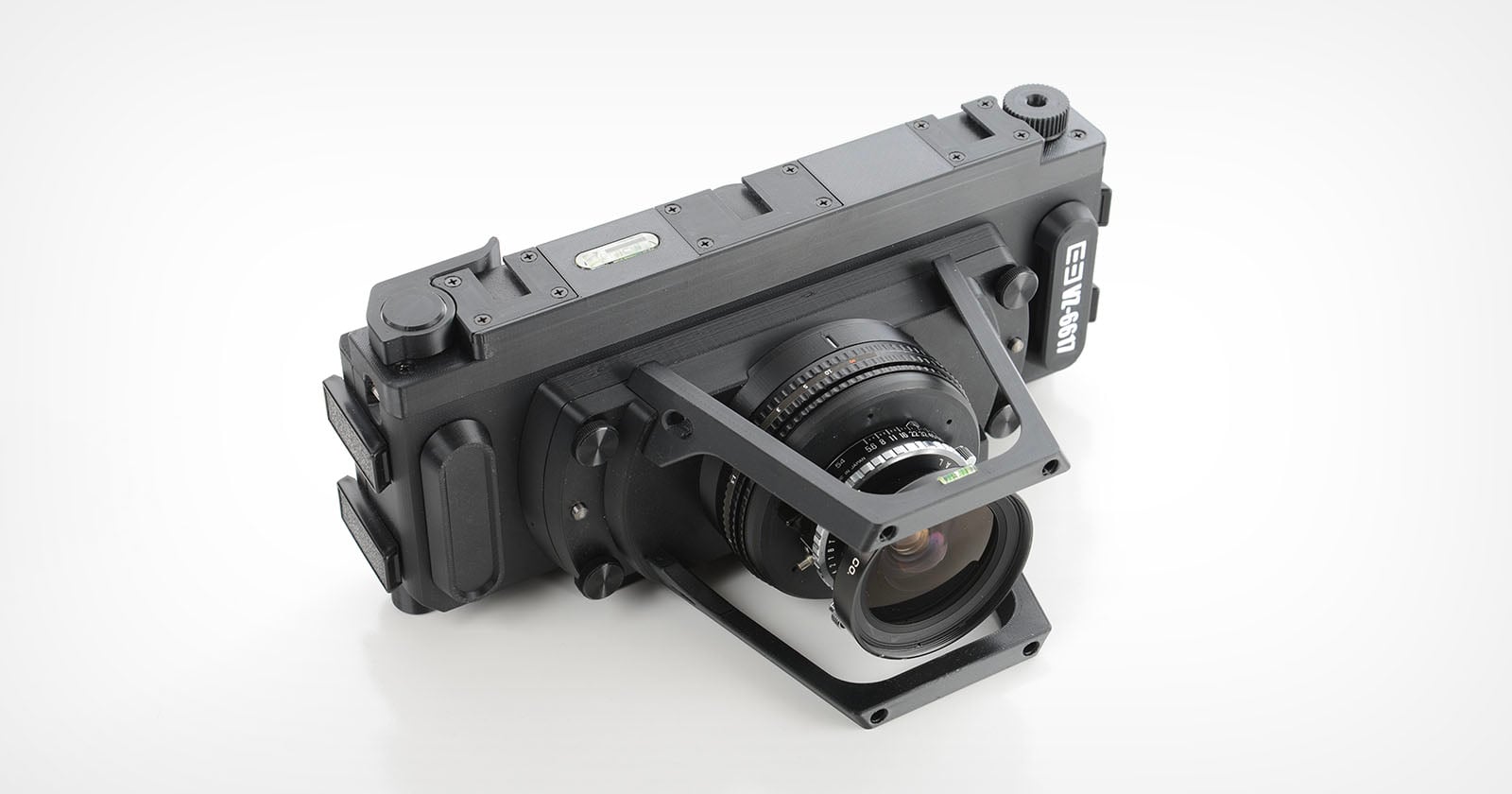
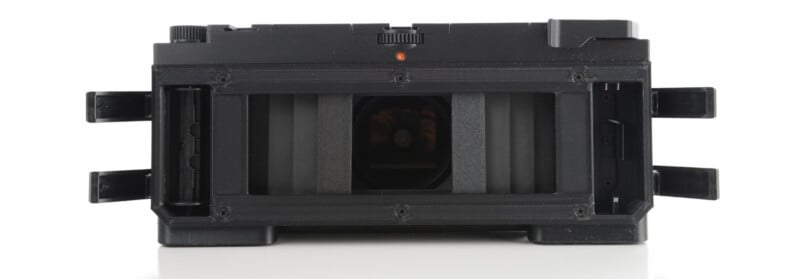
At the core of the VZ-6617’s design is the articulating film gate, a mechanical solution to a problem that has historically required either cropping in post-processing or carrying multiple bulky camera bodies. In standard medium-format photography, the dimensions are fixed by the camera’s internal masking: a Hasselblad or Rolleiflex produces 6x6cm squares, a Pentax 67 produces 6x7cm rectangles, and specialized panoramic cameras like the Fuji G617 or Linhof Technorama produce 6x17cm wide-angle shots.
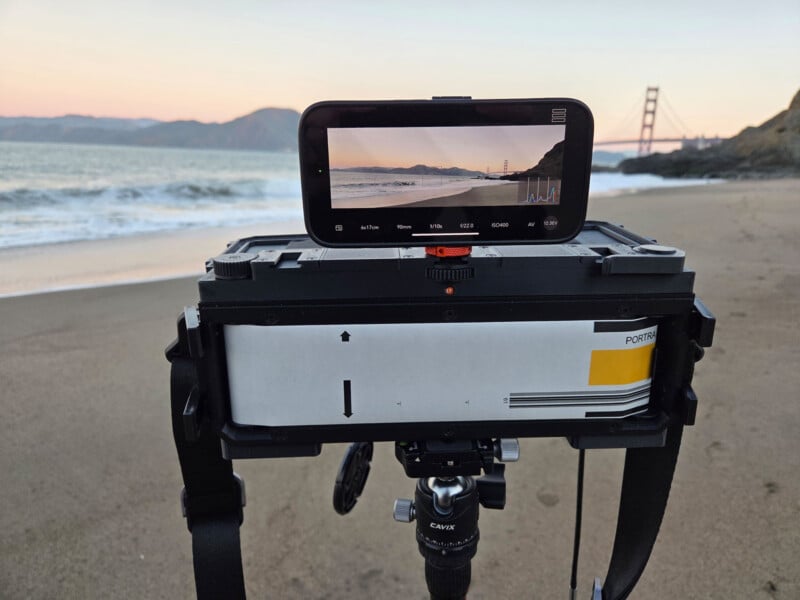
The VZ-6617 utilizes a symmetric masking system controlled by a simple external knob. This "Variable Zone" allows the photographer to dial in the exact width of the exposure area. When set to 6×6, the photographer can maximize the number of shots per roll—typically 12 frames on 120 film. However, if a scene demands a wider perspective, the gate can be opened to 6×9, 6×12, or the full 6×17 panorama. This flexibility introduces a new level of creative decision-making at the moment of capture, allowing the photographer to respond to the geometry of the subject matter rather than being constrained by the equipment loaded in their bag.
Large-Format Optics and the Image Circle Challenge
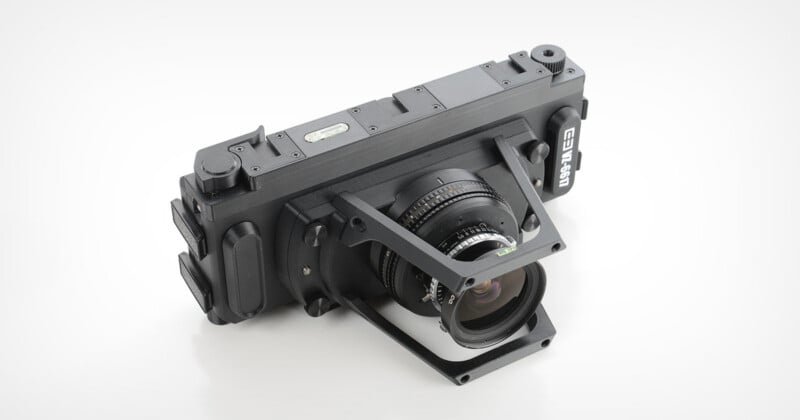
To achieve a 6x17cm exposure, a camera requires a lens capable of projecting a massive image circle. Standard medium-format lenses designed for 6×6 or 6×7 systems typically do not have the coverage required for panoramic photography, leading to severe vignetting or total image failure at the edges of a 6×17 frame. To circumvent this, the VZ-6617 is designed to utilize large-format lenses—optics originally intended for 4×5 or 5×7 view cameras.
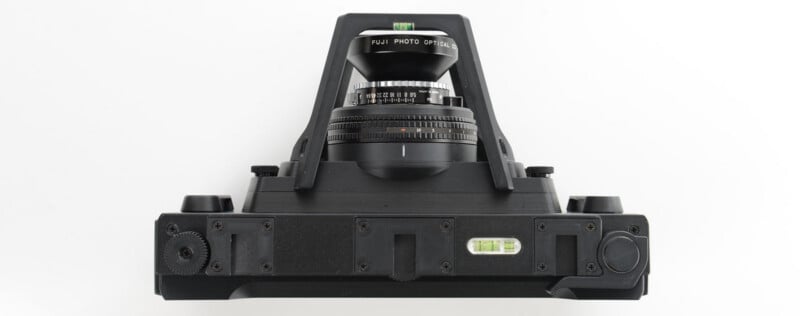
Large-format lenses from manufacturers such as Schneider Kreuznach, Nikon (Nikkor-W and Nikkor-SW), Rodenstock, and Fujifilm are renowned for their expansive image circles and integrated leaf shutters. The VZ-6617 supports these lenses through a system of interchangeable lens cones. Each cone is precision-engineered to maintain the correct flange focal distance, ensuring that the lens is positioned perfectly relative to the film plane.
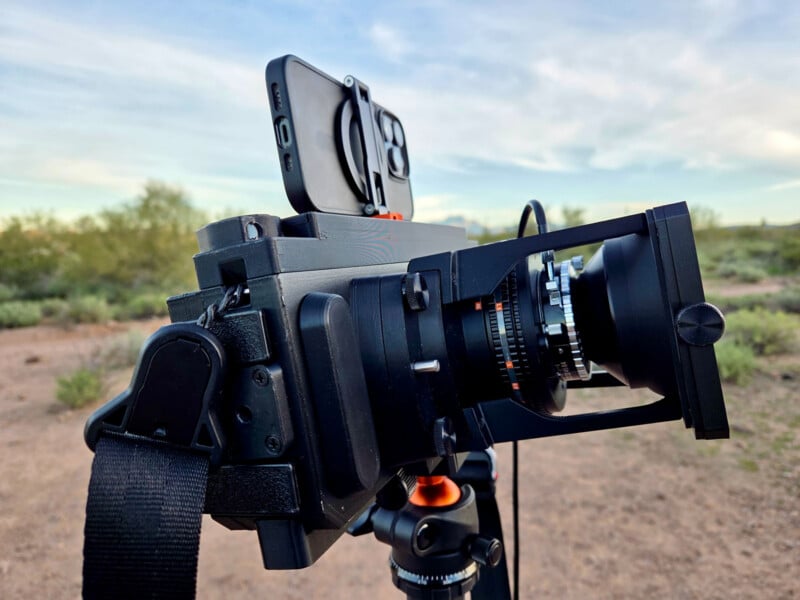
Furthermore, the VZ-6617 incorporates an integrated dark slide within the lens cone assembly. This feature is critical for professional workflows, as it allows the photographer to swap lenses mid-roll without exposing the film to light. The focusing mechanism utilizes an M65 helicoid, requiring the photographer to use "zone focusing" or "scale focusing." By estimating the distance to the subject and aligning it with the distance marks on the helicoid, photographers can achieve sharp results, a common practice in the world of wide-angle panoramic photography where the depth of field is often generous.
A Five-Generation Development Timeline
The journey of the VZ-6617 from concept to Kickstarter campaign involved an extensive prototyping phase spanning five generations of hardware. Exposing Engineering notes that each generation underwent dozens of iterations to refine the mechanical tolerances and durability of the 3D-printed components.
The development process was centered on real-world stress testing. Prototypes were deployed across a variety of demanding environments to ensure the camera could withstand the rigors of professional field use. Testing locations included:
- Urban Environments: Street photography and architectural documentation in various European cities.
- Coastal Regions: Exposure to salt air and moisture along the Bay Area beaches in California.
- Arid Landscapes: Dust and high-temperature testing on desert trails throughout the American Southwest.
- Alpine Conditions: Mechanical reliability testing in the sub-zero temperatures and snow of the Colorado Rocky Mountains.
These tests were instrumental in finalizing the material selection for the 3D-printed body, ensuring that the articulating parts of the Variable Zone Film Gate would remain smooth and light-tight regardless of environmental fluctuations.
The "One Screwdriver" Philosophy and User Repairability
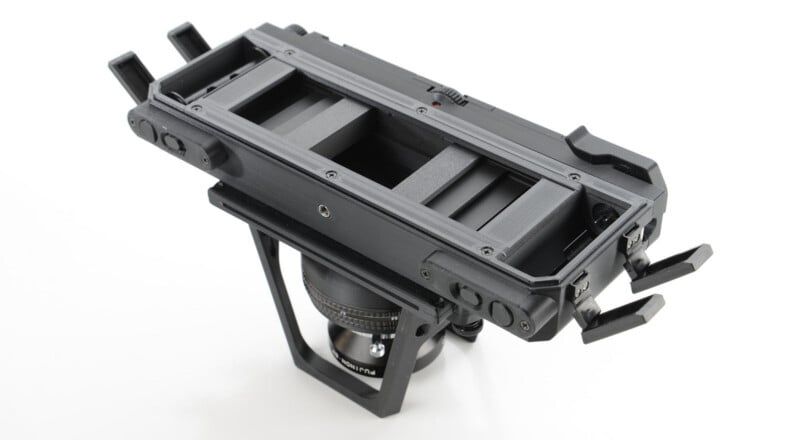
In an era where many modern electronic cameras are difficult, if not impossible, to repair outside of authorized service centers, Exposing Engineering has adopted a "Right to Repair" philosophy for the VZ-6617. The camera is designed to be entirely user-serviceable. According to the developer, the entire chassis is held together by a single type and size of screw, meaning a photographer only needs one screwdriver to completely disassemble and maintain the device.
To support the longevity of the system, Exposing Engineering has committed to providing instructional videos and making select replacement components available following the conclusion of the Kickstarter campaign. While the pre-production units have reportedly shown no mechanical failures during testing, the open-architecture design ensures that if a component does wear out or break, the owner can source or potentially 3D-print a replacement part rather than retiring the entire camera. This approach appeals to the sustainable ethos often found in the film photography community, where vintage gear is frequently kept in operation for decades through diligent maintenance.
Pricing Tiers and Market Positioning
The VZ-6617 is positioned as a cost-effective alternative to vintage panoramic cameras, which have seen a significant price surge in the secondary market. A used Fuji G617 or Linhof Technorama can often command prices between $2,500 and $5,000. By comparison, the VZ-6617 offers a more versatile feature set at a fraction of the cost, provided the user supplies their own lens.
The Kickstarter campaign outlines three primary backing tiers:
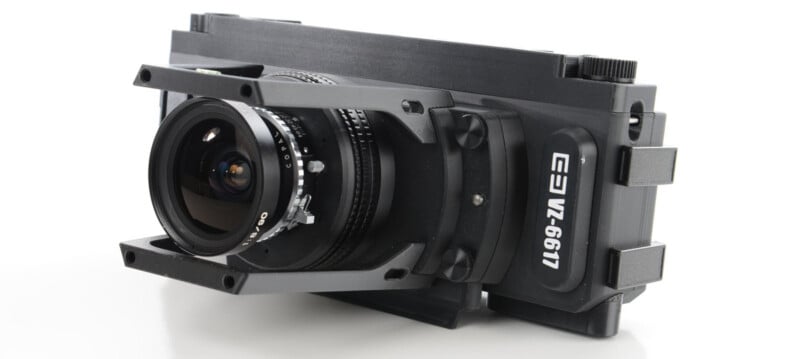
- Starter Bundle ($549): Includes the VZ-6617 camera body and a 90mm focal length lens cone with an M65 focusing helicoid.
- Early Release Bundle ($649): Includes the camera body, 90mm lens cone, a magnetically attached cable release for shutter activation, and an optical viewfinder for framing.
- System Bundle ($799): The most comprehensive package, featuring the camera body, the 90mm cone, an additional lens cone of the buyer’s choice, a cable release, and a ground glass back for precise composition and focus verification.
The project has already surpassed its initial funding goal of $7,500, demonstrating strong interest from the niche community of film enthusiasts. Early release units are scheduled to begin shipping in June, shortly after the campaign’s conclusion.
Analysis: The Resurgence of Modular Film Hardware
The introduction of the VZ-6617 coincides with a broader "renaissance" in the film photography industry. While major manufacturers like Pentax and Mint have recently released new compact film cameras, the medium-format and panoramic sectors have remained largely reliant on aging, vintage equipment. The VZ-6617 represents a growing trend of "boutique" engineering firms using modern manufacturing techniques like 3D printing and CNC machining to fill gaps in the market.
The primary implication of the VZ-6617 is the democratization of the 6×17 format. Historically, 6×17 photography was the domain of specialized landscape photographers due to the high cost and single-purpose nature of the equipment. By creating a variable-frame system that utilizes relatively affordable large-format lenses, Exposing Engineering is lowering the barrier to entry for panoramic film photography.
Furthermore, the modular nature of the camera—specifically the ability to swap lens cones—suggests a future-proof platform. As photographers acquire different lenses, they only need to obtain a new cone rather than a new camera body. This modularity, combined with the ability to change aspect ratios on the fly, provides a level of versatility that was previously unthinkable in the analog realm.
As the Kickstarter campaign moves toward its final weeks, the VZ-6617 stands as a testament to the enduring appeal of film and the innovative potential of modern small-scale manufacturing. For the photographer who values both the square-format intimacy of a portrait and the sweeping grandeur of a 6×17 landscape, the VZ-6617 offers a singular solution to a decades-old logistical challenge.

