


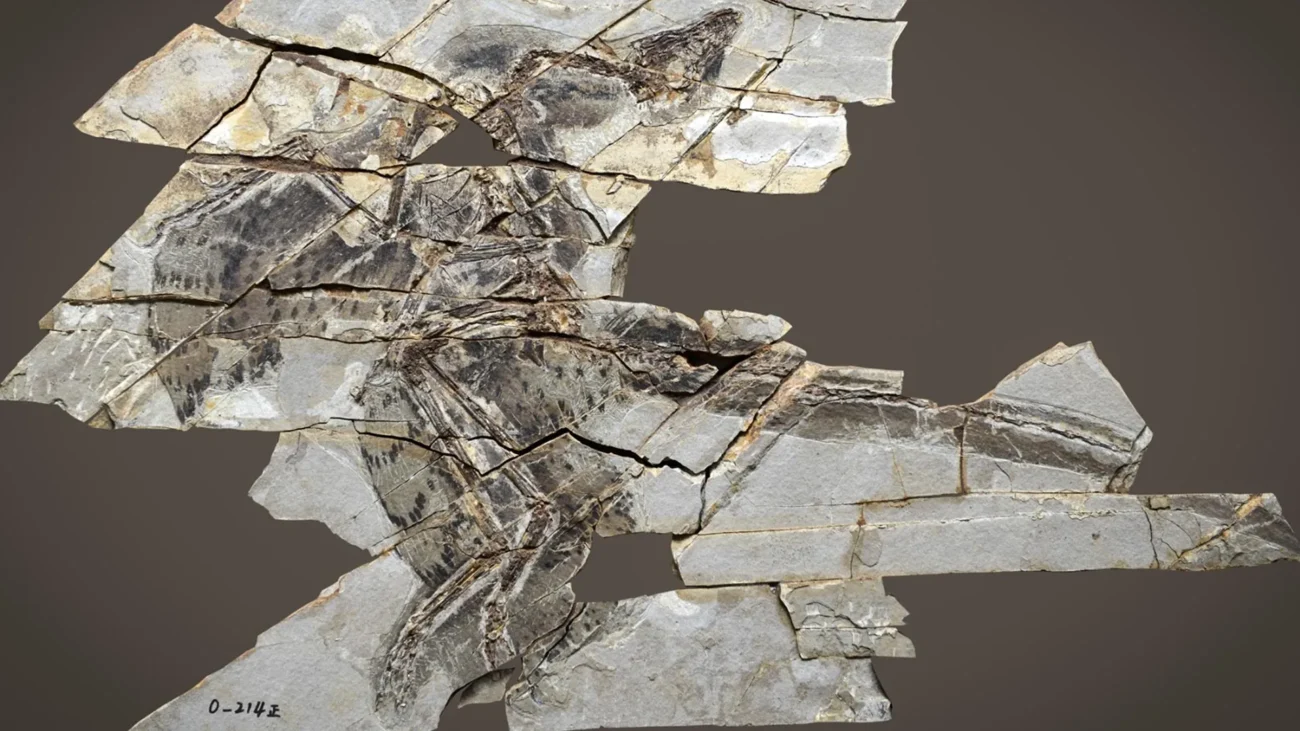
A groundbreaking study of exceptionally preserved dinosaur fossils has revealed that some feathered species, once thought to be on the cusp of flight, may have already lost the ability to fly, challenging long-held assumptions about the evolution of avian flight. The research, led by Dr. Yosef Kiat of Tel Aviv University’s School of Zoology and the Steinhardt Museum of Natural History, analyzed rare specimens of the feathered dinosaur Anchiornis, dating back approximately 160 million years, and found compelling evidence of their flightlessness through an examination of their feather molting patterns. This discovery, published in the journal Communications Biology by Nature Portfolio, offers a unique window into the intricate and often non-linear pathways of evolutionary development, suggesting that the journey from feathered dinosaur to flying bird was far more complex and circuitous than previously understood.
The study’s implications extend beyond the origins of flight, shedding light on the diverse evolutionary trajectories of dinosaurs and providing a deeper appreciation for the myriad forms and functions feathers have assumed throughout prehistory. "Feather molting seems like a small technical detail," Dr. Kiat explained, "but when examined in fossils, it can change everything we thought about the origins of flight, highlighting how complex and diverse wing evolution truly was." This finding underscores the possibility that some dinosaur lineages may have developed rudimentary flight capabilities only to relinquish them later in their evolutionary history, a phenomenon mirrored in modern flightless birds.
The Dawn of Feathers: A Prehistoric Revolution
The evolutionary story of feathers and flight is deeply intertwined with the diversification of dinosaurs. Approximately 240 million years ago, dinosaurs diverged from other reptiles, setting the stage for a remarkable period of innovation. Within tens of millions of years, many dinosaur lineages began to develop feathers, initially theorized to serve purposes such as insulation, display, or even gliding.
Around 175 million years ago, a significant evolutionary branching occurred with the emergence of the Pennaraptora. This group of feathered dinosaurs is considered a crucial link in the lineage leading to modern birds. Uniquely, the Pennaraptora were the sole dinosaur lineage to survive the cataclysmic mass extinction event at the end of the Mesozoic Era, approximately 66 million years ago. While scientists have long presumed that Pennaraptora evolved feathers primarily for flight, the new research suggests a more nuanced picture. The environmental pressures and ecological niches available to these early feathered dinosaurs likely influenced their developmental pathways, leading some species down a route that prioritized other functions over sustained aerial locomotion.
The concept of evolutionary regression, where a trait is lost over time, is not uncommon in biology. Examples abound in modern fauna, with flightless birds like the ostrich, emu, and penguin serving as prominent case studies. These birds, descended from flying ancestors, have adapted to terrestrial or aquatic lifestyles, rendering wings and flight feathers less essential and eventually obsolete. The research on Anchiornis suggests that this evolutionary phenomenon was already at play among feathered dinosaurs millions of years before the rise of modern avian species.
Unearthing Ancient Secrets: The Anchiornis Fossils
The linchpin of this groundbreaking research lies in the extraordinary preservation of nine Anchiornis fossils unearthed in eastern China. These specimens are remarkably rare, not only for the intact feathers they contain but also for the preservation of their original coloration. The unique geological and environmental conditions in this region of China, known for its exceptional fossil beds, facilitated the fossilization process in a way that captured pigments and feather structures with astonishing detail.
Each Anchiornis fossil displayed wing feathers characterized by a distinct pattern: white with a prominent black spot at the tip. This preserved coloration was instrumental in allowing the research team to conduct an in-depth analysis of feather structure and growth patterns, a level of detail rarely attainable from fossil evidence.
Deciphering the Molt: A Window into Flight Capability
The key to understanding Anchiornis‘ flight capability lay in the intricate process of feather molting. Dr. Kiat, an ornithologist specializing in feather biology, explained the fundamental principles that govern this process. Feathers, once they reach their full size and detach from the blood supply that nourished them during growth, become non-living structures. Over time, these feathers wear down and are gradually replaced by new ones in a cycle known as molting.
"Feathers grow for two to three weeks," Dr. Kiat elaborated. "Reaching their final size, they detach from the blood vessels that fed them during growth and become dead material. Worn over time, they are shed and replaced by new feathers — in a process called molting, which tells an important story: birds that depend on flight, and thus on the feathers enabling them to fly, molt in an orderly, gradual process that maintains symmetry between the wings and allows them to keep flying during molting."
In stark contrast, animals that do not rely on flight exhibit a more random and irregular molting pattern. This difference is crucial: a flying animal must maintain the integrity and balance of its wings to remain airborne. Therefore, molting occurs in a staggered, asymmetric manner, ensuring that at any given time, enough functional flight feathers are present to support flight. Flightless creatures, on the other hand, can afford to shed feathers more haphazardly without compromising their mobility.
The researchers meticulously examined the fossilized wing feathers of Anchiornis. They identified a continuous line of black spots along the edges of the wing feathers, indicative of the species’ distinctive coloration. More importantly, they observed developing feathers that were still in the process of growth, with their black spots appearing out of alignment with the established patterns of the mature feathers. This disarray in the growth and replacement of feathers provided the crucial clue.
A detailed analysis of these patterns revealed that the molting process in Anchiornis was not orderly and gradual, as seen in flying birds, but rather irregular and asynchronous. This finding strongly suggested that these dinosaurs were not capable of sustained flight.
Rethinking Dinosaurian Flight: Broader Implications
Dr. Kiat’s conclusion, drawn from his extensive knowledge of modern avian molting patterns, was definitive: "Based on my familiarity with modern birds, I identified a molting pattern indicating that these dinosaurs were probably flightless." He emphasized the rarity and significance of this discovery, stating, "This is a rare and especially exciting finding: the preserved coloration of the feathers gave us a unique opportunity to identify a functional trait of these ancient creatures — not only the body structure preserved in fossils of skeletons and bones."
The implication of this research is profound. It challenges the simplistic narrative that the evolution of feathers in dinosaurs was a direct and unidirectional march towards powered flight. Instead, it highlights a more complex evolutionary landscape where feathers served a multitude of purposes, and the development of flight was not a guaranteed outcome for every feathered lineage.
Anchiornis now joins a growing list of feathered dinosaurs that, despite possessing the epidermal structures associated with flight, were likely incapable of taking to the skies. This underscores the concept that the evolution of flight was a complex and multifaceted process, with numerous evolutionary experiments and adaptations occurring over millions of years. It suggests that the ability to fly may have been gained and subsequently lost within certain dinosaur groups, adding layers of intricacy to our understanding of avian origins.
A Timeline of Evolutionary Strides
To contextualize these findings, it’s helpful to consider a broad evolutionary timeline:
- ~240 Million Years Ago (Triassic Period): Dinosaurs diverge from other reptiles.
- ~210-200 Million Years Ago (Late Triassic Period): Earliest evidence of feathered dinosaurs begins to emerge, with feathers potentially serving non-flight functions.
- ~175 Million Years Ago (Jurassic Period): The Pennaraptora lineage, a group of feathered dinosaurs closely related to birds, appears.
- ~160 Million Years Ago (Late Jurassic Period): The Anchiornis species studied in this research lived, exhibiting feathered wings but likely lacking flight capability based on molting patterns.
- ~150 Million Years Ago (Late Jurassic Period): Other feathered dinosaurs, such as Archaeopteryx, emerge, which are widely accepted as early birds capable of flight.
- 66 Million Years Ago (End of Cretaceous Period): The K-Pg extinction event wipes out non-avian dinosaurs. The avian lineage, including the descendants of Pennaraptora, survives.
- Present Day: Modern birds exhibit a wide range of feather types and flight capabilities, with some species having evolved flightlessness independently.
This timeline illustrates that the evolution of feathers and the evolution of flight were not necessarily concurrent or universally experienced by all feathered dinosaurs. The existence of Anchiornis as a feathered, flightless dinosaur fills a crucial gap in our understanding of these divergent evolutionary pathways.
Broader Scientific and Paleontological Impact
The research on Anchiornis has significant implications for the broader scientific community. Paleontologists will likely reassess existing fossil evidence with a new perspective, considering molting patterns as a critical indicator of functional morphology. This could lead to reclassifications and a more nuanced understanding of the diversity of feathered dinosaurs and their ecological roles.
Furthermore, the study highlights the power of interdisciplinary research, combining expertise in paleontology, ornithology, and evolutionary biology. The ability to glean functional information from fossilized soft tissues, such as feathers, represents a significant advancement in paleontological techniques.
Dr. Kiat’s team’s work also indirectly invites further research into the environmental and selective pressures that might have led to the loss of flight in some feathered dinosaurs. Were there specific ecological niches that favored terrestrial or gliding lifestyles over powered flight? Did changes in prey availability or predator dynamics play a role? These questions open up new avenues for investigation.
The complexity unveiled by this study emphasizes that evolution is rarely a simple, linear progression. It is a dynamic and often messy process of adaptation, innovation, and sometimes, regression. The story of flight in dinosaurs is a testament to this, revealing a richer and more intricate evolutionary tapestry than previously imagined. The seemingly small detail of how feathers are replaced has, indeed, helped to reframe our understanding of a pivotal moment in the history of life on Earth.

