


Birdwatching in the United States has undergone a remarkable transformation, moving beyond the purely visual to embrace the auditory richness of avian communication. What was once a pursuit demanding years of dedicated listening and memorization can now be augmented by powerful smartphone applications that can identify birds by their songs and calls with astonishing accuracy. These digital tools, akin to Shazam for music, empower both novice enthusiasts and seasoned ornithologists to decipher the complex soundscape of the natural world, making bird identification more engaging and accessible than ever before. From the familiar chirps in a backyard to the elusive calls of migratory species, the latest generation of bird song apps leverages advanced technology to unlock the secrets of avian vocalizations.
The core of these revolutionary applications lies in their sophisticated use of artificial intelligence and bioacoustics. When a user records a bird’s vocalization, the app doesn’t just store the audio; it converts it into a visual representation known as a spectrogram. This spectrogram is a detailed graph that maps the frequency, pitch, and timing of the sound, effectively creating a unique visual fingerprint for each bird’s call. This visual data is then analyzed by Deep Convolutional Neural Networks (CNNs), a form of artificial intelligence that has been trained on vast databases of expert-verified bird recordings. These AI models, similar to those used in facial recognition or autonomous driving systems, have learned to recognize the distinctive patterns that differentiate the songs and calls of thousands of bird species.
Adding another layer of precision, these apps integrate geographical and temporal data. By accessing the user’s smartphone GPS and the current date, the application can filter potential identifications based on the bird’s known geographic range and migratory patterns for that time of year. This crucial step significantly reduces the possibility of misidentification, ensuring that the suggested species is likely to be present in the user’s location. Some applications even provide a confidence score, indicating the AI’s certainty about the match, allowing users to gauge the reliability of the identification. This powerful combination of bioacoustics, machine learning, and citizen science data enables these apps to untangle even the most complex dawn choruses, identifying individual bird songs in near real-time.
The Leading Symphony Conductors: Top Bird Song Identification Apps
The market now offers a diverse range of applications catering to different user needs, from comprehensive guides for beginners to specialized tools for dedicated citizen scientists. Here’s a breakdown of some of the most prominent and effective options available today:
| App | Best For | Platforms | Price | Key Feature |
|---|---|---|---|---|
| Merlin Bird ID | Beginners & Accuracy | iOS / Android | Free | Real-time Sound ID |
| BirdNET | Global Species & Science | iOS / Android | Free | AI Probability Scoring |
| Song Sleuth | Learning Bird Songs | iOS | Paid | Spectrogram Analysis |
| ChirpOMatic | Quick ID in the Field | iOS / Android | Paid | Sensitive Sound Detection |
1. Merlin Bird ID: The All-Around Bird Song Maestro
Developed by the prestigious Cornell Lab of Ornithology, Merlin Bird ID stands as a widely acclaimed and accessible tool for birdwatchers of all levels. Its free availability on both iOS and Android platforms, coupled with its exceptional accuracy, makes it a go-to resource. The app’s standout feature is its real-time Sound ID capability, which listens to avian vocalizations and provides instant species suggestions. This functionality, powered by an extensive global database encompassing over 2,000 species, effectively places an ornithologist in your pocket. Merlin’s multi-modal approach also seamlessly integrates photo identification and descriptive keys, offering robust identification options whether a bird is heard or seen.
Merlin Bird ID is designed with the field birder in mind, offering offline functionality through downloadable regional bird packs. This ensures that users can identify birds even in remote areas lacking cellular service. Beyond mere identification, the app serves as a comprehensive learning platform, featuring detailed range maps and extensive sound libraries for study. It also facilitates personal record-keeping by integrating with users’ life lists, enabling them to track every new species they encounter. This comprehensive suite of features makes Merlin Bird ID an indispensable companion for deepening one’s connection with the natural world.
- iOS (iPhone / iPad): Download on the App Store
- Android: Download on Google Play
2. ChirpOMatic: The Streamlined Sound Identifier
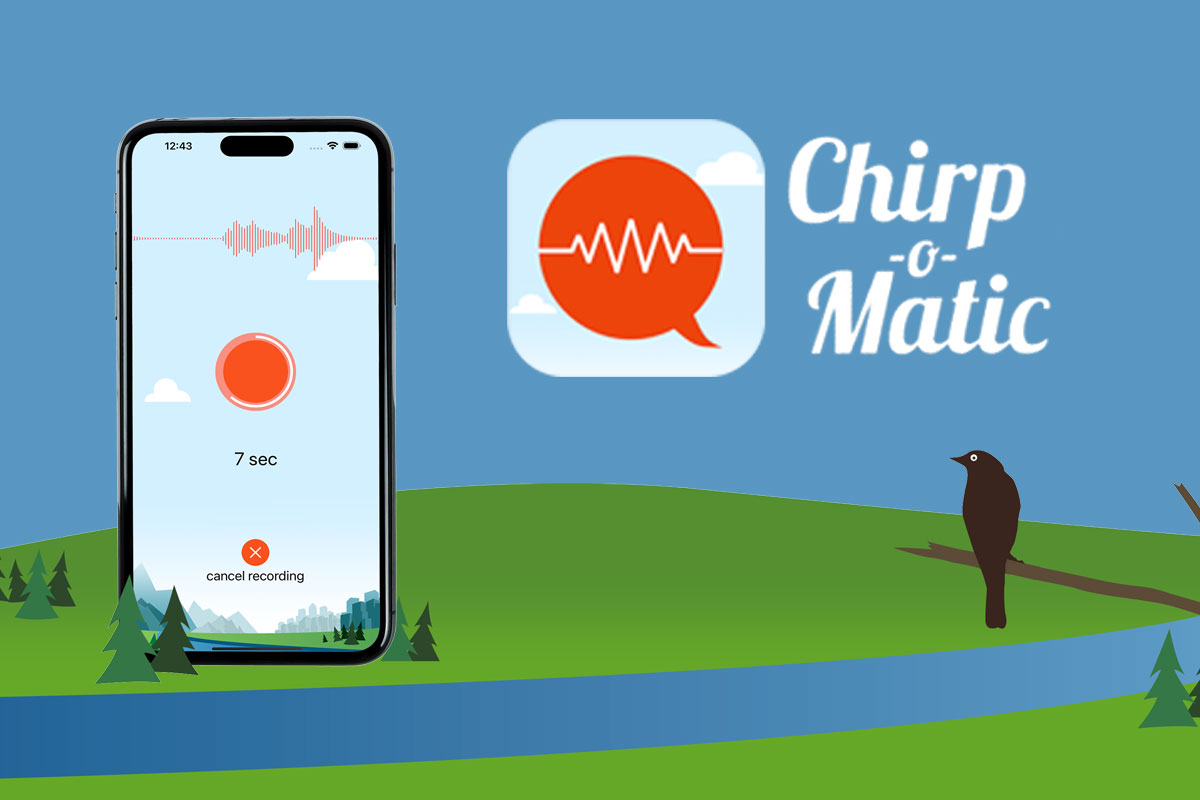
For those prioritizing rapid and straightforward sound-based identification, ChirpOMatic emerges as a top contender. This application is lauded for its user-friendly interface and its focus on speed and technical precision in avian acoustics. ChirpOMatic’s core strength lies in its fast audio identification system, which delivers immediate species matches from a regional database upon recording a bird’s song. The app is particularly noted for its highly sensitive microphone analysis, capable of detecting even faint or distant calls that might elude other identification tools. In challenging environments with background noise, ChirpOMatic employs an evidence ranking system, presenting a curated list of the most probable species for user verification.

The "Pro" upgrade unlocks a suite of advanced organizational and educational features. Users can save, rename, and export recordings to build personal audio libraries and enhance their listening skills through interactive bird-call quizzes. ChirpOMatic’s integration with Apple Watch is a significant advantage for hikers and minimalist birders, allowing for direct recording from the wrist and subsequent syncing with a smartphone for identification. The app also incorporates a thoughtful "Bird-safe Mode," which prevents loud playback that could disturb wildlife, underscoring its commitment to ethical birdwatching practices.
- iOS (iPhone / iPad): Download on the App Store
- Android: Download on Google Play
3. Song Sleuth: Mastering the Language of Bird Song
Collaboratively developed with renowned bird expert David Sibley and Wildlife Acoustics, Song Sleuth transcends simple identification by actively teaching users to interpret bird sounds. Its most distinguishing feature is its spectrogram visualization, which transforms audio recordings into detailed sonograms. By offering a visual representation of frequency and time patterns, users can learn to discern the structural nuances of bird songs, aiding in memorization and differentiation between similar species. The app focuses on a curated library of approximately 200 common North American birds, providing a solid foundation for learners without overwhelming them with rare species.
Song Sleuth functions as a collaborative learning tool rather than an automated scanner. After a recording, it presents a ranked shortlist of suggestions, allowing users to compare their live recording with high-quality reference samples and Sibley’s iconic illustrations. This interactive process encourages active engagement in the identification process. Furthermore, the app is designed for complete offline use, with all reference recordings, spectrogram tools, and species data stored locally on the device. This ensures uninterrupted functionality in remote areas, making it a reliable companion for field excursions.
- iOS (iPhone / iPad): Download on the App Store
- Android: Not available (iOS only)
4. BirdNET: For Global Travelers and Citizen Scientists
BirdNET represents a highly technical, research-driven approach to avian acoustics, bridging casual birding with global conservation science. For each identification, the app provides a qualitative probability score, offering insight into the AI’s confidence level. As a citizen science tool, BirdNET allows users to contribute their recordings to ongoing research projects, aiding scientists in tracking migration patterns and species distribution worldwide.

The interface facilitates learning by providing direct links to Wikipedia and scientific databases, offering extensive information on bird habitats and behaviors. The BirdNET-Analyzer feature caters to advanced users interested in processing large audio datasets, making it a favored tool for those keen on the technical aspects of bioacoustics. BirdNET is ideal for dedicated citizen scientists and technical learners who wish their observations to contribute to ornithological research. Its extensive global species database makes it particularly valuable for travelers exploring diverse regions. The app also excels at isolating specific sounds within complex soundscapes, appealing to patient birders who enjoy the challenge of pinpointing a particular call.
- iOS (iPhone / iPad): Download on the App Store
- Android: Download on Google Play
The Evolving Landscape of Birding in the United States
The proliferation of bird song identification apps signifies a profound shift in how individuals connect with the natural world. These tools have democratized birding, making it accessible to a broader audience than ever before. Previously, accurately identifying birds by sound required extensive training, deep familiarity with field guides, and a keen ear honed over years of practice. Now, with a smartphone, anyone can begin to decipher the complex vocalizations of birds, from the common American Robin’s cheerful melodies to the intricate warbles of less familiar species.
Experts and enthusiasts alike recognize the impact of these applications, with Merlin Bird ID frequently cited as a catalyst for introducing newcomers to the joys of birdwatching. Whether one is a novice seeking immediate feedback or an experienced birder aiming to refine their auditory skills, these apps unlock new dimensions of engagement with avian life. The ability to instantly identify a bird by its song transforms casual walks into interactive learning experiences, fostering a deeper appreciation for the biodiversity that surrounds us.
Selecting Your Sonic Companion: A Guide to Choosing the Right App
The "best" app ultimately depends on individual preferences and goals:
-
For Beginners: Merlin Bird ID remains the benchmark. Its intuitive interface, where a single tap initiates real-time identification, makes it exceptionally user-friendly. It provides an experience akin to having a knowledgeable birding guide at your side, offering instant feedback and visual aids.
-
For Travelers and Data Enthusiasts: BirdNET is the premier choice. Its vast global species database and emphasis on scientific data and probability scoring make it ideal for exploring diverse environments or for those interested in the underlying science of bioacoustics and contributing to research.
-
For Students of Song: Song Sleuth excels in its pedagogical approach. By focusing on spectrogram analysis, it encourages a deeper understanding of the structure and nuances of bird vocalizations, fostering long-term learning and auditory skill development.
-
For Convenience: ChirpOMatic stands out for its seamless integration and ease of use, particularly its Apple Watch compatibility. It caters to the on-the-go birder who values quick identifications without the need to constantly access their phone.

Maximizing Your Bird Song Identification Success
To achieve the most accurate results when using bird song identification apps, consider these practical tips:
- Minimize Background Noise: Record in quieter environments whenever possible. Wind, traffic, and human voices can interfere with the app’s ability to isolate the bird’s song.
- Get Closer (Respectfully): While respecting wildlife is paramount, try to position yourself as close to the singing bird as possible without disturbing it.
- Record Longer Clips: A longer recording (e.g., 10-30 seconds) provides more data for the AI to analyze, increasing the chances of a successful identification.
- Capture Clear Vocalizations: Focus on clear songs or calls. Repeated vocalizations are often easier to identify than single, brief chirps.
- Utilize the App’s Features: Explore the app’s settings and options. Some apps allow you to adjust sensitivity or provide feedback on recordings.
- Cross-Reference with Visuals: If possible, try to get a visual confirmation of the bird. This can help solidify the identification and improve your learning.
- Learn the Basics: Even with advanced apps, understanding basic birding principles and common local species can enhance your experience and aid in identifying challenging recordings.
Conclusion: A Harmonious Future for Birdwatching
In 2026, the integration of sophisticated technology has profoundly democratized and enriched the practice of birdwatching. Powerful smartphone applications have transformed the once-challenging art of identifying birds by sound into an accessible and deeply rewarding pursuit. Whether one is exploring local parks at dawn or observing spring migration in their backyard, these digital tools offer an unprecedented ability to connect with the avian world on a deeper, more meaningful level. By translating the complex symphony of nature into understandable data, these apps are not only changing how we identify birds but are also fostering a greater appreciation for the intricate lives and vocal expressions of our feathered neighbors. The future of birding is undeniably digital, and the melodies of the wild are now within everyone’s reach.

