


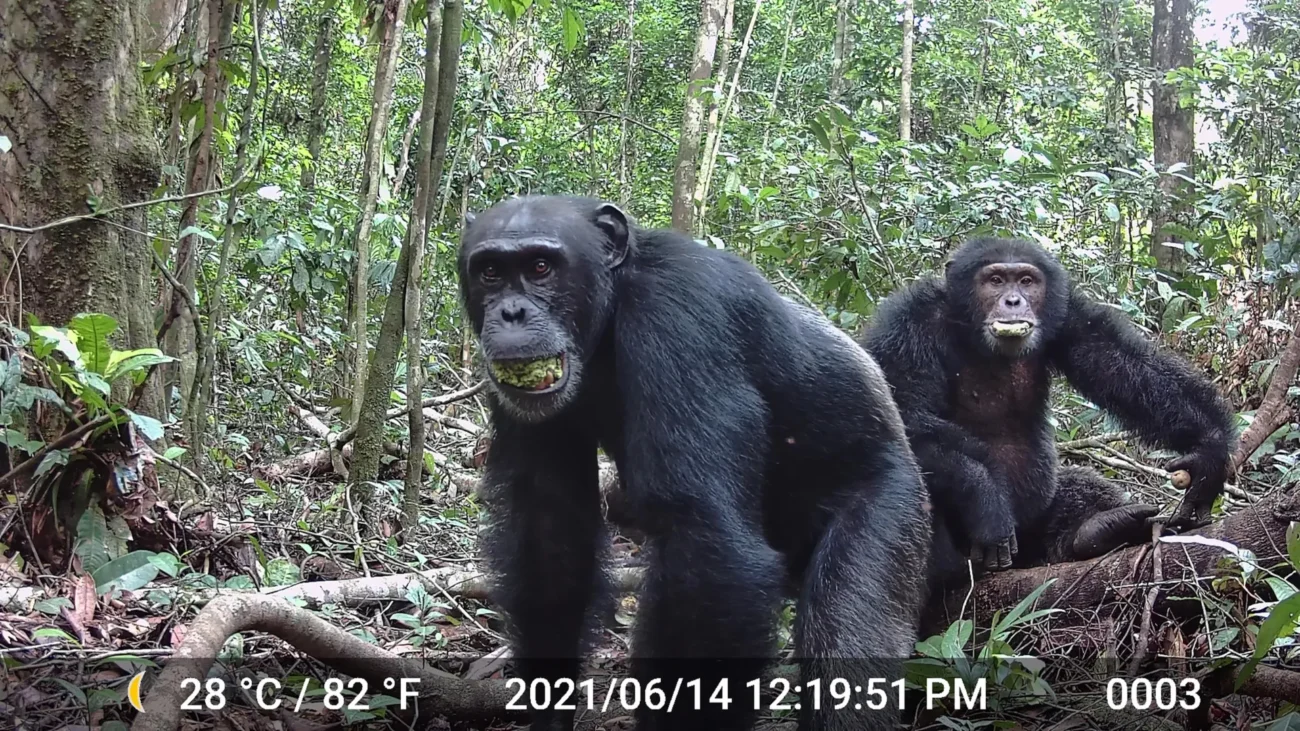
The first-ever direct measurements of the ethanol content in fruits consumed by chimpanzees in their native African habitats reveal that these primates regularly ingest amounts of alcohol equivalent to more than two standard drinks per day. This groundbreaking research, conducted by scientists at the University of California, Berkeley, challenges long-held assumptions about primate diets and offers compelling new insights into the evolutionary origins of alcohol consumption in humans.
The study, published in the prestigious journal Science Advances, utilized advanced analytical techniques to quantify the alcohol levels in a variety of fruits that form a significant portion of the chimpanzee diet. Researchers found that many of the fruit species regularly eaten by chimpanzees contain measurable levels of ethanol, suggesting that alcohol is not an occasional anomaly but a consistent component of their natural food intake. This finding has profound implications for understanding the dietary landscape of our closest living relatives and, by extension, the ancestral diets of early hominins.
A Routine Part of the Primate Menu
For decades, the notion that wild primates might actively seek out or regularly consume alcohol has been met with skepticism. However, the meticulous fieldwork and laboratory analysis undertaken by the UC Berkeley team have provided the most concrete evidence to date supporting this possibility. Aleksey Maro, a graduate student in UC Berkeley’s Department of Integrative Biology and lead author of the study, explained the daily intake: "Across all sites, male and female chimpanzees are consuming about 14 grams of pure ethanol per day in their diet, which is the equivalent to one standard American drink. When you adjust for body mass, because chimps weigh about 40 kilos versus a typical human at 70 kilos, it goes up to nearly two drinks."
It is important to note that a "standard drink" in the U.S. is defined as containing 14 grams of ethanol, irrespective of the consumer’s body size, a metric that provides a consistent reference point for comparison.
Rigorous Methodology in African Forests
The research involved extensive fieldwork across two key chimpanzee habitats: Ngogo in Uganda’s Kibale National Park and Taï National Park in Ivory Coast. These sites are renowned for their long-term chimpanzee research projects, offering unique opportunities to observe and sample primate behavior and diet.
Between 2019 and the following summer, Maro undertook multiple field seasons, collecting samples of fruits that chimpanzees had recently consumed. The collection process was carefully designed to minimize bias. At Ngogo, where chimpanzees are known to climb high into trees to harvest fruits, particularly figs, researchers collected freshly fallen fruits from beneath trees frequented by the primates. At Taï, where chimps tend to eat fruits that have already dropped to the ground, a similar methodology was employed, gathering unblemished fruits from the forest floor.
Each fruit sample was immediately sealed in airtight containers to preserve its state and prevent further fermentation or evaporation. Details such as species, size, color, and softness were meticulously recorded. Back at the field research stations, the collected fruits were frozen to halt any ongoing ripening or fermentation processes.
To accurately determine the alcohol content, Maro employed a suite of three different analytical techniques during his field expeditions. These included a semiconductor-based sensor, akin to those used in breathalyzers, a portable gas chromatograph, and a chemical assay. All three methods were cross-validated in Professor Robert Dudley’s laboratory at UC Berkeley prior to the fieldwork, ensuring their reliability and reproducibility under challenging field conditions. Maro reported processing approximately 20 samples daily during his field research.
Two of the primary methods involved thawing the fruit, carefully removing the peel and seeds, blending the pulp, and then allowing the mixture to sit in a sealed container for several hours. This incubation period facilitated the volatilization of alcohol into the air above the pulp, a process known as creating a "headspace." This headspace was then analyzed for its ethanol concentration. The third method involved extracting liquid from the fruit pulp and employing color-changing chemicals that react specifically to the presence of ethanol. The consistency of the results across these diverse methods lent significant weight to the findings.
Highlighting Alcohol-Rich Fruit Preferences
The analysis revealed that the fruits chimpanzees consume most frequently at each site were also among the most alcohol-rich. At Ngogo, a species of fig known as Ficus musuco emerged as a particular favorite, and its fruits showed higher alcohol concentrations. Similarly, in Taï, the plum-like fruit of the evergreen tree Parinari excelsa was both a preferred food source and a significant contributor of ethanol to the chimps’ diet.
Researchers noted that male chimpanzee groups often congregate in the canopies of F. musuco trees, consuming the fruit before embarking on territorial patrols. This observation, coupled with the fact that elephants are also known to be attracted to P. excelsa fruits, suggests a broader ecological role for alcohol-rich fruits in the African savanna.
When the alcohol content of the fruits was averaged and weighted according to their frequency of consumption by chimpanzees at each site, the figures were substantial: 0.32% by weight at Ngogo and 0.31% at Taï. Considering that chimpanzees consume an estimated 10 pounds (4.5 kilograms) of fruit daily, and that fruit constitutes roughly three-quarters of their total food intake, these seemingly low percentages translate into a considerable daily dose of alcohol.
Professor Robert Dudley, a senior author on the paper and a leading figure in the study of alcohol and evolution, emphasized the significance of these findings: "The chimps are eating 5 to 10% of their body weight a day in ripe fruit, so even low concentrations yield a high daily total — a substantial dosage of alcohol. If the chimps are randomly sampling ripe fruit as did Aleksey, then that’s going to be their average consumption rate, independent of any preference for ethanol. But if they are preferring riper and/or more sugar-rich fruits, then this is a conservative lower limit for the likely rate of ethanol ingestion."
The "Drunken Monkey" Hypothesis Gains Traction
These findings provide crucial empirical support for Professor Dudley’s "drunken monkey" hypothesis, first proposed over two decades ago. This hypothesis posits that humans’ enduring attraction to alcohol has deep evolutionary roots, stemming from ancient foraging habits shared with our primate ancestors. The theory suggests that our ancestors, like modern-day chimpanzees, likely encountered and consumed alcohol regularly through fermenting fruits.
Dudley expanded upon this idea in his 2014 book, The Drunken Monkey: Why We Drink and Abuse Alcohol. Initially, the hypothesis faced considerable resistance from the scientific community, particularly among primatologists who questioned whether wild primates commonly consumed fermented foods. However, a growing body of observational and experimental evidence has gradually bolstered Dudley’s perspective.
More recent field studies have indeed reported instances of monkeys and apes consuming fermented fruits. For example, a recent observation in Guinea-Bissau documented chimpanzees eating fermented fruit. Captive animal studies have also shown a clear preference for alcoholic substances. A notable 2016 study by Dartmouth University researchers found that captive aye-ayes and slow lorises consistently consumed nectar with higher alcohol levels first and returned to the containers of the most alcoholic nectar. Further supporting evidence emerged in 2022 when Dudley and his collaborators demonstrated that wild spider monkeys in Panama consumed fermented fruit containing alcohol and subsequently excreted alcohol metabolites in their urine.
Evolutionary Roots of Alcohol Preference
The implications of these findings extend beyond chimpanzees to the evolutionary history of humans. The consistent, low-level exposure to ethanol observed in chimpanzees suggests that our last common ancestor with chimpanzees, sharing approximately 98% of its DNA with us, was likely exposed to alcohol daily from fermenting fruits. This dietary heritage, largely absent in the diets of captive primates and many modern human diets, may have shaped the biological and behavioral predispositions that contribute to human alcohol consumption.
Maro commented on this evolutionary link: "Chimpanzees consume a similar amount of alcohol to what we might if we ate fermented food daily. Human attraction to alcohol probably arose from this dietary heritage of our common ancestor with chimpanzees."
Interestingly, despite their regular alcohol consumption, the chimpanzees in the study did not exhibit visible signs of intoxication. To become visibly drunk, a chimp would need to consume an exceptionally large quantity of fruit, leading to significant stomach distension. This suggests that their consumption is within a range that allows for functional behavior, even with a daily alcohol intake.
Alcohol in the Wider Animal Kingdom
The presence of alcohol in the diets of fruit-eating animals is not limited to primates. Earlier research published this year by Dudley and colleagues analyzed feathers from 17 bird species and detected alcohol metabolites in 10 of them. This indicates that their diets, which include nectar, grains, insects, and even other vertebrates, can also contain significant amounts of ethanol.
"The consumption of ethanol is not limited to primates," Dudley stated. "It’s more characteristic of all fruit-eating animals and, in some cases, nectar-feeding animals."
Scientists have proposed several hypotheses for why animals might seek out ethanol. Its distinct aroma could serve as a cue, helping them locate foods rich in sugar, which are a concentrated source of energy. Alcohol might also enhance the palatability of food, similar to how wine can augment the enjoyment of a meal for humans. Another theory suggests that the sharing of alcohol-containing fruits could play a role in social bonding within groups.
Dudley concluded by underscoring the need for continued research: "It just points to the need for additional federal funding for research into alcohol attraction and abuse by modern humans. It likely has a deep evolutionary background."
Future Research Directions
The current study establishes a vital baseline for future investigations into chimpanzee alcohol exposure. Subsequent research aims to determine whether chimpanzees actively select fermented, alcohol-containing fruits over less fermented options when presented with a choice. Maro plans to continue this line of inquiry, including a challenging endeavor to collect urine samples from sleeping chimpanzees to test for alcohol metabolites, utilizing kits similar to those employed in workplace drug testing in the U.S. Alongside his team, Maro will also observe foraging chimpanzees to collect freshly dislodged fruits and measure their alcohol content in real-time.
The research team included Aaron Sandel from the University of Texas, Austin; Bi Z. A. Blaiore and Roman Wittig from the Taï Chimpanzee Project; and John Mitani from the University of Michigan, Ann Arbor, a co-founder of the Ngogo Chimpanzee Project. This significant research initiative was funded by UC Berkeley. The meticulous work of these scientists has opened a new window into the complex interplay between diet, evolution, and behavior in our closest primate relatives.

