


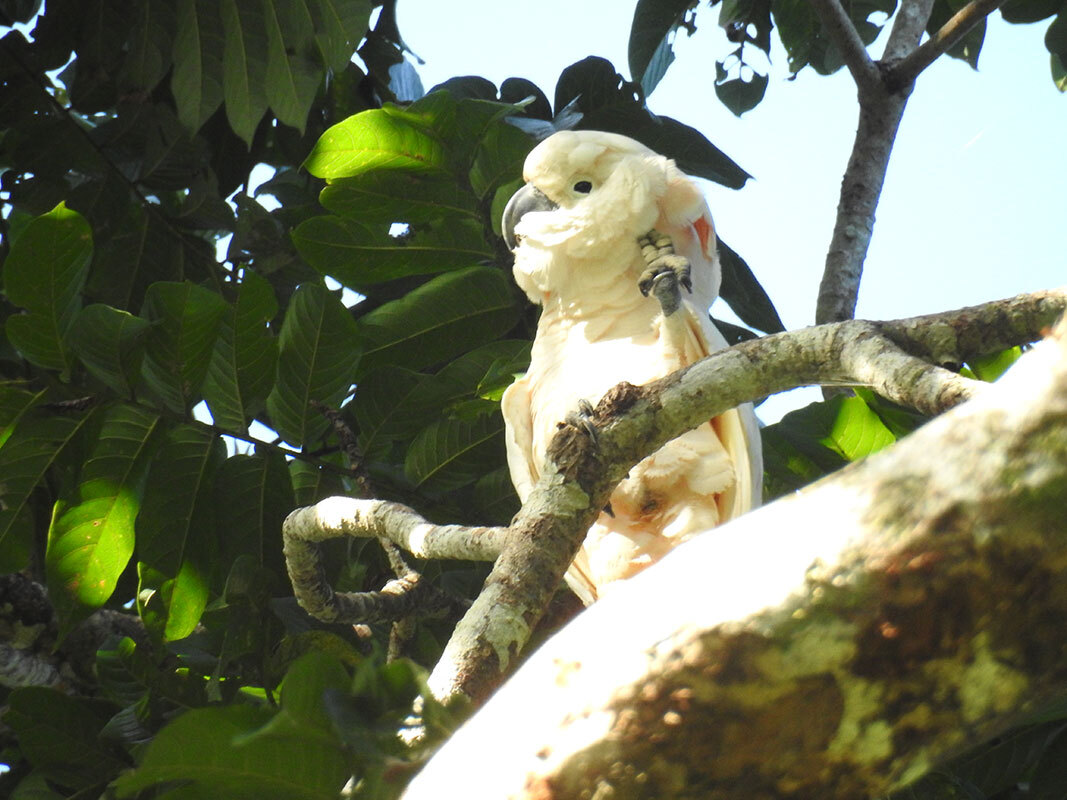
The salmon-crested cockatoo, scientifically known as Cacatua moluccensis and commonly referred to as the Moluccan cockatoo, is a species endemic to Seram, the largest and principal island within Indonesia’s Maluku province. Renowned for their striking appearance, these magnificent birds captivate observers with their soulful dark eyes and resplendent peachy crest feathers. Beyond their visual appeal, Moluccan cockatoos are also distinguished as one of the loudest inhabitants of the avian world, capable of emitting calls that can reach an astonishing 135 decibels, a volume comparable to a jet engine at takeoff. However, despite their majestic presence and unique characteristics, these intelligent parrots face a precarious future, currently listed as endangered due to severe population declines driven primarily by rampant trapping for the illegal pet trade and extensive habitat loss across their native range.
A Species on the Brink: The Moluccan Cockatoo’s Endangered Status
The conservation status of the Moluccan cockatoo has been a grave concern for decades. In 1989, the species was afforded critical protection by being listed on Appendix I of the Convention on International Trade in Endangered Species of Wild Fauna and Flora (CITES). This designation signifies that the species is critically endangered and prohibits all international commercial trade of wild-caught specimens, making any such activity illegal. Complementing this international framework, the Moluccan cockatoo is also prominently featured as "Endangered" on the IUCN Red List of Threatened Species, an assessment that reflects its high risk of extinction in the wild.
Historically, the distribution of these cockatoos extended beyond Seram to several satellite islands, including Haruku, Saparua, and Nusa Laut. Tragically, due to the unrelenting pressures of human activity, they have since been declared locally extinct from these smaller islands, underscoring the severity of their decline. The primary drivers of this precipitous drop in numbers are multifaceted. Illegal trapping operations, often involving cruel and indiscriminate methods, have historically decimated wild populations to feed the demand for the exotic pet trade. Simultaneously, rapid deforestation and habitat degradation, fueled by logging, agricultural expansion, and human settlement, have fragmented and diminished the critical forest ecosystems these birds rely upon for nesting, foraging, and roosting.
These long-lived creatures possess an impressive capacity for longevity; a 2012 study on parrot lifespans documented the oldest known parrot as a 92-year-old salmon-crested cockatoo. This remarkable lifespan, however, often poses significant challenges for individuals kept in captivity. Their extraordinary vocalizations, coupled with their substantial spatial requirements, intense need for mental enrichment, and specific dietary demands, make them exceptionally difficult pets to care for properly. The stark contrast between their potential longevity and the difficulties they face in captive environments only amplifies the urgent necessity to ensure their survival and ability to thrive within their natural Indonesian habitats.
Cultural Nexus: The Huaulu Tribe and the Sacred Cidaku Ritual
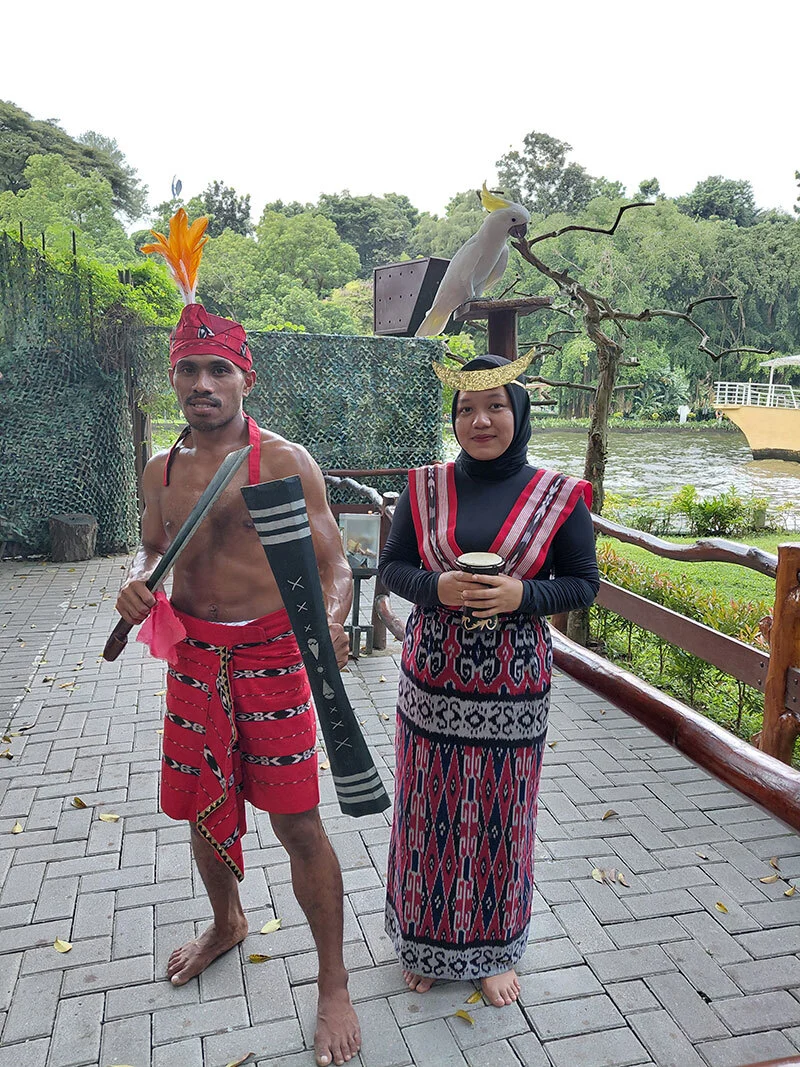
In the northern region of Seram, within the Maluku province, the salmon-crested cockatoo holds a profoundly sacred and indispensable place in the cultural fabric of the Huaulu tribe. Locally known as lakam, this species is central to one of the most significant rites of passage for young Huaulu men: the Cidaku ceremony. This ancient ritual marks a boy’s transition into adulthood, typically performed for males between the ages of 12 and 17. The core of the ceremony involves the acquisition of the cockatoo’s highly prized salmon-colored crest feathers, which are meticulously fashioned into a ceremonial head-dress known as a puheliam.
The Cidaku ceremony is steeped in tradition and executed with rigorous adherence to specific protocols. It follows the birth order of boys within a family, ensuring that the ritual is not performed more than once per year for any single family. The pink crest feather is not merely an ornamental component; it is an irreplaceable symbol imbued with profound spiritual significance. It embodies the essence of sacred life, representing immense strength, courage, and vigilance, mirroring the cockatoo’s stance when its crest is erect. Furthermore, the crest symbolizes an adult male’s commitment to defending his holiness, upholding self-respect, and maintaining an acute awareness of potential threats to his community and cultural integrity. For generations, the pursuit of these feathers has been an integral part of proving one’s readiness for the responsibilities of manhood within the Huaulu society, creating a direct, albeit unintentional, pressure on the wild cockatoo population.
A Landmark Agreement: Bridging Tradition and Conservation
Recognizing the delicate balance between the Huaulu tribe’s deeply rooted cultural practices and the critical need to protect the endangered Moluccan cockatoo, an innovative and collaborative solution began to take shape. In 2019, Perkumpulan Konservasi Kakatua Indonesia (KKI), an Indonesian non-governmental organization dedicated to parrot conservation, initiated a groundbreaking proposal. KKI offered to provide molted salmon-crested cockatoo feathers collected from its rehabilitation center to the Huaulu indigenous community. This initiative sought to fulfill the ceremonial requirements of the Cidaku ritual without necessitating the hunting of wild birds.
The proposition was met with careful consideration and, ultimately, broad agreement from the Huaulu community and various related stakeholders. After extensive discussions and negotiations, a formal agreement was signed in October 2019 by the Head of Huaulu village. This historic accord was not only witnessed by several local officials, including representatives from regional government bodies, but also received official acknowledgment and approval from Indonesia’s Ministry of Forestry. This endorsement from a national governmental body underscored the significance of the agreement, elevating it from a local initiative to a recognized model for integrated conservation and cultural preservation. This collaborative effort represented a monumental step forward, offering a sustainable pathway towards preserving both the wild Moluccan cockatoo populations and the invaluable cultural heritage of the Huaulu tribe.
Challenges and Continued Efforts in a Complex Landscape
While the 2019 feather collection agreement marked a significant victory, its implementation and ongoing monitoring have not been without complexities. Despite the formal agreement, ensuring that all Cidaku traditional ceremonies consistently utilize crest feathers sourced exclusively from KKI’s rehabilitation facility, rather than from wild cockatoos, presents an ongoing challenge. The deeply ingrained nature of traditional hunting practices, passed down through generations, means that a complete and immediate shift in behavior cannot be assumed or easily enforced.
Seven years after the initial agreement (implying the original article was written around 2026), KKI continues its dedicated efforts to uphold its commitment. The organization consistently provides molted feathers from its rehab facility to the Huaulu tribe, honoring its part of the agreement. Beyond mere provision, KKI maintains intensive and sensitive communication with the Huaulu community. This involves regular engagement, including conducting workshops and educational sessions that have been consistently well-attended by tribe members. These workshops serve as vital platforms for fostering dialogue, reinforcing the importance of conservation, and building trust between the conservationists and the indigenous community.

Statements from KKI representatives often highlight the delicate balance required in such initiatives. "Our goal is not to eradicate tradition, but to adapt it in a way that safeguards the future of this iconic species," commented a KKI spokesperson at a recent workshop. "We understand the profound cultural value of the puheliam and the Cidaku ritual. By providing a sustainable source of feathers, we aim to preserve both the bird and the culture." On the ground, while a majority of Huaulu leaders and community members have embraced the agreement, some elders and younger men still occasionally express a preference for the traditional method, underscoring the need for continuous education and engagement. Local officials, while supportive, acknowledge the difficulties in policing remote tribal practices, emphasizing the importance of community-led adherence.
Forging a Sustainable Future: New Initiatives and Broader Impact
Looking ahead, KKI is actively working to deepen its engagement with the Huaulu community through additional conservation programs designed for active participation. A key initiative is the proposed formation of a "Parrot Squad," a community-based patrol composed of Huaulu tribe members themselves. This squad would be trained to monitor local cockatoo populations, report illegal trapping activities, and become frontline guardians of their native wildlife. Such a program not only empowers the community but also leverages their intimate knowledge of the local environment and its inhabitants.
Furthermore, KKI is collaborating with the tribe to explore and develop alternative income opportunities, particularly through ecotourism. By showcasing the natural beauty of Seram and the unique wildlife, including the Moluccan cockatoo, the community could generate revenue from responsible tourism. This economic incentive aims to create a tangible link between the preservation of the cockatoo and the economic well-being of the Huaulu people. The hope is that through these initiatives, the community will develop an even stronger sense of ownership and direct benefit from the preservation of their native Moluccan cockatoo, thereby improving its conservation status and ensuring its long-term survival. The broader implication of such programs is profound: they offer a replicable model for indigenous communities globally, demonstrating how traditional practices can evolve in harmony with modern conservation imperatives, creating pathways for sustainable livelihoods that are intrinsically tied to ecological health.
International and National Conservation Frameworks
The predicament of the Moluccan cockatoo is emblematic of a global crisis facing many endangered species, particularly those targeted by the illegal wildlife trade. The CITES Appendix I listing in 1989 was a direct response to the alarming rate at which Moluccan cockatoos were being extracted from the wild. Before this listing, it’s estimated that tens of thousands of these birds were traded internationally, leading to catastrophic population crashes. The IUCN Red List’s "Endangered" classification further reinforces the urgency, indicating that the species faces a very high risk of extinction in the wild. While precise current population figures are difficult to ascertain due to the species’ elusive nature and the challenges of monitoring in dense forest habitats, estimates generally point to a continued decline, with fragmented populations facing ongoing threats.
Indonesia, as a megadiverse country, is a signatory to CITES and has national laws protecting endangered species. The Ministry of Forestry’s approval of the KKI-Huaulu agreement highlights a growing recognition within the government of the need for collaborative, community-centric conservation approaches that respect indigenous rights and traditions. This shift from purely top-down enforcement to inclusive, participatory models is crucial for effective conservation in regions where local communities are intrinsically linked to the natural environment.
The Path Forward: A Model for Coexistence
The ongoing efforts by Perkumpulan Konservasi Kakatua Indonesia, in partnership with the Huaulu tribe, represent a beacon of hope for the Moluccan cockatoo. This initiative transcends conventional conservation methods by integrating deeply held cultural values with modern ecological imperatives. It acknowledges that effective conservation in biodiverse regions often requires innovative solutions that respect and engage local communities, rather than imposing external regulations.
By providing a sustainable alternative for ceremonial feathers, empowering the community through initiatives like the Parrot Squad, and fostering economic alternatives through ecotourism, KKI and the Huaulu tribe are forging a path towards genuine coexistence. This model, if successful and scalable, offers valuable lessons for other conservation challenges worldwide, particularly where indigenous cultures intersect with threatened biodiversity. The journey is long and fraught with challenges, as evidenced by the ongoing monitoring needs and varying levels of community adherence. However, the commitment of KKI and the progressive spirit of the Huaulu community demonstrate that with sustained effort, dialogue, and mutual respect, a future where magnificent species like the salmon-crested cockatoo can thrive alongside vibrant human cultures is not merely a dream, but an achievable reality. Lafeber’s donation this month proudly supports KKI’s vital and continued conservation efforts for this magnificent species, helping to secure a brighter future for the Moluccan cockatoo and the unique culture intertwined with its survival.

