


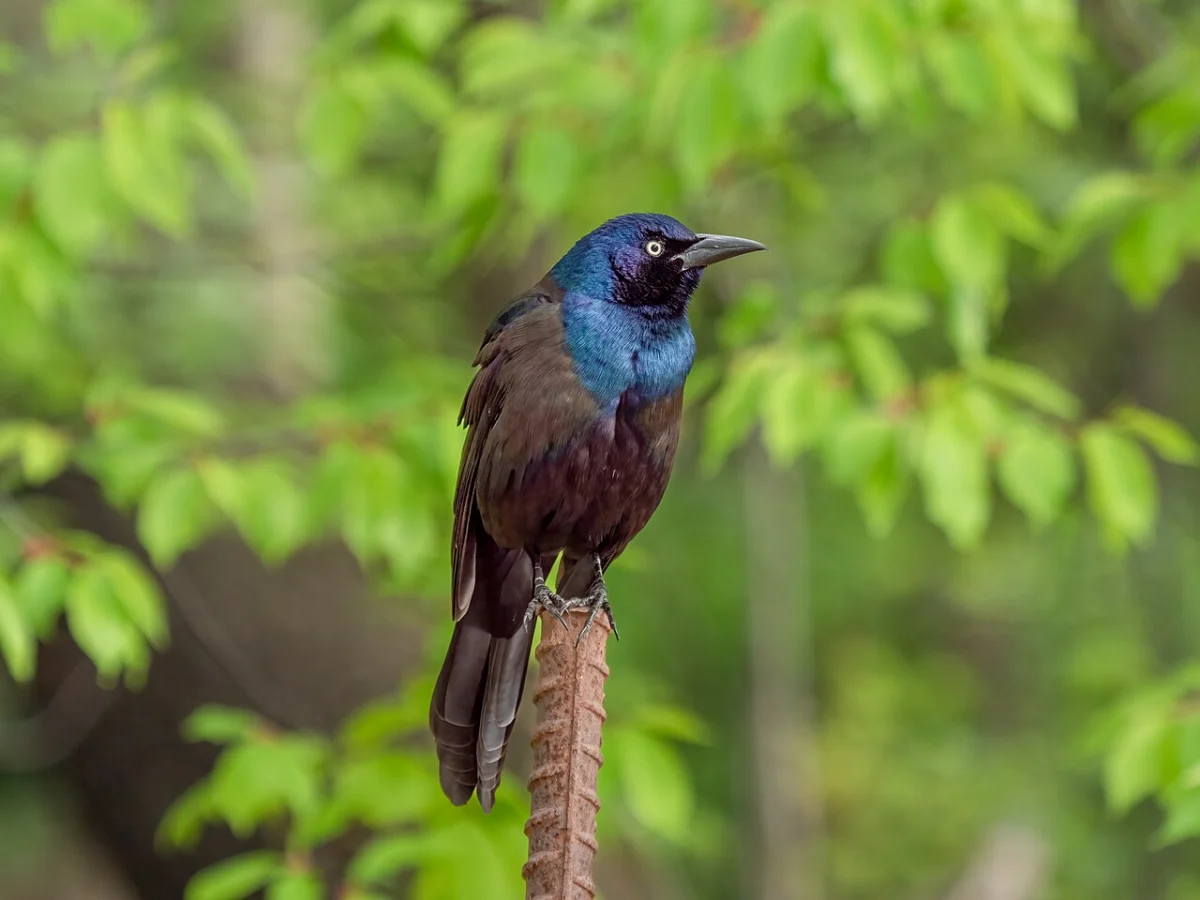
At first glance, a bird that appears entirely black might seem a creature of stark simplicity, its coloration a uniform absence of vibrant hues. However, to truly appreciate these avian wonders, one must pause, allow the light to shift, and witness the sudden, breathtaking flash of a sapphire sheen across their heads. What initially presented as plain and unadorned transforms into something luminous, a testament to nature’s artistry. Black birds with blue heads occupy a fascinating liminal space, where their striking coloration is not a result of embedded pigments but is instead a sophisticated interplay of light, feather structure, and the bird’s very movement. They serve as a profound reminder that nature frequently conceals its most dazzling details in plain sight, rewarding patient observation with unexpected beauty.
The Science Behind the Shimmer: Structural Coloration in Avian Plumage
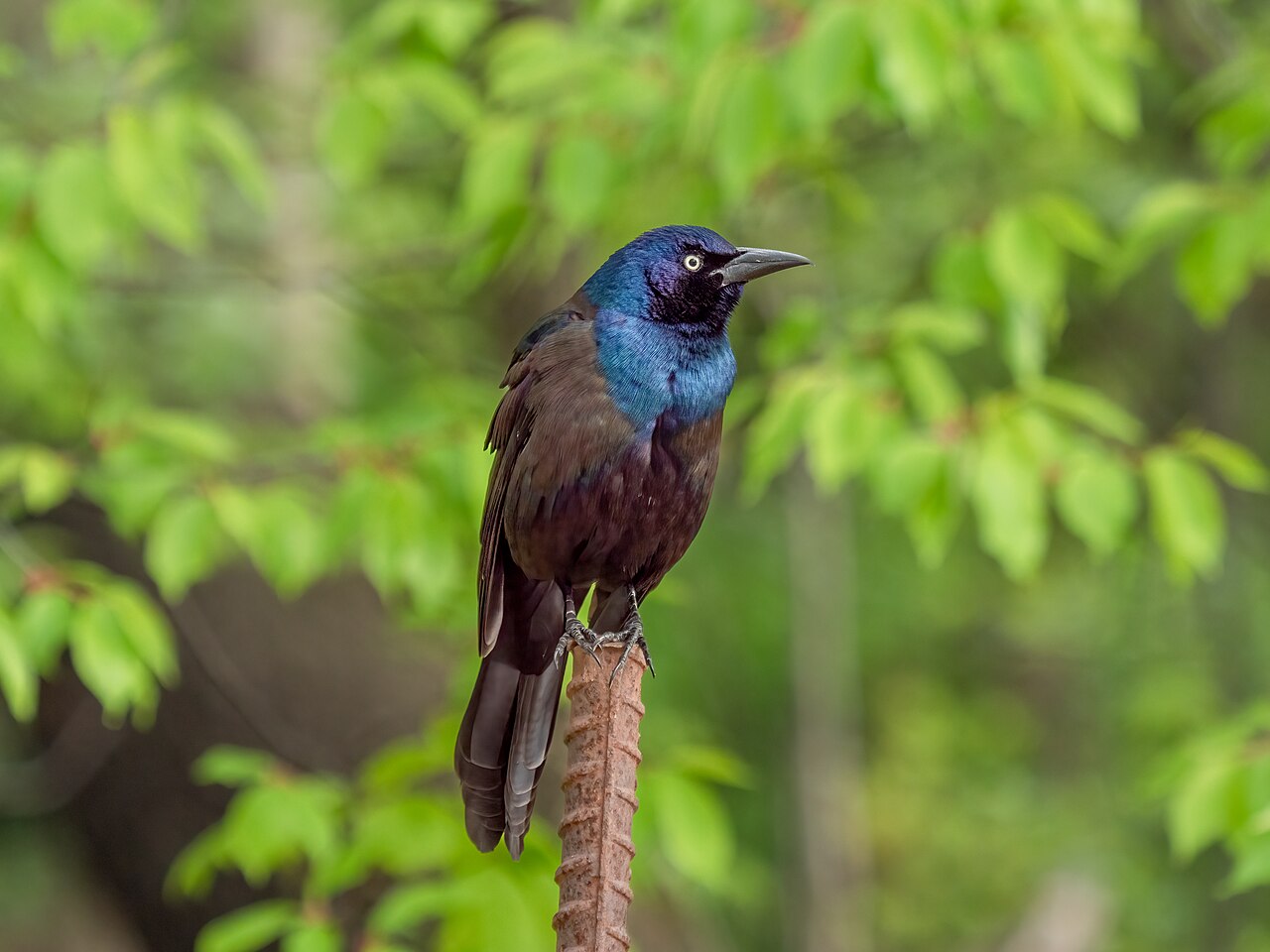
The captivating blue observed on the heads of many predominantly black birds is rarely, if ever, due to blue pigment. Instead, it is a remarkable example of structural coloration, a phenomenon where the physical structure of the feather interacts with light to produce color. Microscopic layers within the barbules of these feathers are arranged in such a way that they selectively scatter light. Shorter wavelengths of light, such as blues and violets, are reflected back towards the observer’s eye, creating the illusion of vibrant color. This scattering is highly dependent on the angle of incidence of the light source—the sun—and the angle from which the bird is viewed. Consequently, the same bird can appear a matte, uniform black one moment, only to erupt in a flash of metallic blue the next as its head catches the sunlight or as it shifts its position.
This dynamic quality is precisely what imbues these birds with an almost magical aura. Their color is not a fixed attribute but a fluid, ever-changing display, intimately tied to the ambient light and the bird’s actions. This phenomenon is observed across a diverse range of avian species, each showcasing the intricate beauty of structural color in unique ways.

Common Grackle: A North American Icon of Hidden Hues
One of the most familiar examples of this striking black-and-blue combination is the Common Grackle (Quiscalus quiscula). Found across a wide expanse of North America, grackles are often perceived by casual observers as noisy, somewhat aggressive, and unremarkable in their plumage. However, a closer examination, particularly of an adult male bathed in sunlight, reveals a spectacular display. The head and neck shimmer with an unmistakable blue or blue-violet gloss, a stark and beautiful contrast to its predominantly bronzed or greenish body.
This iridescent blue on the grackle’s head is not merely for aesthetic appeal; it plays a significant role in the species’ complex social signaling. During the crucial breeding season, males engage in elaborate courtship rituals. They will puff out their feathers, tilt their heads deliberately, and strut, all designed to maximize the reflection of light from their iridescent crowns. While this subtle shimmer might go unnoticed by the human eye in a fleeting glance, it is likely a powerful visual cue for other grackles, communicating vital information about the male’s health, dominance status, and overall genetic fitness. This sophisticated communication underscores the evolutionary advantage of such visually dynamic plumage.

Satin Bowerbird: The Blue Maestro of Australian Jungles
In the lush rainforests of Australia, the Satin Bowerbird (Ptilonorhynchus violaceus) elevates the concept of black adorned with blue to an art form. Adult males of this species present an overall deep black appearance, but their feathers, especially on the head and upper body, possess an intense, almost electric blue gloss. When caught in the right light, these birds resemble living fragments of polished obsidian, radiating a sophisticated, dark beauty.
The striking coloration of the Satin Bowerbird is inextricably linked to one of the most fascinating and elaborate courtship behaviors in the avian world. Male Satin Bowerbirds are renowned for constructing intricate structures known as bowers. These are not nests but rather architectural displays, meticulously decorated with objects that are predominantly blue. Their collection often includes blue berries, flowers, brightly colored insect exoskeletons, and even man-made items like shards of glass, bottle caps, and pieces of plastic. The iridescent blue sheen on the male’s head and body visually harmonizes with this meticulously curated blue stage, amplifying the impact of his courtship display. In this instance, color becomes an integral part of architecture, performance, and persuasion, demonstrating a profound connection between the bird’s appearance and its reproductive strategy. The consistent preference for blue objects suggests a deep-seated aesthetic, further enhanced by the male’s own blue-hued plumage.

Drongos: Sleek Aviators with a Menacing Sheen
Across the diverse landscapes of Africa and Asia, drongos represent another compelling example of the black-and-blue avian aesthetic. These are typically sleek, agile black birds, often distinguished by a distinct blue or blue-green gloss that adorns their heads and necks. Species such as the Black Drongo (Dicrurus macrocercus) appear almost oily in the sunlight, their feathers reflecting brilliant flashes of electric blue.
Drongos are characterized by their bold, intelligent, and famously fearless nature. They are known to mob much larger birds of prey, effectively driving them away from their territory. Furthermore, they possess remarkable mimicry skills, capable of imitating the alarm calls of other species, which they use to steal food from unsuspecting birds that flee their discovered bounty. The metallic shine of their heads contributes significantly to their sharp, almost menacing appearance, reinforcing a reputation that often seems to far exceed their actual physical size. This visual intimidation, combined with their aggressive behaviors, makes drongos formidable inhabitants of their respective ecosystems. The structural blue on their heads may also play a role in intraspecific communication, signaling dominance or readiness to defend their territory.

Starlings: A Global Tapestry of Iridescent Black
Many starling species found across the globe fit the description of a black bird adorned with a blue head, though the intensity and subtlety of this feature can vary considerably. The familiar European Starling (Sturnus vulgaris), for example, often exhibits purple-blue iridescence on its head, particularly during the breeding season and more prominently in males. Against a backdrop of black plumage that is often speckled with pale dots, the head can glow with a soft, oily blue luminescence.
In Africa, a greater diversity of glossy starling species showcases this black-and-blue combination with even greater brilliance. These species often sport intensely reflective blue heads that stand in dramatic contrast to their dark bodies. These African starlings demonstrate the remarkable range of the black-and-blue aesthetic in nature, from understated elegance to a near-neon brilliance. This variability highlights how evolutionary pressures and local environmental conditions can shape the expression of structural coloration, leading to a rich spectrum of appearances within the same basic color theme. The sheer abundance and adaptability of starlings, often found in urban environments, make them accessible examples for observing this fascinating phenomenon.

The Evolutionary Advantage: Why Blue on Black?
From an evolutionary standpoint, the development of blue iridescence on black feathers offers several significant advantages. Firstly, black plumage is highly effective at absorbing light. This characteristic creates a strong visual backdrop, making any reflective color, such as the iridescent blue, appear far more intense and vibrant by contrast. Blue, in particular, is a color that stands out effectively without necessarily requiring the production of bright, energy-intensive pigments. This can be a considerable advantage in terms of metabolic cost and feather maintenance.
Furthermore, iridescent blue can function as a condition-dependent signal, a concept crucial in evolutionary biology. Structural color, which relies on the precise arrangement and spacing of microscopic structures within the feather barbules, is highly sensitive to the bird’s physical condition. Only healthy birds with optimal feather development can produce a strong, consistent, and vivid sheen. Conversely, a dull, patchy, or uneven blue might indicate poor health, nutritional deficiencies, or a lack of prime condition. Thus, the intensity and quality of the iridescent blue can serve as a reliable indicator of an individual’s health and genetic quality, making it a valuable trait for mate selection and social dominance hierarchies.

Cultural Resonance: Symbolism and Human Fascination
Throughout human history, black birds, particularly those with unexpected flashes of color, have captivated the human imagination. In folklore, mythology, and art across various cultures, black birds often symbolize mystery, intelligence, magic, and the liminal spaces between worlds. The sudden, unexpected appearance of a blue shimmer on these dark canvases complicates and enriches this symbolism, adding layers of meaning associated with hidden wisdom, enchantment, and the revelation of profound beauty beneath an unassuming exterior.
In contemporary society, these birds challenge our conventional notions of beauty. Unlike the overt and easily discernible vibrant colors of parrots or hummingbirds, the beauty of a black bird with a blue head demands patience and a keen sense of observation. Their aesthetic appeal is not immediate or easily grasped; it requires attention to the nuances of light, angle, and movement. In a way, they reward curiosity, inviting viewers to engage more deeply with the natural world and to appreciate the subtler, more dynamic forms of beauty that often go overlooked. Their visual complexity can be seen as a metaphor for understanding the world around us – that true appreciation often comes from looking beyond the superficial.

Reinterpreting the Ordinary: A New Perspective on the Familiar
Once one becomes attuned to the subtle yet spectacular phenomenon of blue iridescence on black birds, it becomes an almost indelible part of their perception. A Common Grackle perched on a telephone wire, a drongo surveying its domain from a fence post, or a starling navigating the urban landscape of a city park—all these familiar sights transform. They cease to be mere background elements or common avifauna and become dynamic mosaics of color, their appearance continuously sculpted by the interplay of sunlight, viewing angle, and the slightest shift in their posture or movement.
These black birds, with their hidden blue brilliance, offer a powerful lesson: nature is rarely as simple or as superficially apparent as it might seem. What appears dark and unassuming may, upon closer inspection and under the right conditions, reveal an extraordinary luminescence. What seems ordinary can, in fact, be quietly extraordinary, a testament to the complex and often surprising evolutionary processes at play. All that is required to unlock this appreciation is the right light, a willingness to pause and observe, and the simple act of looking twice. Their existence serves as a constant reminder that the most profound beauty often lies not in the obvious, but in the nuanced and the unexpected, waiting to be discovered by those who take the time to truly see.

