


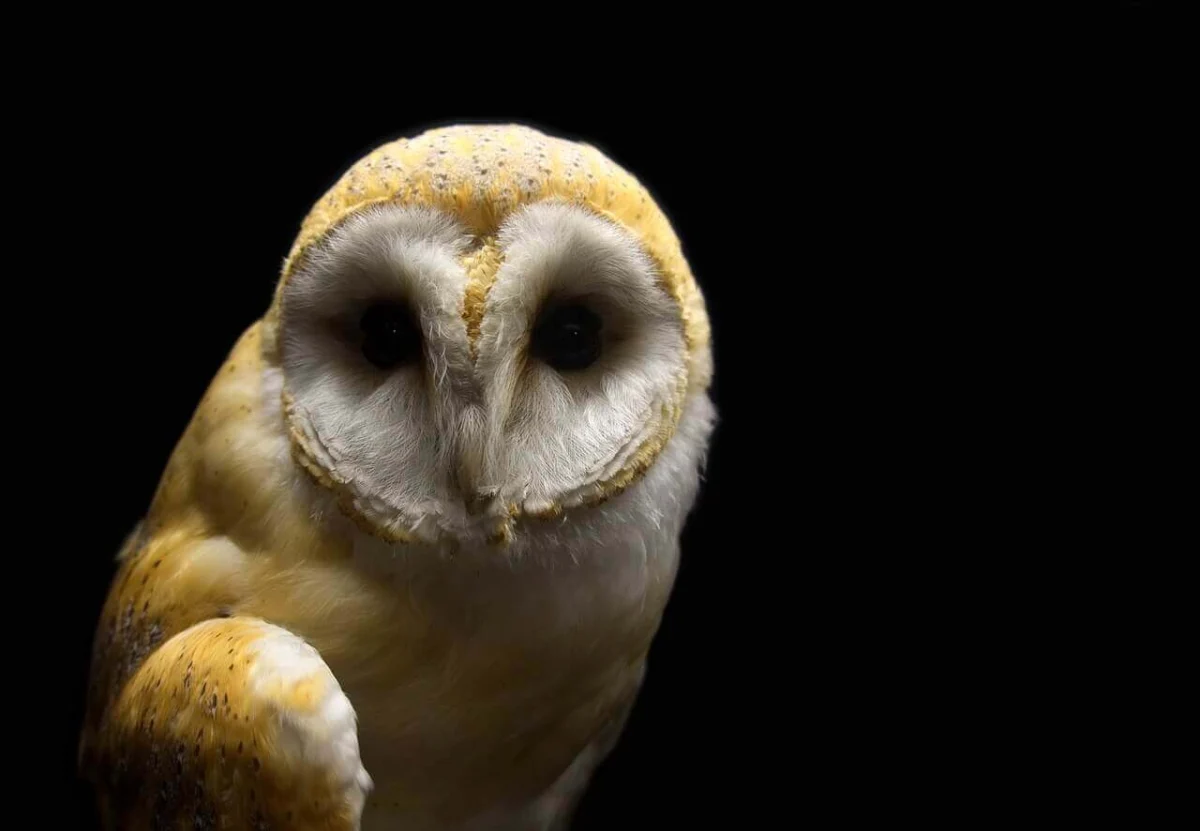
The debate surrounding the ethics and scientific validity of animal experimentation has found a focal point in the laboratory of Shreesh Mysore at Johns Hopkins University (JHU). For several years, Mysore has conducted neurobiological research on barn owls, a project funded by millions of dollars in taxpayer money through the National Institutes of Health (NIH). As the current funding cycle approaches its scheduled conclusion in May 2026, the laboratory faces increasing scrutiny from animal advocacy groups, members of the scientific community, and the public regarding the necessity and morality of these procedures. The central tension lies between the pursuit of fundamental neurobiological knowledge and the ethical treatment of sentient beings, particularly when the translational value to human health is under dispute.
The Scope of the Mysore Laboratory Experiments
Shreesh Mysore, a researcher within the Department of Psychological and Brain Sciences at Johns Hopkins, has focused his career on understanding how the brain filters sensory information to focus on specific stimuli—a process known as "competitive stimulus selection." To investigate this, his laboratory utilizes barn owls, birds known for their highly specialized auditory and visual systems. The experiments involve complex surgical and behavioral protocols designed to map the neural circuits responsible for attention.
According to documents obtained through public records requests by People for the Ethical Treatment of Animals (PETA), the procedures are invasive. The experimental process typically begins with multiple surgeries in which the owls’ skulls are opened to expose the brain tissue. Metal recording chambers or electrodes are then implanted and secured using dental cement and stainless steel screws. These devices allow researchers to measure electrical activity in the midbrain while the birds are subjected to various stimuli.
During the testing phase, the owls are restrained in plastic tubes to prevent movement. Their heads are often bolted into a fixed position to ensure the precision of the electrode readings. While immobilized, the birds are placed in front of screens and bombarded with a series of lights and sounds for several hours at a time. In some instances, the owls remain fully conscious during these sessions to allow for the recording of active brain responses. The documents indicate that when an owl’s brain tissue becomes too damaged from repeated electrode insertions to yield useful data, the animal is euthanized. The current experimental protocol reportedly accounts for the use of 50 to 60 barn owls, including a subset designated specifically for surgical training of laboratory staff.
Financial Background and Federal Oversight
The financial scale of the research is significant. Records show that the National Institutes of Health has funneled more than $3.7 million into Mysore’s owl research. This funding is part of a broader federal investment in basic science research, which the NIH defends as essential for uncovering the fundamental mechanisms of the nervous system. The rationale provided by the university and the funding agencies is that understanding how a "simpler" brain—like that of an owl—manages attention could eventually lead to breakthroughs in treating human conditions such as Attention-Deficit/Hyperactivity Disorder (ADHD) or autism.
However, the use of public funds has become a primary point of contention. Critics argue that the return on investment for such invasive animal modeling is negligible when compared to the direct study of human subjects. The NIH’s support for the project is currently slated to continue through May 31, 2026. As this date nears, the pressure on the NIH to divert these funds toward non-animal research methods has intensified, with over 520,000 individuals reportedly signing petitions calling for the termination of the grant.
The Scientific Controversy: Owls vs. Humans
The primary scientific justification for using barn owls is their exceptional ability to localize sound and track movement, which requires a highly organized midbrain. Mysore’s research aims to identify how the "isthmotectal circuit" in the owl’s brain helps it ignore distractions. Proponents of the research argue that these circuits are evolutionarily conserved, meaning similar structures might exist in the human brain.
Conversely, many scientists and medical professionals question the translatability of these findings. Dr. Pandora Pound, an independent research scientist specializing in the evaluation of animal models, has argued that the evolutionary divergence between birds and mammals is too vast for these experiments to yield reliable data for human medicine. Critics point out that human attention is governed largely by the prefrontal cortex, a highly developed area of the brain that barn owls lack.
The "species gap" is a recurring theme in the critique of Mysore’s work. While owls have evolved specialized systems for nocturnal hunting, human attention is integrated with complex cognitive functions, language, and social cues. Therefore, bombarding a restrained owl with artificial lights in a laboratory setting may provide data on owl physiology but may not accurately reflect the nuances of a human child struggling with ADD in a classroom environment.
Chronology of Public and Regulatory Challenges
The controversy surrounding the Mysore lab has unfolded over several years, marked by legal challenges and public demonstrations:
- 2018–2020: PETA begins investigating the laboratory after obtaining internal documents and photographs. The organization launches a public campaign highlighting the invasive nature of the skull-drilling procedures.
- 2021: Reports emerge regarding potential permit violations. Critics alleged that Mysore did not have the required state permits to possess certain migratory birds for experimental purposes. This led to a brief suspension of some activities while administrative issues were addressed.
- 2022: The debate reaches a wider audience through features in regional publications like Baltimore Magazine. The university defends the research, stating that all protocols are reviewed and approved by the Institutional Animal Care and Use Committee (IACUC), which ensures compliance with the Animal Welfare Act.
- 2023: Advocacy groups focus their efforts on the NIH, arguing that the $3.7 million in grants represents a "misuse of taxpayer dollars" on "curiosity-driven" research rather than "clinical-driven" research.
- 2024–Present: With the May 2026 funding deadline approaching, the campaign to end the experiments has transitioned into a countdown. The focus has shifted toward preventing the renewal of the grant and encouraging Johns Hopkins to adopt modern, human-centric research technologies.
Modern Alternatives to Animal Models
A significant portion of the opposition to the owl experiments is rooted in the availability of 21st-century technology that does not involve animal suffering. Over the last two decades, neuroimaging has advanced to a point where researchers can observe the human brain in real-time with high precision.
Techniques such as Functional Magnetic Resonance Imaging (fMRI) allow scientists to see which parts of the human brain are active during specific tasks. Positron Emission Tomography (PET) scans can track chemical changes and neurotransmitter activity associated with attention disorders. Furthermore, Transcranial Magnetic Stimulation (TMS) and Electroencephalography (EEG) provide non-invasive ways to study and even treat brain dysfunction directly in human patients.
Advocates for these methods argue that data derived from human subjects is inherently more relevant to human disease. They suggest that the millions of dollars currently spent on maintaining owl colonies and conducting invasive surgeries would be better spent on clinical trials and advanced imaging studies involving volunteers with ADHD.
Institutional Response and Ethical Defense
Johns Hopkins University has consistently stood by Shreesh Mysore and the validity of his research. In official statements, the university emphasizes that animal research remains a necessary component of medical progress. They argue that while computer models and imaging are helpful, they cannot yet replicate the complexity of a living brain’s neural network.
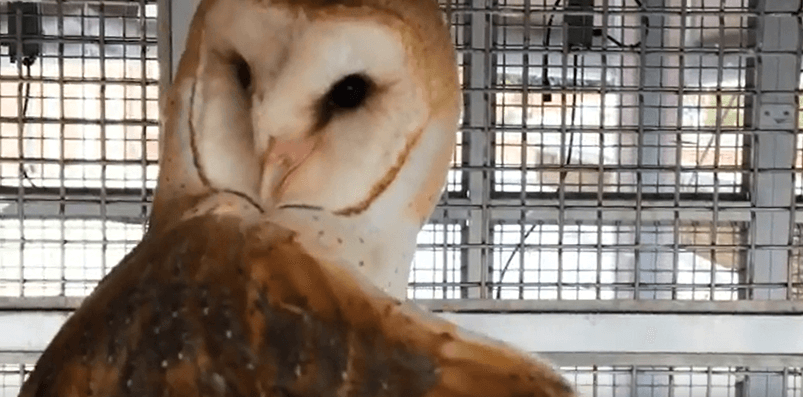
The university also maintains that they adhere to the "Three Rs" of animal research: Replacement (using non-animal models whenever possible), Reduction (using the minimum number of animals), and Refinement (lessening pain and distress). They assert that the use of anesthesia and post-operative care mitigates the suffering of the owls involved.
Despite these assurances, the visual and descriptive evidence of the experiments—specifically the head-fixation and the tube-restraint—continues to fuel public outrage. The ethical debate often boils down to a fundamental question: Does the potential for a future medical insight justify the certain and immediate suffering of dozens of animals?
Broader Implications for the Future of Research
The outcome of the struggle over the Mysore laboratory will likely have broader implications for animal research across the United States. If the NIH chooses not to renew the funding based on public pressure or a re-evaluation of the project’s scientific merit, it could signal a shift in how federal agencies prioritize "basic science" versus "translational science."
Furthermore, this case highlights the increasing power of transparency in the digital age. The ability of advocacy groups to obtain and distribute internal laboratory records has forced academic institutions to be more accountable to the public. As the "tick, tock" of the 2026 deadline continues, the scientific community is watching closely to see if Johns Hopkins will pivot toward alternative methods or continue to defend a research model that many believe has outlived its ethical and scientific usefulness.
The controversy serves as a microcosm of a global transition. As society’s moral circle expands to include greater consideration for animal welfare, the traditional "necessity" of invasive animal modeling is being challenged by both ethical arguments and the rapid pace of technological innovation. Whether the Mysore lab’s funding expires or is renewed, the conversation regarding the treatment of barn owls at Johns Hopkins has already fundamentally altered the public’s perception of what happens behind the closed doors of academic research.

