


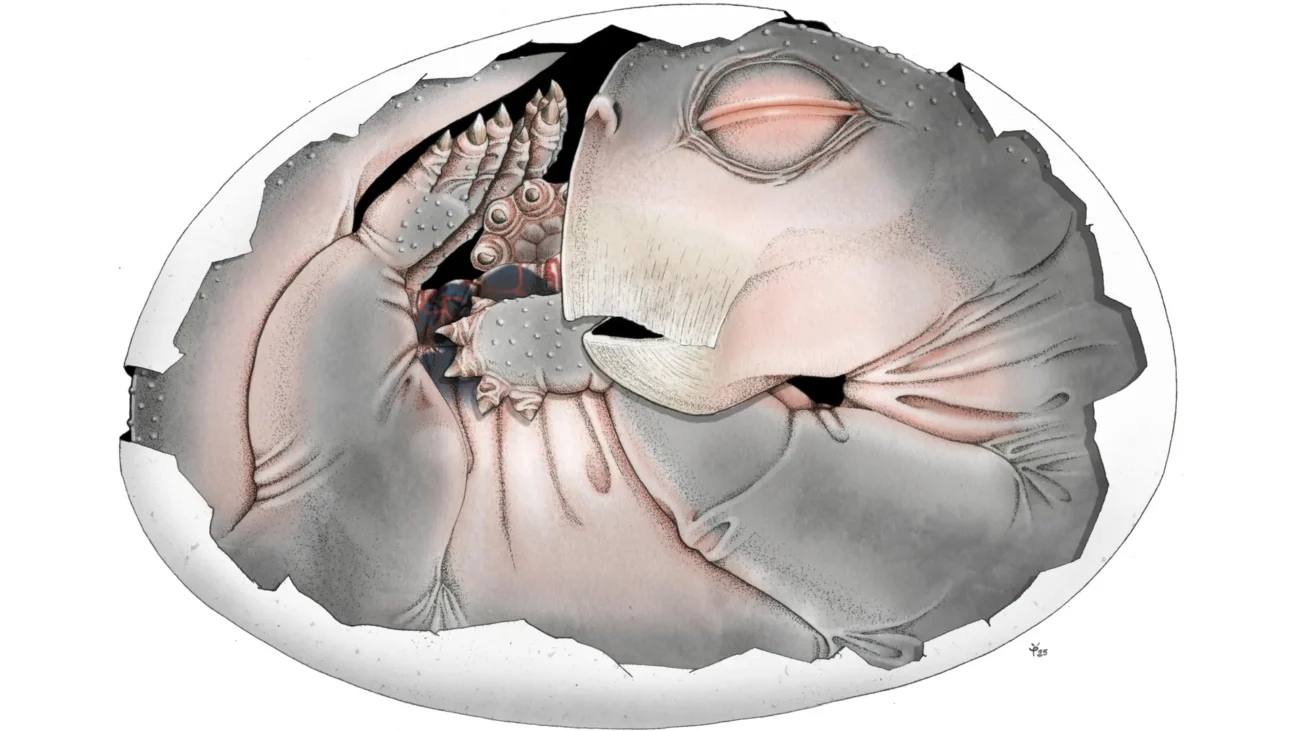
A groundbreaking fossil discovery is shedding new light on one of Earth’s most extraordinary survival sagas and simultaneously resolving a scientific puzzle that has captivated researchers for decades. The ancient reptile Lystrosaurus, a stout, herbivorous creature considered a crucial ancestor to mammals, rose to become one of the planet’s dominant species in the wake of the devastating End-Permian Mass Extinction approximately 252 million years ago. This cataclysmic event, often referred to as the "Great Dying," annihilated an estimated 96% of all marine species and 70% of terrestrial vertebrate species, plunging the world into an era of extreme heat, geological instability, and prolonged droughts. Against this backdrop of planetary devastation, Lystrosaurus not only persisted but thrived, its resilience a testament to its remarkable adaptability.
Recent research, meticulously detailed in the scientific journal PLOS ONE, describes an extraordinary find that is fundamentally reshaping our understanding of this ancient animal. An international consortium of scientists, spearheaded by Professor Julien Benoit, Professor Jennifer Botha from the Evolutionary Studies Institute at the University of the Witwatersrand in South Africa, and Dr. Vincent Fernandez from ESRF—The European Synchrotron in France, has identified a remarkably preserved egg containing a Lystrosaurus embryo estimated to be around 250 million years old. This fossil represents the first unequivocally confirmed egg ever unearthed from a lineage directly leading to mammals, definitively answering a long-standing question that has echoed through the halls of evolutionary biology: Did the ancestors of mammals lay eggs? The answer, now unequivocally established by this discovery, is a resounding yes.
The Elusive Nature of Ancient Reptilian Eggs
The rarity of this discovery is underscored by the significant challenges inherent in finding fossilized eggs from this period. The research team posits that these ancient eggs likely possessed soft, leathery shells. This characteristic, while offering certain advantages in a harsh environment, also explains their scarcity in the fossil record. Unlike the hard, mineralized eggshells of dinosaurs, which are readily preserved through mineralization, soft-shelled eggs are far more susceptible to decay. The delicate organic matter tends to decompose rapidly before the necessary geological conditions can facilitate fossilization, making each surviving specimen an invaluable window into the past. This inherent fragility has meant that for over a century, paleontologists have speculated about the reproductive strategies of early synapsids, the group that includes Lystrosaurus, without concrete fossil evidence of their eggs.
The significance of this find extends far beyond simply confirming the oviparous (egg-laying) nature of these mammal ancestors. It provides a critical piece of the puzzle in understanding how life re-established itself and diversified in the aftermath of the most severe extinction event in Earth’s history.
A Decades-Old Discovery Unearthed by Modern Technology
The remarkable journey of this particular fossil began nearly 17 years ago, during a field expedition in 2008. Professor Jennifer Botha recounted the initial discovery: "This fossil was discovered during a field excursion I led in 2008, nearly 17 years ago. My preparator and exceptional fossil finder, John Nyaphuli, identified a small nodule that at first revealed only tiny flecks of bone. As he carefully prepared the specimen, it became clear that it was a perfectly curled-up Lystrosaurus hatchling. I suspected even then that it had died within the egg, but at the time, we simply didn’t have the technology to confirm it." Nyaphuli’s keen eye and meticulous preparation laid the groundwork for a discovery that would take years to fully realize.
The crucial turning point in understanding the fossil’s true nature came with the application of advanced imaging technologies. Utilizing the unparalleled capabilities of synchrotron X-ray computed tomography (CT) scanning at ESRF, the European Synchrotron, researchers were able to peer inside the fossilized nodule with unprecedented detail. These powerful X-rays, capable of penetrating dense rock and revealing the faintest structural nuances, allowed the team to reconstruct the internal anatomy of the specimen in three dimensions. This non-destructive imaging technique was essential for confirming that the Lystrosaurus individual had indeed died before hatching, still encased within its egg.
Dr. Vincent Fernandez, a key member of the research team, described the moment of revelation: "Understanding reproduction in mammal ancestors has been a long-lasting enigma, and this fossil provides a key piece to this puzzle. It was essential that we scanned the fossil just right to capture the level of detail needed to resolve such tiny, delicate bones." The precise alignment and energy of the X-ray beams were critical for visualizing the minuscule skeletal elements of the embryo without damaging the fragile specimen.
Unlocking Developmental Secrets: The Incomplete Mandible
The high-resolution scans yielded more than just confirmation of an embryonic state; they revealed critical clues about the embryo’s developmental stage. Professor Julien Benoit highlighted a particularly exciting observation: "When I saw the incomplete mandibular symphysis, I was genuinely excited. The mandible, the lower jaw, is made up of two halves that must fuse before the animal can feed. The fact that this fusion had not yet occurred shows that the individual would have been incapable of feeding itself."
This anatomical detail is profoundly significant. The mandibular symphysis, the midline junction where the two halves of the lower jaw meet, typically fuses during development. Its incomplete state in the embryo indicates that it was not yet ready to independently masticate food. This suggests a developmental stage that required continued nourishment and protection, either within the egg or potentially through parental provisioning after hatching, though the former is strongly supported by the discovery.
The Advantage of Large Eggs and Precocial Young in a Harsh World
The research further illuminates the reproductive strategy of Lystrosaurus by analyzing the size of the egg relative to the adult animal. The study indicates that Lystrosaurus produced relatively large eggs for its body size. In modern oviparous animals, larger eggs typically contain a greater volume of yolk, providing a substantial nutrient reserve. This ample yolk supply can fuel extended embryonic development, enabling hatchlings to emerge at a more advanced stage, capable of independent survival. This observation aligns with the hypothesis that Lystrosaurus did not practice lactation, a hallmark of modern mammals, but rather relied on the egg’s resources for post-hatching sustenance.
The substantial yolk reserves also offered a crucial advantage in the parched, unstable climate that characterized the post-End-Permian world. Larger eggs are inherently more resistant to desiccation, a vital trait in an environment prone to prolonged droughts. The ability to maintain hydration within the eggshell would have significantly increased the chances of successful hatching.
The findings strongly suggest that Lystrosaurus hatchlings were likely precocial. This term describes young animals that are born or hatched at a relatively advanced stage of development, possessing functional sensory systems and motor skills, and are capable of fending for themselves shortly after birth or hatching. Such precociality would have enabled young Lystrosaurus to forage for food, evade predators, and begin the process of growth and maturation with minimal dependence on parental care. In essence, Lystrosaurus appear to have adopted a survival strategy centered on rapid growth and early reproductive maturity, allowing them to capitalize on newly available resources in the depopulated ecosystems.
A Resilient Strategy for a Devastated Planet
The End-Permian Mass Extinction, which occurred approximately 252 million years ago, stands as the most severe biotic crisis in Earth’s history. Triggered by massive volcanic eruptions in what is now Siberia, these events released enormous quantities of greenhouse gases, leading to a rapid and dramatic warming of the planet. This global heating caused widespread ocean anoxia (lack of oxygen), ocean acidification, and extreme terrestrial climate shifts, including desertification in many regions. The Permian-Triassic boundary, as it is known geologically, represents a stark turning point, marking the end of the Paleozoic Era and the dawn of the Mesozoic Era, the age of dinosaurs.
In the barren landscapes and volatile conditions that followed this cataclysm, the reproductive and developmental strategies of Lystrosaurus proved to be exceptionally effective. The discovery of its egg provides the first direct biological evidence for oviparous reproduction in a mammal ancestor and offers a compelling explanation for the genus’s remarkable post-extinction success. While other groups of animals struggled to recover, Lystrosaurus populations exploded, and the genus became one of the most abundant terrestrial vertebrates during the Early Triassic. Its ability to exploit new ecological niches and reproduce efficiently in a challenging environment allowed it to dominate the recovering planet.
Broader Implications for Understanding Resilience and Adaptability
As paleontologists continue to excavate and analyze the fossil record, a broader pattern is emerging regarding survival during periods of extreme global environmental upheaval. Success in the face of planetary crises appears to be strongly correlated with adaptability, resilience, and effective reproductive strategies. Lystrosaurus seems to have embodied all three of these critical attributes. Its robust physiology, combined with its ability to produce large, nutrient-rich eggs that yielded precocial young, provided a potent combination for navigating the perils of a post-extinction world.
The implications of this discovery extend beyond the Mesozoic Era. In the context of contemporary environmental challenges, understanding how past organisms weathered global crises offers invaluable insights into the potential responses of modern species to rapid climate change and ecological disruption. The resilience displayed by Lystrosaurus underscores the importance of evolutionary flexibility and the role of reproductive strategies in determining a species’ long-term survival prospects.
Reflections from the Research Team
Professor Julien Benoit emphasized the multifaceted importance of the research: "This research is important because it provides the first direct evidence that mammal ancestors, such as Lystrosaurus, laid eggs, resolving a long-standing question about the origins of mammalian reproduction. Beyond this fundamental insight, it reveals how reproductive strategies can shape survival in extreme environments: by producing large, yolk-rich eggs and precocial young, Lystrosaurus was able to thrive in the harsh, unpredictable conditions following the end-Permian mass extinction. In a modern context, this work is highly impactful because it offers a deep-time perspective on resilience and adaptability in the face of rapid climate change and ecological crisis. Understanding how past organisms survived global upheaval helps scientists better predict how species today might respond to ongoing environmental stress, making this discovery not just a breakthrough in paleontology, but also highly relevant to current biodiversity and climate challenges." He also lauded the collaborative nature of the research, particularly the opportunity to work at the ESRF: "The opportunity to work at the European Synchrotron Radiation Facility alongside beamline scientists was also an unforgettable part of the journey. The cutting-edge data we generated there allowed us to ‘see’ inside the fossil in extraordinary detail, ultimately revealing that the embryo was still at a pre-hatching stage. That moment, when the pieces all came together, was incredibly rewarding."
Professor Jennifer Botha echoed the sentiment of collaborative effort and the satisfaction of solving a long-standing mystery: "What makes this work especially exciting is that we were able to quite literally follow in John Nyaphuli’s footsteps, returning to a specimen he discovered nearly two decades ago and finally solve the puzzle he uncovered. At the time, all we had was a beautifully curled embryo, but no preserved eggshell to prove it had died within an egg. Using modern imaging techniques, we were able to answer that question definitively." She also highlighted the groundbreaking nature of the find within South African paleontology: "It is also thrilling because this discovery breaks entirely new ground. For over 150 years of South African paleontology, no fossil had ever been conclusively identified as a therapsid egg. This is the first time we can say, with confidence, that mammal ancestors like Lystrosaurus laid eggs, making it a true milestone in the field."
This discovery, bridging nearly two decades from initial observation to definitive scientific confirmation, not only closes a significant gap in our understanding of mammalian origins but also provides a powerful historical analogy for the challenges facing life on Earth today. The enduring legacy of Lystrosaurus serves as a potent reminder of life’s capacity for adaptation and resilience in the face of profound environmental change.

