


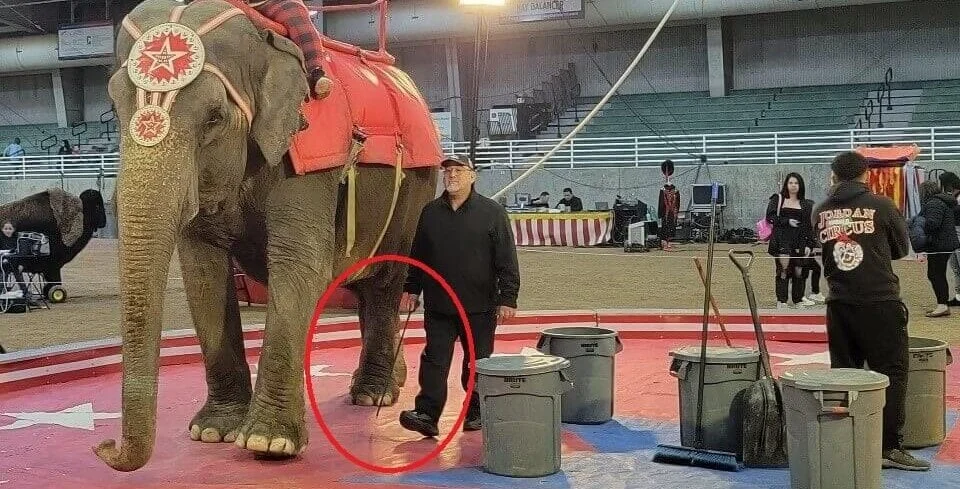
In a significant shift for the North American entertainment industry, Jordan World Circus has officially confirmed the permanent removal of elephants from its touring productions. The decision follows years of intense scrutiny from animal welfare organizations, a series of high-profile escapes, and mounting public pressure regarding the treatment of elderly elephants, specifically a 56-year-old Asian elephant named Viola. For decades, Viola has been a central figure in the debate over the ethics of using migratory, highly intelligent mammals in traveling shows. This development marks a pivotal moment in the gradual phasing out of wild animal acts across the United States, reflecting a broader cultural transition toward animal-free entertainment.
The Life and Captivity of Viola
Viola’s history serves as a case study for the life of a circus elephant in the 20th and 21st centuries. Born in the wild in Asia, she was captured as a calf and brought to the United States, where she was eventually acquired by Carson & Barnes Circus, a major supplier of elephants for various regional circus outfits. For over fifty years, Viola has been leased to different organizations, including the Jordan World Circus, to perform in hundreds of shows annually.
By 2025, despite her advanced age and deteriorating physical condition, records indicate that Viola was forced to perform in nearly 200 shows. Veterinary experts and animal rights advocates have long raised alarms about her health. A report from a leading elephant specialist noted that Viola suffered from a chronic condition in her right front wrist, rendering her unable or unwilling to bend the joint properly. Furthermore, she was found to have an untreated and likely painful toenail condition, which, in elephants, can lead to osteomyelitis—a life-threatening bone infection.
In the wild, Asian elephants are social creatures that live in matriarchal herds, traveling several miles a day through diverse terrain. In the circus circuit, Viola’s life was defined by the antithesis of these natural behaviors. She spent much of her time in heavy chains or confined within transport trailers, hauled between cities for the majority of the year.
A Chronology of Resistance and Incidents
The decision by Jordan World Circus to retire elephant acts did not occur in a vacuum but was preceded by a series of incidents that highlighted the risks and distress associated with captive elephants. Viola herself has a documented history of attempting to flee her handlers, with at least four recorded escape attempts over the last several decades.
The most recent and widely publicized incident occurred in April 2024 in Butte, Montana. While being prepared for a performance with the Jordan World Circus, Viola was startled by a backfiring vehicle. She broke through a temporary enclosure and wandered into a busy street, navigating through traffic and into a residential area before being recaptured. While no humans were injured in the Butte incident, the footage of an elderly, limping elephant walking past a gas station went viral, sparking a national conversation about the safety and morality of elephant acts.
Previous incidents involving Viola date back to 2010 and 2014, occurring in states as varied as Wisconsin and California. These episodes were frequently cited by the People for the Ethical Treatment of Animals (PETA) in their filings with the U.S. Department of Agriculture (USDA), the federal body responsible for enforcing the Animal Welfare Act (AWA).
The Advocacy Campaign and Regulatory Pressure
The removal of elephants from Jordan World Circus is the culmination of a multi-year campaign led by PETA and supported by a global network of activists. The strategy employed by advocates was multi-faceted, involving grassroots protesting, digital mobilization, and legal challenges.
According to data released by advocacy groups, over 600,000 emails were sent to Jordan World Circus management by concerned citizens. These digital campaigns were supplemented by dozens of physical protests at tour stops across the country. Protesters often focused on the use of "bullhooks"—heavy batons with a sharp metal hook at the end—used by handlers to exert control through the threat of physical pain.
On the regulatory front, the USDA has faced consistent pressure to revoke the licenses of exhibitors like Carson & Barnes, who provided elephants to Jordan World. Carson & Barnes has a long history of AWA violations, ranging from failure to provide adequate veterinary care to the improper handling of animals. By targeting the circuses that leased these animals, advocates were able to squeeze the economic viability of the elephant acts, making them a liability rather than an asset.
The Physical and Psychological Toll of Circus Life
The scientific community has increasingly weighed in on the suitability of elephants for circus life. Biologists note that elephants possess complex cognitive abilities, including self-awareness, long-term memory, and the capacity for grief. The repetitive nature of circus tricks—such as standing on two legs or sitting on stools—places unnatural stress on an elephant’s massive skeletal structure.
For an elderly elephant like Viola, the physical toll is compounded by the lack of a stable environment. Constant transportation prevents the healing of joint injuries and exacerbates foot rot, which remains the leading cause of death for captive elephants in North America. Psychologically, the isolation from a natural herd structure often leads to "stereotypic behavior," such as repetitive swaying or head-bobbing, which are recognized indicators of profound mental distress.
The transition of Jordan World Circus away from these acts acknowledges, at least implicitly, that the traditional circus model is increasingly incompatible with modern understandings of animal welfare and public safety.
Industry Implications and the Shift Toward Animal-Free Shows
The move by Jordan World Circus follows in the footsteps of industry giants. In 2016, Ringling Bros. and Barnum & Bailey Circus retired its elephant troupe, and after a brief hiatus, the circus returned in 2023 with a completely animal-free show. Other major circuses have followed suit, citing the high cost of maintaining animals, the complexity of complying with a patchwork of local and state bans, and a shift in consumer demand.
Currently, several U.S. states, including California, New York, and Illinois, have implemented statewide bans on the use of most wild animals in circuses. Numerous municipalities have passed similar ordinances, particularly targeting the use of bullhooks. This legislative landscape has made it logistically difficult for traveling circuses to plan national tours if they include elephants or big cats.
Market analysis suggests that younger demographics—Millennials and Gen Z—are significantly less likely to purchase tickets for events featuring performing wild animals. Instead, there is a growing preference for "human-centric" circuses, such as Cirque du Soleil, which focus on acrobatics, technology, and theatrical storytelling.
The Path Forward: The Call for Sanctuary
While the removal of elephants from the Jordan World Circus tour is a victory for welfare advocates, it raises the question of what becomes of the animals themselves. In the case of Viola, she remains under the legal ownership of Carson & Barnes Circus. Advocates are now shifting their focus toward ensuring that she and other retired circus elephants are moved to accredited sanctuaries rather than being sold to other exhibitors or kept in private holding facilities.
Accredited sanctuaries, such as those recognized by the Global Federation of Animal Sanctuaries (GFAS), provide hundreds of acres of naturalistic habitat. In these environments, elephants are not forced to perform, are not chained, and are given the opportunity to socialize with others of their species. For an elephant like Viola, who has spent half a century in the "industry," a sanctuary represents the first opportunity to live without the threat of the bullhook.
Conclusion
The decision by Jordan World Circus to end its elephant acts serves as a landmark moment in the evolution of American entertainment. It reflects the power of sustained advocacy and a growing societal consensus that the exploitation of intelligent, sentient beings for amusement is no longer acceptable. As the circus industry continues to reinvent itself, the story of Viola remains a poignant reminder of the costs of captivity and the ongoing effort to provide a more humane future for the world’s most iconic land mammals. The focus now turns to the regulators and owners to ensure that the "retirement" of these animals results in a life of peace in a sanctuary, rather than a mere change in the venue of their confinement.

