


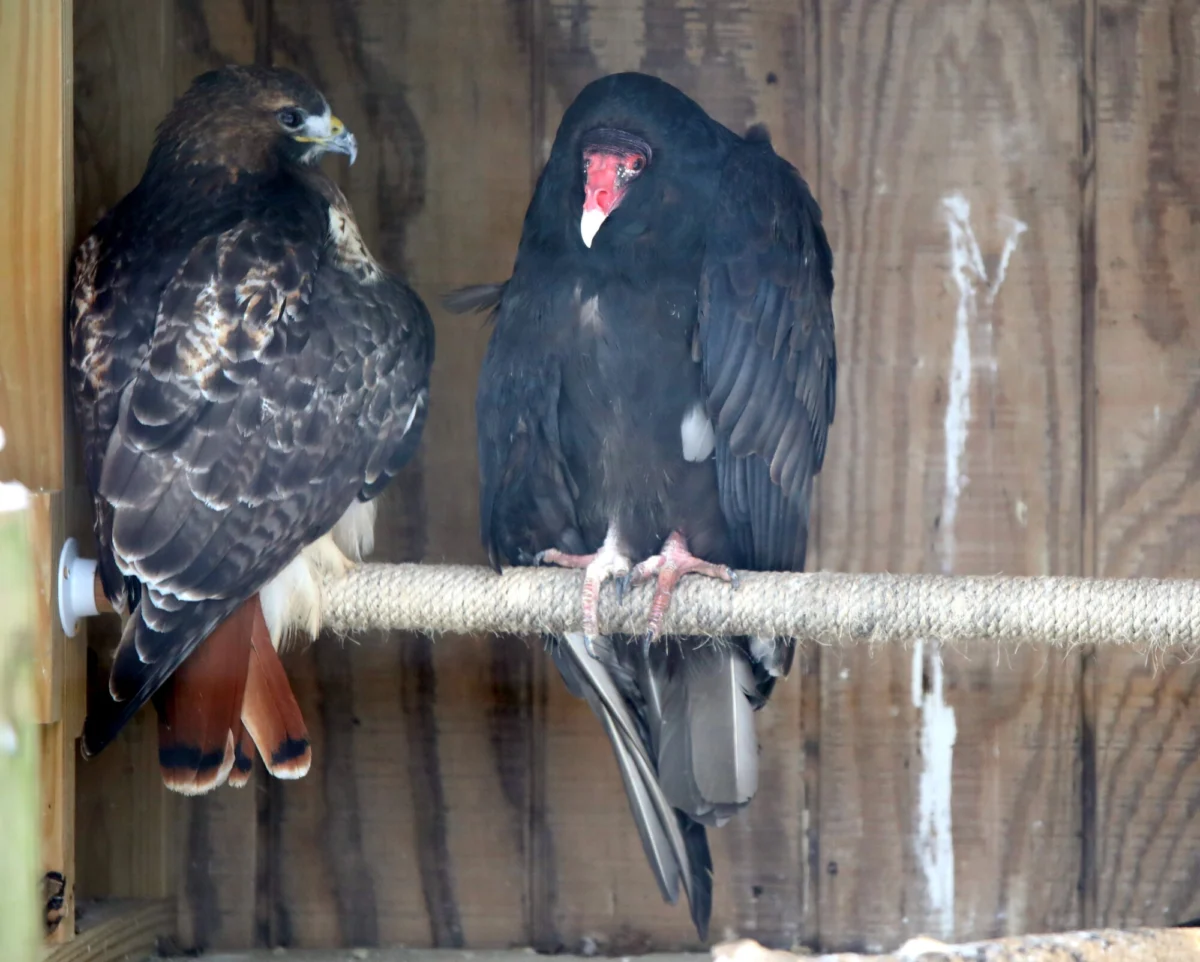
The profound capacity for interspecies connection, often transcending the boundaries of natural instinct and typical species interaction, is a phenomenon that captivates observers and enriches our understanding of animal behavior. While humans frequently forge deep bonds based on shared experiences and mutual affinity, the observation of similar complex relationships within the animal kingdom remains equally, if not more, remarkable. Such connections highlight an innate ability to find solace, companionship, and even support in the presence of another, irrespective of species. This narrative unfolds around Stan and Hunter, two avian residents of the Elmwood Park Zoo in Norristown, Pennsylvania, whose enduring friendship defies conventional wisdom regarding predator-prey dynamics and solitary species behaviors, offering a compelling testament to the power of shared circumstance and mutual understanding.
The Unlikely Alliance: Species in Focus
Stan, a 20-year-old female Turkey Vulture (Cathartes aura), and Hunter, a 22-year-old female Red-tailed Hawk (Buteo jamaicensis), share an aviary at the Elmwood Park Zoo, having been brought into human care due to severe injuries sustained in the wild. Their friendship is particularly striking given the distinct ecological roles and behavioral patterns of their respective species.
Turkey Vultures are primarily scavengers, equipped with an exceptional sense of smell to locate carrion. They are social birds, often seen roosting and feeding in groups, which can number in the hundreds. However, their social interactions are typically centered around food resources or communal roosting, rather than deep individual bonds with non-vulture species. Vultures play a crucial role as nature’s clean-up crew, preventing the spread of disease by consuming decaying carcasses. Their natural habitat spans a vast range across the Americas, from southern Canada to the tip of South America, adapting to various environments from forests to deserts.
In stark contrast, Red-tailed Hawks are apex predators, renowned for their keen eyesight and powerful talons. They primarily hunt small mammals and birds, embodying the classic raptor image. While they are monogamous during breeding season, forming pairs, their social structure is largely territorial and solitary outside of nesting duties. Red-tailed Hawks are one of the most widespread and commonly observed raptors in North America, inhabiting diverse landscapes from open fields to urban parks. Their diet consists almost entirely of live prey, positioning them at a different trophic level than the scavenging vulture.
The fundamental differences in their natural diets, hunting strategies, and social inclinations make the close, affectionate bond between a turkey vulture and a red-tailed hawk an extraordinary occurrence. In the wild, such species might share airspace or even a distant glance, but an intimate, mutually supportive relationship is virtually unheard of. This inherent species divergence underscores the unique circumstances that led to Stan and Hunter’s remarkable connection.
A Shared Path to Sanctuary: Chronology of Arrivals
The genesis of Stan and Hunter’s enduring friendship is rooted in a shared experience of trauma and subsequent rehabilitation. Both birds arrived at the Elmwood Park Zoo in 2005, not as healthy wild specimens, but as injured individuals requiring long-term care, rendering them non-releasable into their natural habitats.
Hunter was the first to arrive in July 2005. As a juvenile, she was transferred to the Elmwood Park Zoo from a now-defunct rehabilitation center. Her injury was severe: an air-rifle pellet had fractured her right humerus, the long bone in the wing. Despite the best efforts of veterinary staff and rehabilitators, the damage was irreparable, and the bone never healed correctly. This left Hunter with a permanently compromised right wing, severely limiting her ability to fly and hunt effectively in the wild. The nature of her injury, likely caused by human interference, highlights the persistent threats faced by wildlife in proximity to human populations.
Just a month later, in August 2005, Stan arrived. She was transferred from Tri-State Bird Rescue & Research, a highly respected avian rehabilitation center located in Newark, Delaware, known for its extensive work with injured and oiled birds. Stan’s journey to Tri-State began when she was found by the Newark Police Department, also suffering from a pellet wound. The projectile had lodged in her right wing, causing a fracture to both her radius and ulna – the two bones of the forearm. Similar to Hunter, the fracture did not heal sufficiently to restore full flight capabilities. For a turkey vulture, efficient flight is paramount not only for foraging over vast distances but also for escaping predators and navigating their environment.
The coincidence of both birds arriving in the same year, both with severe wing injuries caused by human projectiles, created an immediate, albeit tragic, point of commonality. Their shared physical limitations, which rendered them unable to survive independently in the wild, became the unexpected catalyst for a bond that would flourish in the controlled environment of the zoo.
The Genesis of a Bond: Shared Trauma and Mutual Support
The shared inability to fly freely, a fundamental aspect of avian existence, appears to have forged a profound and unusual connection between Stan and Hunter. In the wild, healthy birds would likely compete for resources or avoid each other. However, within the confines of their shared aviary, their mutual vulnerability fostered an environment of coexistence and, eventually, deep mutual support. This concept aligns with observations in other species where shared hardship can lead to unexpected social structures.
Over the past decade, the staff at Elmwood Park Zoo have observed a consistently strong bond between Stan and Hunter, referring to them as "bonded." Their interactions extend far beyond mere tolerance; they exhibit behaviors indicative of genuine companionship and care. When food is introduced into their enclosure, a potential point of contention for many species, it is often Hunter, the red-tailed hawk, who takes the initiative to gather the food and then shares it with Stan, the turkey vulture. This behavior is particularly striking given the predatory nature of hawks and the opportunistic scavenging of vultures. In a wild scenario, a hawk would typically guard its kill, while a vulture might attempt to displace it. Their shared mealtime ritual is a clear indicator of their established social hierarchy and mutual trust.
Beyond shared meals, Stan and Hunter engage in allopreening, a behavior where animals groom each other. Allopreening is common among social species, particularly within families or established pairs, and serves to strengthen social bonds, maintain hygiene, and reduce parasites in hard-to-reach areas. For a turkey vulture and a red-tailed hawk to exhibit allopreening is exceptionally rare and signifies a deep level of comfort, trust, and affection. This physical intimacy further underscores the strength and uniqueness of their bond.
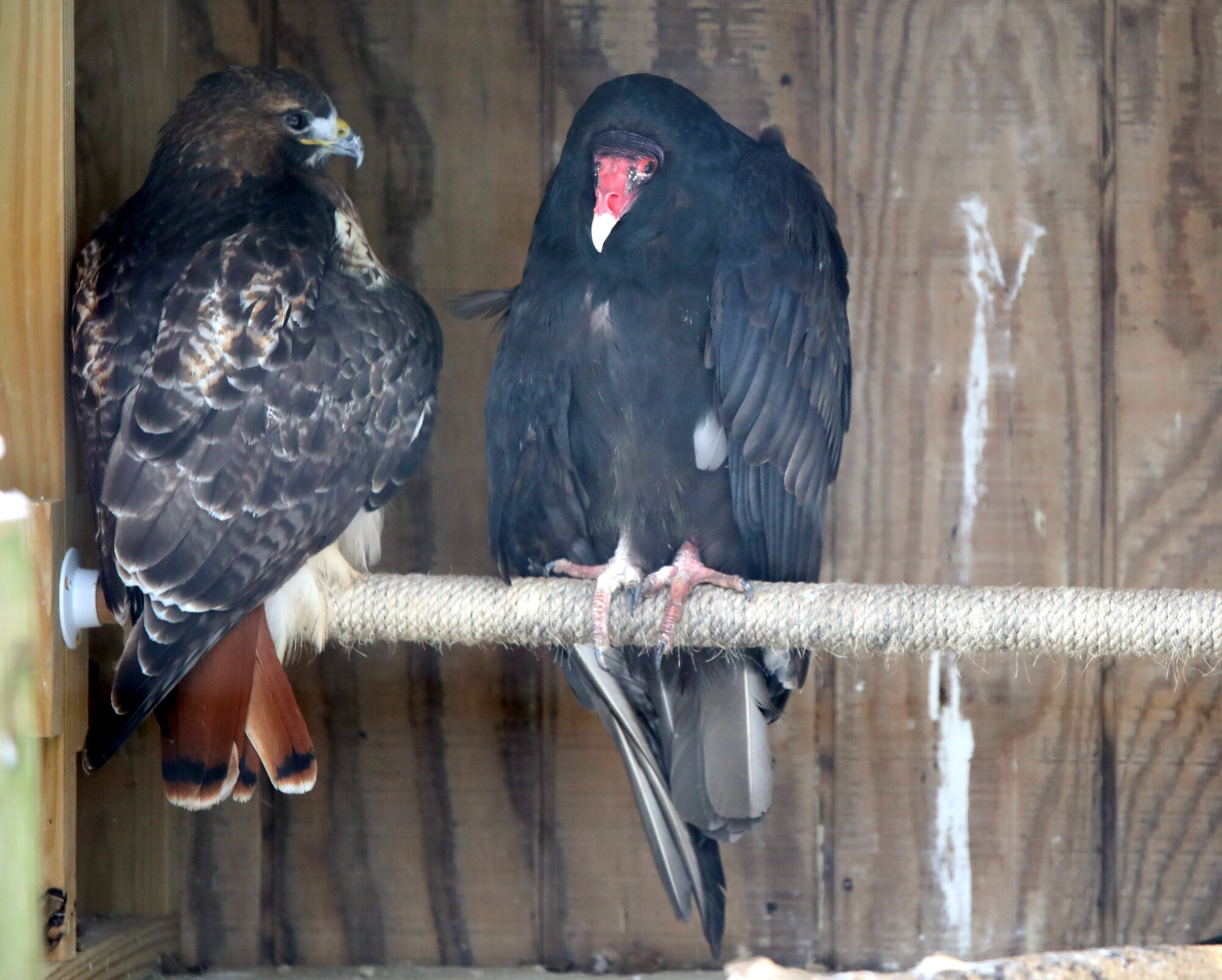
Perhaps one of the most poignant demonstrations of their connection occurs during Hunter’s nesting periods. When Hunter lays eggs, it is Stan who is observed sitting on them. While these eggs are infertile, given that Hunter is not paired with a male hawk, Stan’s maternal-like behavior towards them, and implicitly towards Hunter’s reproductive cycle, speaks volumes about her empathetic engagement and participation in Hunter’s life. This behavior transcends typical species-specific instincts and points to a profound level of social understanding and care between the two birds.
Life at the Elmwood Park Zoo: Care and Environment
The Elmwood Park Zoo plays a crucial role not only in providing a permanent sanctuary for Stan and Hunter but also in facilitating the conditions under which their unique friendship could flourish. As a respected zoological institution, the zoo is committed to animal welfare, conservation, and education.
Upon arrival, animals like Stan and Hunter receive comprehensive veterinary care, including diagnostics, surgery if necessary, and ongoing rehabilitation. For birds with permanent disabilities, zoos offer a lifeline, providing a safe, controlled environment where their specific needs can be met without the threats and challenges of the wild. The aviary at Elmwood Park Zoo is designed to provide an enriching habitat that caters to the physical limitations of both birds while also stimulating their natural behaviors as much as possible. It offers ample space for their limited flight capabilities, perching options, and varied terrain, crucial for their physical and mental well-being.
The decision to house Stan and Hunter together without other birds in their enclosure was likely a deliberate one, potentially influenced by their initial shared trauma and the desire to create a stable social environment. This isolation from other avian species, particularly other predatory birds or vultures, may have removed potential stressors or competitive dynamics that could have hindered the development of their bond. Instead, they were given the unique opportunity to interact primarily with each other, fostering a reliance and comfort that might not have developed in a more crowded or species-diverse setting.
"Our primary goal is always the welfare of the animals," states a representative from the Elmwood Park Zoo. "For Stan and Hunter, their shared enclosure has become their home, and their friendship is a testament to their resilience and adaptability. We’ve observed them for years, and their bond is undeniably strong. It allows them to thrive in an environment that might otherwise be solitary for injured individuals."
Zoo staff provide consistent care, including a carefully managed diet that meets the nutritional requirements of both species without requiring them to hunt, and regular health checks. This ensures that their focus can be on their social interactions and daily well-being, rather than survival. The absence of survival pressures, coupled with a stable, secure environment, has undoubtedly allowed their interspecies connection to deepen and endure for over a decade.
Expert Perspectives: Inferred Statements and Broader Implications
The extraordinary friendship between Stan and Hunter offers valuable insights for animal behaviorists, zoologists, and the public alike. While direct communication from the birds is impossible, the observed behaviors and the longevity of their bond allow for informed inferences and analysis by zoo professionals.
"Seeing such a close bond between a turkey vulture and a red-tailed hawk is genuinely remarkable," an inferred statement from a senior animal curator at Elmwood Park Zoo might read. "These are species that, in the wild, occupy very different ecological niches and would typically not form such intimate relationships. Hunter is a predator, and Stan is a scavenger. Their natural instincts dictate separation or even conflict. However, their shared experience of severe injury and subsequent residency in a protected environment seems to have overridden these natural divisions, allowing for a unique social structure to emerge."
A hypothetical veterinary expert might add, "From a welfare perspective, this bond is incredibly beneficial. Animals, much like humans, can suffer from stress and loneliness. Having a consistent, supportive companion, especially one who understands the shared limitation of flight, undoubtedly contributes significantly to their overall mental and emotional health. The allopreening and food-sharing behaviors are clear indicators of a strong, positive social dynamic that enhances their quality of life here at the zoo."
The implications of Stan and Hunter’s story extend beyond individual animal welfare. It serves as a powerful educational tool for zoo visitors. "When visitors see Stan and Hunter together, it sparks curiosity and wonder," an inferred education director might explain. "It challenges preconceived notions about animal behavior and highlights the complexity of animal emotions and social structures. It’s a living example of empathy and adaptability, demonstrating that bonds can form in the most unexpected places and between the most unexpected individuals. This can foster a deeper appreciation for wildlife and the importance of conservation, reminding people that every animal has a unique story and an inherent value."
Moreover, this case contributes to the growing body of knowledge on interspecies friendships in captive environments. While such bonds are not unheard of, they remain relatively rare and often provide scientists with data points to better understand animal cognition, emotional capacity, and the factors that can influence social dynamics outside of species-specific norms. The study of these unique relationships can inform best practices for animal husbandry, particularly for non-releasable animals that may benefit from companionship in zoo or sanctuary settings.
Conclusion
The narrative of Stan and Hunter is more than just a charming anecdote; it is a profound testament to the adaptability and resilience of the animal spirit. Their journey from injured wild birds to cherished residents of the Elmwood Park Zoo, and the subsequent development of their extraordinary interspecies friendship, offers a compelling illustration of how shared adversity can forge unexpected bonds. Their daily interactions—the shared meals, the tender allopreening, and Stan’s protective presence over Hunter’s eggs—paint a vivid picture of a deep, enduring connection that transcends species boundaries.
In an environment free from the harsh realities and competitive pressures of the wild, their shared physical limitations became a foundation for mutual understanding and support. Stan the turkey vulture and Hunter the red-tailed hawk stand as living symbols of empathy, companionship, and the intricate, often surprising, tapestry of life within the animal kingdom. Their story continues to inspire zoo visitors and staff, serving as a powerful reminder of the complex emotional lives of animals and the enduring magic of friendship, even between the most unlikely of companions.

