


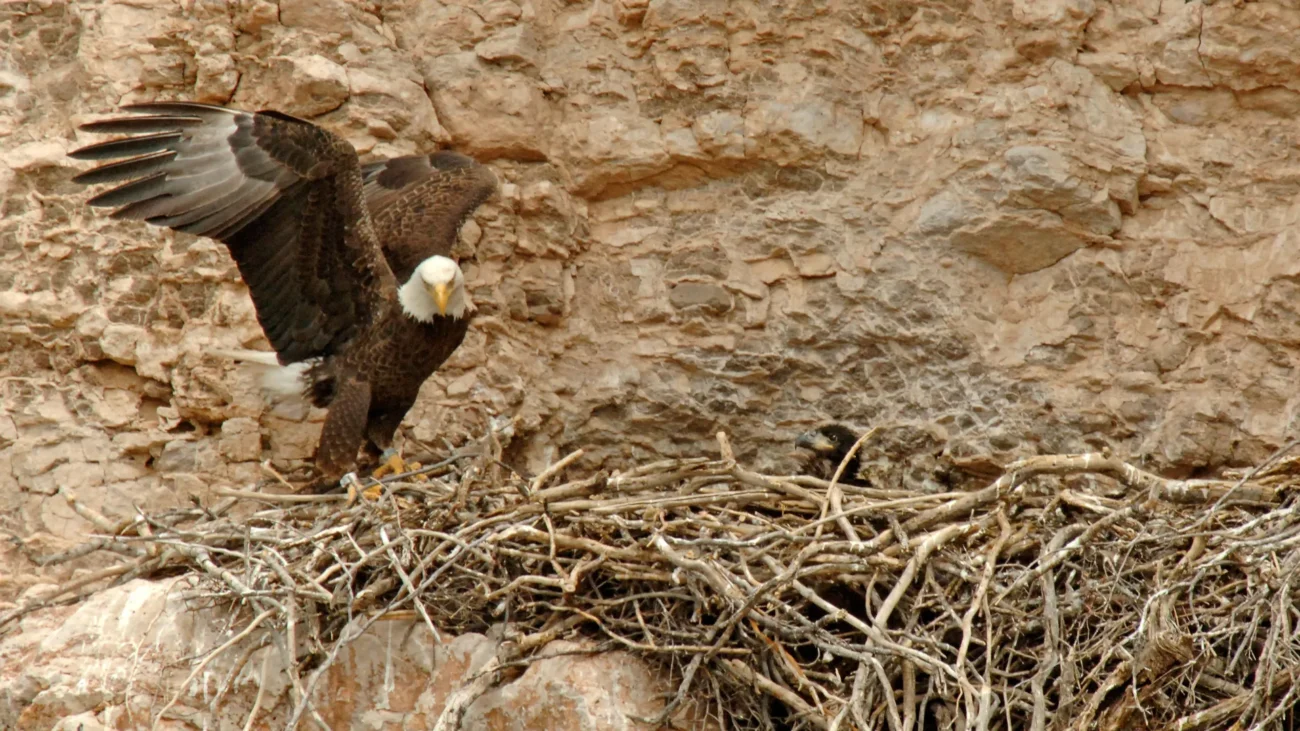
A groundbreaking study published in the Journal of Raptor Research is challenging long-held assumptions about avian migration, revealing that Bald Eagles ( Haliaeetus leucocephalus) in Arizona are undertaking unexpected journeys northward, a stark departure from the typical southward migratory patterns observed in many temperate-zone birds. This research, titled "Northward Migrations of Nonbreeding Bald Eagles from Arizona, USA," not only highlights this peculiar directional shift but also documents a remarkable instance of a single eagle emigrating from Arizona and establishing residency in California. This latter finding significantly broadens our understanding of territorial dispersal and the potential for population exchange among Bald Eagle cohorts. The researchers posit that these southwestern Bald Eagles exhibit a highly exploratory nature, likely driven by the imperative to locate ephemeral food resources. In an era of escalating climate change and dynamic landscapes, documenting how wildlife adapts its migratory and dispersal behaviors is paramount for the effective design of conservation strategies and the preservation of critical migratory corridors for species facing increasing vulnerability.
Unraveling the Mysteries of Nonbreeding Eagle Movements
Between the years 2017 and 2023, a dedicated research team based in Arizona meticulously employed satellite transmitters to track the movements of 24 newly fledged Bald Eagles and two adult nonbreeding individuals. This seven-year endeavor provided an unprecedented granular view of how these majestic birds navigate within and beyond the confines of their home state. While breeding Bald Eagles in Arizona are generally understood to maintain proximity to their established nesting territories throughout much of the year, considerably less information has been available regarding the behavioral ecology of their nonbreeding counterparts. Recognizing that survival rates and ecological roles can vary significantly across different life stages, the comparative analysis of movement patterns and survival metrics between nonbreeding and breeding eagles offers scientists a more comprehensive understanding of the species’ overall well-being across its geographical range and elucidates the intricate population-level processes that shape its dynamics.
The research protocol involved continuous monitoring of individual eagles for the duration of the satellite tracking devices’ functionality, extending in some cases up to four years within the seven-year study period. A common perception, shared by both the general public and many within the scientific community, is that migratory birds in North America predominantly journey southward during their nonbreeding season—typically corresponding to the Northern Hemisphere’s winter months—in search of more temperate climates and a more abundant and reliable food supply. However, the Arizona Bald Eagle population presents a unique temporal anomaly; they commence their breeding activities during the winter, meaning their nonbreeding season actually occurs during the summer and autumn. Lead author Dr. Caroline D. Cappello expressed her fascination with this inverted seasonal timing of movement, noting that "northward migratory behavior raises interesting questions about the recent and historical pressures that shape these movement strategies." This observation alone necessitates a re-evaluation of traditional migratory paradigms.
Enduring Habitats and Historic Pathways
A significant finding of the study is the remarkable overlap between the stopover sites utilized by the tracked eagles and those identified in a seminal study conducted in the 1980s. The authors reported that the contemporary eagles frequently paused at many of the same lakes and rivers that had been designated as crucial stopover points for Bald Eagles in decades past. This consistency strongly supports the hypothesis that these specific aquatic habitats have remained vital congregational areas for multiple generations of eagles, underscoring their enduring ecological significance.
Beyond substantiating the robust utilization of the Intermountain Flyway and a pronounced reliance on lakes and rivers along their migratory trajectories, the study also revealed that Bald Eagles of varying age classes were migrating to regions in the northern United States and southern Canada. Dr. Javan M. Bauder, a research scientist with the U.S. Geological Survey (USGS), Assistant Unit Leader at the Arizona Cooperative Fish and Wildlife Research Unit, and Assistant Professor at the University of Arizona, emphasized the profound implications of this observation. He stated, "Managing and conserving wildlife populations requires that we understand the movement of patterns of individuals of all age classes within those populations." The research team also observed a discernible trend: as the eagles matured, their migratory pathways became increasingly precise and refined. A substantial proportion of the birds that were tracked for a minimum of two years exhibited a return to Arizona in the autumn of their hatch year, following an expansive summer roaming period farther north. The researchers hypothesize that these younger eagles might be capitalizing on seasonal ecological opportunities, such as the abundance of spawning salmon, nesting waterfowl, or the carcasses of large mammals. However, definitive confirmation of this hypothesis awaits further dedicated research.
Navigating a Perilous World: Emigration and Existential Threats
The life of a young raptor is fraught with inherent dangers, particularly in an environment increasingly shaped by human activities. The study documented one particularly compelling case of an eagle that traversed ten U.S. states and four Canadian provinces during its formative years before appearing to settle in northern California, where it seemed poised to establish a breeding territory. Tragically, at the age of four, this individual met its demise due to electrocution, a regrettably common cause of mortality for large birds of prey that interact with power infrastructure. Dr. Cappello highlighted the particular distress caused by this loss, explaining that it "underscored the ongoing risks these birds face," and underscored the inherent difficulty in accurately measuring the phenomenon of emigration. The apparent decision of this eagle to relocate and potentially breed in California offered a rare glimpse into the frequency with which Bald Eagles hatched in Arizona might disperse to other regions, a crucial piece of information for population modeling and conservation planning.
The threats confronting young raptors extend beyond electrocution and encompass a grim litany of anthropogenic challenges. These include insidious poisoning from lead and rodenticides, catastrophic collisions with wind turbines, the pervasive loss of essential habitat, and the pervasive uncertainty engendered by a rapidly changing climate. By undertaking comprehensive studies of raptors across all life stages, including the exploratory forays of young birds, scientists are empowered to formulate evidence-based recommendations. These recommendations can guide the prioritization of critical stopover sites for protection and advocate for the modification of infrastructure, such as electrical systems, to enhance survival rates for eagles and other large raptor species.
Future Directions and Conservation Imperatives
The research team has articulated several key recommendations for future scientific inquiry. Among these is a focus on "route fidelity," a concept that Dr. Cappello believes could significantly enhance conservation efforts. She stated, "if consistent patterns exist it could help focus conservation efforts on specific, high-use areas along their migratory route." This suggests that identifying and protecting key corridors and resting areas is paramount. Furthermore, the researchers emphasize the importance of comparative studies, advocating for a comparison of these Arizona Bald Eagles with other wildlife populations that exhibit northward migration from the southern extents of their ranges. Such comparisons are vital for a more nuanced understanding of the trade-offs, costs, and benefits associated with this northward migratory strategy.
The broader implications of this research extend beyond the specific behaviors of Bald Eagles in Arizona. It contributes to a growing body of evidence that suggests many species, particularly those facing environmental pressures, may be exhibiting plasticity in their migratory and dispersal behaviors. This adaptability, while potentially a survival mechanism, also introduces complexities for conservationists who traditionally rely on more predictable patterns. The study serves as a critical reminder that our understanding of wildlife ecology is constantly evolving, and that long-term, multi-faceted research is indispensable for developing robust conservation strategies in an unpredictable world. As human landscapes continue to expand and climate change intensifies, the ability of species to adapt their movements will be a key determinant of their long-term survival, making research into these dynamic processes an urgent priority. The data generated by this study provides a vital foundation for understanding these adaptive strategies, informing decisions that could impact the future of Bald Eagle populations and countless other migratory species.

