


Historical Context: The Roots of the 1994 Genocide
To understand the weight of the reconciliation documented in Blood Bonds, one must examine the historical architecture of the 1994 genocide against the Tutsi. While the violence erupted with unprecedented speed on April 7, 1994, the foundations were laid during the colonial era. Under Belgian administration, the previously fluid social categories of Hutu and Tutsi were rigidified through the introduction of ethnic identity cards in the 1930s. This institutionalization of difference created a hierarchy that favored the Tutsi minority, sowing seeds of resentment that would be exploited by Hutu nationalist movements in the mid-20th century.
The 1959 "Hutu Revolution" led to the displacement of hundreds of thousands of Tutsis, creating a diaspora that would eventually form the Rwandan Patriotic Front (RPF). Decades of periodic ethnic violence and systemic discrimination culminated in the early 1990s as the Hutu-led government of Juvénal Habyarimana faced both an RPF insurgency and internal pressure for democratization. State-sponsored propaganda, disseminated through the Radio Télévision Libre des Mille Collines (RTLM), dehumanized Tutsis as "Inyenzi" (cockroaches), preparing the civilian population for mass mobilization.
The catalyst occurred on April 6, 1994, when President Habyarimana’s plane was shot down over Kigali. Within hours, roadblocks were established, and the Interahamwe militia, supported by the national army, began a systematic campaign of extermination. Over the course of 100 days, between 800,000 and one million people were murdered. The intimacy of the violence was its most harrowing feature; killers were often the victims’ neighbors, teachers, or even godparents, utilizing machetes and clubs to carry out face-to-face executions.
The Gacaca Courts: An Institutional Attempt at Truth
Following the cessation of hostilities and the RPF’s victory, the Rwandan state faced an impossible judicial crisis. With hundreds of thousands of suspects in custody, the traditional legal system was estimated to require over a century to process the caseload. In response, the government revived and adapted a traditional community justice mechanism known as Gacaca (meaning "justice on the grass").
Between 2002 and 2012, more than 12,000 village-level courts were established. These courts were designed with a dual purpose: to provide a localized trial for perpetrators and to establish a public record of the truth. Over one million cases were heard. Unlike Western adversarial systems, Gacaca encouraged confession and apology in exchange for reduced sentences.
While the Gacaca system succeeded in processing the massive backlog of prisoners and uncovering the locations of mass graves, it also left deep psychological scars. Survivors were forced to recount their traumas in front of the very people who had harmed them, and many felt that the sentences did not match the gravity of the crimes. The legal process could mandate physical proximity and legal closure, but it could not mandate the emotional healing required for a functioning society.
Mvura Nkuvure: The "I Heal You, You Heal Me" Initiative
Recognizing the limitations of formal legalism, community-based sociotherapy programs were developed to address the "invisible wounds" of the genocide. One of the most prominent methods is Mvura Nkuvure, a Kinyarwanda phrase meaning "I heal you, you heal me." This approach, highlighted in Blood Bonds, focuses on the social fabric of the community rather than just the individual psyche.
Since its inception in 2005, more than 115,000 Rwandans have participated in these sociotherapy groups. The sessions typically consist of 10 to 15 participants—including survivors, perpetrators, and their descendants—who meet weekly for several months. The process follows six distinct phases: safety, trust, care, respect, new orientations, and social transition.
By creating a space where participants can share their daily struggles—ranging from poverty to nightmares—the program humanizes "the other." For perpetrators, it provides a path to reintegration and the shedding of the "killer" identity. For survivors, it offers a venue to receive the specific apologies and details they need to find closure. The success of this model has led to its implementation in other conflict zones, including eastern Congo, South Sudan, and Liberia.
Case Studies in Forgiveness: The Subjects of Blood Bonds
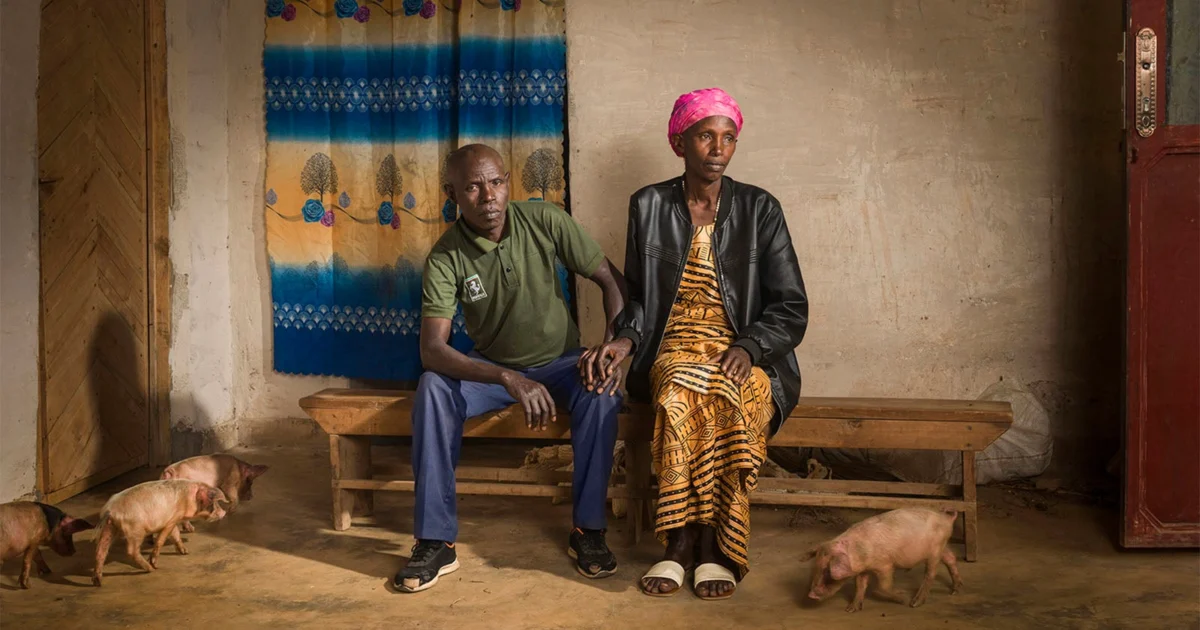
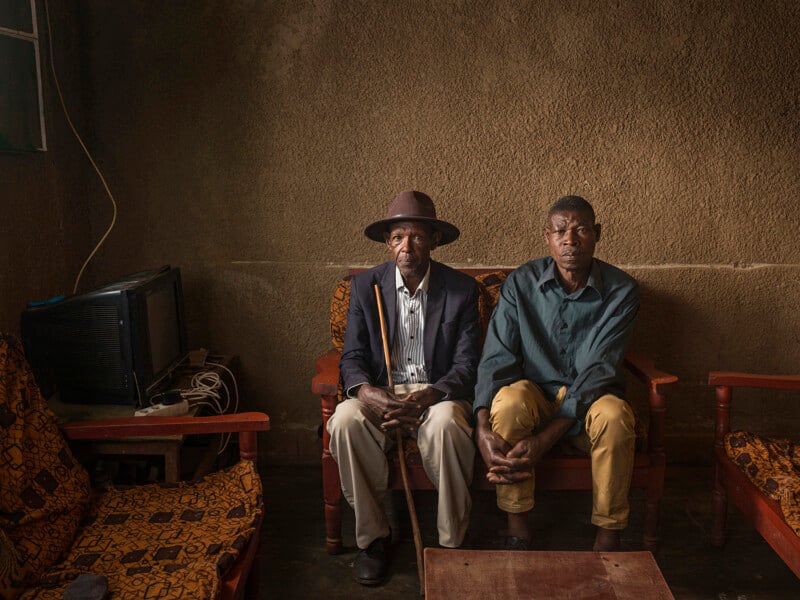
The portraits in Jan Banning’s book provide a visual and narrative anchor to these abstract concepts of reconciliation. The images often depict subjects in their domestic environments—sitting on simple benches, standing in gardens, or sharing tea—defying the viewer’s expectation of visible animosity.
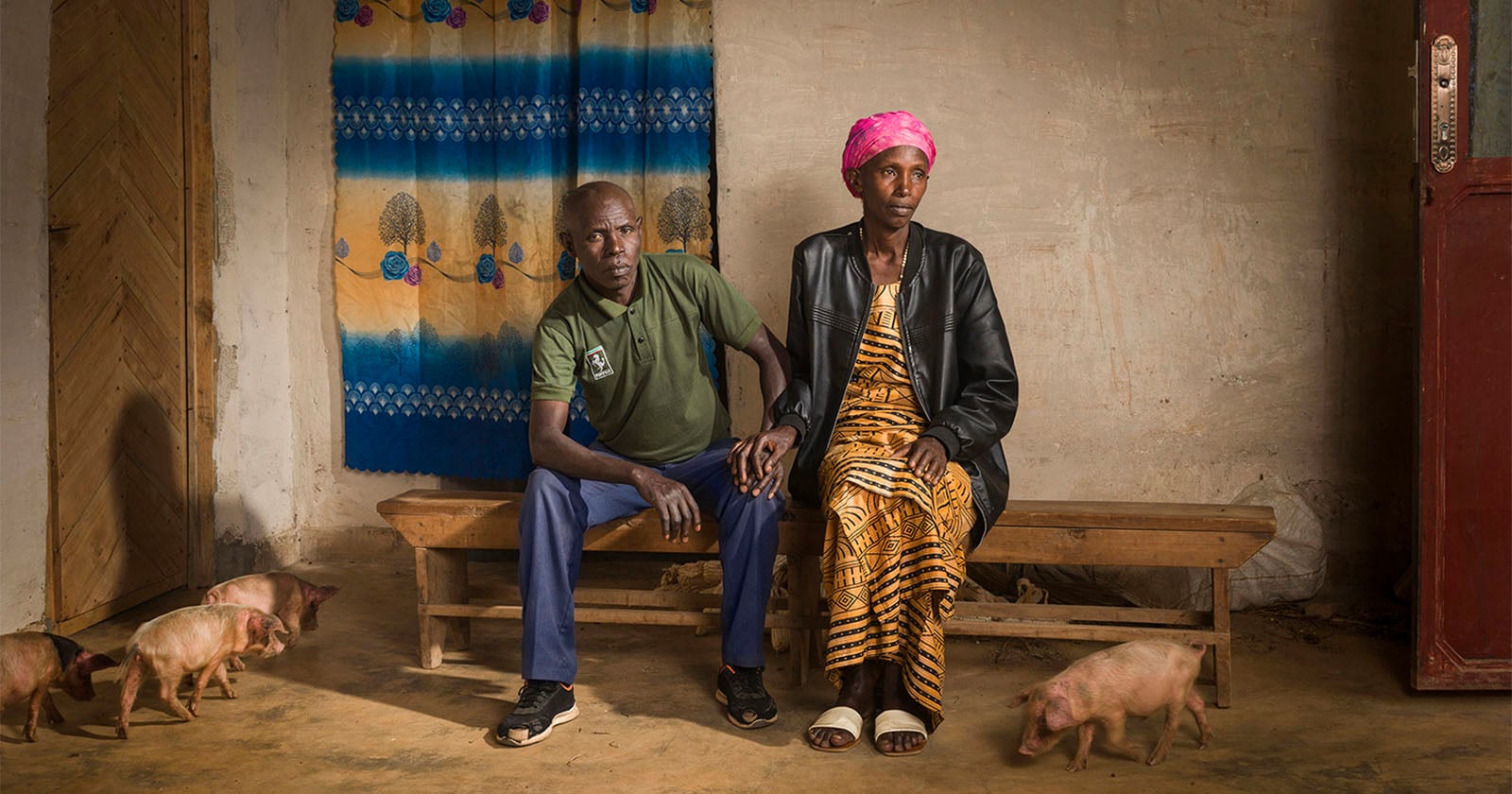
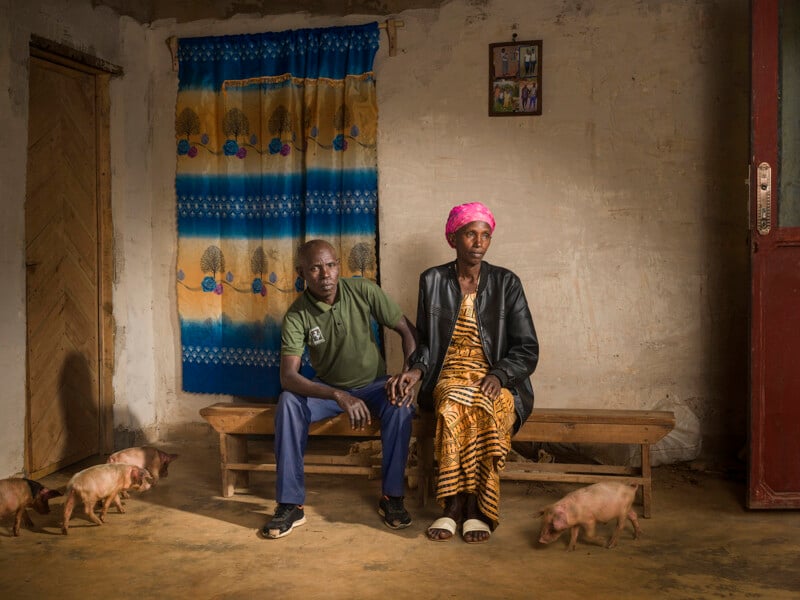
One notable account features Marianna Nyirantagorama (58) and Marc Nyandekwe (60). Marianna’s survival story is one of profound horror; she hid among the corpses of her family members in a church during a massacre and later fled to the hills of Bisesero. Years later, through a sociotherapy group, she encountered Marc, who confessed to killing her sister and looting her home. Through the facilitated sessions, Marianna made the choice to forgive him. The portrait shows them sitting together in a room decorated with family photographs, a piglet at their feet—a symbol of the agricultural cooperation that often defines their current relationship.
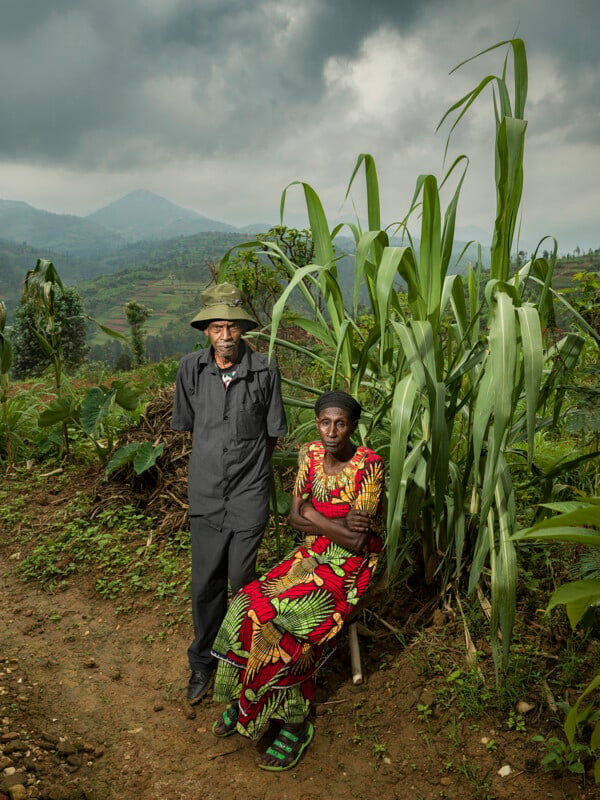
Another pair, Celestin Kayijuka (70) and Jean Marie Mukyenrwari (62), demonstrates the transition from legal confession to social friendship. Jean Marie murdered Celestin’s father and served ten years in prison. Following his release and a confession during a Gacaca trial, Jean Marie sought a personal audience with Celestin to apologize. Today, Celestin notes that they "dance together" at village parties, a radical shift from the era of machetes.
Analysis of Implications and Broader Impact
The reconciliation process in Rwanda, as documented in Blood Bonds, offers several critical insights for modern conflict resolution. First, it suggests that forgiveness is often a pragmatic necessity rather than a purely moral or religious impulse. In a country as densely populated as Rwanda, survivors and perpetrators are physically bound to the same hills and water sources. Reconciliation becomes a survival strategy for the community.
Second, the project highlights the role of "restorative justice" in preventing the cycle of generational revenge. By involving the children of survivors and perpetrators in sociotherapy, the program aims to ensure that the grievances of 1994 are not inherited by the youth. This is particularly relevant as Rwanda shifts its national identity away from ethnic labels (Hutu/Tutsi) toward a unified "Rwandan" identity, a policy strictly enforced by the current government.
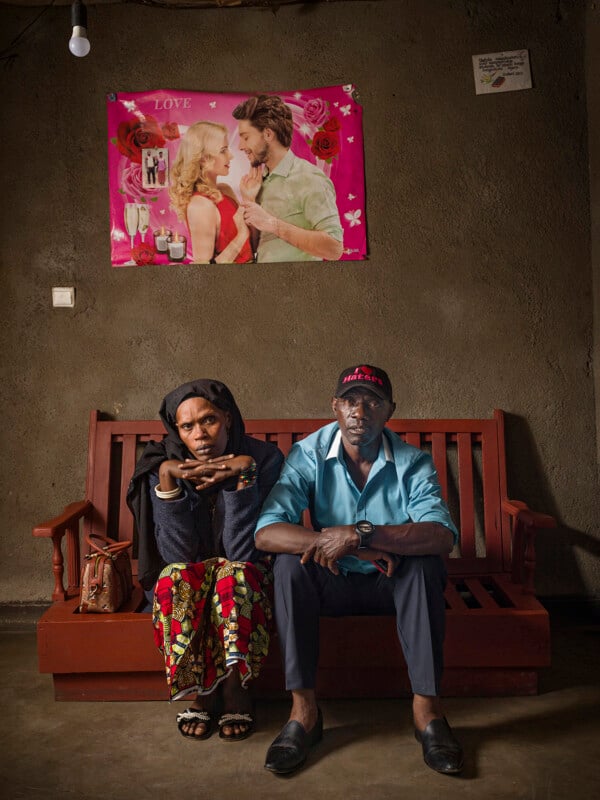
However, critics and analysts often point out the "fragility" of this peace. The Rwandan government’s "Unity and Reconciliation" policies are often described as top-down and mandatory. Some scholars argue that the outward displays of forgiveness may mask underlying tensions that the state prevents from being voiced. Blood Bonds acknowledges this complexity by presenting the subjects not as saints, but as people engaged in a difficult, ongoing labor.
Conclusion: A Global Perspective on Post-Conflict Recovery
The relevance of Blood Bonds: Reconciliation in Post-Genocide Rwanda extends far beyond the borders of East Africa. In an era of increasing global polarization and ethnic nationalism, the Rwandan experience serves as both a warning and a testament. It warns of the speed at which neighbors can be turned into enemies through propaganda and state-sanctioned hate. Conversely, it provides a testament to the human capacity for coexistence after the unimaginable has occurred.
The work of Banning, Wittenberg, and Slob suggests that while the law can provide a framework for order, true reconciliation requires a "blood bond" of a different sort—a recognition of shared humanity and a mutual commitment to a future that is not dictated by the crimes of the past. As the final pages of the book suggest, the existence of these 18 pairs is proof that even after a genocide, life and hope are not only possible but are being actively constructed in the small, daily interactions of those who chose to stay.

