


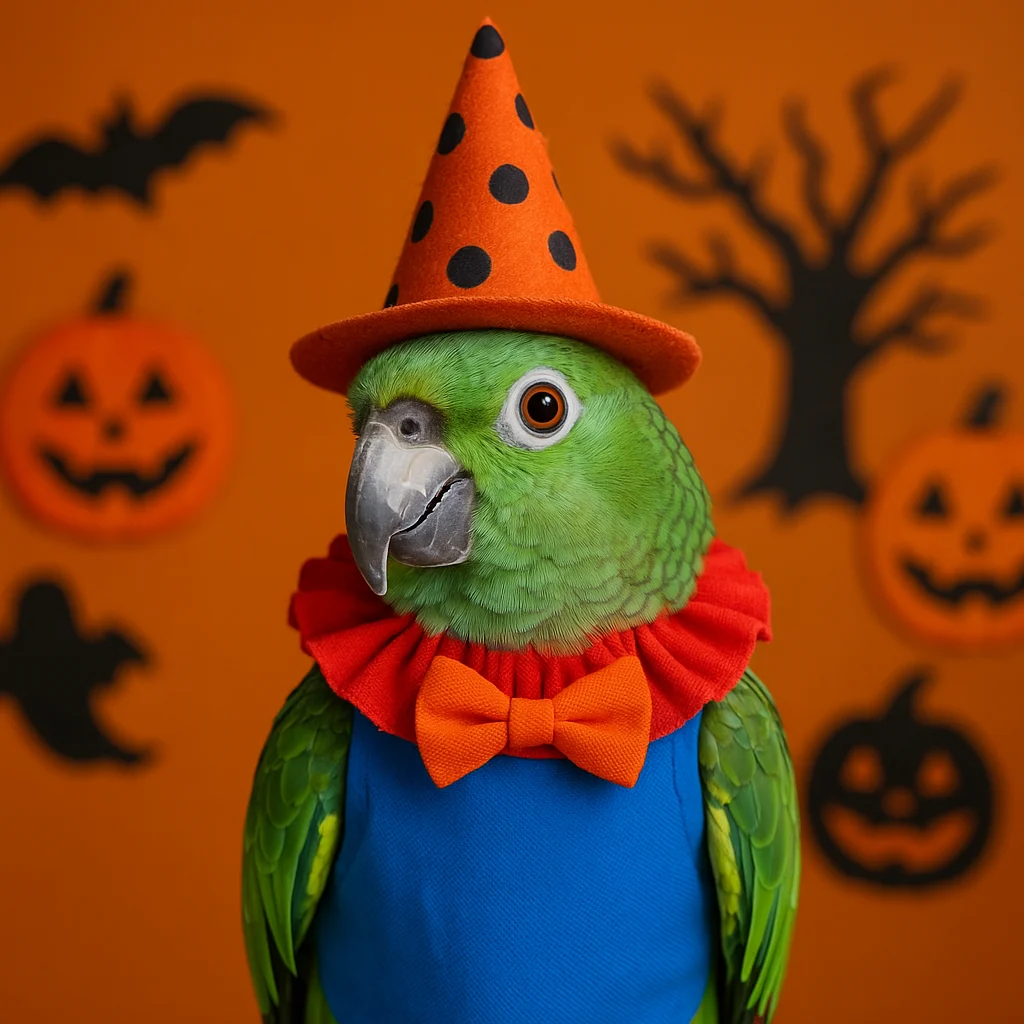
Halloween, a festive occasion marked by costumes, candy, and boisterous celebrations, presents a unique set of challenges for pet birds, particularly parrots, whose sensitive natures and ingrained survival instincts can be profoundly disrupted by the holiday’s characteristic chaos. While humans revel in spooky fun, the constant doorbells, flashing lights, unfamiliar sights, and unusual sounds associated with Halloween can plunge feathered companions into states of anxiety and fear, potentially leading to stress-related health and behavioral issues. This article explores the specific stressors Halloween poses for birds and outlines comprehensive strategies, informed by avian behavior and veterinary science, to ensure their evening remains calm, cozy, and free from fright.
The Avian Perspective: Why Halloween is More Than Just a "Spook"
Birds, unlike humans, do not comprehend the celebratory context of Halloween. Their responses are driven by instinctual reactions to perceived threats and deviations from their predictable environments. Parrots, known for their intelligence and complex emotional lives, are creatures of routine, thriving on stability and familiar surroundings. Any significant disruption can trigger their innate "flight or fight" response, a primal survival mechanism designed to protect them from predators.
The cascade of events on Halloween night—from the appearance of strange figures (costumes) to sudden, loud noises (doorbells, shrieking children, spooky soundtracks), and erratic lighting—mimics the conditions of danger in the wild. This perceived threat activates their stress hormones, such as corticosterone, leading to physiological and behavioral changes. Common manifestations of stress in birds include increased vocalization (screaming), aggressive behaviors (biting), feather plucking, hiding, changes in appetite, and restless sleep patterns. Prolonged or acute stress can compromise a bird’s immune system, making them more vulnerable to illness. Understanding these underlying biological and behavioral mechanisms is crucial for developing effective mitigation strategies.
A Chronology of Stress: The Halloween Build-Up and Peak
The impact of Halloween on birds is not confined to a single evening; it often unfolds over several weeks. Decorations, which begin appearing in neighborhoods well before October 31st, introduce novel visual stimuli that can be unsettling. A giant inflatable ghost or a motion-activated zombie prop, while amusing to humans, can be perceived as a lurking predator or an unfamiliar, threatening entity by a bird.
As the actual date approaches, the intensity increases. The pre-Halloween parties, increased traffic, and general festive atmosphere gradually escalate the sensory input. The peak stress period typically occurs during the evening hours of Halloween itself, generally between 5 PM and 9 PM, when trick-or-treating is in full swing. This timeframe coincides with many birds’ natural winding-down and bedtime routines, exacerbating the disruption. Following the main event, lingering decorations and the aftermath of parties can continue to subtly affect a bird’s sense of normalcy for several days.
Disrupting the Peace: Specific Stressors and Their Avian Impact
Several key elements of Halloween are particularly distressing for birds:
1. Auditory Assault: Loud Noises and Startles
Birds possess highly sensitive hearing, often more acute than humans in certain frequency ranges. Their auditory systems are finely tuned to detect subtle sounds in their environment, crucial for identifying predators or communicating within their flock. Consequently, sounds that are merely loud or exciting to humans—such as doorbells ringing repeatedly, children squealing with delight or fear, and commercially produced spooky soundtracks—can be overwhelming and even painful for birds. The decibel levels produced by a typical doorbell can exceed 80 dB, and a child’s scream can reach over 100 dB, levels comparable to a jackhammer or a motorcycle. For a bird, these sudden, intense noises can trigger an immediate flight response, even if confined to a cage, leading to frantic flapping, night frights, or panic attacks.
Mitigation Strategies:
- Sound Buffering: Close windows and doors to minimize external noise penetration. Heavy curtains can also help absorb sound.
- White Noise/Calming Music: Introduce a consistent, soothing background sound. White noise machines, fans, or calming classical music (specifically curated for pets) can help mask sudden external noises and create a more predictable auditory environment. Studies on various species, including some birds, suggest that certain types of music can have a calming effect by influencing heart rate and behavior.
- Cage Covering: A dark, breathable cage cover can provide a sense of security and help muffle sounds, creating a "safe haven" for the bird.
- Relocation: If feasible, move the bird’s cage to a quieter, interior room, away from the front door and windows. This is often the most effective strategy.
- Positive Reinforcement: Instead of overly comforting a fearful bird, which can inadvertently reinforce the fear, reward calm behavior with verbal praise or a small, healthy treat when the bird settles. This builds resilience and encourages self-soothing.
2. Night Frights: Guarding Essential Sleep Time
Like humans, birds require adequate, uninterrupted sleep for their physical and mental well-being. Most parrots need 10-12 hours of dark, quiet sleep per night. Halloween festivities typically commence precisely when many birds are preparing for bed, leading to fragmented sleep. A restless night can result in crankiness, increased aggression, excessive vocalization, or lethargy the following day. Chronic sleep deprivation can weaken the immune system and exacerbate existing behavioral problems.
Mitigation Strategies:
- Early Bedtime: Initiate the bird’s bedtime routine earlier than usual. Cover their cage completely (with a breathable cover) and move them to their designated dark, quiet sleep space well before trick-or-treating begins.
- Consistent Routine: Maintaining a predictable daily routine, even amidst holiday disruptions, provides a sense of security. Birds thrive on knowing what to expect, and a consistent bedtime routine is a cornerstone of this predictability.
3. Visual Threats: Costumes, Masks, and Unfamiliar Company
To a bird, a human wearing a mask, a large hat, or an elaborate costume does not resemble their familiar caretaker. Instead, it can appear as a strange, potentially predatory figure. Birds are highly visual creatures, and their survival in the wild depends on their ability to quickly identify threats. A mask that obscures facial features or alters a person’s silhouette can trigger a primal fear response. Even familiar guests, if dressed unusually, can be perceived as strangers, leading to fear or defensive aggression.
Mitigation Strategies:
- Separate Quarters: The simplest and most effective solution is to keep the bird in a separate, secure room away from guests and the main activity. Ensure the room is adequately lit and ventilated.
- Avoid Photoshoots: Resist the temptation to include your bird in Halloween-themed photoshoots. Dressing a bird in a costume is highly stressful, restricts their natural movement, and can impede breathing or vision. Their welfare should always take precedence over human entertainment.
- Gradual Introduction (if necessary): If a bird must be exposed to guests, ensure they are introduced gradually and without costumes. Explain to guests the importance of calm, quiet interactions and avoiding sudden movements.
Expert Insights and Practical Applications
Diane Burroughs, LCSW, an expert in parrot behavior and founder of UnRuffledRx, emphasizes the importance of proactive measures. "Knowing your bird needs calm and predictability is one thing, but actually creating that peace takes the right tools and foresight," Burroughs states. Her work, which integrates psychotherapy and Applied Behavior Analysis, focuses on practical, science-backed strategies for bird owners.
Burroughs advocates for a multi-faceted approach, incorporating both environmental modifications and natural calming aids. "We’ve spent years developing safe, trusted products that support bird wellness from the inside out," she explains, referencing products like UnRuffledRx™ Calming Formula and Aloe Vera Bird Spray. These products, trusted by avian veterinarians, offer natural support for reducing anxiety by addressing physiological stress responses. The Calming Formula, for instance, often contains ingredients like L-Theanine or specific botanicals known for their anxiolytic properties in animals, while Aloe Vera Spray can soothe irritated skin or feathers, indirectly reducing stress-induced behaviors like plucking.
Bonus Tips for a Scare-Free Evening:
- Enrichment Before the Chaos: Offer a favorite foraging toy or a challenging puzzle feeder before the trick-or-treating begins. Engaging their minds can provide a distraction and positive focus.
- Soothing Sounds: Utilize nature tracks or specific avian-calming soundscapes available online to create a serene auditory backdrop.
- Maintain Routine: Adhere to the bird’s regular feeding, play, and interaction schedule as much as possible. Predictability is a powerful comfort for birds.
- Natural Calming Support: Consider supplements like UnRuffledRx™ Calming Formula or Aloe Vera Spray as recommended by an avian vet or behaviorist. These can help temper anxiety naturally.
- Post-Event Relaxation: Once the festivities subside, offer a calm evening snack, such as a plain almond, walnut, or unsweetened dried fruit, and provide extra praise and gentle interaction to reinforce a sense of security.
Halloween Bird Safety 101 (FAQ Style):
Q: Can I dress my bird up for Halloween?
A: Absolutely not. While tempting for social media photos, costumes are highly stressful for birds. They can restrict movement, impair vision or breathing, and often induce fear or panic. A bird’s welfare should always be prioritized over human entertainment.
Q: What if my bird screams all night during Halloween?
A: Persistent screaming is a sign of extreme distress. Ensure the bird is in a quiet, dark room, covered. Use soft music or white noise to mask external sounds. Critically, avoid reacting to the screams, as this can inadvertently reinforce the behavior. Instead, reward quiet moments with praise or a treat. If screaming persists or is accompanied by other concerning behaviors, consult an avian veterinarian.
Q: Can I share Halloween candy or treats with my bird?
A: Under no circumstances should birds be given human Halloween candy. Most human treats contain ingredients like chocolate, high sugar levels, artificial sweeteners (xylitol), and various artificial colors and preservatives, all of which are toxic or highly detrimental to avian health. Chocolate, for instance, contains theobromine, which is poisonous to birds and many other pets. Instead, offer bird-safe alternatives such as a small piece of plain almond, walnut, unsweetened dried fruit, or a bite of their favorite fresh vegetable.
Broader Implications and Responsible Pet Ownership
The challenges posed by Halloween underscore the broader responsibilities of pet ownership. Companion birds rely entirely on their human caretakers for their physical and psychological well-being. Failing to account for their specific needs during holidays like Halloween can lead to acute distress, behavioral regressions, and even long-term health issues. Chronic stress can manifest as feather destructive behaviors, immune system suppression, and increased susceptibility to illness.
Avian veterinarians frequently see an uptick in stress-related cases following holidays characterized by loud noises and disruptions. This highlights the importance of education and proactive preventative care. Animal welfare organizations consistently advocate for creating safe and predictable environments for pets, especially during times of increased public activity.
By implementing these thoughtful strategies, bird owners can transform what could be a terrifying night into a peaceful and secure evening for their feathered family members. It reflects a commitment to responsible pet ownership and a deeper understanding of the unique needs of these intelligent and sensitive creatures. Sharing stories and photos of "calm-not-carved" birds on social media can also help raise awareness and inspire other owners to prioritize their birds’ well-being during festive, yet potentially stressful, occasions. Ultimately, Halloween should be a night of "no tricks, just treats" in the form of peace and quiet for our cherished avian companions.

