


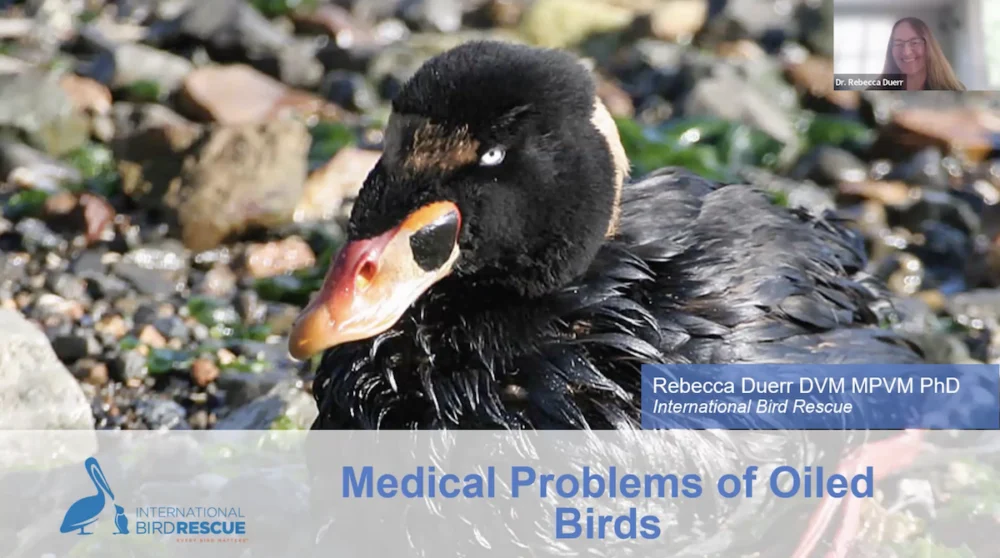
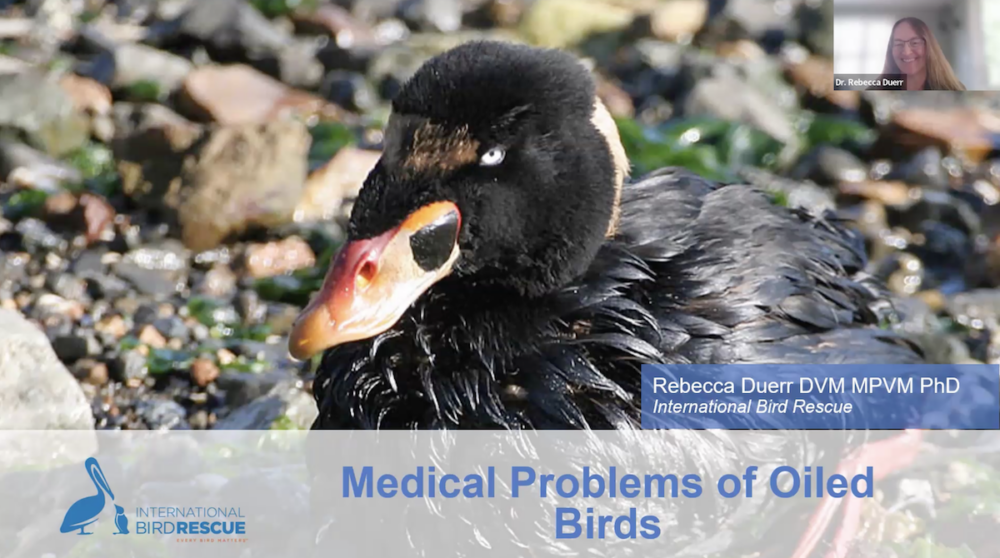
On April 21, 2026, Dr. Rebecca Duerr, DVM, MPVM, PhD, a renowned authority in avian medicine and wildlife rehabilitation, delivered a comprehensive virtual presentation to the Kansas State University (KSU) College of Veterinary Medicine Exotics Club. This educational session, facilitated through the Lafeber Company Student Program, addressed the complex medical challenges associated with treating wild birds affected by oil spills. The lecture provided a deep dive into the physiological impacts of petroleum exposure, the evolution of cleaning protocols, and the latest clinical research regarding patient management during the high-stress decontamination process.
The event served as a critical educational touchpoint for aspiring veterinarians, bridging the gap between classroom theory and the high-stakes reality of environmental disaster response. Dr. Duerr’s insights were supported by recent peer-reviewed literature, most notably a 2024 study published in the Journal of Avian Medicine and Surgery, which has begun to shift the paradigm of how avian practitioners approach the physical handling of compromised wildlife.
The Physiological Crisis of Oiled Wildlife
When a bird comes into contact with oil, the biological consequences are immediate and often catastrophic. Dr. Duerr emphasized that the primary threat is not merely toxic ingestion, but the physical destruction of the feather structure. Avian feathers are complex mechanical structures; microscopic barbs and barbules interlock to create a waterproof and airtight seal. This seal is essential for thermoregulation and buoyancy.
Petroleum products act as a solvent, breaking down the natural waxes and physical alignment of the feathers. Once this "zipper" mechanism is compromised, water reaches the bird’s skin. In aquatic species, this leads to a rapid loss of body heat, forcing the animal into a state of hypermetabolism as it attempts to maintain its core temperature. This metabolic drain quickly exhausts fat reserves, leading to emaciation and, eventually, hypothermia.
Beyond the external damage, oiled birds face severe internal complications. As they instinctively attempt to preen the oil from their feathers, they ingest toxic hydrocarbons. These substances cause acute gastrointestinal irritation, hemorrhagic enteritis, and severe organ damage, particularly to the liver and kidneys. Furthermore, volatile organic compounds (VOCs) inhaled by the birds can lead to pneumonia and neurological impairment. Dr. Duerr’s presentation highlighted that the medical management of these patients must address both the external "mechanical" failure and the internal "toxicological" crisis.
Chronology of Care: From Field to Release
The veterinary response to an oiled bird follows a strict chronological protocol designed to maximize the animal’s chances of survival. Dr. Duerr outlined a timeline that begins long before the first soap bubble touches a feather.
- Search and Collection: Field teams recover birds, which are often highly stressed and dehydrated.
- Stabilization (48 to 72 hours): This is the most critical phase. Dr. Duerr noted that washing a bird immediately upon arrival is often a "death sentence" due to the extreme stress and physiological instability of the patient. Instead, birds are given warmed intravenous or subcutaneous fluids, nutritional support, and treatments to bind ingested toxins (such as activated charcoal).
- The Wash Process: Once blood parameters (such as packed cell volume and total protein) stabilize, the bird undergoes a series of warm, soapy baths.
- Rinsing and Drying: Removing every trace of detergent is vital, as soap residue is just as damaging to waterproofing as oil.
- Conditioning: The bird is moved to outdoor pools to regain its waterproofing through natural preening and to rebuild muscle mass before being cleared for release.
Advancements in Decontamination: The 2024 Sedation Study
A focal point of the April 2026 presentation was the integration of recent scientific data into clinical practice. Dr. Duerr referenced a landmark study by Kelley et al. (2024), titled "Comparison of manual restraint with and without sedation on outcomes for wild birds undergoing decontamination," published in the Journal of Avian Medicine and Surgery.
Historically, the "wash" phase was conducted on conscious birds using manual restraint. This process is inherently stressful, often lasting 45 minutes or more, during which the bird’s heart rate and cortisol levels remain dangerously elevated. The 2024 study investigated whether midazolam-based sedation could improve outcomes.
The findings suggested that birds undergoing sedation experienced fewer "capture myopathy-like" symptoms and exhibited more stable physiological markers during the procedure. Dr. Duerr explained that by reducing the stress response, veterinarians can decrease the incidence of sudden cardiac arrest during the wash and potentially shorten the time it takes for a bird to return to normal behaviors post-decontamination. This shift toward pharmacological intervention represents a major evolution in wildlife veterinary medicine, prioritizing animal welfare and long-term survival over traditional "speed-based" cleaning methods.
The Role of the Lafeber Company Student Program
The presentation was part of an ongoing initiative by the Lafeber Company to support veterinary education. The Lafeber Company Student Program provides resources, expert speakers, and nutritional products to veterinary colleges worldwide, focusing on exotic and wild species that are often underrepresented in standard curricula.
By sponsoring Dr. Duerr’s lecture at Kansas State University, the program ensures that the next generation of veterinarians is equipped with the specialized knowledge required to handle large-scale environmental emergencies. The KSU Exotics Club, representing a cohort of students dedicated to non-traditional species, serves as a vital pipeline for future wildlife rehabilitators and conservation scientists.
Analysis of Broader Implications and Environmental Impact
The medical management of oiled birds is a microcosm of the broader challenges facing conservation medicine in the 21st century. As industrial activities continue to intersect with wildlife habitats, the frequency of "unnatural" medical emergencies—such as oil spills, plastic ingestion, and chemical runoff—is likely to persist.
Dr. Duerr’s presentation underscores the necessity of standardized, evidence-based protocols. The transition from anecdotal "rescue" methods to rigorous clinical standards (like those discussed in the 2024 sedation study) is essential for the credibility of wildlife rehabilitation. Critics of wildlife rescue often point to low survival rates in early oil spill responses (such as the 1989 Exxon Valdez spill) as a reason to question the efficacy of these efforts. However, modern veterinary techniques have significantly improved release rates and post-release survival, proving that with the right medical intervention, these animals can successfully reintegrate into the breeding population.
Furthermore, the data collected during these medical interventions provides invaluable insights into ecosystem health. Oiled birds act as sentinels; the toxins found in their blood and tissues offer a direct look at the chemical load present in the marine or riparian environments they inhabit.
Conclusion and Future Outlook
The virtual session concluded with a discussion on the future of avian toxicology and the ongoing need for interdisciplinary collaboration. Dr. Duerr emphasized that while the veterinary community has made great strides in treating the physical symptoms of oiling, the ultimate goal remains the prevention of such disasters.
The materials provided to the KSU students, including a detailed PDF of the PowerPoint presentation and a recording of the lecture, serve as a permanent resource for the university’s veterinary library. These resources detail the specific soap concentrations, water temperatures (typically 102–105°F), and soft-tissue handling techniques that are standard in modern oiled-bird response.
As veterinary medicine continues to evolve, the integration of sedation, advanced fluid therapy, and better understanding of avian physiology will remain at the forefront of wildlife rescue. The collaboration between educational institutions like Kansas State University, industry leaders like the Lafeber Company, and field experts like Dr. Rebecca Duerr ensures that when the next environmental crisis occurs, the veterinary community will be prepared to respond with scientific precision and compassion.
The April 2026 lecture stands as a testament to the importance of continuous learning in the veterinary field. By analyzing past failures and embracing new research—such as the 2024 study on sedation—practitioners are moving toward a future where the "medical problems of oiled birds" are met with increasingly sophisticated and successful clinical solutions.

