


The photography accessory market has witnessed a significant shift toward magnetic mounting systems over the past several years, driven by a demand for speed and efficiency in the field. Maven Filters, a company that has carved out a niche for itself through innovative, color-coded filter systems, has officially announced its latest contribution to this evolution: the Iron Slider Gradient Adapter. Described by the manufacturer as the most flexible method currently available for controlling graduated neutral density (GND) filters, this new system aims to bridge the gap between the portability of circular filters and the adjustability of traditional square filter holders. By combining a specialized magnetic adapter with Maven’s existing 95mm magnetic filter line, the Iron Slider provides photographers with a streamlined workflow for managing high-contrast lighting conditions, particularly in landscape photography.
Technical Architecture and Design Philosophy
The Iron Slider Gradient Adapter is engineered to address a long-standing limitation of circular graduated filters. Traditionally, circular GND filters are screwed directly onto the lens thread, which fixes the transition line—the area where the filter fades from dark to clear—directly in the center of the frame. This forces photographers to compose their shots around the filter, rather than positioning the filter to suit the composition. The only alternative has been the use of large, 100mm or 150mm square filter systems, which require bulky holders and expensive rectangular glass sheets.
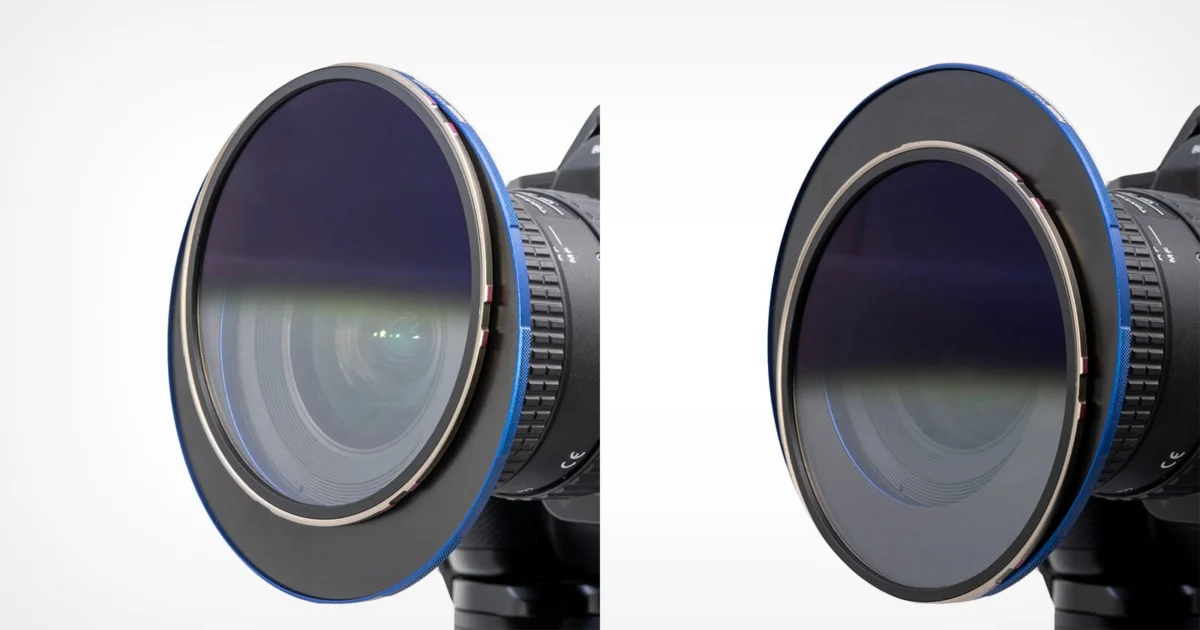
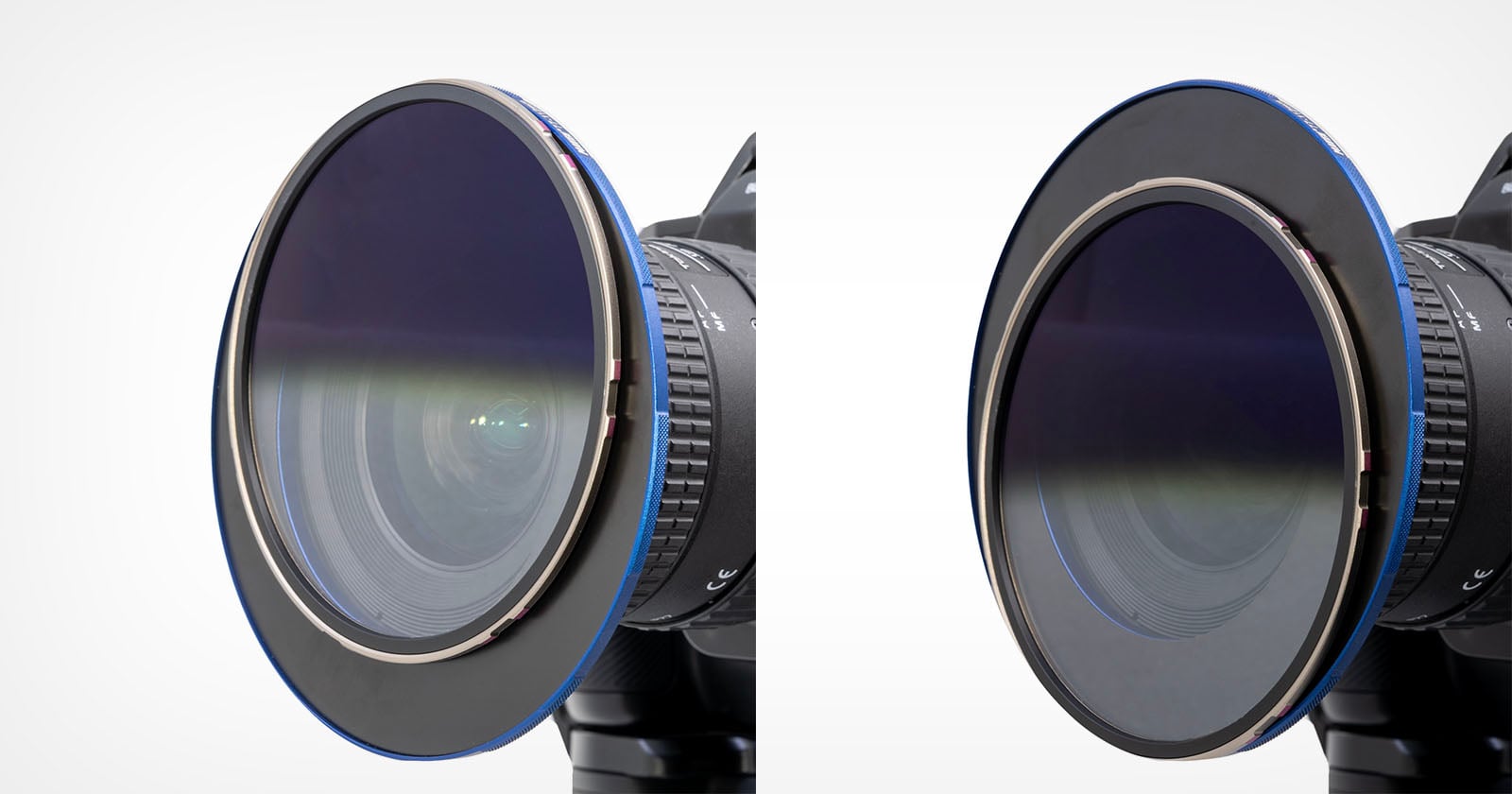
The Maven Iron Slider functions as an oversized magnetic mounting plate. It is currently available in three primary thread sizes: 72mm, 77mm, and 82mm. While the interior threads match these common lens diameters, the exterior dimensions of the adapter are significantly wider, mimicking the surface area of a much larger step-up ring. This intentional "over-sizing" creates a broad magnetic track. When a 95mm Maven magnetic filter is snapped onto the adapter, the difference in size—between the 72-82mm lens opening and the 95mm filter—allows for substantial vertical movement. Photographers can slide the filter up or down across the face of the lens to precisely align the gradient transition with the horizon line of their scene.
Furthermore, the magnetic nature of the connection allows for effortless 360-degree rotation. This is critical for landscape compositions where the horizon is not perfectly horizontal, such as mountain ranges, coastal cliffs, or diagonal architectural lines. The Iron Slider effectively provides the mechanical freedom of a square filter holder but maintains the low profile and ease of use associated with magnetic circular systems.
The Historical Context of Graduated ND Filters
To understand the significance of the Iron Slider, one must look at the historical role of Neutral Density filters in the progression of photographic technology. During the era of film photography, Graduated ND filters were indispensable tools. Because film has a fixed dynamic range, a bright sky would often be completely "blown out" (rendered as pure white) if the photographer exposed for the darker foreground. Conversely, exposing for the sky would leave the foreground in deep, recoverable shadow. The GND filter solved this by physically darkening the top half of the frame, allowing the camera to capture a balanced exposure in a single frame.
With the advent of the digital revolution, many industry pundits predicted the demise of physical GND filters. Technologies such as High Dynamic Range (HDR) bracketing and advanced post-processing techniques like luminosity masking allowed photographers to blend multiple exposures to achieve a balanced look. However, the professional landscape photography community has remained largely loyal to physical filters for several practical reasons.
First, "getting it right in camera" saves significant time in the post-production workflow. Second, a single-exposure capture avoids the "ghosting" artifacts often seen in HDR images when movement is present in the scene, such as swaying trees or flowing water. Third, many high-end photography competitions and editorial standards require a single-frame capture to ensure the authenticity of the scene. Maven’s Iron Slider is positioned as a tool for these purists and professionals who prioritize optical solutions over software-based corrections.
Chronology of Development and Brand Background
The release of the Iron Slider is the latest chapter in the growth of Maven Filters, a brand founded by Michael Andrew, also known in the industry as "Michael The Maven." The company first gained significant traction through successful crowdfunding campaigns on platforms like Kickstarter, where it introduced the concept of color-coded magnetic filters. By assigning specific colors to different filter types—such as red for a 10-stop ND or blue for a Circular Polarizer—Maven addressed a common pain point: the difficulty of identifying filters in low-light conditions or while wearing gloves.
The development of the Iron Slider appears to be a direct response to user feedback regarding the limitations of the initial magnetic circular GND filters. While the original magnetic system was fast, it still suffered from the "centered horizon" problem common to all circular filters. The engineering of the Iron Slider represents a mid-cycle innovation designed to expand the utility of the existing 95mm filter ecosystem, ensuring that users who invested in Maven’s large-diameter glass can now use those same filters with greater compositional flexibility.
Market Comparison and Economic Analysis
The Maven Iron Slider enters a competitive landscape populated by established players such as Lee Filters, NiSi, Benro, and PolarPro. Each of these companies offers a different take on the "perfect" filter system.
- Traditional Square Systems (Lee/NiSi): These systems are the gold standard for flexibility. They allow for stacking multiple filters and precise positioning. However, they are notoriously "fiddly," requiring the attachment of a mounting ring, then the holder, and then the sliding of glass plates into slots. A full kit can easily exceed $500 to $800.
- Standard Magnetic Circular Systems (PolarPro/Kase): These offer incredible speed but usually lack the ability to slide a graduated filter vertically. They are ideal for standard ND filters but less effective for GND filters.
- The Maven Hybrid Approach: The Iron Slider attempts to occupy the middle ground. The adapter itself is priced competitively, starting at $62 for the 72mm version and reaching $69 for the 82mm version. When paired with a 95mm magnetic filter (which starts at $139), the total investment for a single-filter setup is approximately $200. This is significantly more affordable than a high-end square filter kit while offering nearly identical functionality for the vast majority of landscape scenarios.
From a data perspective, the use of 95mm filters on 72mm or 77mm lenses also provides a technical advantage: the reduction of vignetting. By using a filter that is substantially larger than the lens diameter, the edges of the filter frame are kept far away from the optical path, even when using wide-angle lenses—a common issue with standard screw-on filters.
Official Positioning and Industry Reactions
In statements accompanying the product launch, Maven Filters emphasized the ergonomic benefits of the system. The company noted that the Iron Slider was designed to be "the most flexible way to control your graduated ND filters," focusing on the tactile experience of the photographer. Early impressions from the field suggest that the magnetic strength is a key point of discussion. For a sliding system to be effective, the magnets must be strong enough to hold the 95mm glass securely in place against wind or accidental bumps, yet smooth enough to allow for intentional adjustment.
Industry analysts suggest that the Iron Slider may also find a secondary market among videographers. While GND filters are primarily a tool for still photography, the ability to quickly rotate a polarizer or slide a gradient can be useful in run-and-gun documentary filmmaking where lighting conditions change rapidly and there is no time to set up a matte box.
Broader Implications for the Photography Industry
The introduction of the Iron Slider reflects a broader trend in the camera accessory industry: the "magnetization" of the workflow. As camera bodies become faster and more automated, photographers are looking for manual accessories that don’t slow them down. The shift away from threaded filters toward magnetic ecosystems is likely permanent, as the benefits of speed and the reduction of cross-threading risks are too significant to ignore.
Moreover, the Iron Slider highlights a shift in how companies approach product compatibility. By creating an adapter that utilizes the 95mm filter size—a size often reserved for massive telephoto lenses—Maven is encouraging photographers to buy "up" in filter size. This "one-size-fits-all" strategy, enabled by step-up adapters and sliding plates, allows a photographer to buy one high-quality set of glass that works across their entire lens collection, from small primes to large zooms.
Conclusion and Availability
The Maven Iron Slider Gradient Adapter is currently available for purchase through the Maven Filters website and authorized retailers. With prices set at $62 (72mm), $65 (77mm), and $69 (82mm), it represents a tactical investment for landscape photographers looking to streamline their gear. The 95mm magnetic filters required for the system are sold separately, with various densities and gradient types available to suit different lighting environments.
As digital sensors continue to improve in dynamic range, the physical filter remains a vital tool for those who demand the highest level of optical quality and compositional control. The Iron Slider does not just offer a new way to hold a piece of glass; it represents a refined approach to the age-old challenge of balancing light, proving that even in a world of advanced software, there is no substitute for the precision of a well-designed mechanical tool.

