


The perception of exercise has evolved dramatically since the 1980s, shifting from a primary focus on aesthetics to a recognized necessity for overall health. This paradigm shift is equally applicable to our pet rats, whose physical and mental well-being is significantly enhanced by regular activity. While the image of a rat in a tiny leotard might be amusing, the reality of ensuring their vitality requires a more nuanced approach, integrating various methods to encourage movement and prevent the health issues associated with a sedentary lifestyle.
The Crucial Benefits of Exercise for Rats
Regular physical activity is fundamental to a rat’s physiological functioning, playing a vital role in disease prevention and maintaining a healthy weight. Obesity in rats, much like in humans, places considerable strain on their joints and muscles. This excess weight can predispose them to a range of serious health complications, including hind leg degeneration, cardiovascular issues, diabetes, and the development of lipomas, which are benign fatty tumors.
For owners concerned about their rat’s physique, a critical first step involves a thorough evaluation of their diet and daily exercise regimen. Understanding the potential causes of weight gain, such as dietary habits and portion control, is paramount. Beyond weight management, exercise is a cornerstone of a rat’s mental health. A lack of stimulation can lead to boredom, anxiety, depression, and the manifestation of undesirable behavioral issues, particularly given that rats often spend a significant portion of their lives within the confines of a cage. It is imperative to note that this discussion pertains to healthy rats without pre-existing mobility limitations due to age, illness, or injury. For rats with such conditions, consulting a veterinarian is essential to tailor exercise plans that meet their specific needs.

Fostering Activity: No Gyms Required for Rats
Unlike their wild counterparts, domesticated rats tend to exhibit a more sedentary disposition. Consequently, their owners bear the responsibility of actively facilitating opportunities for movement. The good news is that this does not necessitate the acquisition of miniature exercise equipment or elaborate training routines. Rats do not possess sweat glands, a biological difference that underscores their unique physiological needs when it comes to physical exertion.
The core requirement is to provide daily opportunities and motivation for them to engage their bodies and move beyond their preferred resting spots, such as hammocks. This can be achieved through a variety of engaging activities, including exploration of new environments, interactive play with toys, the use of puzzle feeders, the creation of agility courses, and even the clever use of food as a motivator.
Enhancing Activity Within the Cage Environment
To combat the tendency for rats to become overly lethargic, especially as they age, providing more than just basic bedding and cage accessories is crucial. While multi-level cage designs are beneficial, they are insufficient on their own to guarantee consistent activity. The introduction of specific items that actively promote movement is essential.
Exercise Wheels: A Potential Boon for Rat Fitness
Exercise wheels can be a valuable addition to a rat’s environment, though their effectiveness can vary. Some rats readily embrace running on a wheel, while others may repurpose it for sleeping. As a rat’s equivalent of a treadmill, a well-chosen wheel is worth considering, provided it is safe and appropriately sized. Recommended brands often include the Wodent Wheel or the Silent Spinner, with newer options potentially available.
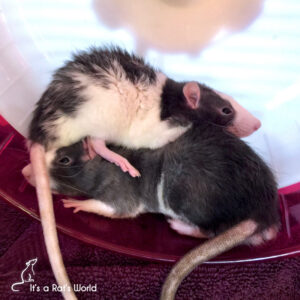
It is vital that the wheel is large enough to accommodate adult rats comfortably, typically an X-large size. The material should be solid, without any bars or gaps that could trap a tail or foot. Furthermore, the wheel must be securely fastened to the cage or possess a stable stand, ensuring there is no space between the wheel and the cage bars where a rat’s head or other body parts could become entrapped. Introducing a wheel to young rats is advisable, as older rats, particularly males, may develop a preference for using it as a resting place or simply ignore it altogether.
Interactive Cage Decor: Stimulating Movement Through Play
Many rat owners creatively incorporate interactive items into their cages to keep their pets engaged. This often involves a combination of commercially available pet toys and everyday household objects repurposed as climbing structures, bridges, tunnels, and dig boxes.
For instance, a wooden bird perch can be adapted as a toilet paper holder, allowing rats to engage in the enjoyable activity of "redecorating" with the paper. Modifying cage ramps to require more effort to navigate can also encourage increased movement. These modifications are particularly effective for younger, more mobile rats, while senior rats may require different approaches to accommodate their specific needs.
Beyond the Cage: Encouraging Out-of-Cage Activity
Introducing a change of scenery is a highly effective method for stimulating rat activity. Their innate curiosity and desire to explore new spaces and interact with novel objects serve as powerful motivators for engagement.

Free-Ranging: A World of Exploration
Most rats relish the opportunity to explore outside their cage, even those with a naturally laid-back demeanor. This does not necessitate unrestricted access to the entire home. Instead, designating specific times and a thoroughly rat-proofed room can provide a safe and enriching environment. During these periods, incorporating items that encourage continuous activity is key.
A common practice involves utilizing a rat-proofed bathroom, equipped with igloos, tubes, cardboard boxes, and other items for climbing and exploration. Owners can also actively participate by serving as a "rat jungle gym." A particularly engaging activity, often referred to as "TPing," involves rats manipulating toilet paper rolls. This can lead to extended periods of running, climbing, and problem-solving, fostering both physical exertion and cognitive engagement. Providing an extra roll of toilet paper can turn this into a recurring source of entertainment. Comprehensive guidelines for safe and effective free-ranging are available in dedicated resources.
Playpens and Dedicated Play Areas: Controlled Environments for Fun
A designated play area for rats serves as their equivalent of a schoolyard recess, offering a safe and contained space to expend energy. These can be commercially available structures or custom-built setups on protected surfaces within the home. While store-bought floor playpens can be utilized, rats are often adept at finding ways to escape.
To maximize the exercise benefits of a play area, it should be equipped with stimulating elements. Puzzle toys or dig boxes are excellent choices, not only promoting physical movement but also providing crucial mental stimulation. Items that facilitate climbing or entering and exiting, such as igloos, tunnels, or floor-standing wheels, are also highly recommended. Creativity is encouraged, with everyday items like small trash cans filled with paper, tissue, and cardboard offering engaging opportunities for rats to empty and relocate materials.

To maintain sustained interest, it is important to offer a variety of items and rotate them regularly, perhaps on a weekly or bi-weekly basis. This prevents monotony and keeps the environment novel and exciting. For those who opt to build their own play areas, consider designs that double as a "rat gym." For example, a structure constructed from shallow storage containers connected by plastic piping can incorporate thinner pipes as balance beams and larger pipes as internal tunnels, creating a multi-faceted play experience.
Engaging Toys: Interactive Play for Physical Activity
Direct interaction with rats using safe pet toys can be highly effective. Rolling cat toys that can be chased or wand-style toys with feathers attached by strings can elicit enthusiastic responses, as most rats enjoy "attacking" feathers.
Agility Courses: Advanced Training and Exercise
For owners seeking a more ambitious approach, setting up an agility course offers a significant challenge and promotes both exercise and learning. Resources and examples of rat agility courses are widely available online, often showcasing rats not only engaging in strenuous activity but also learning new tricks simultaneously.
Leveraging Treats to Motivate Exercise
As rats age, their activity levels naturally decrease, with male rats, in particular, often becoming less energetic, especially after neutering. While this tendency might be seen as endearing, it is crucial to maintain their physical health. The following strategies utilize food as a powerful motivator to encourage activity.
Making Them Work for Their Food
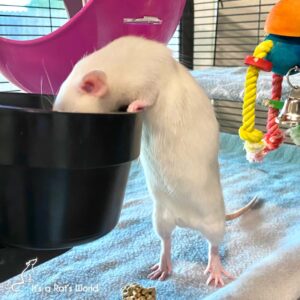
The use of specialized food crocks, foraging wheels, or treat dispensers necessitates greater effort from the rat to access their meals. If a food dish is placed directly on the cage floor, a rat may simply sit beside it and eat until satisfied. However, if the food dish is attached to the side of the cage a few inches above the floor, the rat must stand and stretch to reach each bite, thus incorporating physical exertion. Foraging wheels require even more time and effort to extract food, further promoting activity.
The Fun of "Pea Fishing"
A simple yet highly effective activity is "pea fishing." This requires a heavy, tip-proof food container, water, and frozen peas. Rats exhibit a strong natural inclination to "fish" for peas, and even initial hesitation often gives way to enthusiastic efforts to retrieve them. When multiple rats participate, the competitive aspect of vying for peas further increases their physical exertion, effectively burning calories.
Acknowledging Individual Differences in Rats
It is a common misconception that overweight rats are necessarily inactive. Personal observations suggest that genetics can play a significant role in a rat’s body composition. Some of the author’s most robust rats were consistently active and allowed free-range throughout the house, yet still maintained a considerable weight, independent of overeating.
In instances of significant weight issues, consulting a veterinarian is highly recommended. They can assist in determining whether the weight gain is attributable to a health condition, dietary imbalance, or if a more structured exercise plan is warranted.
Navigating the demands of modern life can make it challenging to consistently meet a pet rat’s daily exercise requirements. However, by incorporating a variety of methods that encourage movement throughout the day, owners can significantly contribute to their rats’ overall health and happiness.

