


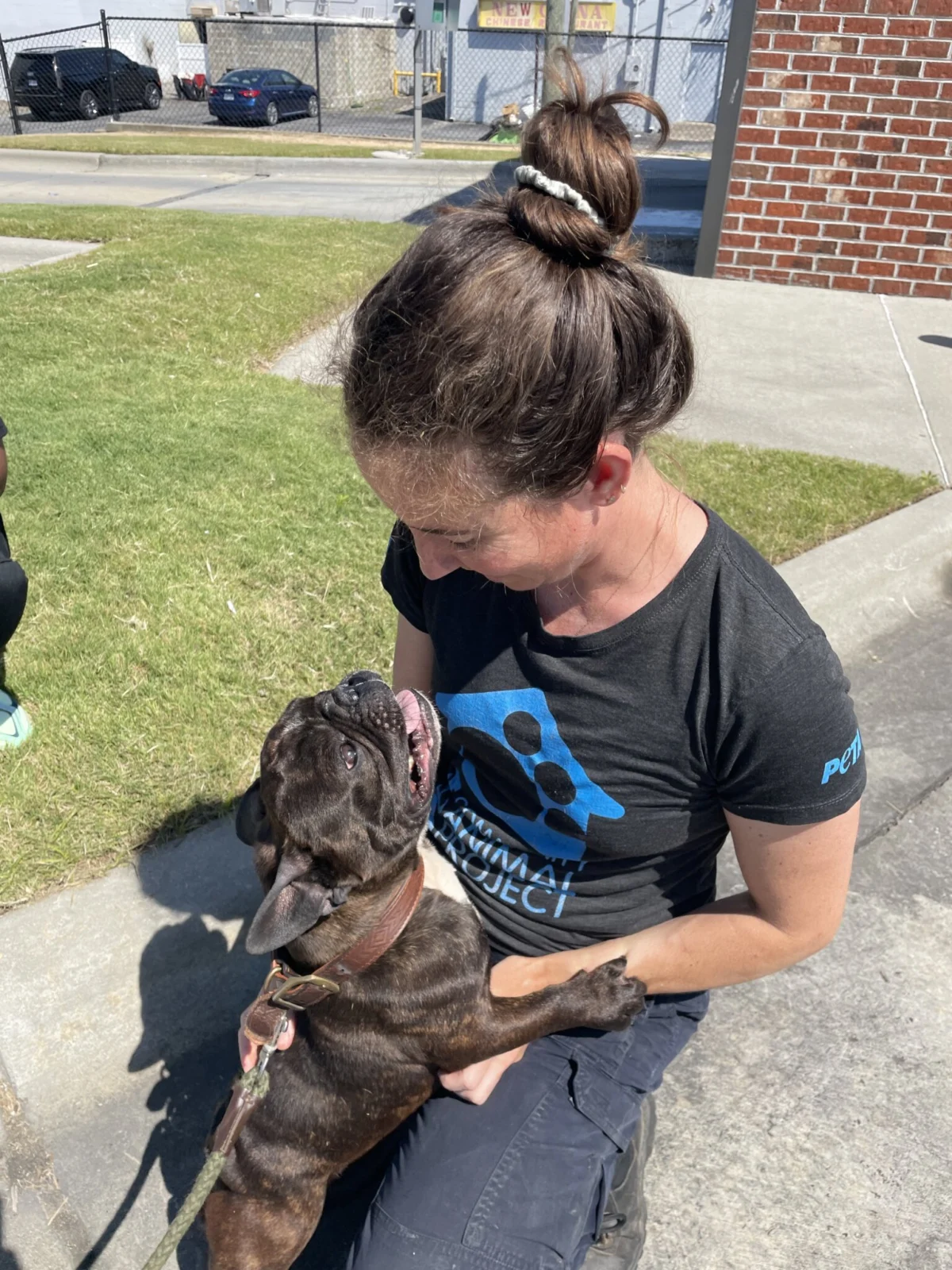
The animal welfare organization People for the Ethical Treatment of Animals (PETA) has recently intensified its advocacy against the commercial breeding of brachycephalic dogs, centering its campaign on the rescue and rehabilitation of a two-year-old French bulldog named Pierre. Pierre’s journey from a commercial breeder to a series of unstable homes, and finally into the care of animal welfare specialists, serves as a poignant case study for the broader issues plaguing the pet industry. The organization is using Pierre’s story to shed light on the physical suffering inherent in "breathing-impaired breeds" (BIBs) and the psychological toll of restrictive confinement practices such as crating.
Pierre, a 25-pound brindle French bulldog, was surrendered to PETA’s Norfolk, Virginia, headquarters late last month by an owner who felt unable to provide the specialized care and environment the dog required. According to PETA fieldworkers, Pierre’s background is emblematic of the struggles faced by many high-demand "purebred" dogs. Born into a system that prioritizes aesthetic traits—specifically the flat, "smushed" face popular in French bulldogs—Pierre arrived in the world with significantly compromised anatomy. This physical structure, while meeting certain kennel club standards, often results in a lifetime of respiratory distress.
The Chronology of a Rescue: Pierre’s Journey to Stability
Pierre’s life began under the auspices of a commercial breeder, where he was produced to meet the high market demand for French bulldogs, a breed that has consistently topped the American Kennel Club’s (AKC) most popular breeds list in recent years. Despite his pedigree, Pierre’s early life was marked by instability. He was moved through several households, a common occurrence for brachycephalic breeds when owners realize the significant medical and behavioral demands of the dogs.
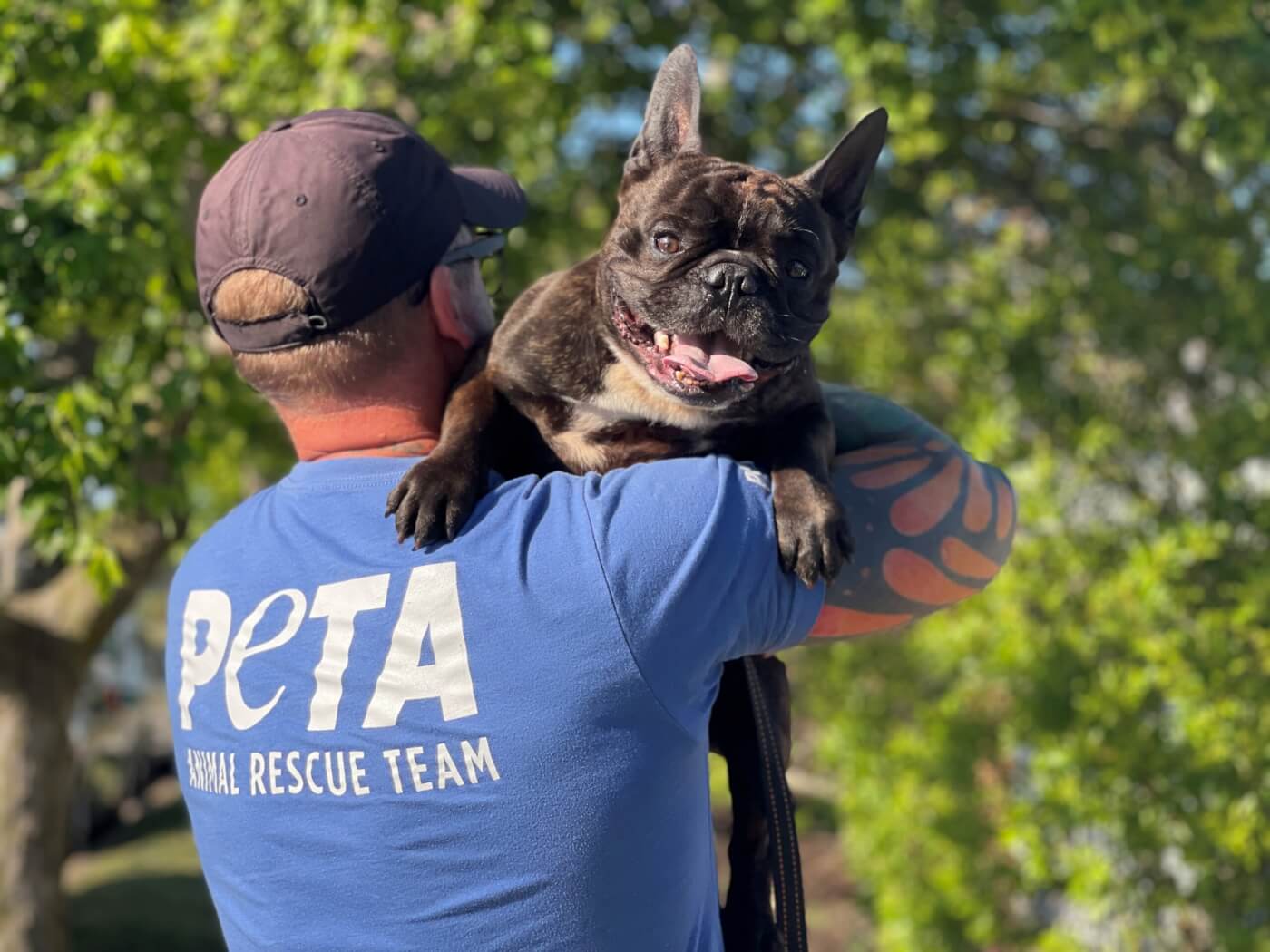
In at least one of these previous homes, Pierre was subjected to frequent crating. PETA maintains a strict policy against crating, arguing that it is a form of intensive confinement that can lead to muscle atrophy, psychological distress, and the exacerbation of anxiety. For a dog like Pierre, who already struggled with restricted airflow, the stress of confinement can further complicate respiratory function.
The turning point for Pierre occurred when his most recent owner reached out to PETA’s Community Animal Project. Recognizing that Pierre required both medical intervention and a highly informed permanent home, the owner surrendered him to the organization’s shelter. Pierre was immediately placed into a foster home with a PETA veterinary technician who specializes in the care of breathing-impaired breeds. This transition marked the beginning of a comprehensive rehabilitation plan designed to address both his immediate health needs and his long-term quality of life.
The Medical Reality of Breathing-Impaired Breeds (BIBs)
The primary concern for Pierre, and the focus of PETA’s broader educational campaign, is Brachycephalic Obstructive Airway Syndrome (BOAS). This condition is the result of selective breeding for short muzzles and flat faces, which causes the soft tissues of the head to become crowded. For Pierre, this has resulted in stenotic nares (narrowed nostrils) and an elongated soft palate, both of which obstruct the flow of air to the lungs.
Veterinary experts note that the snorting, wheezing, and heavy panting often considered "cute" or "characteristic" of French bulldogs are actually signs of air hunger. To mitigate these issues, Pierre is scheduled to undergo a series of surgical procedures, including a rhinoplasty to widen his nostrils. This surgery is intended to increase the volume of air he can inhale, though it cannot fully correct the internal anatomical distortions caused by his breeding.
In addition to respiratory issues, French bulldogs are genetically predisposed to Intervertebral Disc Disease (IVDD), a condition where the discs between the vertebrae bulge or burst into the spinal cord space. This can lead to pain, nerve damage, and even paralysis. The financial burden of managing these conditions is significant; BOAS surgery can cost between $2,000 and $5,000, while IVDD treatments can exceed $10,000 depending on the severity. PETA emphasizes that prospective owners must be prepared for these "built-in" medical expenses when considering the adoption of a BIB.
Legislative Context and Global Trends in Breeding
The plight of dogs like Pierre has sparked a global conversation regarding the ethics of breeding for extreme physical traits. Several European nations have already taken legislative action to curb the production of dogs with compromised health. For instance, the Netherlands has implemented strict regulations that effectively ban the breeding of dogs whose snouts are less than a third of the length of their skulls. Similarly, Norway’s district court ruled in 2022 that the breeding of British Bulldogs and Cavalier King Charles Spaniels violated the country’s Animal Welfare Act, though the ruling was later nuanced on appeal to allow for scientifically managed "out-breeding" programs.
In the United States, the city of Ojai, California, became a pioneer in animal welfare legislation by passing an ordinance that bans the sale and commercial breeding of breathing-impaired dogs and cats. PETA has been a vocal supporter of such measures, advocating for a shift away from "purebred" aesthetics toward "health-first" breeding or, preferably, the adoption of the millions of animals currently in shelters.
The Ethical Debate: Buying vs. Adopting
PETA’s stance on Pierre’s case is clear: the organization argues that the commercial trade in animals is a major contributor to the pet overpopulation crisis. According to the American Society for the Prevention of Cruelty to Animals (ASPCA), approximately 6.3 million companion animals enter U.S. animal shelters every year. Of these, roughly 3.1 million are dogs.
PETA representatives state that every time a dog is purchased from a breeder or a pet store, a dog in a shelter loses the opportunity for a home. In the case of French bulldogs, the high price tag—often ranging from $3,000 to $10,000—creates a financial incentive for breeders to continue producing dogs with known health defects. The organization advocates for a "rescue-only" approach, encouraging enthusiasts of specific breeds to seek out breed-specific rescues or wait for those breeds to appear in local shelters.
Implications for Prospective Guardians
As Pierre prepares for his corrective surgery and subsequent search for a "forever home," PETA has established rigorous criteria for his potential adopters. The organization is seeking individuals with documented experience in managing brachycephalic breeds. The ideal guardian must understand the nuances of BIB care, such as the necessity of keeping the dog in a temperature-controlled environment to prevent heatstroke—a common killer of flat-faced dogs who cannot pant efficiently enough to cool themselves.
Furthermore, Pierre’s future family must commit to a no-crate lifestyle, ensuring he has the freedom to move and interact within the home. Despite his physical limitations, Pierre is described as having a "big, sassy personality" and is reported to be compatible with children, cats, and other dogs.
Analysis of Broader Animal Welfare Trends
The case of Pierre reflects a growing tension between traditional kennel club standards and modern veterinary ethics. As genomic testing and veterinary science provide more data on the suffering caused by extreme phenotypes, the "breed standard" is increasingly coming under fire. Critics argue that the prioritization of "type" over "function" is a form of institutionalized animal cruelty.

From a journalistic perspective, the story of Pierre is not just a human-interest piece about a rescued dog; it is an indicator of a shifting cultural landscape. Consumers are becoming more aware of the "cost" of their pets, not just in dollars, but in the biological toll paid by the animals themselves. The move toward legislative bans in Europe and specific U.S. municipalities suggests that the era of unregulated breeding for extreme aesthetics may be nearing its end.
PETA’s involvement in Pierre’s relocation and medical care also highlights the role of large-scale animal rights organizations in direct rescue work. While often known for their provocative public campaigns, projects like the Community Animal Project demonstrate the practical, boots-on-the-ground efforts to manage the fallout of the commercial pet industry.
As Pierre’s surgery approaches, he remains under the watchful eye of his foster guardian in Virginia. Once he has recovered from his "nose job" and is fully vaccinated and neutered, PETA will begin the process of transporting him to a permanent home, likely along the East Coast. His story remains a testament to the resilience of animals and a stern warning about the consequences of human-driven genetic selection. For Pierre, the goal is a life where he can finally do something most dogs take for granted: breathe deeply and freely.

