


Oregon, a state celebrated for its diverse landscapes ranging from rugged coastlines to dense forests and arid eastern plains, is a haven for a remarkable array of avian predators. Beyond its well-known attractions like the Witch’s Castle and Thor’s Well, Oregon boasts a rich biodiversity, with approximately 120 designated Important Bird Areas supporting a staggering 544 bird species. Among these feathered inhabitants, birds of prey, or raptors, hold a special place, embodying the wild spirit of the Pacific Northwest. This article delves into the fascinating world of Oregon’s most prominent birds of prey, exploring their habitats, hunting strategies, ecological significance, and the conservation efforts that aim to protect them.
Birds of prey are apex predators, crucial for maintaining the delicate balance of ecosystems. Their presence indicates a healthy environment, as they rely on robust prey populations. Raptors, characterized by their sharp talons, hooked beaks, and exceptional eyesight, are skilled hunters that play a vital role in controlling populations of smaller animals, insects, and even carrion. Oregon’s varied topography provides ideal conditions for a wide range of these magnificent creatures, from the smallest falcon to the largest eagle.
The Ferruginous Hawk: Oregon’s Largest Hawk
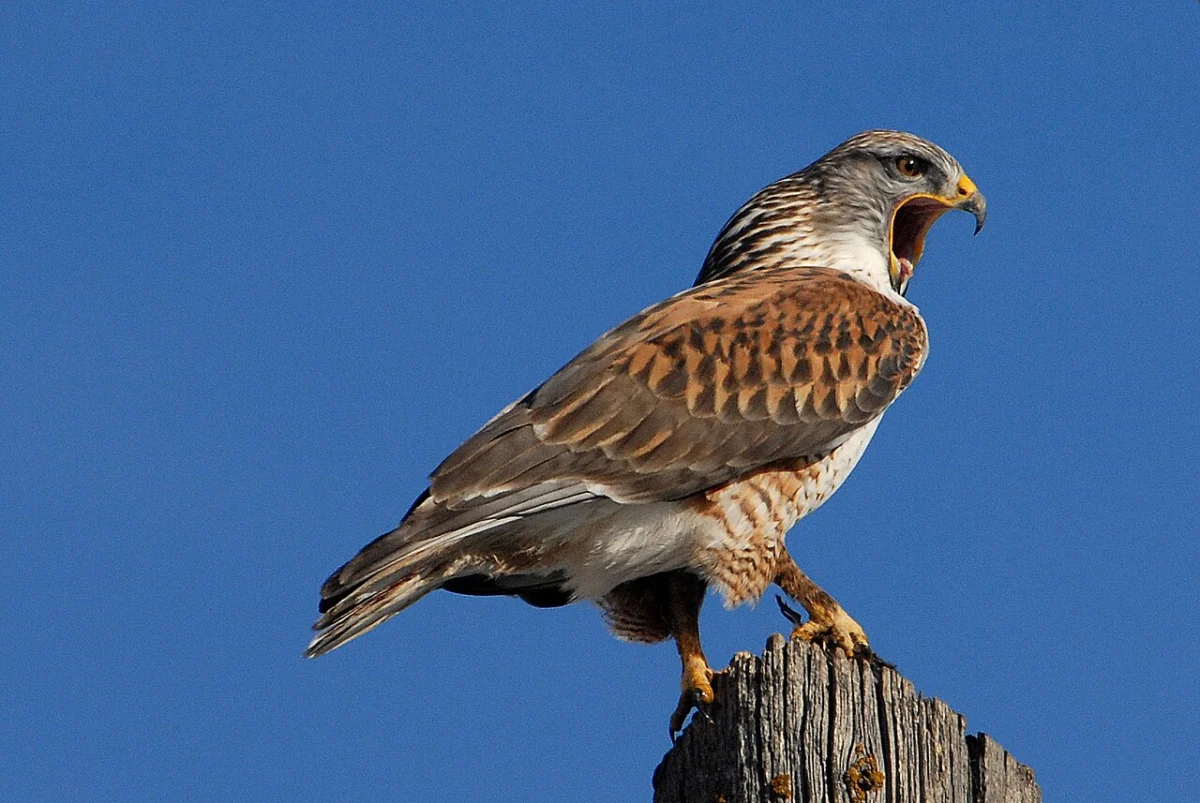
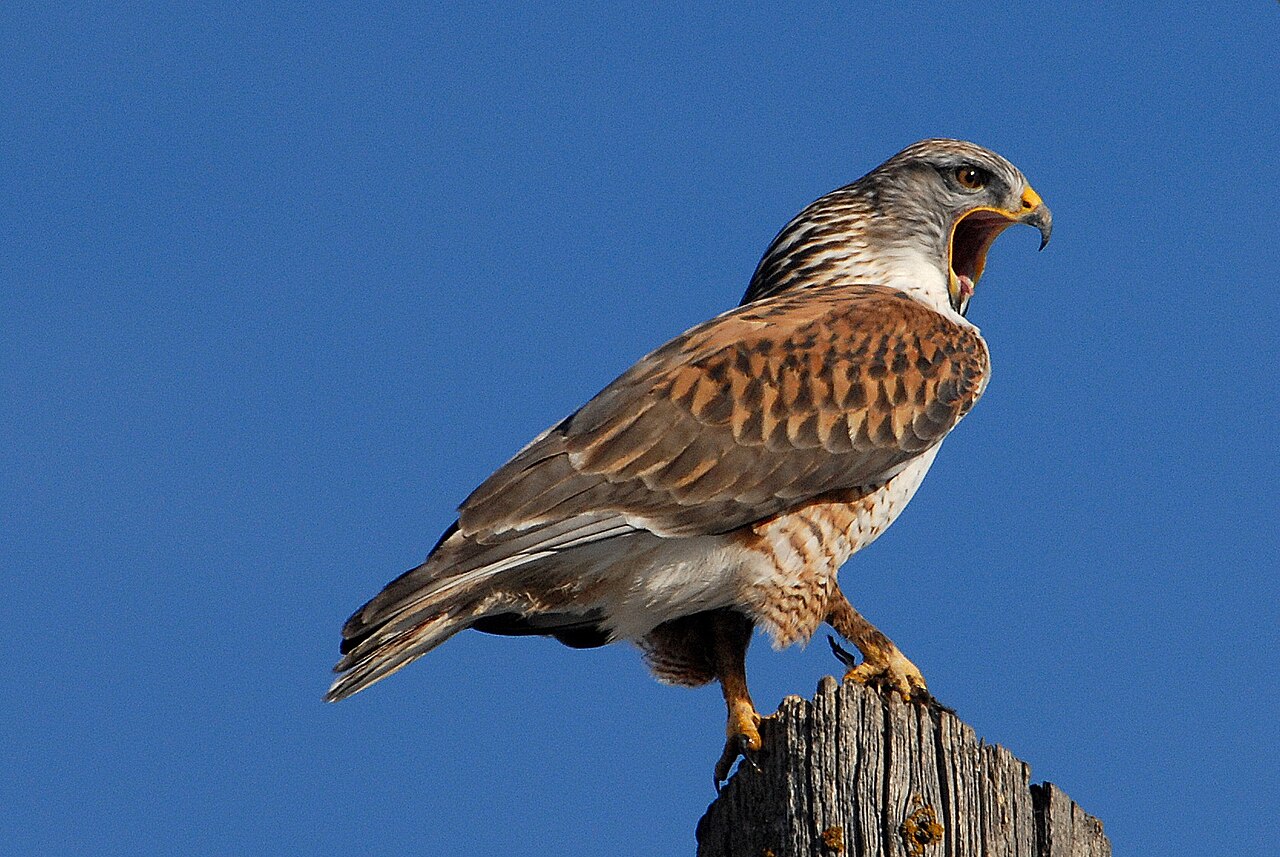
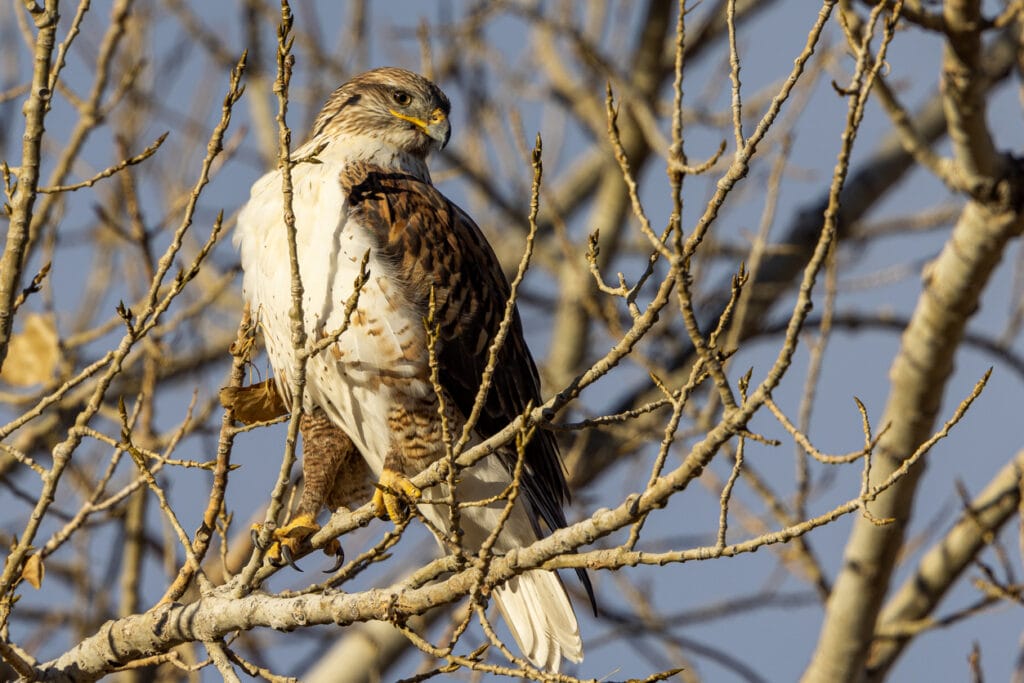
The Ferruginous Hawk (Buteo regalis) stands as the largest hawk species found in Oregon. While not as commonly sighted in the open landscapes east of the Cascade Mountains, it can be observed along the foothills of the Blue Mountains and in the northern reaches of Malheur County. Its status as a sensitive species on the Oregon Conservation Strategy Species list underscores the importance of its protection.
Light-morph Ferruginous Hawks are more prevalent in Oregon than their dark-morph counterparts. These birds exhibit striking white underparts adorned with subtle markings, contrasted by rusty-colored backs and wings. Their hunting repertoire is diverse, employing four distinct methods: chasing prey on the ground, ambushing from a perch, searching from the air, or hovering to pinpoint targets. Their diet primarily consists of small mammals, with cottontail and jackrabbits being favored prey. However, they are opportunistic feeders, occasionally supplementing their diet with reptiles, amphibians, and other birds. The conservation of their grassland and shrub-steppe habitats is critical for the survival of this impressive raptor.
The Golden Eagle: A Symbol of North American Wilderness
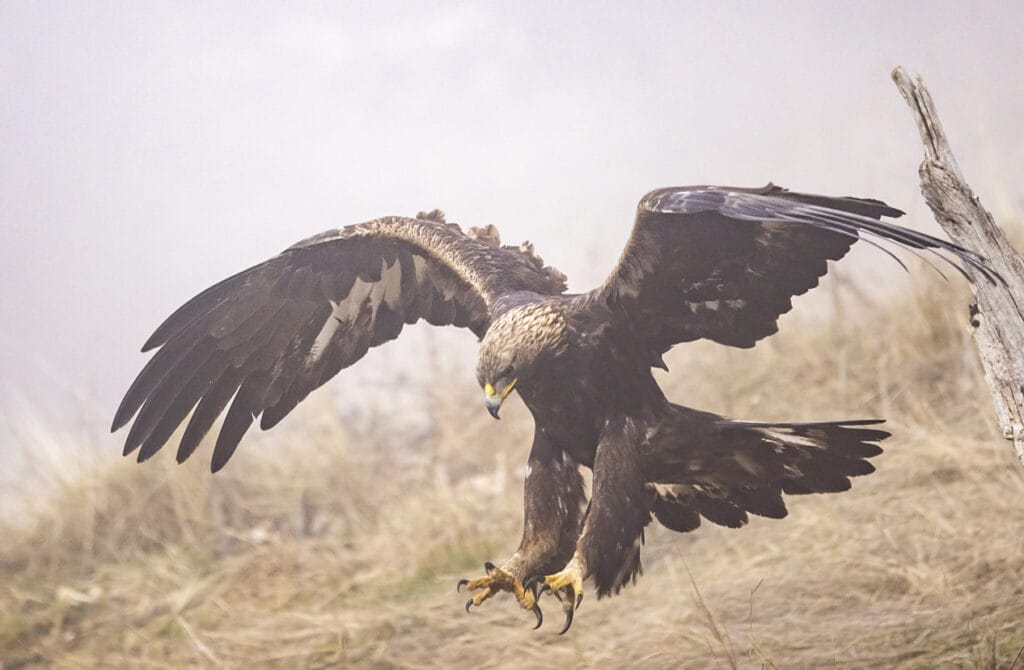
The Golden Eagle (Aquila chrysaetos) is a familiar and majestic sight in the eastern counties of Oregon, east of the Cascade range. As one of North America’s most recognized raptors, it embodies the grandeur of wild spaces. Golden Eagles are predominantly brown, with a distinctive golden sheen gracing their heads and necks. They are often seen soaring alone, though they sometimes hunt in pairs. Their hunting strategies typically involve attacking prey from a perch or capturing it on the ground.
Beyond its ecological role, the Golden Eagle holds significant cultural importance, serving as the national emblem for several countries, including Mexico, Austria, Kazakhstan, Germany, and Albania. This widespread symbolism highlights its universal appeal as a symbol of power and freedom. These eagles prefer open and semi-open country, generally avoiding heavily developed areas and dense, unbroken forests. Their diet consists mainly of small to medium-sized mammals, such as prairie dogs, squirrels, hares, rabbits, and even domestic dogs. In some instances, they have been known to take larger prey, including wild ungulates and livestock, though this is less common. The preservation of vast, open territories is paramount for sustaining Golden Eagle populations.
The California Condor: A Triumph of Conservation
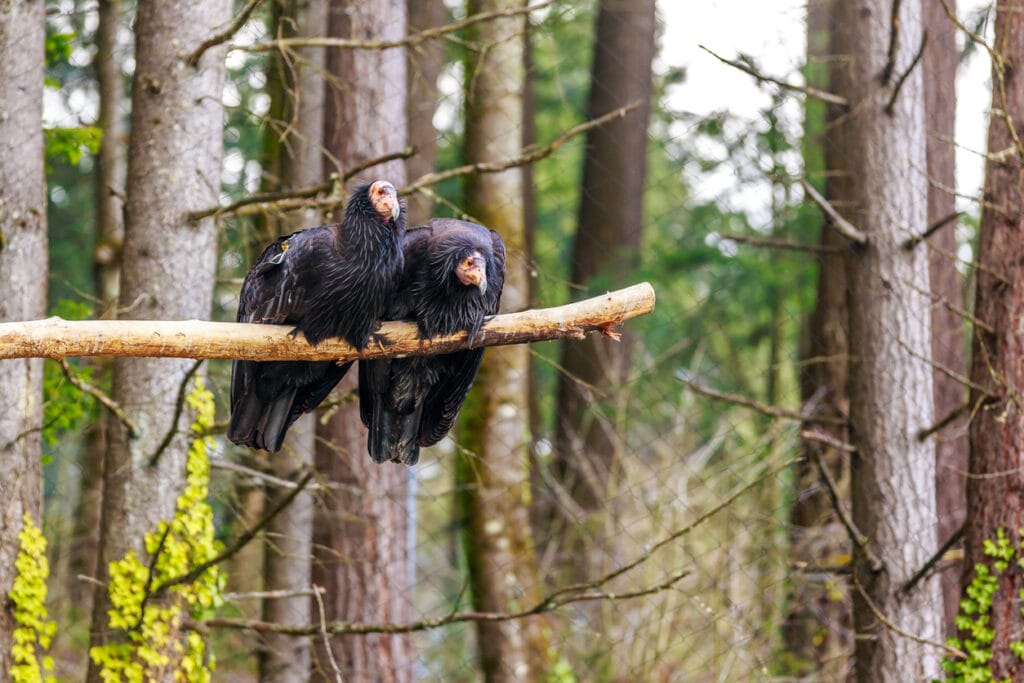
The California Condor (Gymnogyps californianus), a magnificent New World vulture, is native to Oregon, though its population numbers are a testament to dedicated conservation efforts. Currently, only around 400 individuals exist, with approximately half of them flying free. This species represents the largest bird in North America and is classified as endangered, with ongoing initiatives aimed at improving its conservation status.
Characterized by its predominantly black plumage and distinctive white feathers on the underside of its wings, the California Condor possesses a bald, often reddish head. Its most striking feature is its immense wingspan, measuring nearly 9.8 feet, and a weight of about 20 pounds. Unlike many birds of prey, female California Condors are slightly smaller than males. These birds are exceptional soarers, rarely needing to flap their wings. They are social creatures, often gathering in groups around carcasses and at communal bathing sites. Their diet consists primarily of carrion from both land and marine animals, including deer, pigs, cattle, rabbits, and even whales and sea lions. They show a preference for smaller to medium-sized carcasses, as their digestive systems are better equipped to handle these. Condors typically nest in cave cliffs and other natural cavities, seeking sheltered locations for raising their young. The successful reintroduction programs for the California Condor in California and Arizona have provided hope for its future, with occasional sightings in Oregon indicating potential range expansion.
The Great Horned Owl: The Ubiquitous Hoot Owl
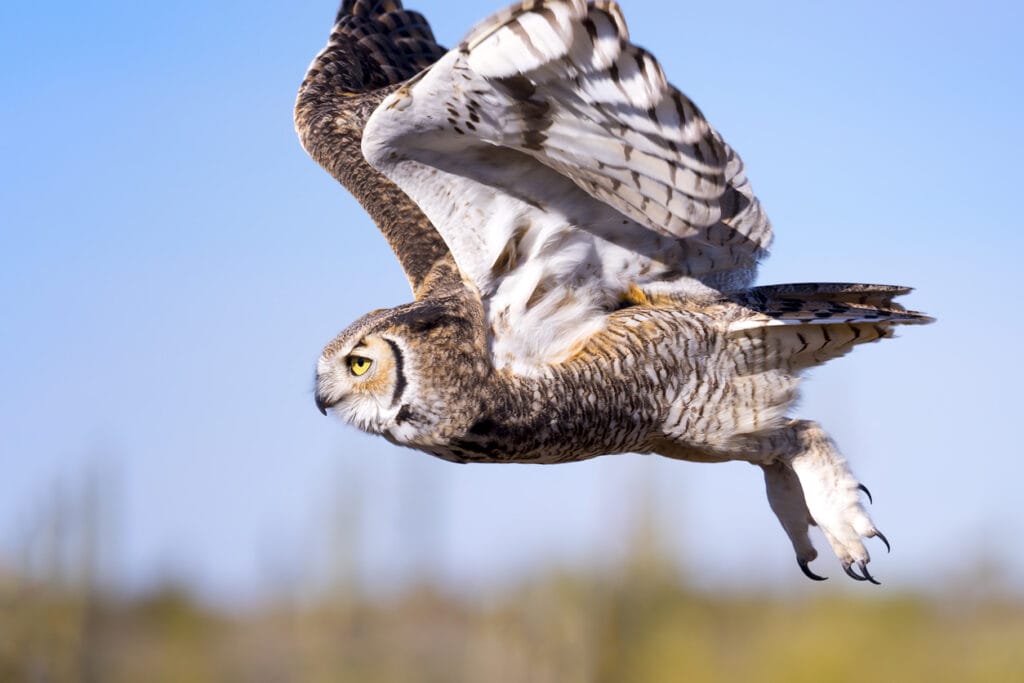
Oregon is home to 14 species of typical owls, but the Great Horned Owl (Bubo virginianus) is arguably the most common and widespread. Its adaptability allows it to thrive in a variety of habitats, from bustling city parks and urban fringes to woodlands and deserts. This large owl is distinguished by its mottled brownish-gray body, broad rounded wings, and a slightly reddish facial disk. Its piercing yellow eyes and deep, resonant hooting call, which lends it the nickname "hoot owl," are iconic features.
During roosting, the owl’s prominent, ear-like tufts serve as an effective form of camouflage, helping it to blend seamlessly with its surroundings. The Great Horned Owl is known for its predatory prowess, often taking prey larger than itself, including other raptors like hawks and smaller owls. Its diet is remarkably diverse, encompassing small mammals, rodents, birds, amphibians, reptiles, and even arthropods such as scorpions. Their ability to hunt in a wide range of environments and their varied diet contribute to their success and widespread distribution across the state.
The Sharp-shinned Hawk: A Small Yet Agile Hunter
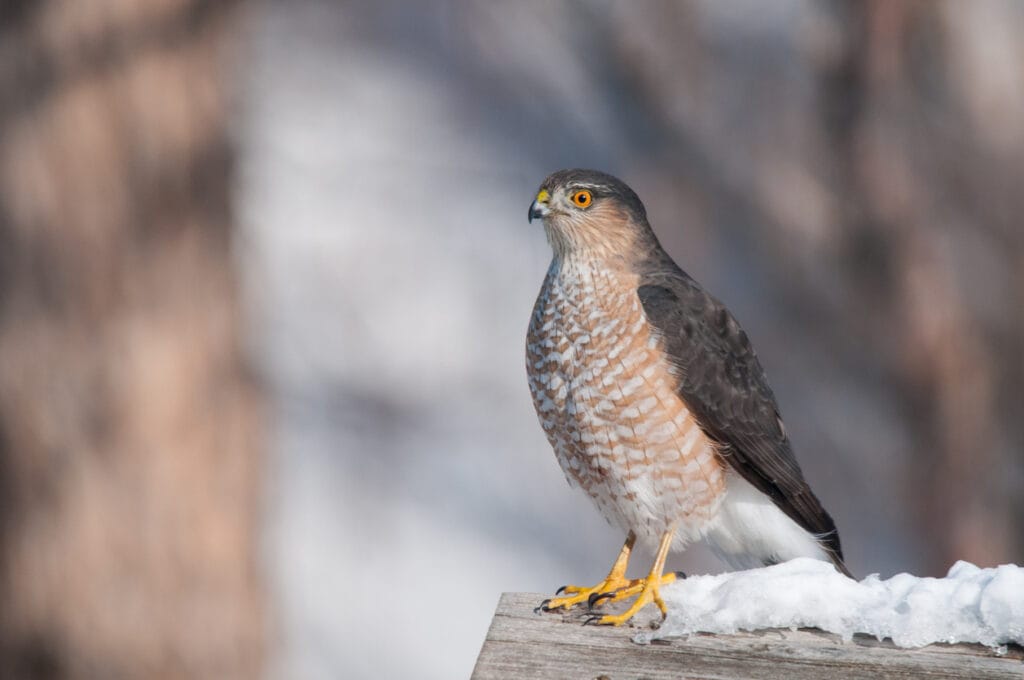
Though not as commonly encountered as some other raptors, the Sharp-shinned Hawk (Accipiter striatus) can be found in the forested areas of Oregon. It holds the distinction of being the smallest hawk species in the United States. Its plumage is a striking blue-gray, with orange markings on its breast. This agile raptor is a master of surprise, expertly ambushing songbirds in mid-flight.
The dense vegetation of Oregon’s forests provides ideal cover for the Sharp-shinned Hawk to pursue its primary prey, which consists of American robins, warblers, thrushes, and sparrows, making up nearly 90% of its diet. It is also capable of catching larger birds, including doves, swifts, woodpeckers, and even falcons, and will occasionally prey on rodents. A fascinating aspect of their hunting behavior involves backyard bird feeders; if a Sharp-shinned Hawk begins to frequent a feeder, temporarily removing it can encourage the hawk to move on to a more suitable hunting ground. The sexual dimorphism in size, with males being smaller than females, influences their hunting roles. Nestlings are often fed prey caught by the father, and then later by the mother as they grow. Male Sharp-shinned Hawks are known to consume the head of their prey first.
The Bald Eagle: A Resurgent Symbol of American Identity
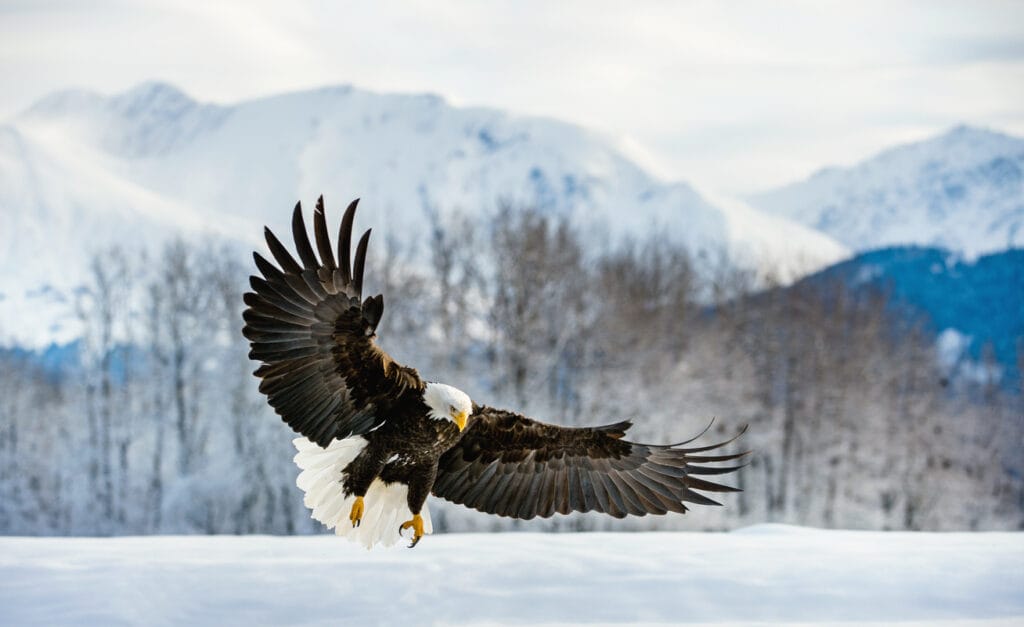
The Bald Eagle (Haliaeetus leucocephalus), the national bird of the United States, is a familiar presence in various Oregon locales. Sightings are common along the Columbia River below Portland, in the upper Willamette River Basin, throughout the High Cascade region, and along the Oregon coast. As a sea eagle, it is typically found near large bodies of water, often nesting in old-growth trees.
The Bald Eagle’s diet is predominantly fish, though its common name, "bald," is a misnomer as its head is covered in distinctive white feathers. Its body is brown, complemented by a large, hooked yellow bill. Rather than always catching its own prey, Bald Eagles are known for their opportunistic "piracy" behavior, often stealing fish from other birds of prey, particularly Ospreys. They will approach an Osprey in mid-air and snatch the fish from its talons. This behavior extends to other animals, as they may also pilfer catches from fishing mammals and even humans. The Bald Eagle’s diet is highly adaptable, including fish, mammals, reptiles, amphibians, birds, and invertebrates. They construct massive nests, which can measure 5 to 6 feet in diameter and 2 to 4 feet in height, often utilizing the same nest for many years. The recovery of the Bald Eagle population, thanks to the ban on DDT and other conservation measures, is a significant success story in wildlife management.
The American Kestrel: The Smallest Falcon
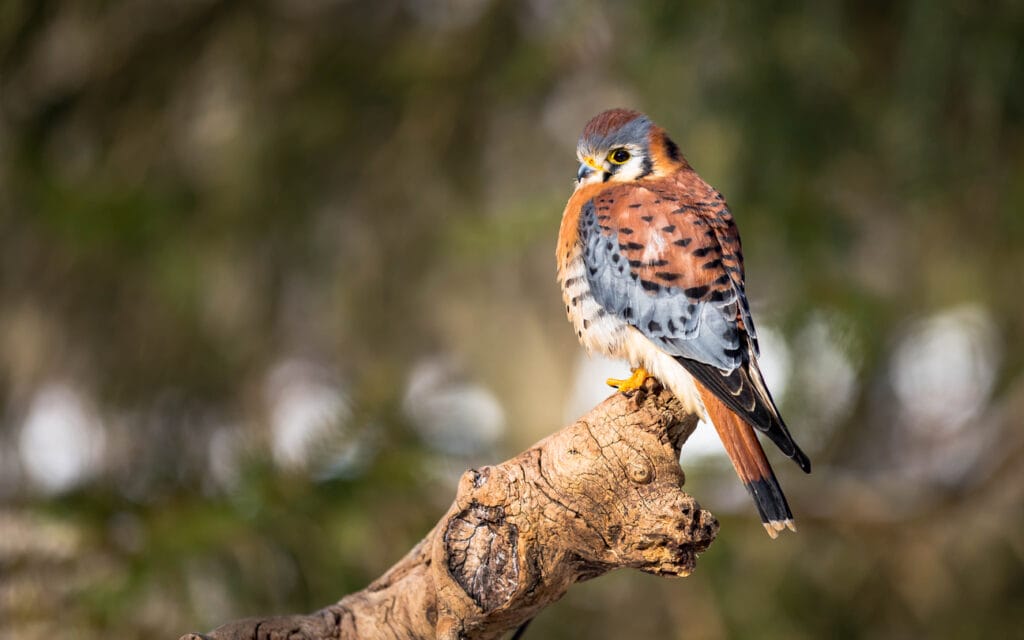
Also known as the Sparrow Hawk, the American Kestrel (Falco sparverius) is the smallest and most common falcon in the United States, and it is frequently observed in Oregon. It prefers to hunt in open areas such as meadows and fields, where it can efficiently spot its prey. Male American Kestrels typically weigh around 5 ounces, while females are slightly larger, weighing approximately 5.8 ounces, making them roughly the size of a Mourning Dove. Despite their diminutive stature, American Kestrels are fierce and skilled predators.
A key identifier of the American Kestrel is the distinct difference between the sexes: males display rusty-spotted upper parts and slate-blue wings, while females have reddish-brown wings. Both sexes share characteristic black vertical lines beneath their eyes. These falcons hunt by stooping from a perch or while hovering, capturing prey from the ground. Their diet primarily consists of insects, rodents, and songbirds. In rarer instances, they have been known to take larger prey, such as Northern Flickers. Their adaptability to human-modified landscapes, including agricultural areas and even suburban parks, contributes to their widespread presence.
The Osprey: The Dedicated Fish Hunter
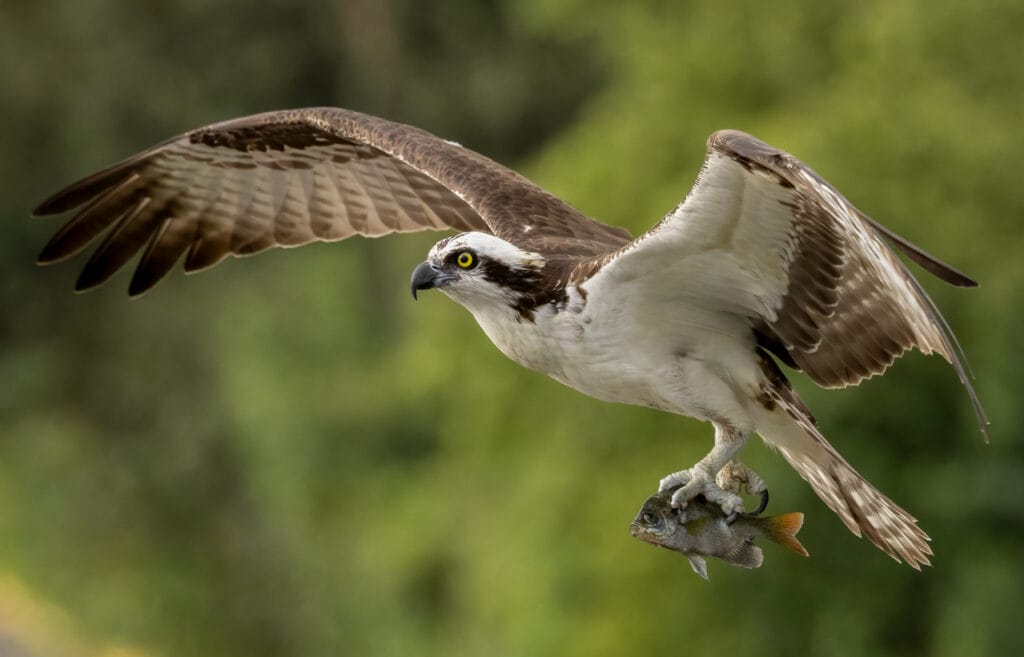
The Osprey (Pandion haliaetus), often referred to as the fish hawk or sea hawk, is found throughout Oregon, particularly near coastal areas, rivers, lakes, swamps, and reservoirs. While sometimes mistaken for a hawk, it belongs to its own unique family. This large bird of prey typically weighs around 4 pounds and 10 ounces and is characterized by its brown plumage, white underparts, and a streaked breast.
Ospreys are commonly seen soaring over shorelines, demonstrating a remarkable lack of fear towards humans. Their presence is often indicated by their distinctive chirping calls, especially near abundant fish populations. For those living within their range, providing nesting boxes can be a valuable way to support breeding pairs. Ospreys typically hunt in shallow waters, requiring a reliable supply of fish within approximately 12 miles of their nest. Their nest sites are usually elevated to protect eggs and nestlings from predators like raccoons. The Osprey’s specialized diet and hunting techniques make it a fascinating subject for observation.
The Great Gray Owl: A Shy Giant of the Forest
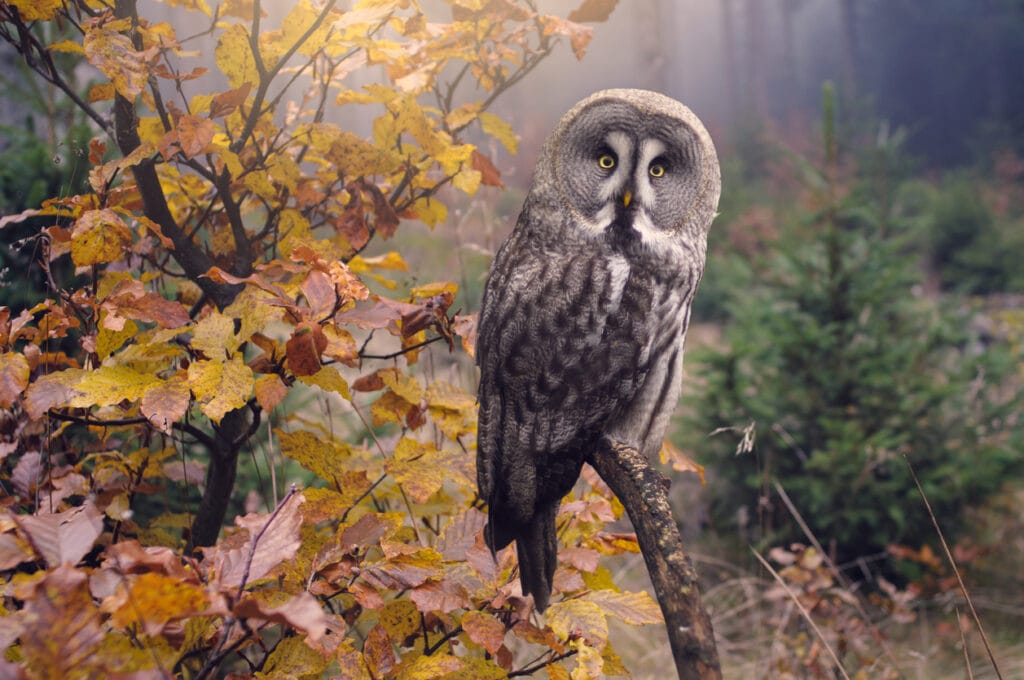
While not as commonly found as other owl species, the Great Gray Owl (Strix nebulosa) is regularly spotted in the forests near Oregon’s Cascade, Wallowa, and Blue Mountains. During winter months, these owls tend to move towards lower-elevation evergreen forests. They are characterized by their large size, rounded heads, and distinctive gray facial disks. Their underparts are streaked, while their upperparts are a paler gray. They emit a deep hooting sound, and young birds often hiss.
The Great Gray Owl’s large size is largely due to its dense plumage, which provides insulation in colder climates. This shy bird generally avoids human contact and prefers to perch at the edges of meadows and forests, relying on its exceptional camouflage to remain undetected. Its hunting strategy involves flying low over open areas, using its acute hearing to locate small mammals and rodents, such as pocket gophers, mice, voles, chipmunks, and lemmings. The provision of suitable nesting sites, such as large tree cavities, can encourage these owls to establish territories.
The Prairie Falcon: Master of the Open Skies
The Prairie Falcon (Falco mexicanus) is widely distributed across Oregon’s open landscapes, including grasslands, pastures, fields, and shrubby deserts. It is a large falcon, distinguished by its brown upperparts and pale underparts, which feature distinctive markings on the belly. While roosting birds can be difficult to spot, their loud calls become more noticeable during the breeding season.
The Prairie Falcon is renowned for its astonishing aerial displays, including a unique hunting technique where it drops a dried ball of cow manure and dives to catch it. Scientists hypothesize that this behavior helps the falcons sharpen their coordination skills. Their diet primarily consists of small mammals, such as ground squirrels, and they also consume birds, pikas, and insects. These falcons are highly territorial and will aggressively defend their nesting sites, often chasing away larger raptors like Great Horned Owls, hawks, eagles, and even other falcons.
The Swainson’s Hawk: A Migratory Marvel
The Swainson’s Hawk (Buteo swainsoni) inhabits the region stretching from east of the Cascade Mountains to the Blue Mountains in Oregon. This hawk exhibits gray or brown upperparts and a reddish-brown chest. Darker individuals, which can be entirely black, are also encountered but are less common.
This species has a particular fondness for locusts and grasshoppers, earning it the nicknames "grasshopper hawk" or "locust hawk." It often hunts insects on the wing, consuming them while flying, but will chase rodents on the ground. Its diet also includes rabbits, gophers, ground squirrels, mice, and voles, especially during the breeding season. In some instances, Swainson’s Hawks have been observed hunting bats, lizards, and other birds. During their migration, these hawks form impressive "kettles" containing tens of thousands of individuals. These massive flocks often include Turkey Vultures and Broad-winged Hawks, creating an extraordinary spectacle for birdwatchers and ornithologists.
The Western Screech-Owl: A Tiny, Camouflaged Hunter
This small owl is a year-round resident found below 3,000 feet in Western Oregon. It prefers to inhabit deciduous forests, but can also be found in parks, mountains, suburbs, and deserts. The Western Screech-Owl (Megascops kennicottii) is a stocky owl with a square face and an almost non-existent neck. Its plumage provides exceptional camouflage, closely resembling tree bark, and can vary in color from grayish to brownish or reddish, with paler underparts.
The presence of this tiny owl is often announced by its short, repeated hoots. They typically nest in tree cavities excavated by woodpeckers but will also utilize naturally occurring cavities formed by broken branches or in cliffs. Despite its small size, the Western Screech-Owl is capable of preying on animals larger than itself, including pocket mice, rabbits, shrews, and bats. Its diet also extends to birds, amphibians, and fish. Its ability to thrive in diverse environments and its effective camouflage make it a well-adapted resident of Oregon’s varied habitats.
Broader Implications for Oregon’s Ecosystems
The presence of such a diverse range of birds of prey highlights the ecological health and resilience of Oregon’s natural landscapes. These raptors serve as indicators of environmental quality; their declining numbers can signal broader ecosystem issues such as habitat loss, pollution, or a reduction in prey populations. Conservation efforts focused on protecting critical habitats, reducing pesticide use, and mitigating human-wildlife conflicts are essential for ensuring the continued survival of these magnificent predators.
The economic and cultural benefits of these raptors are also significant. Birdwatching is a growing industry, attracting tourists and supporting local economies. The aesthetic and intrinsic value of these wild creatures enriches the lives of Oregonians and visitors alike, fostering a deeper connection with the natural world.
Frequently Asked Questions
What kinds of birds of prey live in Oregon?
Oregon is home to a wide variety of raptors, including various species of eagles, hawks, falcons, and owls. Specific examples include the Ferruginous Hawk, Golden Eagle, California Condor, Great Horned Owl, Sharp-shinned Hawk, Bald Eagle, American Kestrel, Osprey, Great Gray Owl, Prairie Falcon, Swainson’s Hawk, and Western Screech-Owl.
What is the largest bird in Oregon?
The largest bird found in Oregon is the California Condor. With a wingspan of up to 9.8 feet, it is a truly impressive avian species.
What kind of vultures live in Oregon?
The primary vulture species found in Oregon is the Turkey Vulture (Cathartes aura). They are often seen soaring over roads, searching for carrion. Their distinctive V-shaped wing posture when flying and their red, bald heads are key identification features.
The continued study and conservation of these apex predators are vital for understanding and preserving the rich biodiversity of Oregon. Their presence is a powerful reminder of the wild beauty that defines the Beaver State.

