


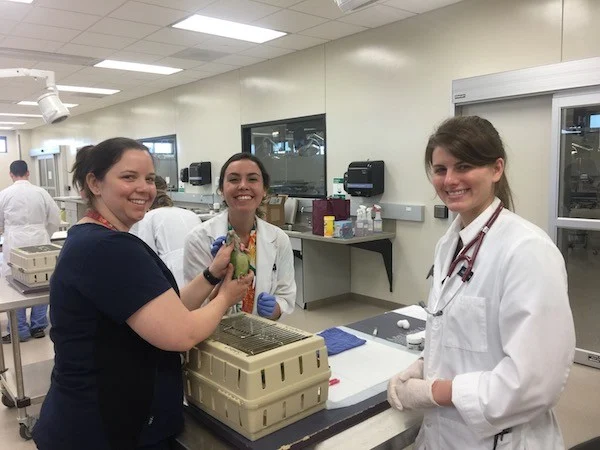
The landscape of veterinary medicine is undergoing a profound transformation as specialized care for avian, exotic, and wildlife species moves from the periphery to the center of academic focus. For nearly two decades, the integration of industry expertise and university research has fostered a robust educational pipeline, ensuring that the next generation of veterinarians is equipped to handle the unique physiological and clinical needs of non-traditional species. This pedagogical shift is most visible in the ongoing series of symposia, wet labs, and distance-learning events hosted by major veterinary colleges across North America and Europe, often supported by specialized industry partners like the Lafeber Company. These initiatives bridge the gap between standard domestic animal curricula and the high-level specialization required for board certification in fields such as avian practice, zoological medicine, and exotic companion mammal surgery.
The Strategic Integration of Industry and Academia
The collaboration between academic institutions and specialized industry entities serves as a critical catalyst for clinical excellence. By providing financial sponsorship and access to world-renowned experts, these partnerships allow veterinary student clubs—such as the Zoo, Exotics, and Wildlife (ZEW) clubs and the Wildlife, Avian, Aquatic, and Zoological Medicine (WAAZM) groups—to host advanced training sessions that would otherwise be beyond the scope of standard tuition-funded programs. This synergy is essential for addressing the growing demand for specialized care as the population of non-traditional pets, including parrots, reptiles, and small mammals, continues to rise globally. Furthermore, the inclusion of wildlife rehabilitation and conservation medicine into these programs reflects a broader "One Health" approach, recognizing the interconnectedness of human, animal, and environmental health.
Chronological Evolution of Veterinary Specialization: 2024-2026
The upcoming academic years represent a pinnacle in the delivery of specialized veterinary knowledge, characterized by a heavy emphasis on advanced surgical techniques and the long-term management of chronic conditions in exotic species. Looking forward to April 2026, Dr. Rebecca Duerr is scheduled to present "Oiled Wild Bird Care" to the Exotic Animal Medicine Club at Kansas State University, a topic that underscores the veterinarian’s role in environmental disaster response. Earlier that month, the University of Arizona will host Dr. Amanda Fisher to discuss laboratory animal medicine, highlighting the diversity of career paths within the exotic field.
In early 2026, the Atlantic Veterinary College will continue its tradition of high-level surgical training with Dr. Andrea Henrik’s presentation on reproductive tract surgery in female birds, co-sponsored by the Association of Avian Veterinarians (AAV). This focus on avian surgery is complemented by the work of Kara Burns, a pioneer in veterinary nutrition, who will present avian nutrition fundamentals at Purdue University in March 2026. The transition into 2025 shows a continued reliance on distance learning to connect global experts with students. Notable events include Dr. Yvonne van Zeeland’s exploration of the intersection between behavior and medical issues in birds, a joint session for Kansas State University and the European Association of Avian Veterinarians. This international reach demonstrates how digital platforms have democratized access to elite veterinary education.
The Digital Transformation and Pandemic-Era Adaptations: 2020-2023
The period between 2020 and 2023 marked a significant shift in the delivery of veterinary continuing education. The global pandemic necessitated a move toward "distance-learning events," a format that proved so effective it has remained a staple of the curriculum. During this time, the University of Illinois and the University of Florida became hubs for virtual symposia. In 2021 and 2022, experts like Dr. Jaime Samour and Dr. LoraKim Joyner utilized digital platforms to teach complex subjects such as medical procedures in birds of prey and transformative parrot conservation.
The data from 2020 reveals an immediate and successful pivot to virtual instruction. For instance, Dr. Deborah Monks presented on avian emergencies and resuscitation to Kansas State University, while Dr. Jörg Mayer introduced innovative pedagogical tools, such as using comics to interpret rabbit hematology, at the University of Illinois. This era also saw an increased focus on backyard poultry and infectious diseases, as evidenced by Dr. Teresa Morishita’s 2020 lectures at the University of Florida regarding avian infectious bronchitis. These sessions provided critical biosecurity knowledge at a time when local food systems and backyard farming were seeing a resurgence.
Expanding the Clinical Scope: Mammals, Reptiles, and Aquatics
While avian medicine remains a cornerstone of exotic veterinary education, the timeline from 2015 to 2019 illustrates a significant expansion into mammalian and aquatic specialties. At Louisiana State University, the Rabbit Dentistry Lab led by Dr. Javier Nevarez in late 2025 (and similar sessions in earlier years) addresses one of the most common clinical presentations in exotic mammal practice. Similarly, the University of Illinois’ "Bunny Bonanza" symposium reflects the high level of community engagement and specialized knowledge required for lagomorph care.
Aquatic medicine has also seen a steady rise in prominence. Events such as the 2023 shellfish disease monitoring discussion at Atlantic Veterinary College and the 2016 fish anesthesia labs at Texas A&M University highlight the technical precision required for aquatic patients. The involvement of organizations like the Alaska Sealife Centre and the Georgia Aquarium in these student events provides a direct link between clinical practice and large-scale conservation efforts. This diversification ensures that graduates are not merely "bird vets" or "reptile vets" but are versatile clinicians capable of treating a vast array of taxa.
Pioneering the Field: The Formative Years and Foundational Lectures
The roots of this educational movement can be traced back to the early 2000s, where foundational lectures by pioneers like Dr. M. Scott Echols, Dr. Brian Speer, and Dr. Natalie Antinoff set the standard for exotic animal care. In 2007 and 2008, sessions at the University of Tennessee and Texas A&M focused on the basics of critical care and the role of organizations like the American Eagle Foundation. These early years were characterized by in-person "wet labs"—hands-on sessions where students practiced bandaging, blood draws, and necropsy techniques.
One of the most enduring figures in this timeline is Kara Burns, whose lectures on critical care nutrition have spanned over a decade, reaching students at Tuskegee, Oklahoma State, and Ohio State. Her work emphasizes that nutrition is the foundation of recovery, a principle that applies across all species. Similarly, the frequent contributions of Dr. April Romagnano and Dr. Gregory Rich across multiple decades provide a sense of continuity and mentorship that is vital for the professional development of veterinary students.
The Role of Specialized Nutrition and Behavior
A recurring theme throughout the twenty-year history of these sponsored events is the critical importance of nutrition and behavior in exotic animal health. From Dr. Ellen Dierenfeld’s lectures on herptile nutrition to Dr. Susan Friedman’s workshops on behavior at Tufts University, the curriculum recognizes that many exotic animal illnesses are rooted in husbandry and psychological stress. The 2024 Parrot Cognition and Behavior Symposium at North Carolina State University, featuring Dr. Irene Pepperberg—famed for her work with the African Grey parrot Alex—represents the cutting edge of this field. Understanding animal cognition is no longer viewed as a luxury but as a clinical necessity for diagnosing and treating behavior-linked pathologies.
Broader Implications for Global Conservation and Animal Welfare
The long-term impact of these educational initiatives extends far beyond the classroom. By training students in specialized techniques, such as avian orthopedics or reptile endoscopy, these programs directly improve the welfare of millions of animals. Furthermore, the emphasis on conservation medicine—highlighted by Dr. LoraKim Joyner’s "Liberating Wings" and Dr. Noha Abou-Madi’s sessions on elephant reproduction—prepares veterinarians to play a leading role in preventing species extinction.
The data also suggests a strong correlation between these educational events and the growth of professional organizations like the Association of Avian Veterinarians (AAV) and the Association of Exotic Mammal Veterinarians (AEMV). Students who participate in these sponsored labs and symposia are more likely to pursue board certification, thereby raising the overall standard of care in the profession. As veterinary medicine continues to evolve, the blueprint established by these two decades of collaboration will remain a vital model for specialized education, ensuring that the health of the world’s most unique and vulnerable species is in capable hands.

