


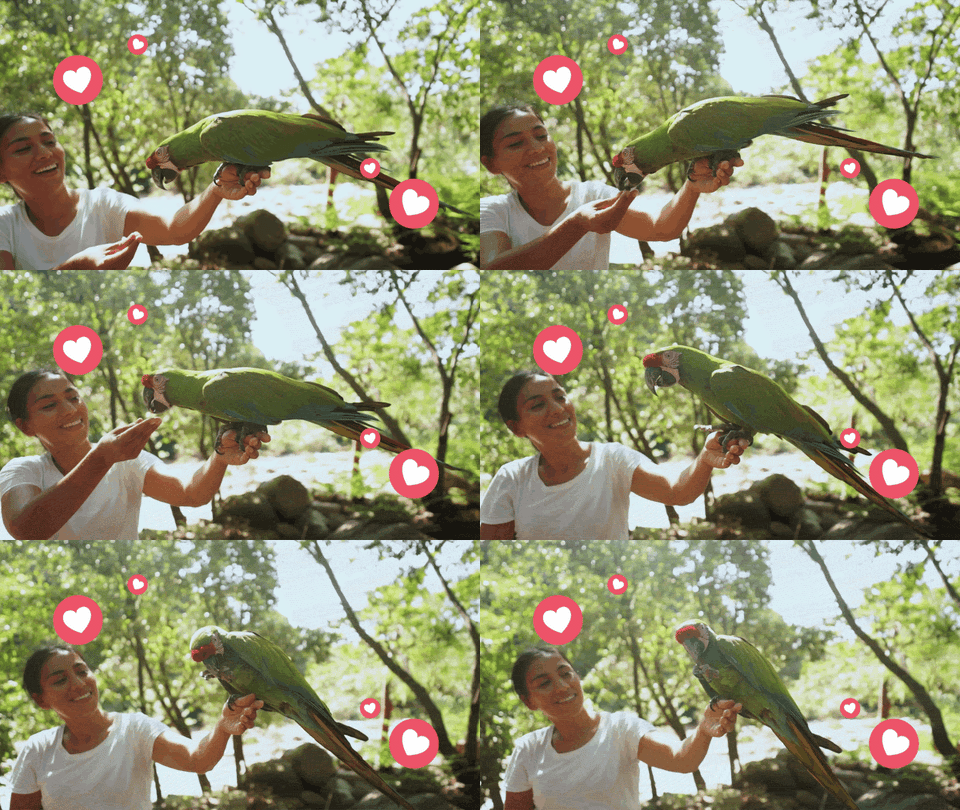
For individuals sharing their homes with fully flighted avian companions, the seemingly simple behavior of a bird stepping onto a hand or perch on command represents a critical foundation for daily life, safety, and the overall well-being of the animal. Without this fundamental skill, a fully flighted bird can navigate its environment with complete autonomy, potentially leading to a frustrating and often perilous dynamic where the owner is left in a constant pursuit from high perches to precarious ledges. This lack of control is not merely an inconvenience; it can pose significant dangers, as the ability to calmly and reliably cue a bird to "step up" in moments of alarm or hazard can be the decisive factor between maintaining safety and facing a potentially devastating accident or loss.
The Indispensable Value of Bird Step-Up Training
The scenario is all too common for bird owners: a sudden noise, the unexpected entry of a child, or a startling movement sends a parrot into a panicked flight. Imagine the bird flapping wildly from the back of a sofa, disoriented and fearful, beak slightly agape, wings spread wide in a defensive posture. In such a moment, the ability to calmly approach, kneel, and issue the clear, familiar command, "Step up," can de-escalate the situation instantly. When this skill has been diligently practiced, the bird recognizes the cue, responds by climbing onto the outstretched hand, and can then be safely relocated to its secure perch or cage—a crisis deftly averted.
Teaching a bird to "step up" transcends the realm of a mere parlor trick; it is a life-saving imperative. This behavior forms the bedrock of effective bird training, essential for a multitude of situations ranging from routine daily handling and care to urgent emergencies or necessary veterinary visits. It facilitates safe transport, allows for health checks, and enables owners to remove their bird from potentially hazardous situations.
Historically, the relationship between humans and companion birds has evolved significantly. While birds have been kept for centuries—initially for their beauty, song, or as status symbols—the understanding of their complex cognitive abilities and emotional needs has deepened considerably in recent decades. Early training methods often relied on dominance or force, leading to fearful, stressed, and sometimes aggressive birds. However, the advent of behavioral science, particularly Applied Behavior Analysis (ABA) and the principles of positive reinforcement, revolutionized avian care. Pioneers in animal behavior demonstrated that animals learn most effectively and willingly when desired behaviors are rewarded, rather than when unwanted behaviors are punished. This shift in philosophy is particularly crucial for intelligent and sensitive creatures like parrots, which can form deep, lasting bonds with their human caregivers built on trust and mutual respect. Experts like Diane Burroughs, LCSW, whose work integrates psychotherapy and ABA, exemplify this modern approach, emphasizing that effective bird training is fundamentally about fostering a healthy, trusting relationship.
Understanding Obstacles: Why a Bird Might Resist the Step-Up Command
Before embarking on training, it is crucial to understand the potential reasons a bird might be hesitant or outright refuse to step up. This refusal is rarely an act of "stubbornness" but rather a manifestation of fear, confusion, physical discomfort, or past negative experiences.
- Past Trauma or Negative Associations: Birds, especially those with a history of rough handling, forced restraint, or improper hand-feeding, can develop strong negative associations with human hands. These experiences can lead to a deep-seated fear, causing the bird to perceive an approaching hand as a threat rather than an invitation.
- Novelty of the Hand as a Perch: A human finger or hand differs significantly from a natural branch or a sturdy cage perch. It can feel warm, move unexpectedly, or lack the consistent texture and stability a bird is accustomed to. This unfamiliarity can make a bird wary and hesitant.
- Unsteady Handling: Once a bird does step up, a sudden movement or an unsteady arm from the handler can be startling. Birds are prey animals by nature and are highly sensitive to perceived instability, which can trigger their flight response and erode trust.
- Physical Limitations: Young birds may lack the full coordination or strength, while elderly birds or those suffering from conditions like arthritis may experience pain or difficulty with balance and grip strength. These physical challenges can make stepping up uncomfortable or impossible.
- Ineffective Training Methods: Using inconsistent cues, failing to provide immediate reinforcement, or resorting to punishment can confuse the bird and undermine the training process. Birds are highly intelligent and respond best to clear, positive, and predictable methods. Research in avian cognition consistently demonstrates that positive reinforcement leads to faster learning, stronger retention, and a more positive emotional state in animals.
A Structured Approach to Teaching the Step-Up Command
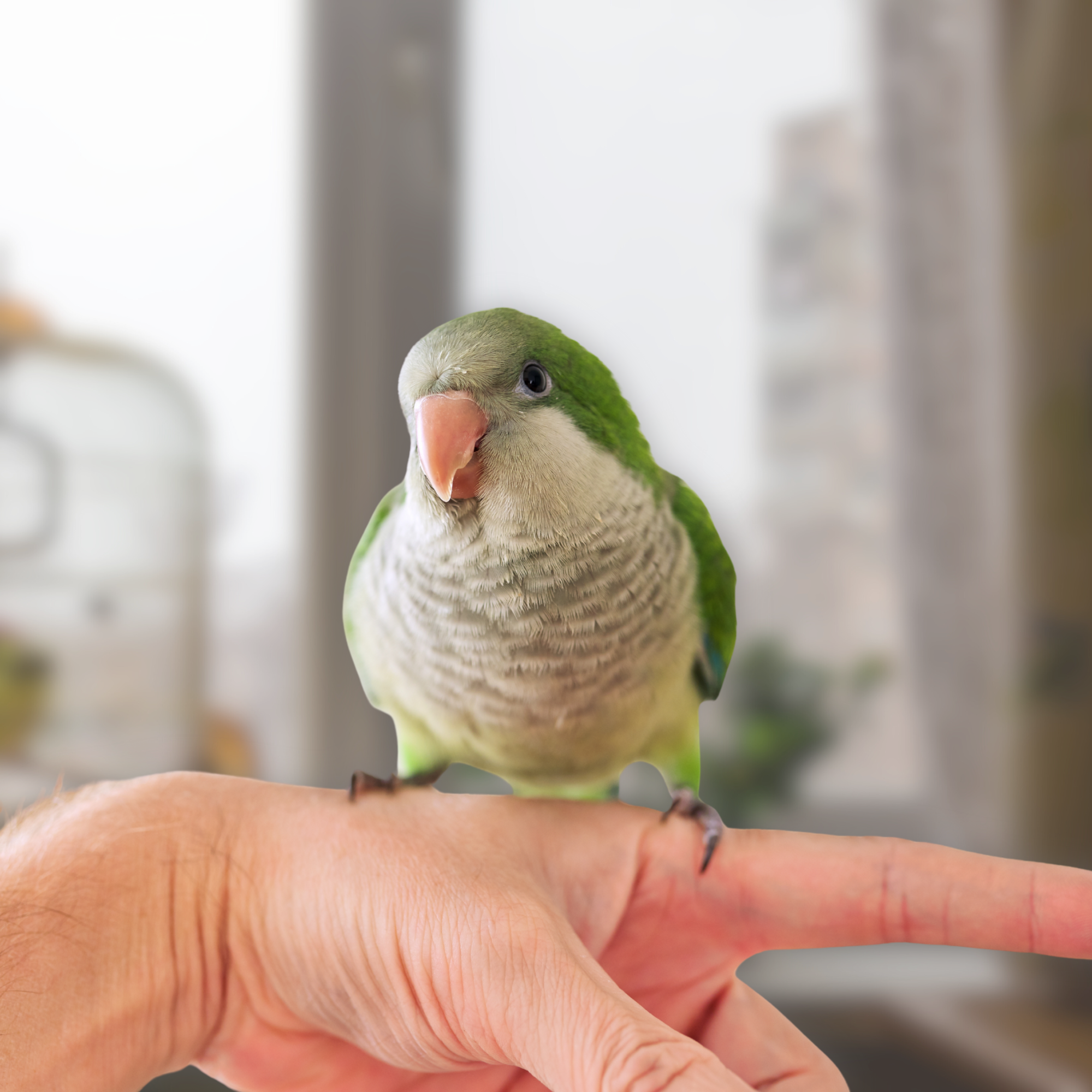
Effective step-up training relies on a clear communication system comprising a verbal cue, a visual cue, and gentle, consistent pressure. These elements work in concert to help the bird understand the desired action. The voice signals the command, the hand indicates the target, and a soft nudge encourages the movement. Consistency in their application is paramount for these cues to become second nature for both bird and owner.
Phase 1: Cultivating Trust and Familiarity
The cornerstone of all avian training is trust. A bird will not willingly step onto a hand it perceives as a threat. The initial focus must be on creating positive associations with human hands. This involves:
- Positive Exposure: Start by simply having your hand near the bird, without attempting to touch or prompt a step-up. Offer highly valued treats (e.g., small pieces of almond, millet spray, preferred fruits) or favorite toys from a distance the bird finds comfortable.
- Gradual Approach: If the bird is fearful or new to training, begin by offering your finger or a training perch from a safe distance. Slowly decrease the distance as the bird’s comfort level increases, always respecting its boundaries. Signs of comfort include relaxed posture, curiosity, and willingness to take treats. Signs of discomfort include leaning away, puffing up feathers, or hissing.
- Short, Positive Interactions: Keep initial interactions brief and always end on a positive note. The goal is for the bird to associate your hand with pleasant experiences.
Phase 2: Introducing the Cue and Gentle Pressure
Once the bird shows comfort with your hand’s presence, you can introduce the specific cues:
- Verbal Cue: Choose a simple, calm, and consistent verbal cue such as "Step up." Say this cue every single time you present your hand or perch for the behavior.
- Visual Cue: Present your hand, finger, or a training perch just below the bird’s chest, where its legs meet its body. This is the natural position for a bird to brace itself before stepping.
- Gentle Pressure: As the bird becomes more comfortable with the verbal and visual cues, apply a very gentle, upward-and-forward pressure against the bird’s chest or lower belly with your finger. This is not a forceful shove but a subtle nudge designed to encourage the bird to lift one foot and then the other onto your hand. The pressure should be just enough to unbalance the bird slightly, prompting it to seek stability on your hand.
Phase 3: Reinforcement and Generalization
Immediate and consistent reinforcement is key to solidifying the behavior:
- Instant Reward: The moment your bird places one foot, and then both feet, onto your hand or perch, provide immediate positive reinforcement. This could be a tiny piece of a highly favored treat (e.g., a sliver of almond, a sunflower seed, a small piece of fruit) and gentle verbal praise ("Good bird!"). The timing of the reward is crucial; it must occur within seconds of the desired action for the bird to associate the reward with the "step up."
- Short Sessions: Keep training sessions brief, typically 5 to 10 minutes maximum. Birds have short attention spans, and longer sessions can lead to frustration or boredom. It’s better to have multiple short, successful sessions than one long, taxing one.
- End on Success: Always try to end a training session on a positive note, even if it means asking for a simpler, already mastered behavior. This ensures the bird leaves the session feeling successful and eager for the next one.
- Generalization: Practice the step-up in various locations around the house, with different people (if appropriate and trusted by the bird), and from different surfaces (e.g., cage bar, play stand, floor). This helps the bird understand that "step up" means the same thing regardless of the context.
Troubleshooting a Fearful or Hesitant Parrot
When a bird refuses to step up, bites, or flies away, it’s essential to recognize that this is not defiance but often an expression of fear, confusion, or a breakdown in communication.

- Identify the Root Cause: Is the bird genuinely afraid of hands? Is the pressure too firm? Is the environment too distracting? Has the training progressed too quickly?
- Back Up and Rebuild: If the bird is struggling, revert to a step where it was consistently successful. Re-establish trust, use lighter pressure, or practice in a quieter environment.
- Positive Reinforcement Only: Never use punishment or force. This will only exacerbate fear and damage the bond. Focus solely on rewarding desired behaviors.
- Read Body Language: Pay close attention to your bird’s cues. Pinning eyes, fluffed feathers, leaning away, or hissing indicate discomfort. Respect these signals and adjust your approach.
- Consistency and Patience: Building trust and teaching new behaviors takes time, especially with birds that have had negative past experiences. Short, positive, and consistent sessions are your most powerful tools. Over time, the bird will learn to feel safe, confident, and even excited about training.
Expanding Beyond the Basic Step-Up: Advanced Training
Once the "step up" is mastered, it becomes a springboard for more advanced and enriching behaviors.
- Step-Down: Teaching your bird to "step down" from your hand onto a designated perch or cage bar is equally important. This provides control over where your bird perches and prevents it from staying on you indefinitely or landing in undesirable places. The process mirrors step-up training: cue the bird to step down, and reward it the moment its feet touch the target surface.
- Laddering: This exercise involves having your bird alternate between stepping onto your left hand and then your right hand, moving in a continuous upward motion. "Step up" onto one, then the other. Laddering builds coordination, balance, stamina, and enhances the bird’s responsiveness, reinforcing its focus on your cues.
- Target Training: Using a target stick to guide your bird to specific locations or to perform various actions (like touching its beak to the stick) can greatly enhance its learning capacity and expand its repertoire of behaviors. A target stick can be invaluable for guiding a bird into its cage, onto a play stand, or for vet visits, all building upon the foundation of voluntary movement established by the step-up.
- Enrichment Ideas: A bird that confidently steps up can be easily moved to different play stands, safely introduced to new, bird-safe environments within the home, or participate in various trick training activities, all contributing to its mental stimulation and overall welfare. This foundation allows for a richer, more interactive life for the bird.
Expert Perspectives and Broader Implications
Avian veterinarians consistently advocate for the importance of step-up training. A well-trained bird is significantly less stressed during examinations, nail trims, or medication administration, leading to better diagnostic accuracy and treatment outcomes. Veterinarians often highlight that birds exhibiting behavioral problems, frequently stemming from a lack of basic training like step-up, are unfortunately common reasons for owner surrender or rehoming.
Animal behaviorists, like Diane Burroughs, emphasize that successful step-up training builds more than just compliance; it cultivates a deeper bond between owner and bird. It empowers the bird by giving it a clear understanding of what is expected, reducing anxiety and increasing its confidence in its human companion. This confidence translates into a more secure and adaptable bird, capable of navigating its domestic environment with less stress. Furthermore, the mental engagement involved in training provides valuable enrichment, preventing boredom and the development of undesirable behaviors often associated with captive parrots.
From the perspective of responsible pet ownership, mastering the "step up" is a fundamental commitment. It ensures the bird’s safety by allowing immediate intervention in hazardous situations, facilitates essential care, and strengthens the human-animal bond through positive interaction and clear communication. In a broader context, promoting such training helps elevate the standard of care for companion birds, acknowledging their intelligence and complex needs, and ultimately fostering a more harmonious co-existence between humans and their feathered friends. The published work and specialized products, such as those featured in the Journal of Avian Medicine and Surgery and at ExoticsCon, underscore the growing recognition within the veterinary and behavioral communities of the critical role of structured, positive reinforcement training.
Conclusion
Bird training, particularly the foundational "step up" command, is not merely a set of techniques but an ongoing commitment to building a lifelong relationship grounded in mutual trust and clear communication. When a bird confidently and happily steps up on cue, it is a testament to the strong bond and the successful communication established with its owner. This fundamental skill enriches the bird’s world, making it safer, more predictable, and more engaging. For bird owners, understanding the principles of clear communication and trust is the first step; actively implementing these principles and witnessing the transformative benefits is the rewarding journey. As advocates like Diane Burroughs continue to champion, the mission is simple: to help parrots and their people thrive together, ensuring the best possible life for these extraordinary companions through understanding, patience, and positive reinforcement.

