


A foundational understanding of avian health emergencies begins with key questions: Can you effectively manage a bleeding injury? Is the contact information for a qualified avian veterinarian readily accessible? Do you have a comprehensive parrot first aid kit prepared at home? A negative response to any of these questions, or the anticipation of welcoming a parrot into one’s family, signals the imperative to acquire this vital information. This guide provides an in-depth exploration of navigating sickness or injury in parrots, aiming to maximize their chances of survival and recovery.
Immediate Action in a Crisis
It is crucial to differentiate between informational reading and an active emergency. If a parrot is currently experiencing a clear medical emergency—such as severe difficulty breathing, unresponsiveness, or profuse bleeding—the priority shifts from reading to action. Immediately place the bird in a carrier and contact an avian veterinarian while en route. For situations where the urgency is less clear, a phone call to the veterinarian from home, detailing the symptoms, allows for professional guidance on the next steps. In scenarios where an avian vet is unavailable, the information provided below on interim care becomes relevant, though continuous efforts to locate professional help remain paramount.
Proactive Measures: Preparing for the Unforeseen
Prevention invariably supersedes cure, forming the bedrock of responsible parrot ownership. The single most important preparatory step is identifying and establishing a relationship with an experienced avian veterinarian before any emergency arises. Avian medicine is a specialized field, and not all general veterinarians possess the requisite expertise in the unique physiology and pathology of birds. Saving the vet’s contact information in your phone is a non-negotiable step. Furthermore, establishing an emergency veterinary fund or securing pet insurance for your bird is a prudent financial strategy, as specialized avian treatments can incur substantial costs. Beyond these critical initial steps, three primary areas of preparedness can significantly mitigate the risk and severity of parrot health crises.
Cultivating a Safe Environment: Parrot-Proofing
For seasoned parrot owners, the principles of avian safety may be second nature, yet periodic review of best practices is always beneficial. For those new to parrot guardianship, understanding the species’ inherent traits is vital. Parrots are highly intelligent, intensely curious, and remarkably sensitive creatures. This combination, while endearing, renders them particularly susceptible to accidents and injuries within a typical household environment. Their exploratory nature often leads them into hazardous situations: chewing through electrical cables, ingesting toxic houseplants, becoming entrapped in confined spaces, or escaping through inadequately secured windows or doors.
Consequently, all areas accessible to a free-roaming parrot must be meticulously "parrot-proofed." This involves ensuring all windows and doors are securely closed, preventing access by other household pets, and removing all potentially toxic or dangerous items. Common household items like cleaning products, certain human foods (e.g., avocado, chocolate, caffeine), heavy metals (e.g., lead from old paint or stained-glass solder, zinc from galvanized cages or cheap toys), and numerous common houseplants (e.g., Dieffenbachia, philodendron, lilies) pose significant threats. For instance, even a few bites from a Dieffenbachia plant, as depicted in the original article, can necessitate urgent veterinary intervention. Opting for parrot-safe plants is a simple yet effective preventative measure.
The bird’s cage, often perceived as a sanctuary, also requires diligent parrot-proofing. Not all commercially available parrot toys are inherently safe; some may pose choking hazards, contain toxic dyes, or become dangerous as they degrade. Regular inspection of toys for wear and tear, along with strict adherence to cage hygiene protocols, are essential components of preventive care.

Assembling the Avian First Aid Kit: A Comprehensive Inventory
Despite the most meticulous preventative measures, accidents remain an unfortunate reality of pet ownership. A parrot’s toe might become caught in a door, it could collide with a reflective surface, or a blood feather might break, leading to significant hemorrhage. These scenarios underscore the importance of immediate preparedness. A well-stocked avian first aid kit, stored in an easily accessible location, can be a game-changer.
The core components of an avian first aid kit should include:
- Styptic Powder (e.g., Kwik Stop): Essential for stopping bleeding from broken blood feathers or minor cuts. Blood feathers, which contain a blood supply, can bleed profusely if broken.
- Clean Gauze Pads and Non-Stick Dressings: For applying pressure to wounds and covering injuries.
- Vet Wrap (Self-Adhesive Bandage): Useful for securing dressings or temporarily splinting minor injuries. It adheres to itself, not feathers, making it ideal.
- Antiseptic Solution (e.g., Diluted Chlorhexidine or Povidone-Iodine): For cleaning minor wounds. Avoid alcohol, which can be irritating and dehydrating.
- Sterile Saline Solution: For flushing eyes or wounds.
- Small Scissors and Tweezers: For cutting gauze, removing splinters, or other delicate tasks.
- Oral Syringes or Droppers (various sizes): For administering water, rehydration solution, or liquid medications.
- Heat Source: A microwavable heat pad (safer than hot water bottles which can burst) or a ceramic heat emitter (with appropriate shielding) to provide supplemental warmth.
- Emergency Carrier: A small, easily portable carrier, lined with paper towels for hygiene, and capable of being darkened to reduce stress during transport.
- Rehydration Sachets (e.g., Pedialyte equivalent): To prepare an electrolyte solution for mildly dehydrated birds.
- Flashlight or Headlamp: For examining the bird in low light or inspecting hard-to-see areas.
- Magnifying Glass: For detailed examination of small injuries or parasites.
- Nail Clippers and File: For overgrown nails or minor nail injuries.
- Emergency Contact List: Including your avian vet, emergency vet clinics, and trusted contacts who can assist.
Crucially, everyone in the household should be aware of the kit’s location and possess a basic understanding of how to use its contents, particularly the blood clotting powder. Parrots have a remarkably small blood volume relative to their body size, making rapid intervention critical in cases of bleeding. As Dr. Daisy May, Psittacology’s resident veterinarian, emphasizes, approximately 10% of a bird’s body weight is blood. A 100-gram cockatiel, for example, has roughly 10 milliliters of blood, and a loss exceeding 10% of this volume (i.e., more than 1 milliliter) can quickly become life-threatening. This physiological reality underscores the urgency required when a bleeding injury occurs.
Recognizing Subtle Signs of Illness: Avian Distress Signals

One of the greatest challenges in avian care is the parrot’s innate ability to mask symptoms of illness or pain. As prey animals in the wild, displaying weakness makes them vulnerable to predators. This evolutionary trait, while protective in nature, can delay owner recognition of a problem in a domestic setting. The most effective strategy for early detection is intimately knowing your bird’s healthy baseline: its typical behavior, vocalizations, posture, appetite, appearance (feathers, eyes, cere, beak), and the consistency and color of its droppings. Any deviation from this baseline should prompt concern.
Veterinarian Dr. Daisy May advises contacting your avian vet for guidance on immediate visit versus scheduled appointment if the following symptoms are observed:
- Changes in Droppings: Any alteration in color, consistency, or volume, unless explainable by recent diet (e.g., beetroot or bell pepper causing reddish droppings).
- Decreased Appetite or Thirst: A noticeable reduction in food or water intake.
- Lethargy or Increased Sleep: More time spent sleeping, listlessness, or reduced activity levels.
- Changes in Vocalization: A decrease in normal calls or unusual sounds.
- Minor Feather Issues: Prolonged ruffling, dullness, or excessive preening.
- Slight Discharge: From nares or eyes.
- Mild Lameness: A subtle limp or reluctance to use a limb.
Certain symptoms, however, necessitate immediate veterinary attention, with a call placed while en route to the clinic. These often indicate a severe, life-threatening condition requiring urgent intervention such as oxygen therapy, placement in a warmed brooder, and fluid administration (oral or intravenous). These critical symptoms include:
- Severe Respiratory Distress: Open-mouth breathing, tail bobbing with each breath, labored breathing, or gasping.
- Collapse or Unresponsiveness: The bird is unable to stand or respond to stimuli.
- Severe Bleeding: Uncontrolled hemorrhage from any injury.
- Seizures or Tremors: Involuntary muscle contractions or shaking.
- Severe Trauma: Any obvious broken bones, deep wounds, or impact injuries.
- Persistent Vomiting or Regurgitation: Especially if accompanied by lethargy.
- Sudden Weakness or Paralysis: Inability to use legs or wings.
- Head Tilt or Loss of Balance: An example being a budgie waking with its head stuck at an angle, as mentioned in the original article, requiring urgent anti-inflammatory medication and examination.
- Distended Abdomen: Swelling in the abdominal area.
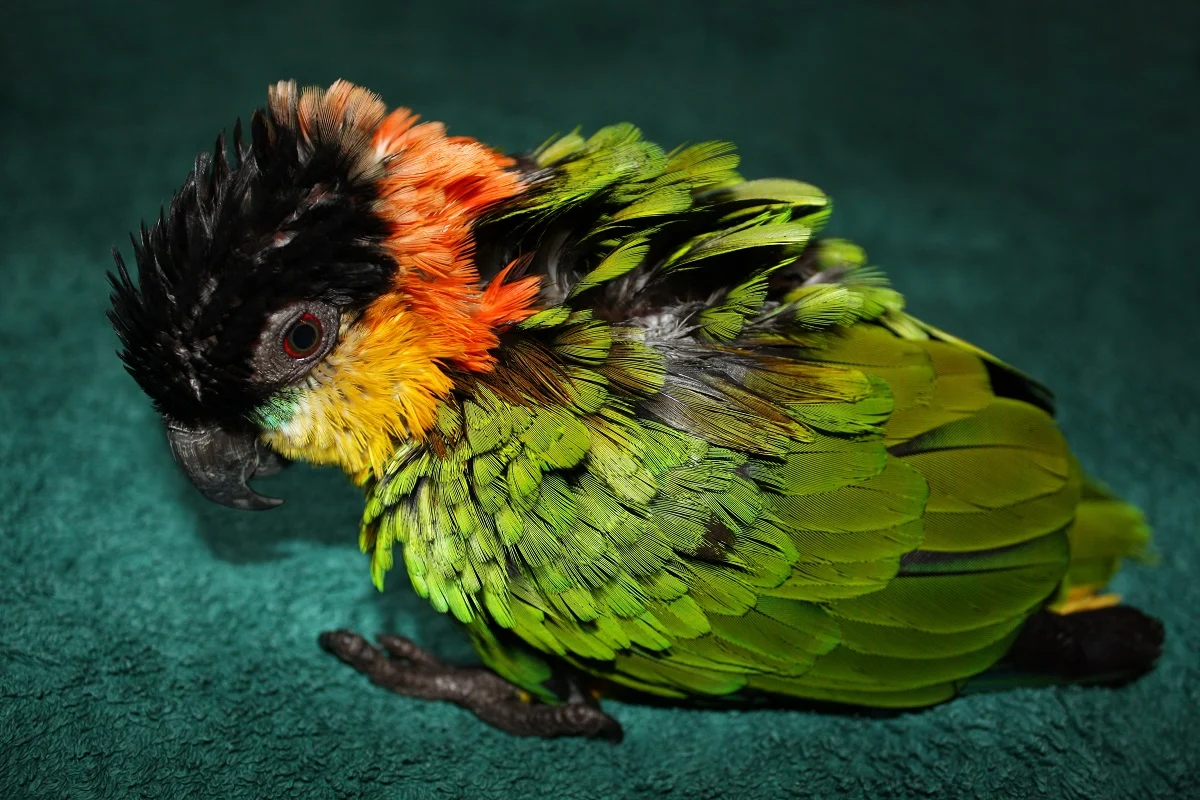
Regular, ideally twice-yearly, health check-ups with an avian vet serve as an invaluable preventative measure. These routine examinations can detect subtle problems, such as nutrient imbalances or early signs of disease, long before they manifest as overt symptoms. A parrot with ruffled, disarrayed feathers, a droopy head, or sitting on the cage floor is a clear visual indicator of illness and demands immediate professional veterinary attention.
Emergency Care While Awaiting Veterinary Intervention

In situations where professional veterinary care is delayed—due to a long commute or immediate appointment unavailability—providing basic emergency care at home can significantly impact the bird’s prognosis. Maintaining composure is paramount. A calm owner can act more effectively.
1. Stopping Hemorrhage:
If bleeding is present, it is the absolute first priority. Apply styptic powder directly to the source of bleeding (e.g., a broken blood feather or minor cut) and exert gentle but firm pressure with clean gauze for several minutes. Avian blood clots relatively efficiently, so this typically suffices for minor bleeding. If the wound is deep and appears to penetrate a body cavity (abdomen or thorax), styptic powder is ineffective. Instead, apply continuous pressure with clean gauze and proceed directly to the vet without delay. When applying pressure, extreme caution must be exercised to avoid restricting the bird’s ability to expand its chest. Unlike mammals, birds lack a diaphragm and rely entirely on chest wall movement for respiration. Any constriction around the chest can impede breathing and be fatal.
2. Providing Isolation and Thermal Support:
Stress and shock are significant contributors to mortality in sick or injured birds. Veterinarians often adopt a "hands-off" approach with severely compromised parrots precisely for this reason; even minimal handling can exacerbate stress to a fatal degree. Furthermore, ill or injured parrots frequently struggle to maintain their body temperature. Supplemental warmth is essential, with an ideal ambient temperature of approximately 85°F (29°C).
To achieve isolation and warmth, prepare a small carrier or a clean, appropriately sized box. Line it with soft kitchen paper or towels. Place a covered heat pad (microwavable pads are safest to avoid leaks) or a well-wrapped hot water bottle inside, ensuring the bird cannot directly contact the heat source. Then, cover the enclosure with a towel to create a dark, quiet, and stress-reducing environment. This setup can also serve as the transport container to the veterinary clinic.
3. Addressing Dehydration:
Vomiting or diarrhea can rapidly lead to dehydration in parrots. Moderate to severe dehydration demands immediate veterinary intervention. However, mild dehydration can be managed at home under veterinary guidance or while awaiting an appointment.

Assessing the degree of dehydration can be done by checking the basilic wing vein refill time. Locate the basilic wing vein, visible as a raised blue line across the bird’s "elbow" (humeral-radioulnar joint) on the inside of the wing. Gently press on the vein to displace blood. In a well-hydrated bird, the vein should refill instantly upon lifting your finger. A delayed refill indicates dehydration. If it takes more than two seconds for the vein to refill, the bird is likely experiencing moderate-to-severe dehydration and requires immediate veterinary attention. In very sick birds, it is generally safe to assume severe dehydration is present.
Your first aid kit should contain rehydration sachets. Prepare the solution according to package instructions and offer it to the bird. Unfortunately, severely ill birds often refuse to drink. Mildly dehydrated birds that are still alert and able to swallow can be offered the solution via a teaspoon or syringe. If using a syringe, administer the fluid slowly and carefully into the side of the beak, allowing the bird to swallow at its own pace. Fluids should be gently warmed to body temperature to prevent further chilling, as sick birds already struggle with thermoregulation. It is imperative not to attempt to administer fluids directly into the back of the bird’s mouth unless specifically trained by a qualified avian professional, due to the high risk of aspiration into the lungs, which can be fatal.
Conclusion: A Call for Vigilance and Preparedness
In summary, the paramount objective during any parrot health crisis is to secure professional avian veterinary care as swiftly as possible. Birds are inherently delicate creatures, and their health can deteriorate with alarming speed in emergency situations. Proactive preparation—establishing a relationship with an avian vet, comprehensive parrot-proofing, maintaining a well-stocked first aid kit, and diligently monitoring for subtle signs of illness—is not merely beneficial but often life-saving. These measures, combined with calm, informed action during an emergency, are the cornerstones of responsible parrot ownership and significantly enhance the chances of a positive outcome for our cherished feathered companions.
Sources
- Avianmedicine.net: Emergency and Critical Care. (https://avianmedicine.net/wp-content/uploads/2013/03/07_emergency_and_critical_care.pdf)
- Further insights from Dr. Daisy May, resident veterinarian at Psittacology.com.

